




How to Load a Lowbed Semi Trailer Safely Without Damaging Ramps or Deck Structure
How to Load a Lowbed Semi Trailer Safely Without Damaging Ramps or Deck Structure
The damage usually starts before the machine is fully on the trailer. A lowbed semi trailer is built to carry heavy equipment with a low center of gravity, but its ramps and deck are not meant to absorb shock loading, side twist, or concentrated axle impact from a rushed loading job. When operators complain that the ramp hinge cracked, the deck plate buckled near the gooseneck, or the cross members began to deform earlier than expected, the root cause is often not overload on paper. It is poor loading geometry, bad ground conditions, or the wrong approach for the machine being moved.
The first thing experienced crews look at is not the trailer rating. It is the loading surface. If the trailer is parked on uneven ground, the ramps will not share load equally. One ramp takes more weight, the machine climbs at an angle, and the deck sees torsion instead of straight-line compression. On compacted yard concrete this is manageable. On a quarry edge, roadside shoulder, or loose construction fill, it becomes a structural risk very quickly. Even a correctly specified lowbed semi trailer can be damaged if one ramp foot sinks while the other stays high.
Ramp angle is the next point people underestimate. Operators often focus on whether the machine can climb the slope, but the real question is what happens at the breakover point. Machines with long wheelbases, low ground clearance, steel tracks, or heavy front attachments can strike the ramp crest or front deck transition. That impact is not just a scrape issue. It can shock the hinge area and transfer a peak load into the front section of the deck. This is why loading excavators, pavers, rollers, and some dump trucks should not be treated as the same exercise just because the gross weight looks similar.
Where Damage Really Comes From
In the field, three loading mistakes show up again and again. One is climbing too fast. The second is letting the machine turn while part of it is still on the ramps. The third is placing axle load in the wrong section of the deck and then trying to correct position with repeated forward and reverse movement. That repeated repositioning can be harder on the trailer than one clean loading cycle, especially when the cargo has aggressive tire lugs, steel tracks, or a high point load.
Tracked machines are particularly unforgiving. Their contact patch is broad, but the loading event is harsh because the leading edge of the track can strike the ramp bars and deck transition with a hammering effect if the approach is not smooth. Wheeled machines create a different problem: concentrated axle load. A loaded axle rolling over the hinge line or the first unsupported deck section can exceed what that local structure likes to see, even when total machine weight is within the trailer’s nominal capacity.
This is also why some fleets use timber mats or steel spreader plates under ramp feet in soft or broken ground. It is not just to prevent sinking. It stabilizes the ramp reaction point and reduces the twisting that can open welds over time. Shandong Jiyake Automobile Sales Co., Ltd., working across markets in Southeast Asia, Central Asia, and Africa, serves operators who routinely load in mixed site conditions rather than ideal depot environments. In those regions, trailer durability depends as much on loading discipline as on fabrication quality, steel selection, and welding consistency.
Different Machines Need Different Loading Logic
A crawler excavator is usually loaded slowly, attachment low, with careful attention to where the track transitions from ramp to deck. A wheel loader may climb more easily but can create a sharper point load at the front axle when cresting. A dump truck changes the equation again because of wheelbase, approach angle, and axle spacing.
For example, when moving a construction or mining truck such as HOWO 380HP Dump Truck, the loading concern is not only gross mass. The vehicle’s axle group behavior matters. A 6x4 truck built with high-strength steel for rough hauling may tolerate severe terrain in operation, but that does not mean it should be driven aggressively onto a trailer. With a middle-lifting dump body, heavy rear structure, radial tires, and a drivetrain intended for site work, it should still approach straight, at controlled speed, with ramp spacing matched to the tire track and with enough deck length to place the load where the trailer is designed to carry it. The mistake is assuming that because the truck is rugged, the loading event can be rough as well.
That same logic applies whether the unit being moved is a Sinotruk Howo 6x4 or another heavy vocational truck. The loading path has to respect axle spacing and deck structure, not just trailer payload capacity.
The Deck Is Strong, but Not Everywhere in the Same Way
Operators sometimes talk about a trailer deck as if it were one uniform platform. Structurally, it is not. The gooseneck area, the main load deck, the transition zones, and the rear ramp connection all behave differently. The strongest-looking steel plate is not the whole story; support spacing underneath matters more. A machine that pauses with one axle over a less favorable section can overstress that area even if the final parked position would have been acceptable.
This is where loading without a spotter becomes expensive. A spotter is not just there to avoid driving off the edge. The spotter helps the operator hit the intended load position the first time, reducing correction moves and keeping axle lines away from weak transition points. On longer lowbeds, that matters even more because slight position errors can change kingpin load and rear axle group load at the same time.
A well-built trailer from a full-range manufacturer with CNC cutting, automatic welding, and large forming equipment will generally deliver better consistency in structure and fit-up, but no fabrication process cancels out bad site practice. Repeated shock loading, twisting during ramp entry, and loading on unprepared ground will shorten service life regardless of brand.
What Good Loading Practice Looks Like on Site
The most reliable crews follow a sequence that is simple but not casual. They check ground firmness under the tractor and ramp feet. They confirm ramp spacing and locking condition. They look at the machine’s approach geometry, especially on vehicles with long wheelbase or low clearance. They remove the temptation to steer on the ramps. If the cargo is self-propelled, they keep speed low enough that the machine climbs under control, not momentum.
If the ground is poor, improving the setup before loading is usually cheaper than repairing a ramp assembly later. If the machine repeatedly bottoms out at the deck transition, the answer is not more throttle. It is a better loading angle, different blocking arrangement, or a trailer configuration better matched to the cargo. And if the deck shows localized wear, bent approach plates, cracked welds near the hinge, or uneven ramp wear, those are operating signals. The trailer is telling you where the loading method is wrong.
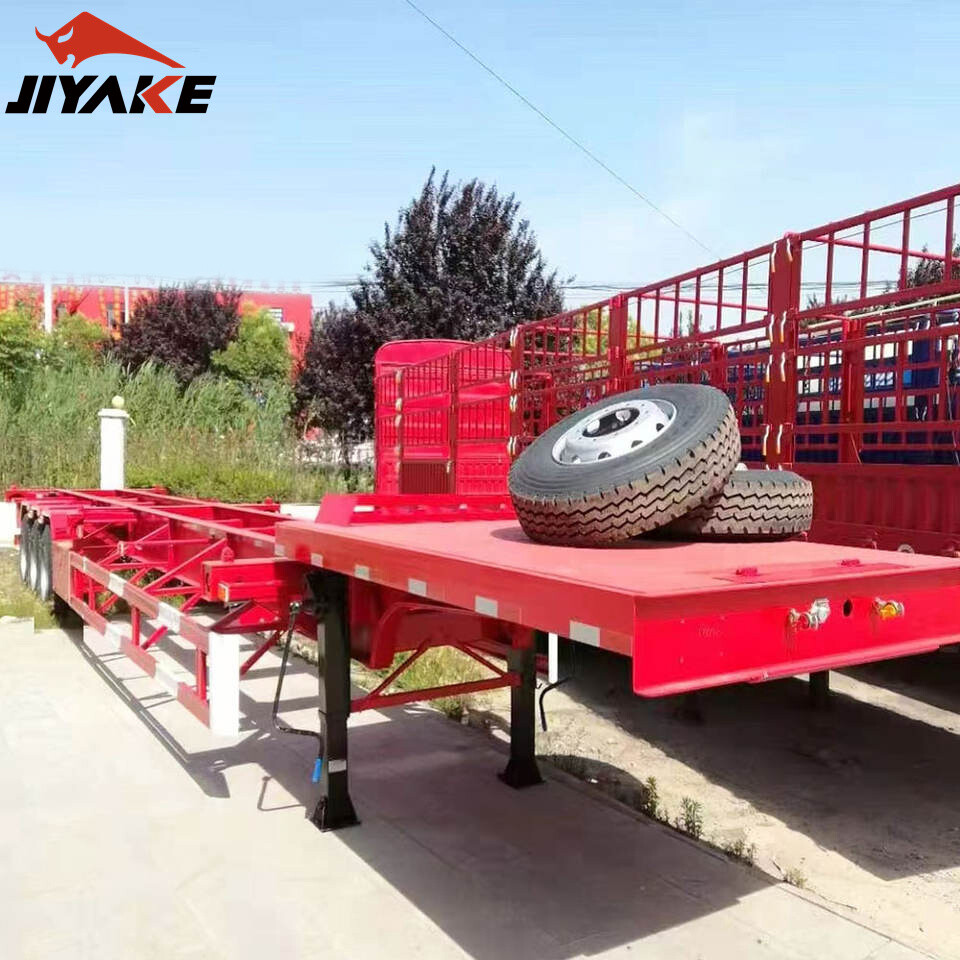
When buyers evaluate a lowbed semi trailer for heavy vocational fleets, the right question is not only how much it can carry. Ask what it will be asked to load, on what kind of ground, with what frequency, and how disciplined the loading operation really is. That is the difference between a trailer that stays structurally sound for years and one that spends its life in ramp repair and deck straightening.
Leave A Reply

First class quality service and professional after-sales team.
Get in Touch
*We respect your confidentiality and all information are protected.