




Best Lowbed Semi Trailer Setup for Construction Machinery and Oversized Cargo
Start with the machine, not the trailer brochure
When people shop for a lowbed semi trailer, they often begin with axle count, price, or deck length. That is usually backwards. The right setup starts with the equipment you actually need to move: excavators, loaders, rollers, pavers, drill rigs, or mixed oversized cargo that does not behave the same way on the road.
A practical setup should let you load safely, keep the center of gravity under control, and survive repeated jobsite use without turning every trip into a planning problem. For buyers comparing options from heavy vehicle manufacturers such as Shandong Jiyake Automobile Sales Co., Ltd., the real question is not which trailer looks strongest on paper. It is which configuration matches your cargo, route conditions, and loading routine with the fewest compromises.
Check the cargo profile before you compare configurations
Write down four things for the heaviest and most awkward machine you expect to carry:
- Operating weight
- Overall width and height
- Track or wheel contact length
- How the weight sits front to rear
That last point matters more than many first-time buyers expect. A compact machine with a heavy rear counterweight loads very differently from a long machine with balanced axle loads. If your cargo mix changes from job to job, use the toughest case as your reference. A lowbed semi trailer that is perfect for one excavator may become unstable or inconvenient when you switch to a taller machine or a longer piece of oversized cargo.
Match the deck design to loading reality
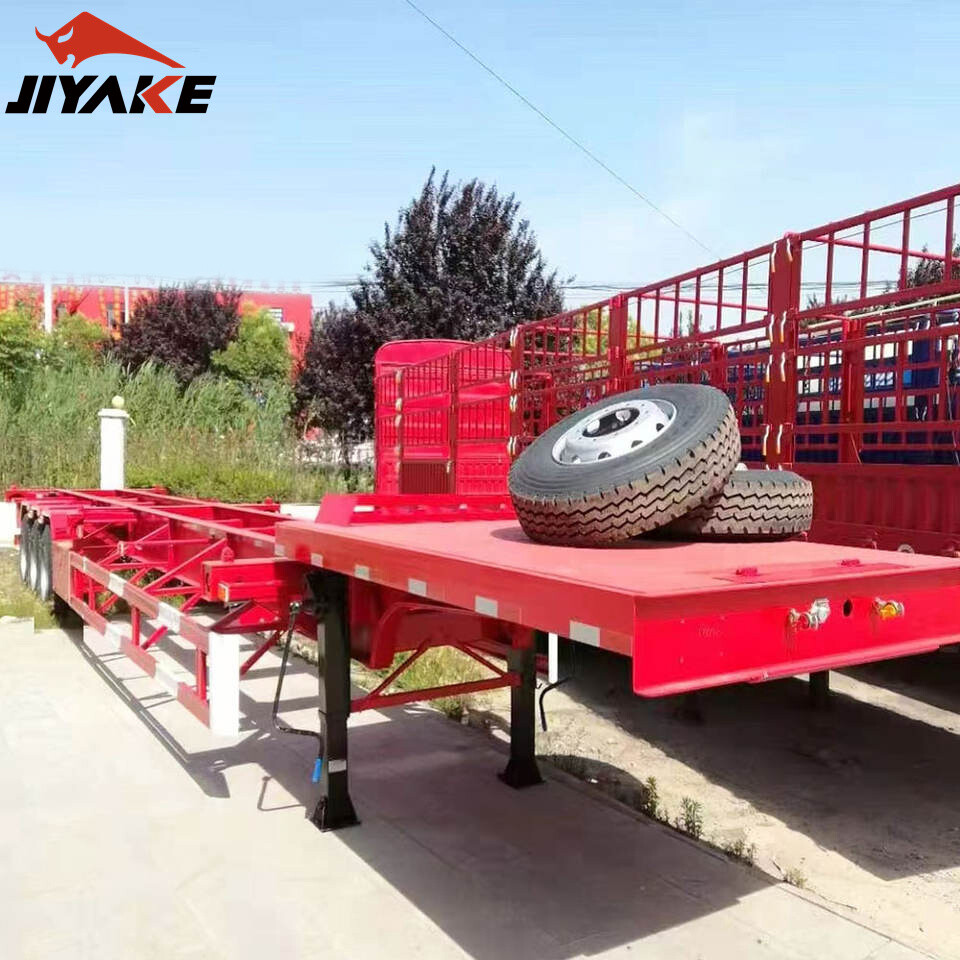
The low deck is the main reason buyers choose this trailer type in the first place. It helps reduce transport height and improves stability, but only if the deck shape fits the machine.
Look closely at usable deck space, not just advertised trailer length. A machine with a long undercarriage needs enough flat, load-bearing area to sit properly without pushing too much weight onto the neck or too far back onto the rear section. If you regularly move machines with low ground clearance, pay attention to transition angles. A steep breakover point can scrape the underside during loading even when the trailer capacity is technically sufficient.
A simple buying rule: if loading requires repeated repositioning, timber blocking, or guesswork to keep the machine level, the deck layout is probably wrong for your use.
Do not treat axle count as a shortcut decision
More axles can improve load distribution, but that does not automatically make a trailer better for every buyer. The useful question is how the load will be shared across the trailer and tractor combination on the roads you actually use.
If you expect to carry heavier construction machinery often, axle layout becomes part of both compliance and tire life. If your routes include tight site access, poor turning space, or rough temporary roads, maneuverability matters just as much. An oversized cargo setup that works on open highways may become frustrating on urban access roads or quarry entrances.
Before ordering, compare the trailer layout against the legal load rules and axle distribution requirements in the destination market. The documents to check are the vehicle specification sheet, axle ratings, and the local transport authority rules for abnormal or oversized loads.
Pay attention to ramp design because loading damage starts there
Ramps are often treated like a small accessory. They are not. For tracked equipment, ramp strength, width, surface grip, and deployment method affect daily safety more than many cosmetic trailer options.
Check these points in person or on detailed drawings:
- Ramp width compared with track or tire spacing
- Whether the climb angle suits low-clearance machinery
- Locking reliability during transport
- Whether the ramp surface gives enough traction in mud or rain
One common mistake is choosing ramps that are technically strong enough but too short or too narrow for calm loading. That leads to hesitant operators, off-center approach, and unnecessary wear.
Securement points should match the machine, not just the trailer frame
A lowbed semi trailer is only as usable as its tie-down layout. Buyers usually notice the main frame and suspension first, then discover later that the lashing points are awkward for real machines.
You want securement positions that allow direct, balanced restraint from the machine’s approved tie-down locations. If the chain angles are poor or the anchor points sit too far from the load, operators start improvising. That is where shifting loads, bent components, and roadside delays begin.
For buyers running mixed fleets, it also helps to think ahead about replacement items. Reliable access to components such as braking, chassis, and electrical spares can reduce downtime over the trailer’s working life. In that context, Parts for truck and trailer systems can be relevant when you are building a support plan around Sinotruk Howo-related operations.
Look underneath: suspension, frame, and welding quality decide service life
This is where experienced buyers spend their time. On construction work, trailers suffer from uneven ground, repeated ramp impact, side-loading during turns, and constant vibration. A clean paint finish does not tell you much about how the trailer will hold up after a year of rough use.
Inspect the main frame design, cross members, suspension arrangement, and weld consistency. You are looking for a structure that suits the expected duty cycle, not just maximum advertised loading. Manufacturers with integrated production capability and in-house fabrication equipment usually have better control over build consistency, which matters when the trailer will be used across harsh routes and variable cargo conditions.
Use this short decision table before placing the order
Think about support after delivery
A trailer that works well in the yard but is hard to support in service becomes expensive quickly. Ask what can be supplied quickly for wear, repair, and replacement. For buyers operating in export markets, packaging method, shipping options, and delivery time for replacement items matter more than they seem during the quotation stage. Even something as routine as access to categorized chassis, braking, drivetrain, or electrical Parts can shape how long a trailer stays productive after a failure.
Order in this sequence
If you want a setup that holds up in real work, keep the order simple. Define the heaviest and tallest machine. Match the deck and ramp geometry to that machine. Check axle distribution against the roads and transport rules in your target market. Review securement points using the actual machine tie-down locations. Then look at build quality and after-sales support.
That sequence will usually lead you to the right lowbed semi trailer faster than comparing price lists or generic capacity claims. For construction machinery and oversized cargo, the best setup is the one that loads calmly, travels predictably, and keeps working without constant workaround decisions from the operator.
Leave A Reply

First class quality service and professional after-sales team.
Get in Touch
*We respect your confidentiality and all information are protected.