





What determines the price of a skeleton semi-trailer?
What Determines the Price of a Skeleton Semi-Trailer?
When evaluating a skeleton semi-trailer for sale, the initial quotation is only part of the decision. Chassis steel, payload requirements, axles, suspension, container locks and manufacturing quality all influence the price. Customization, order quantity, delivery and after-sales support affect the investment as well. The difficult part is not identifying these cost drivers; it is establishing whether competing quotations describe trailers built for the same work.
A chassis moving sealed containers between a port and a nearby depot faces different demands from one hauling heavy boxes over rough inland roads. Buying solely against a nominal payload figure can leave a fleet with a trailer that looks adequate on paper but is expensive to operate or unsuitable for its route.
Start with the container and the actual load
The container sizes and combinations a trailer must carry determine much of its layout. A chassis intended for one container length may need a different frame and locking arrangement from one designed to accommodate several configurations. Additional lock positions, adjustable sections or other flexibility can increase fabrication and component costs, but they are worth considering if dispatchers regularly handle mixed container traffic.
Be precise about weight. A supplier’s stated payload is not necessarily the same as the maximum permitted gross combination weight on the intended route. The empty trailer weight, tractor configuration, container weight and distribution across axles all matter. Ask the supplier to explain the rated payload, expected tare weight and assumptions behind them; then check the applicable local limits before ordering.
A higher-rated chassis will generally require more substantial components, but simply specifying the highest available rating is not always economical. Extra steel can raise the purchase price and tare weight. If most trips carry lighter containers on paved roads, a carefully specified standard-duty frame may be a better fit than a heavily reinforced design.
Frame design matters as much as steel grade
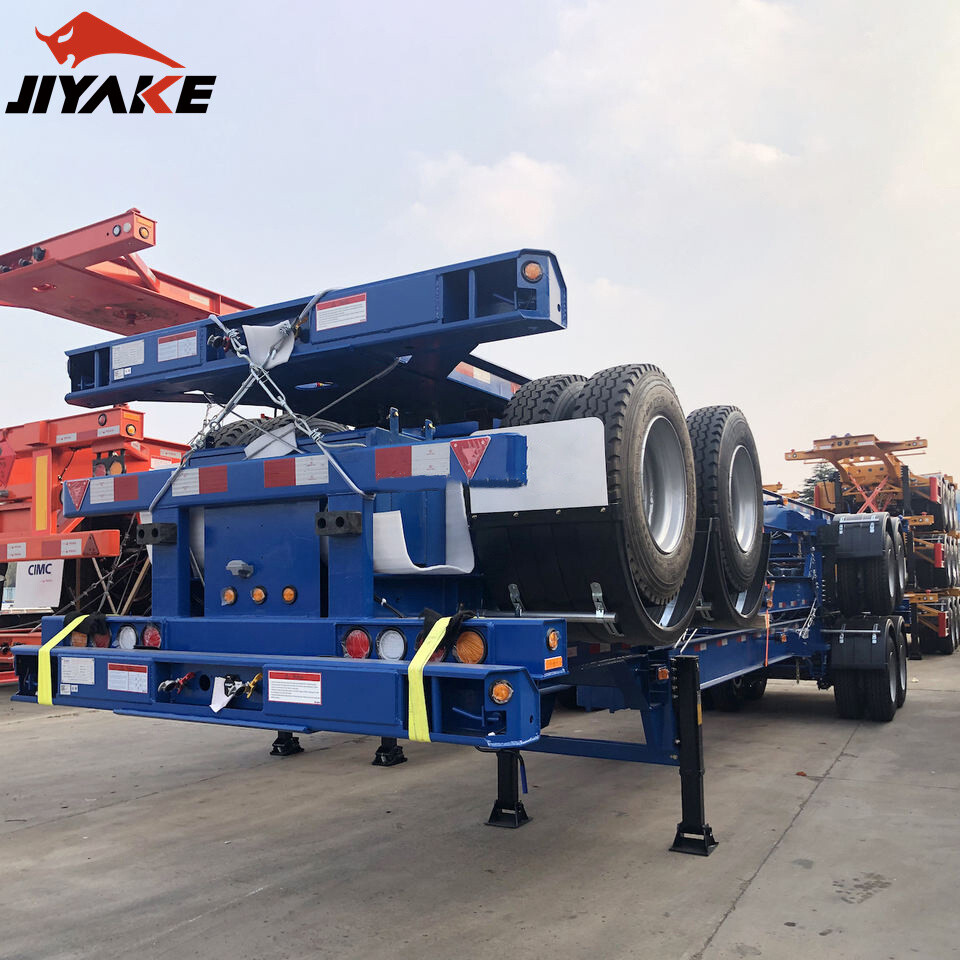
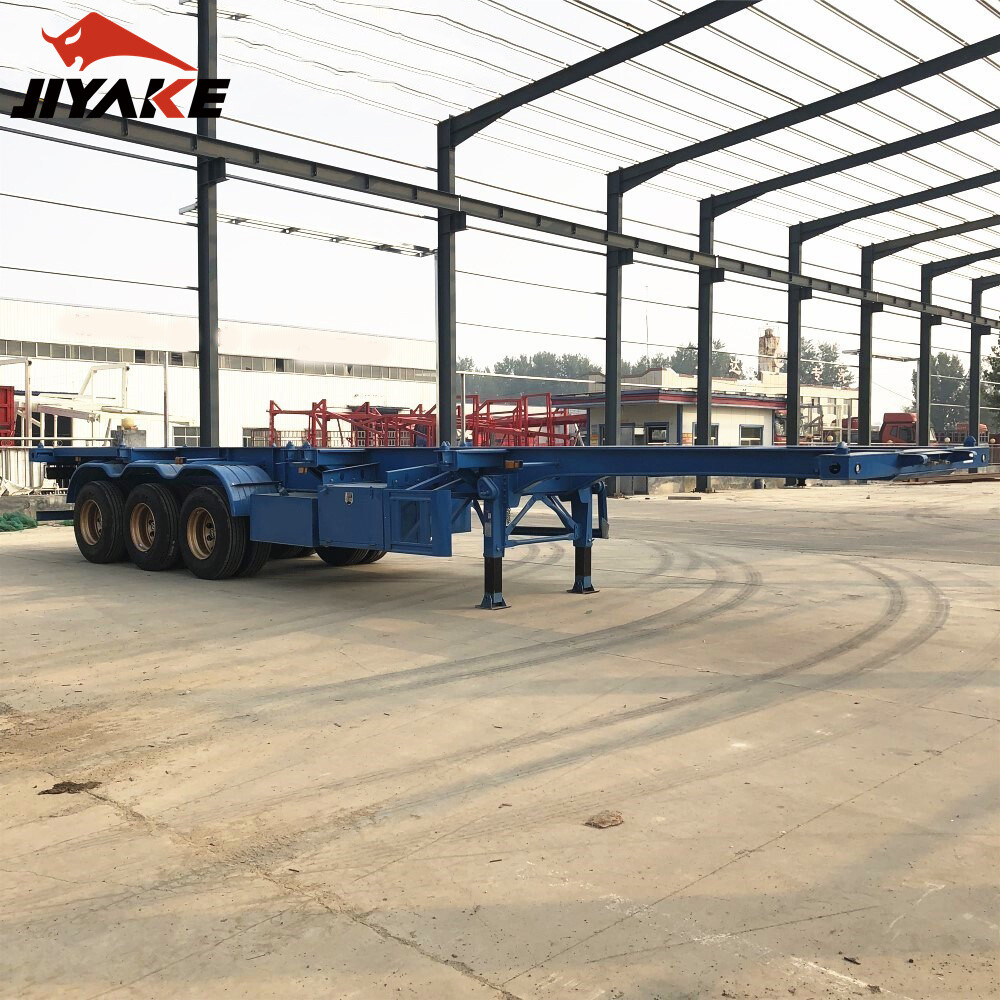
Steel grade is an obvious line item, but it does not tell the whole story. Main-beam dimensions, plate thickness, cross-member spacing and reinforcement around the suspension, landing gear and container locks all affect how the chassis carries load. Two quotations can both describe “high-strength steel” while offering materially different structures.
Request a drawing and a material specification rather than relying on a sales description. Pay particular attention to concentrated loads: container forces enter the chassis at the support and lock positions, so those areas deserve scrutiny. For rough-road work, discuss reinforcement with the manufacturer instead of assuming that thicker plate everywhere is the answer.
Manufacturing controls also influence value. CNC cutting and automated welding can support repeatable production, but the equipment alone does not prove the quality of a finished trailer. Ask how the factory checks alignment, welds and lock positioning, and what inspection records can be supplied before shipment.
Running gear can change both the quote and the maintenance bill
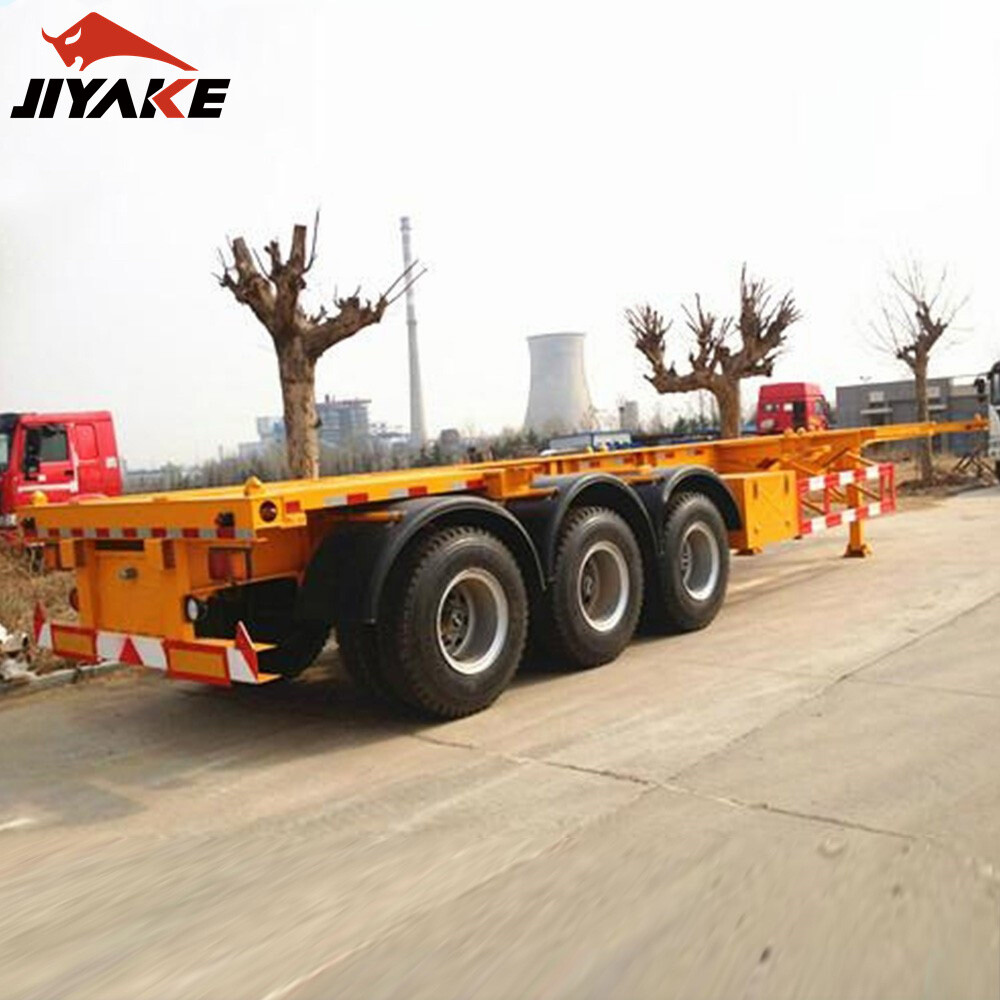
Axle quantity and rating, suspension type, tyres and brakes are often where apparently similar offers diverge. Compare component brands and model numbers, not just the number of axles. Confirm whether wheel ends, bearings, brake chambers and tyres are included, and whether replacements are readily available where the trailer will operate.
Leaf-spring suspension is commonly considered for demanding routes and straightforward maintenance. Air suspension may suit a different operating requirement, but its suitability depends on road conditions, support capability and the specification of the complete vehicle. Neither option should be selected on price alone.
Brake equipment deserves the same attention. Check whether ABS is included or optional, what electrical connections are supplied, and whether the arrangement is compatible with the tractor and destination-market requirements. A low headline price can lose its appeal if upgrades are needed before the trailer can enter service.
Locks, compatibility and corrosion protection are not minor details
Twist locks are relatively small components, but the number, positions and type must match the containers being carried. Confirm which positions are usable for each container configuration and how the locks are secured. A drawing showing the arrangement is more useful than a quotation that merely says “container locks included.”
Check the kingpin size and height, coupling clearance, landing-gear operation, air connections and lighting with the intended tractor. A trailer may be mechanically sound yet require modification if these interfaces were assumed rather than agreed.
Surface preparation and coating also affect cost. For port operations, road spray and exposure to salty air make coating quality worth discussing. Ask what preparation, primer and finish are included, and how accessible areas around joints and brackets are treated. A paint colour alone is not a coating specification.
Separate the trailer price from the delivered cost
A factory quotation is not necessarily comparable with a delivered offer. Confirm the trade terms, named delivery point, currency and validity period. Freight, insurance, unloading, duties, taxes, registration and local modifications may sit outside the quoted price. Identify which party is responsible for each item rather than assuming it is included.
Order volume can affect unit pricing, especially when several trailers share a specification. However, a bulk discount is less useful if the fleet needs different lock layouts or spare parts support for several operating regions. Also ask about production lead time, payment milestones, warranty exclusions and how claims are handled after export. A warranty is only practical if replacement parts and technical guidance can reach the workshop.
Make sure a container chassis is the right trailer
A skeleton chassis is designed around carrying containers; it is not a substitute for a trailer intended to discharge loose material. Where a fleet also moves mining or construction bulk loads, a Side Tipper Trailer is a different solution, using a body and tipping system for side discharge. Its payload, dimensions and hydraulic requirements should be assessed separately rather than compared directly with a container chassis quote.
Shandong Jiyake Automobile Sales Co., Ltd. supplies several types of semi-trailer and special vehicle, and reports serving markets across Southeast Asia, Central Asia and Africa. For an export order, that breadth is useful context for a technical discussion, but the decisive document remains the specification agreed for the intended route and cargo.
Before placing an order, send each shortlisted supplier the same container configurations, expected load, operating conditions and tractor details. Ask for an itemized quotation, chassis drawing, component list and written confirmation of delivery scope. If a price is noticeably lower, resolve the difference in writing: it may reflect a sensible design choice, or an omitted component that will have to be paid for later.
Leave A Reply

First class quality service and professional after-sales team.
Get in Touch
*We respect your confidentiality and all information are protected.