





How does container position affect skeleton trailer axle loads?
How does container position affect skeleton trailer axle loads?
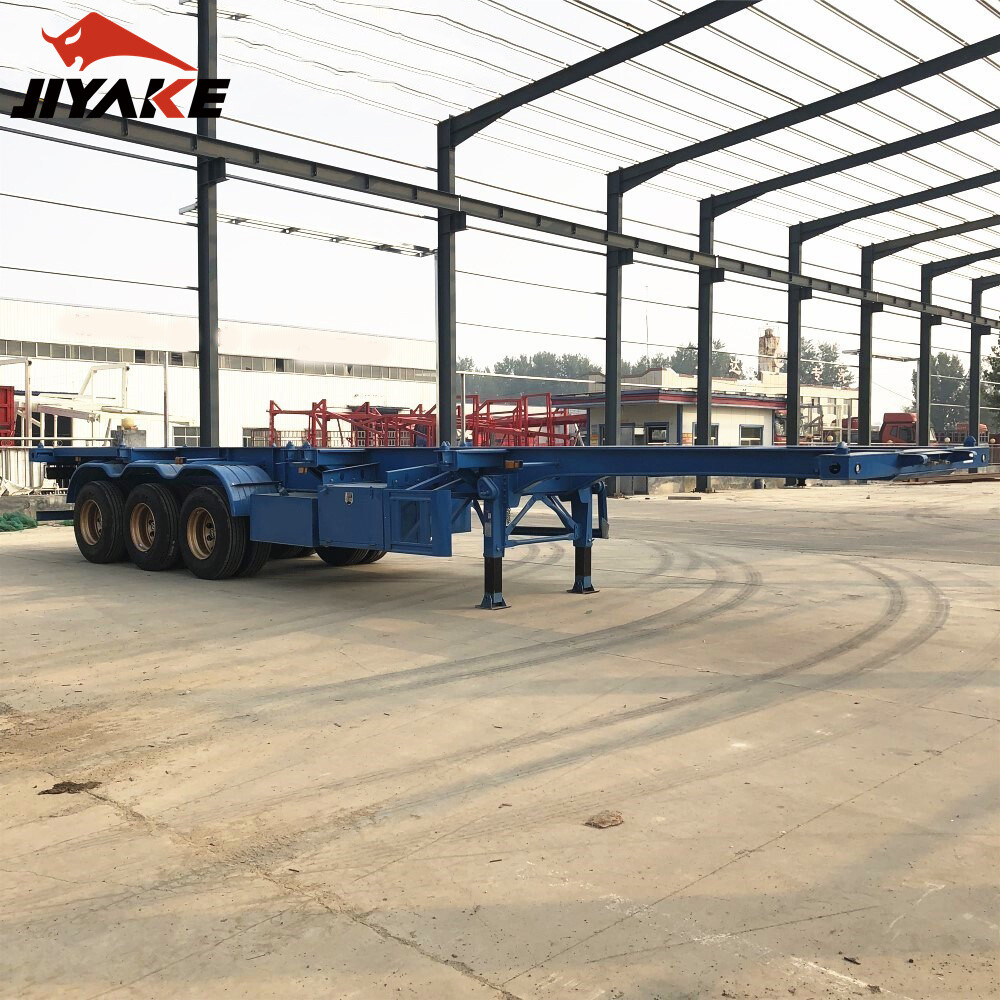
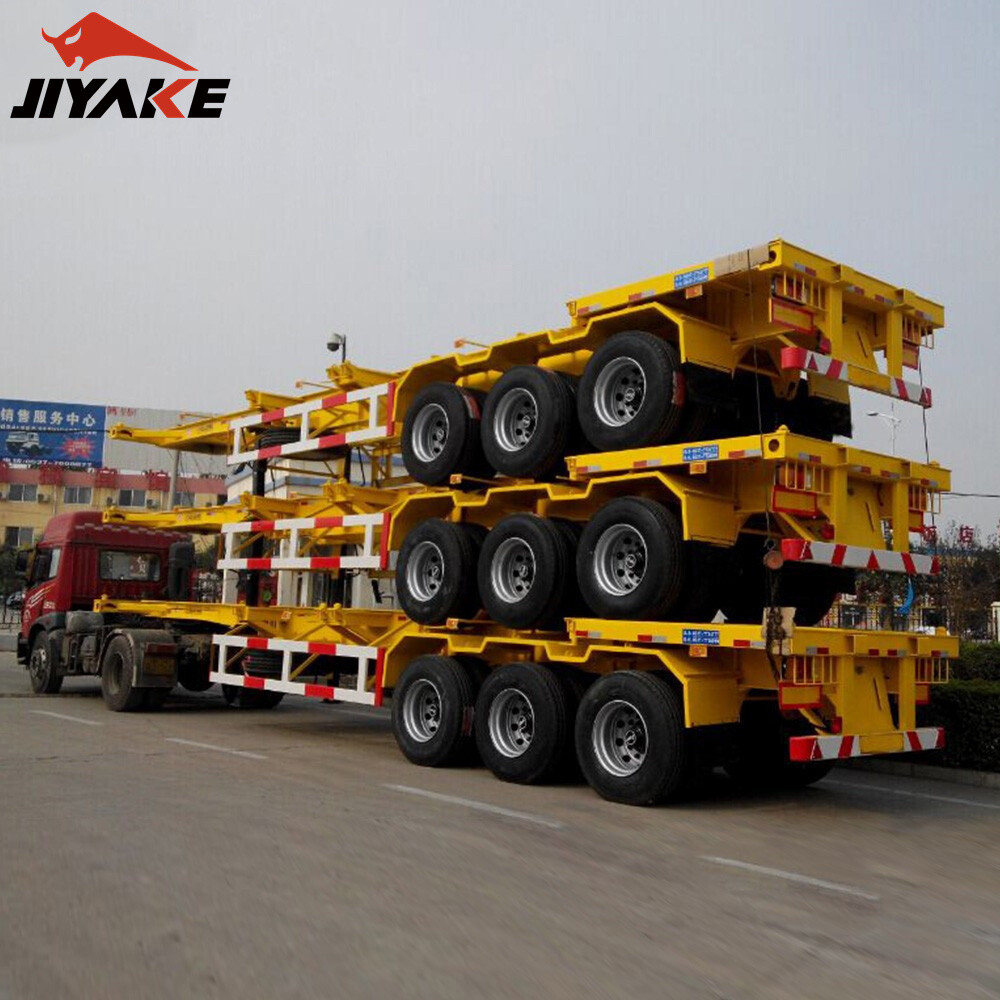
Where you position a container on a skeleton trailer can make the difference between a balanced load and an overloaded axle. Even when the total weight is legal, shifting the container forward or backward changes how that weight is distributed between the tractor and trailer axles. For operators evaluating a skeleton semi-trailer for sale, understanding this relationship is essential for safer handling, regulatory compliance, and reduced tire and suspension wear. This guide explains how container placement affects axle loads and what to check before starting a journey.
The load is shared between the kingpin and trailer axles
A coupled skeleton trailer transfers its weight to the tractor through the kingpin and to the road through its axle group. The container adds weight to both support points, but not necessarily in equal proportions. What matters is the position of the container’s center of gravity relative to the kingpin and the effective center of the trailer axle group.
Moving the container’s center of gravity forward generally increases the load carried through the kingpin and reduces the load added to the trailer axle group. Moving it rearward generally has the opposite effect. The amount transferred depends on the weight moved, the distance moved and the trailer’s support geometry.
Kingpin load is not the same as tractor drive-axle load. The fifth-wheel position and tractor wheelbase determine how that load is shared between the tractor’s steer and drive axles. A forward container position may therefore create a tractor axle problem before the trailer axles reach their limits.
A simple calculation shows the direction of change
For a preliminary estimate, treat the kingpin and the center of the trailer axle group as two support points. If a container of weight W has its center of gravity a distance x behind the kingpin, and the distance between the support points is L, the approximate container load added to the trailer axle group is W × x ÷ L. The remainder is added at the kingpin.
For example, suppose a loaded container weighs 20 tonnes, its center of gravity is 4 meters behind the kingpin, and the effective support spacing is 8 meters. The simplified calculation assigns 10 tonnes to the trailer axle group and 10 tonnes to the kingpin. If that same center of gravity moves 0.4 meters forward, the estimate changes to 9 tonnes on the trailer group and 11 tonnes at the kingpin.
This is an illustration, not a dispatch calculation. It excludes the unladen vehicle weights, assumes a level, static vehicle and treats the axle group as one support. Actual axle readings also depend on suspension condition, individual axle loading, fifth-wheel location and ground level. Use measured weights to make the final decision.
The container’s physical position is only part of the picture
An evenly packed container may have its center of gravity close to its geometric center. A container carrying machinery, coils or other concentrated cargo may not. Two containers with the same gross mass and the same twist-lock position can produce different axle loads if the cargo inside is distributed differently.
Do not assume that a container weight declaration identifies where the weight is concentrated. Where the load is known to be uneven, ask the shipper for center-of-gravity or packing information. If the readings are unexpected, a weighbridge check is more reliable than guessing which end is heavier. Repositioning or repacking cargo requires coordination with the responsible shipper or loading facility.
Lateral distribution matters too. A load concentrated on one side can increase loading on the tires and suspension components on that side, even when the axle total looks acceptable. Standard axle scales may not reveal that imbalance; investigate the packing and use suitable wheel-load measurement where available.
Use only approved container positions
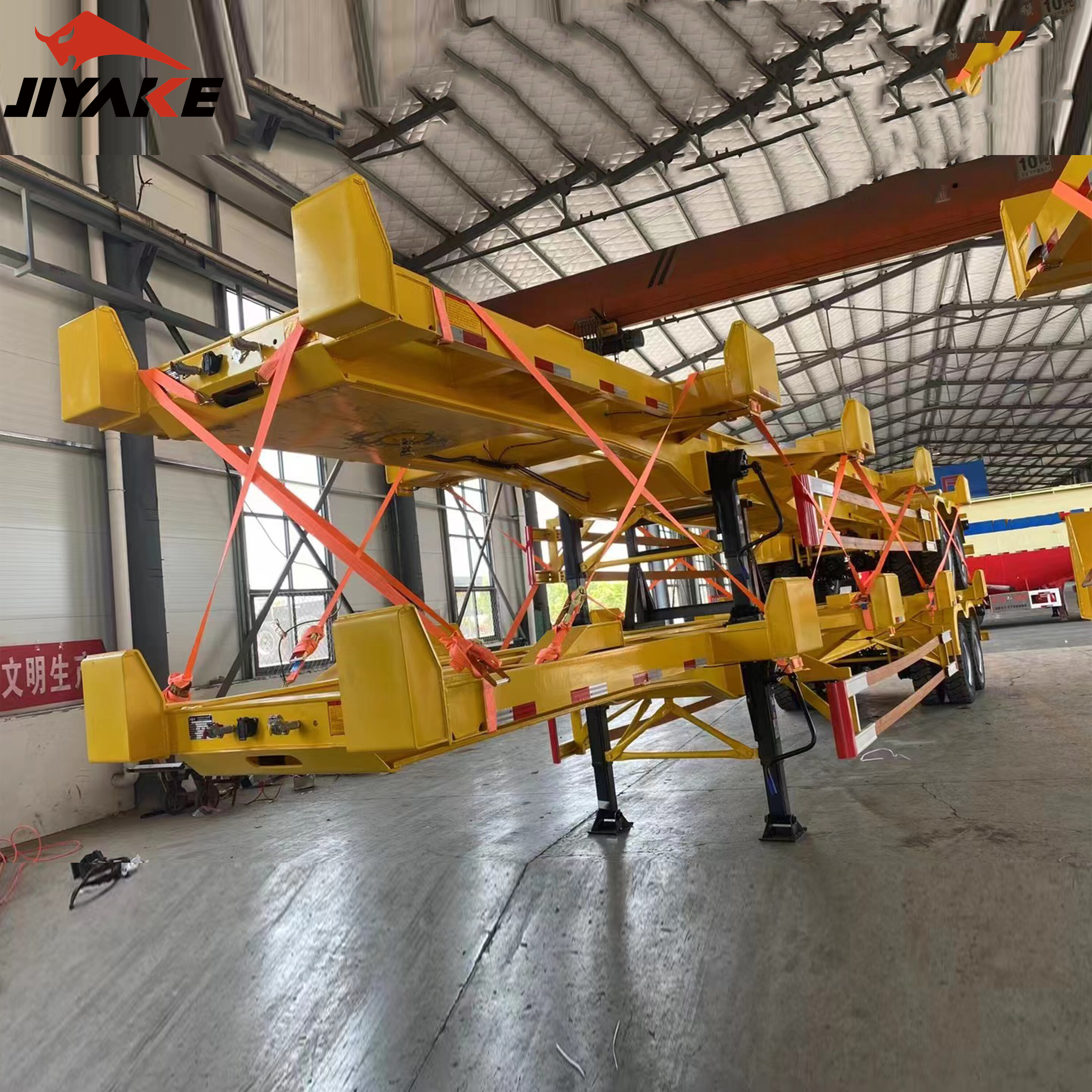
A skeleton chassis is designed around specific container sizes, support points and twist-lock locations. An apparently convenient forward or rearward position is not acceptable unless the trailer is designed for it and the container can be supported and secured as specified. Never improvise a lock position or leave a required corner unsupported to improve an axle reading.
For a multi-position chassis, the manufacturer’s loading diagram should identify the permitted configurations. Check the container size, the designated lock positions and any restrictions on gross container mass for each arrangement. Confirm that every required twist lock is fully engaged before moving; an axle-compliant load is still unsafe if the container is not properly secured.
Sliding a fifth wheel or an adjustable trailer axle group can also alter load distribution, but these adjustments affect different parts of the combination. Make them only within the equipment manufacturer’s permitted settings, secure the locking mechanism, and weigh again. Moving the fifth wheel is not a substitute for correcting an unsafe container load.
What to check at the weighbridge
Weigh the combination in its intended travel condition: coupled, with the container secured, normal operating equipment aboard and fuel level considered. Follow the scale operator’s instructions so each relevant axle or axle group is properly positioned on the platform. If separate platforms are unavailable, obtain the measurements needed to calculate group weights without double counting.
Compare the results with the applicable limits for the whole combination, each axle and axle group, as well as the rated capacities of the tractor, trailer, tires and suspension. Road limits and measurement rules vary by jurisdiction and route; a bridge, permit condition or axle-spacing rule may impose an additional restriction. The lowest applicable limit governs the decision.
If the trailer group is overweight but the tractor has capacity remaining, an approved forward container position may help. If the tractor is already near its limit, the same adjustment may merely move the violation. When no permitted position produces compliant readings, the remedy may be a different tractor or chassis, a reduced load, or repacking—not a departure based on gross weight alone.
Match the chassis to the work before loading day
When reviewing a skeleton chassis, request a loading diagram for the intended container sizes and gross masses, along with kingpin-to-axle dimensions, axle and suspension ratings, and unladen axle weights. Share the tractor’s wheelbase, fifth-wheel position and axle ratings as well. A trailer that looks suitable on payload alone may not distribute a particular container legally behind a particular tractor.
Not every transport task calls for a container chassis. For indivisible equipment used in infrastructure or energy projects, a lowbed is a different kind of solution: the Folding Gooseneck Lowbed Semi Trailer is intended for equipment transport rather than as a substitute for a twist-lock container trailer. Its suitability still depends on the actual load, axle distribution and route requirements.
Shandong Jiyake Automobile Sales Co., Ltd. supplies several types of heavy vehicles and semi-trailers across international markets. For an operator comparing configurations, the useful next step is to provide the intended container weights, tractor details and operating routes, then review the proposed loading positions and confirm the finished combination on a scale.
Leave A Reply

First class quality service and professional after-sales team.
Get in Touch
*We respect your confidentiality and all information are protected.