





When does an extendable skeleton trailer make sense?
An extendable skeleton trailer makes commercial sense when container lengths vary enough to disrupt fleet scheduling, but the same trailer can carry those containers legally and safely in each required configuration. Its value is not simply that the chassis can change length. The value comes from using one asset across work that would otherwise require separate trailers, repositioning or subcontracted capacity.
That flexibility has a cost. An extendable chassis adds moving parts, inspection requirements and, in some designs, extra unladen weight. Before comparing a skeleton semi-trailer for sale with a fixed-length alternative, the important question is whether the expected operating benefit is large enough to cover those costs over the trailer’s working life.
Where the flexibility creates value
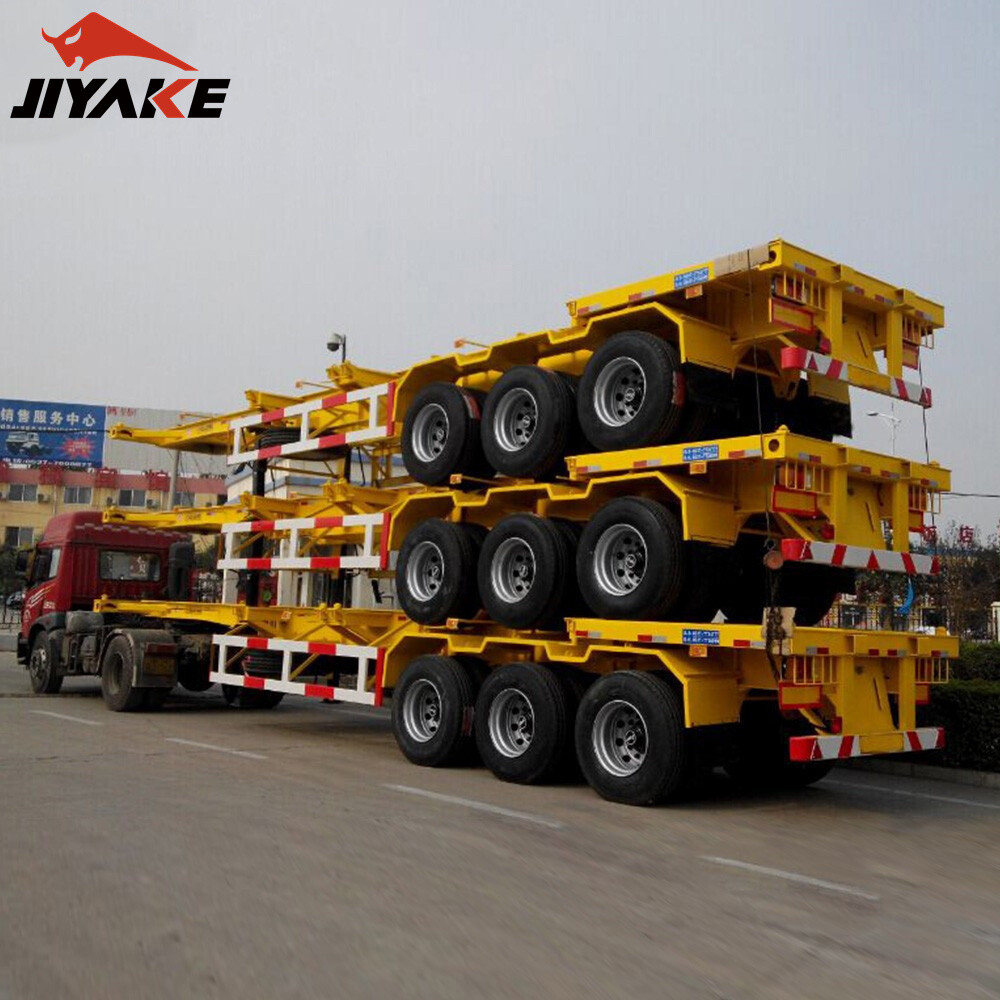
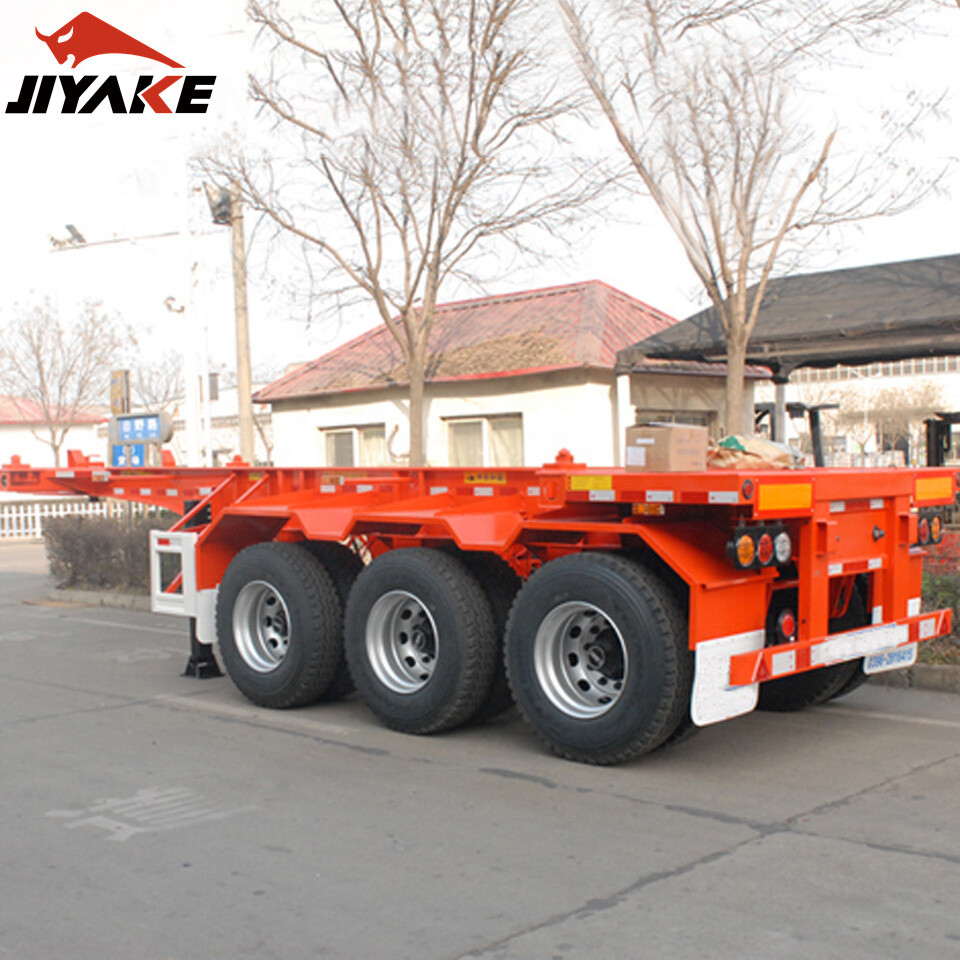
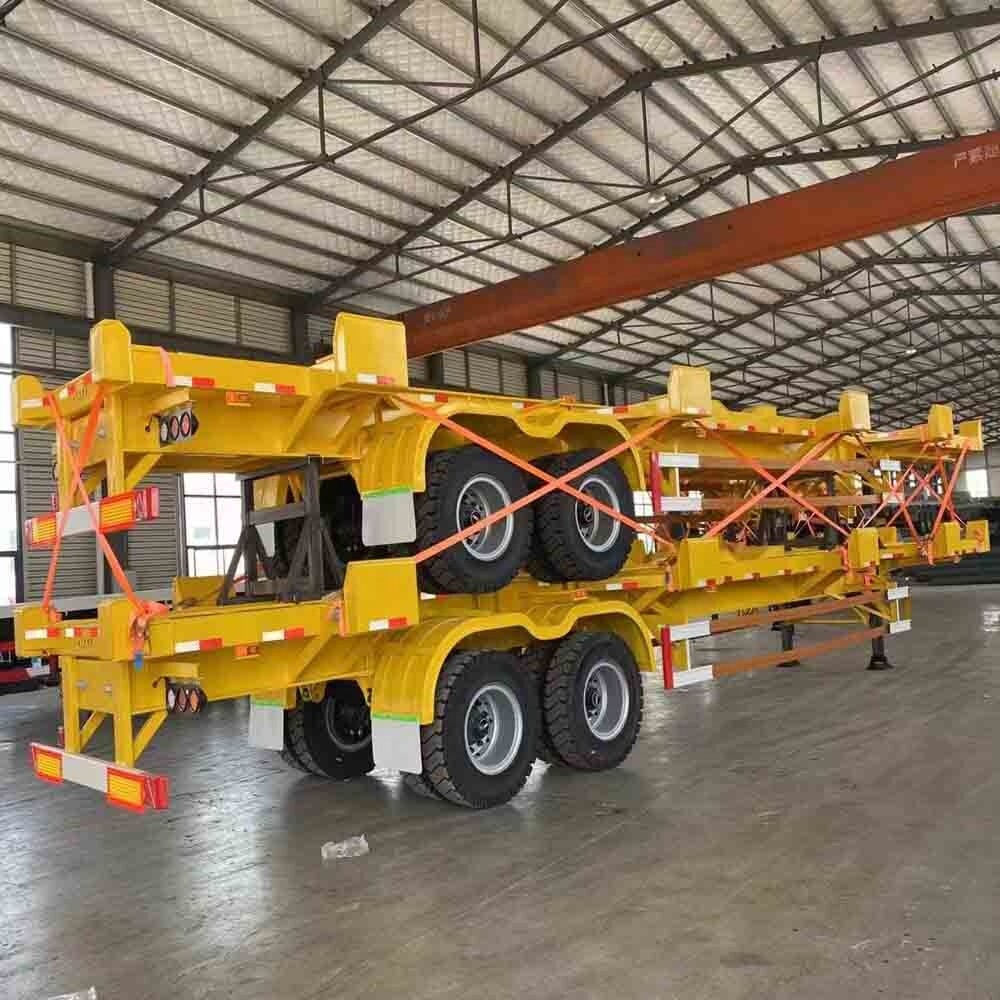
An extendable skeleton trailer is a container chassis with a frame that can be adjusted to specified positions. Each position must provide the correct container support and locking arrangement; an adjustable overall length alone does not mean that every container size or combination can be carried.
The strongest case arises when a transport operation handles a genuine mix of compatible container lengths and cannot reliably assign each length to a dedicated trailer. A chassis that can be shortened or extended between jobs may reduce the need to move an empty trailer into position or leave another asset idle while waiting for its preferred load.
The benefit is especially relevant when demand varies by route, customer or season. For example, a trailer delivering a shorter container to one location might be extended for a compatible longer container on its next assignment. The commercial gain comes from the avoided repositioning or delay, not from extension itself. If the next load is unavailable, incompatible or too heavy for the selected configuration, the flexibility has little immediate value.
A fixed chassis can be a better choice when most work involves one container length and schedules are predictable. It may also be preferable where a dedicated fleet can keep utilization high without frequent trailer exchanges. In those circumstances, paying for an extension mechanism can add complexity without changing how the fleet is dispatched.
Container fit is more than a length measurement
Before treating an extendable trailer as a substitute for several fixed chassis, list the exact containers and loading patterns it must handle. Check the manufacturer’s approved positions, container support points and twist-lock locations for each configuration. A chassis approved for a single long container should not automatically be assumed suitable for two shorter containers, or for every loading position of a shorter box.
Weight distribution is equally important. Two containers with the same external length can produce very different axle loads depending on their gross weight and how their contents are distributed. Moving the chassis to another position can alter the relationship between the load, the trailer axle group and the tractor’s fifth wheel. A legally permissible gross combination weight does not, by itself, establish that individual axle limits are satisfied.
Ask for load diagrams or an axle-load calculation for the intended tractor, container weights and trailer positions. Include the likely heaviest loads as well as typical ones. The calculation should reflect the actual tractor wheelbase, fifth-wheel location and axle arrangement, not just a generic vehicle combination.
Payload also deserves attention. If the extendable chassis has a higher tare weight than a comparable fixed chassis, the remaining legal payload may be lower. For light or partially loaded containers, this difference may have little commercial effect. For consistently heavy containers, even a modest loss of payload allowance can determine whether the trailer can take the available work.
Compare the operating plan, not just the purchase price
A useful comparison starts with the work the trailer is expected to perform over a representative period. Separate trips by container size, weight, route and loading pattern, then identify where a fixed chassis would cause a real scheduling problem. A varied cargo list alone is not enough: different container lengths may be handled efficiently by separate fixed trailers if each has a dependable workload.
For the extendable option, estimate the recurring costs of the additional mechanism alongside routine trailer costs. These include inspection and servicing of sliding components, locking devices and associated air or electrical connections where applicable. Allow for downtime when the mechanism needs attention and for any reduced payload that affects revenue. Financing, insurance and resale assumptions should be compared on the same basis for both options.
Then consider the costs the adjustable chassis could avoid: hired-in capacity, empty repositioning, idle trailers or delays caused by waiting for a suitable chassis. Count a saving only when the operating plan shows how it would arise. For example, reducing the theoretical number of trailer types does not produce a cash saving if the business still needs the same total number of trailers to cover simultaneous departures.
A practical test is to calculate the additional annual cost of the extendable trailer and compare it with the annual value of the work it enables or the costs it avoids. The calculation is sensitive to utilization. A trailer that changes configuration regularly and avoids measurable disruption has a clearer investment case than one purchased for occasional, unspecified flexibility.
Check whether adjustment fits the daily operation
Changing length requires a suitable place, a defined procedure and a secure final lock. The exact process depends on the chassis design. Some sites may have limited space for adjustment, uneven ground or operating rules that prevent the work from being done where the driver intends. Time spent waiting for an appropriate area can erode the benefit of using a single trailer for multiple jobs.
Confirm whether adjustment is permitted only when the chassis is empty, how the operator verifies that the locking pins are fully engaged, and what inspection is required before departure. The answer should come from the manufacturer’s operating instructions for the specific model. Drivers and maintenance staff need a clear way to identify an incomplete lock or damaged component rather than relying on the trailer’s apparent length.
Also consider the consequences of a jammed or damaged extension mechanism. If a trailer becomes stuck in one position, can it still complete its scheduled work? Availability of replacement pins, wear parts and qualified service support can affect the practical value of the chassis, particularly where repair facilities are far from the operating route.
Do not confuse container flexibility with general cargo capability
A skeleton trailer is designed around supported and secured containers; it is not automatically a suitable platform for machinery or other indivisible loads. Cargo outside the container system may need a deck, concentrated-load assessment, different securing points and a different loading arrangement.
For equipment work, a lowbed such as the 2 Axle Lowbed Semi Trailer represents a different transport approach, with a platform and loading ladders rather than reliance on container twist locks. Its suitability still depends on the equipment’s dimensions, weight and securing requirements. Choosing an extendable skeleton chassis because the fleet also moves heavy equipment would not solve those requirements.
Confirm the legal envelope for every position
Road rules are determined by the jurisdictions and routes used. Maximum combination length, axle loads, gross weight, turning requirements and container overhang provisions can differ, and a configuration acceptable on one route may not be acceptable on another. Port, terminal and customer-site restrictions may add operational limits even where road use is permitted.
Before purchase, obtain the proposed trailer’s dimensional drawings and axle-load information in both contracted and extended positions. Check them against the intended tractor and each operating jurisdiction, including cross-border routes. Where permits are required, include their cost and availability in the comparison rather than assuming that the longer configuration will always be usable.
The best candidate for an extendable skeleton trailer is therefore not simply a fleet that carries different container lengths. It is one that can assign those containers to the trailer’s approved configurations, remain within the applicable legal limits and use the adjustment often enough to produce a measurable operating benefit. Where those conditions are absent, a fixed chassis—or a different trailer type for non-container cargo—can be the more economical choice.
Leave A Reply

First class quality service and professional after-sales team.
Get in Touch
*We respect your confidentiality and all information are protected.