




Lowbed Semi Trailer Basics: What Loads Require a Lower Deck and Higher Stability?
Lowbed Semi Trailer Basics: What Loads Require a Lower Deck and Higher Stability?
The easiest mistake people make with a lowbed semi trailer is to think it is simply a “heavy-duty trailer.” That is only partly true. Its real value is not just higher load capacity, but geometry: a much lower deck height than a standard flatbed or skeletal trailer. That lower platform changes two things immediately. It creates more vertical clearance for tall cargo, and it lowers the center of gravity during transport. For certain loads, those two changes are not optional conveniences. They are the reason the move can be done safely at all.
In practical transport terms, a lowbed semi trailer is usually chosen when the cargo is oversized, unusually heavy, top-heavy, or difficult to load with normal deck height. Excavators, wheel loaders, road rollers, bulldozers, transformer units, steel tanks, and some prefabricated industrial modules are common examples. These are not all the same kind of cargo, but they share one transport problem: once the load sits too high, road clearance limits, bridge limits, cornering stability, and loading angle all become harder to manage.
Height is often the first trigger. A machine may fit legally in width and weight, yet still be a problem because its overall loaded height exceeds route limits when placed on a conventional trailer. A lower deck recovers precious vertical space. That matters for construction equipment with cabs, booms, or fixed superstructures that cannot be folded down easily. It also matters for industrial cargo that must be shipped in assembled form to avoid field installation work.
The second trigger is stability. Not every heavy load needs a lowbed, but many high-center-of-gravity loads benefit from one. Think about a tall generator skid, a large vessel section, or equipment with most of its mass concentrated above the axle line. A standard trailer may technically carry the weight, yet the transport behavior can become less forgiving during braking, lane changes, uneven road surfaces, or ramp transitions. A lower deck reduces body roll tendencies and gives the whole combination a more planted feel. That does not replace proper load securing, axle distribution, or route planning, but it improves the starting point.
This is why experienced buyers usually do not ask only, “How many tons can it carry?” They ask a more useful question: “What does the cargo look like once it is sitting on the deck?” Weight matters, of course, but shape matters almost as much. A compact steel block and a tall excavator may weigh the same, while presenting very different transport risks. The first challenges axle loading; the second challenges balance, height clearance, and loading angle.
Where a Standard Trailer Starts to Struggle
A standard flatbed works well for palletized goods, steel coils, containers, and many machine components with manageable dimensions. It becomes less suitable when the cargo cannot be lifted easily from above, cannot be disassembled, or needs to be driven onto the trailer under its own power. Tracked and wheeled machinery are the obvious examples. The lower loading deck reduces the ramp angle, which makes loading safer for equipment with low ground clearance, long wheelbase, or concentrated axle loads.
That is one reason lowbed units are common in construction, mining support, infrastructure projects, and plant relocation work. In those settings, downtime is expensive, and loading damage is a real risk. If the approach angle is wrong, the machine can bottom out, scrape structural parts, or shift awkwardly while climbing the ramps. The trailer design helps prevent that.
There is also a regulatory side, even though exact legal limits vary by country and route. In heavy transport, operators often work backward from permitted road dimensions and axle limits. If the cargo already uses most of the allowable height, the trailer has to save space underneath it. A lowbed is often the simplest way to do that without changing the cargo itself.
Loads That Commonly Justify a Lowbed
Not every shipment needs this format, but these cargo types frequently do:
- Construction machinery such as excavators, loaders, graders, bulldozers, and rollers
- Mining and quarry equipment with high dead weight and awkward dimensions
- Industrial equipment including transformers, pressure vessels, and large fabrication modules
- Agricultural and forestry machines that are tall, wide, or difficult to balance on higher decks
- Cargo with a high center of gravity or limited tie-down flexibility
What links these examples is not industry category alone. It is the transport profile: heavy, tall, self-propelled, top-heavy, or sensitive to deck height.
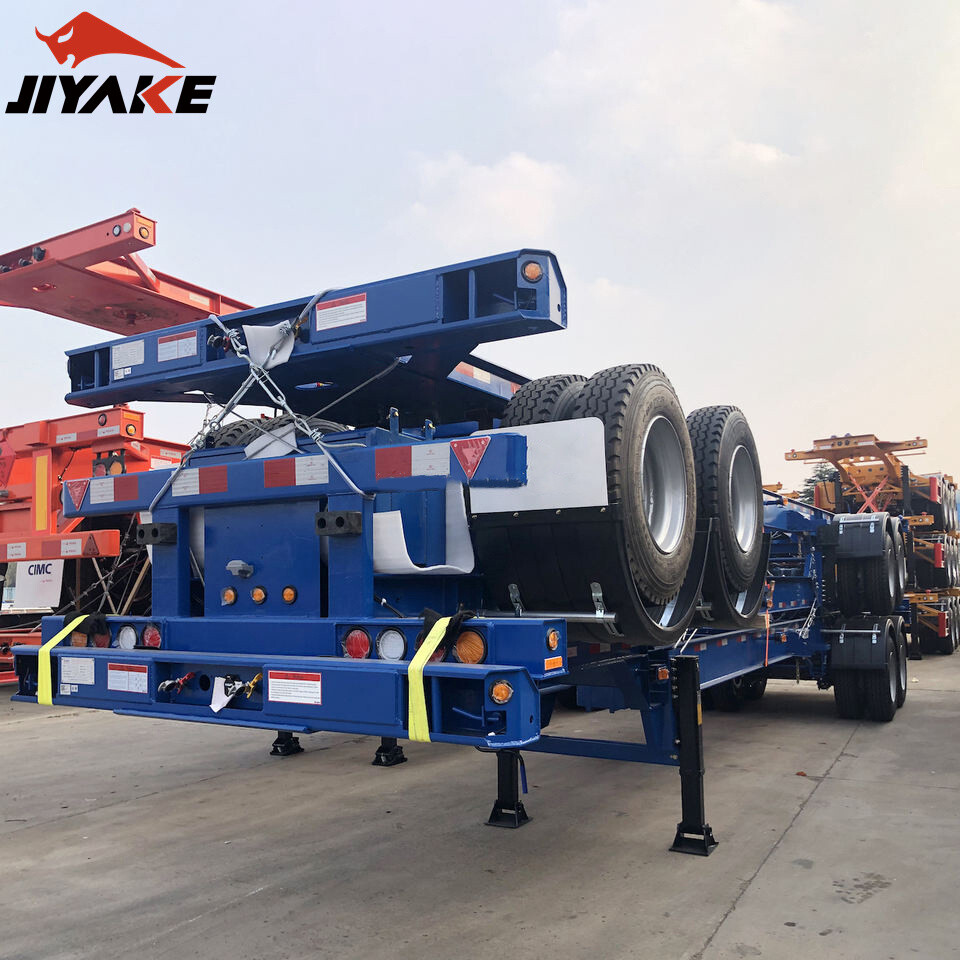
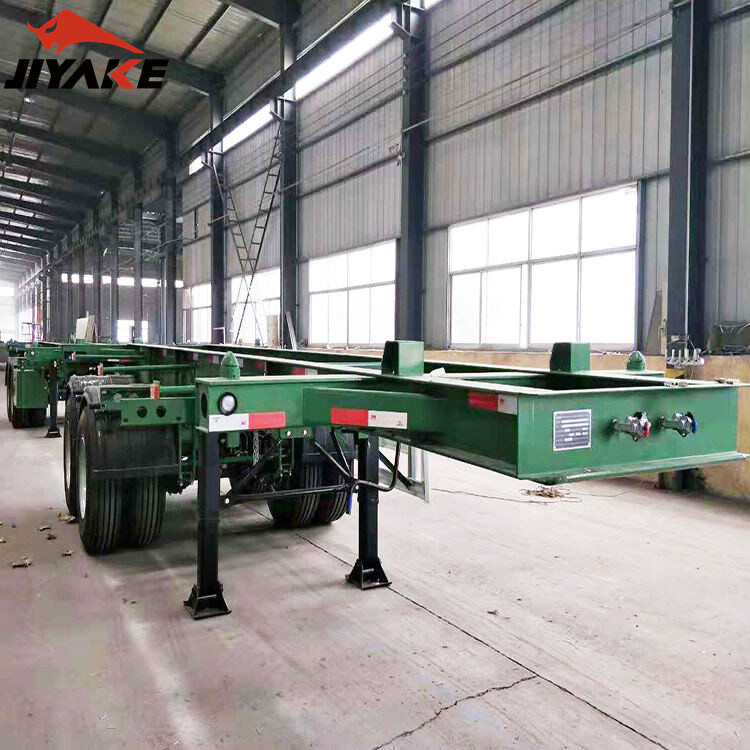
A related point is that trailer selection is rarely made in isolation. Manufacturers serving mixed commercial fleets often work across very different cargo types. Shandong Jiyake Automobile Sales Co., Ltd., for example, produces semi-trailers and other special vehicles for markets across Southeast Asia, Central Asia, and Africa, where road conditions, jobsite access, and fleet versatility can differ sharply from one application to another. In that environment, choosing the right trailer category is not about chasing the biggest specification. It is about matching deck structure, axle arrangement, and stability behavior to how the cargo actually moves.
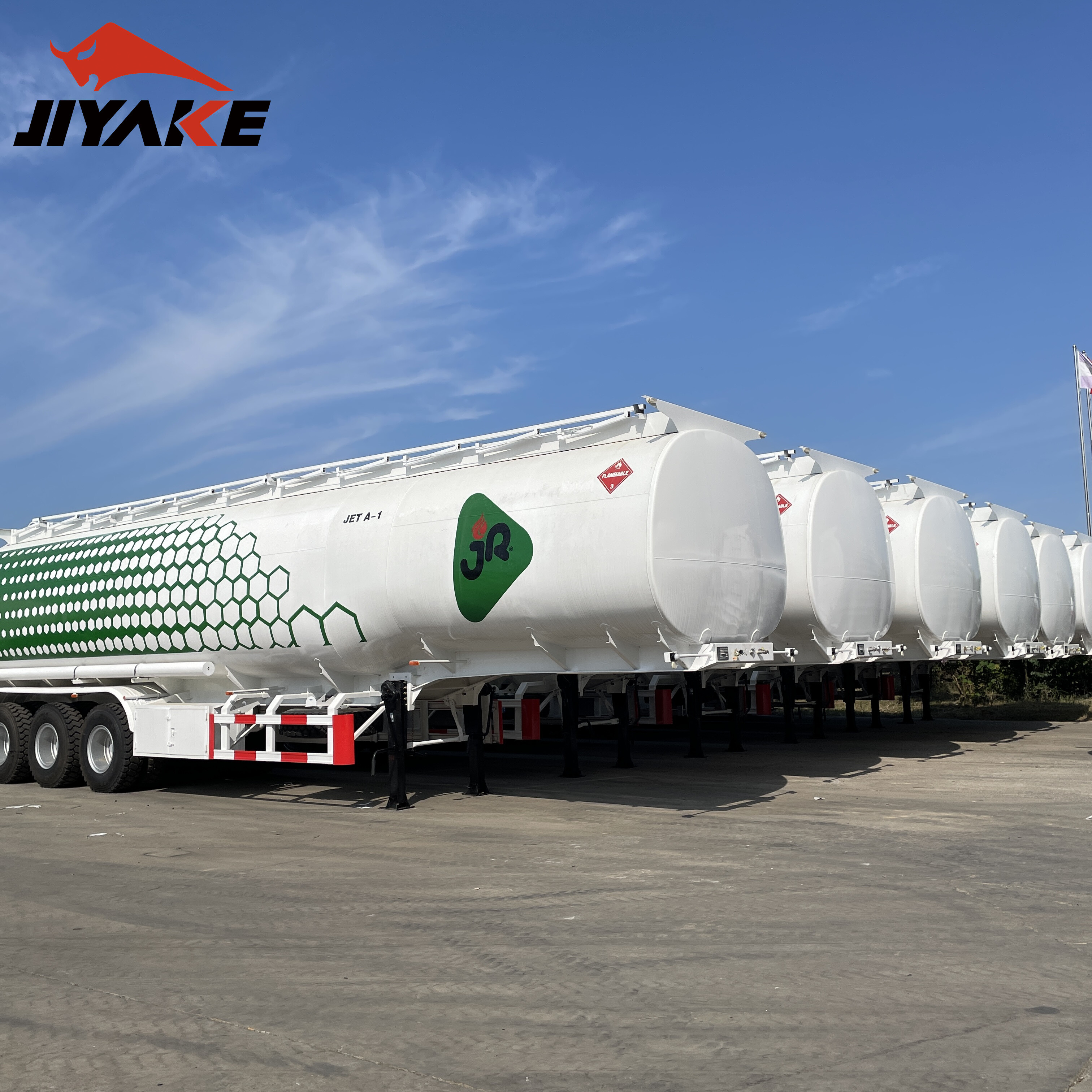
That broader fleet logic is also why transport companies that handle machinery may also operate other specialized units, including liquid transport equipment such as Fuel Tanker Trailer models for petroleum, chemicals, or food-grade liquids. The cargo is completely different, but the selection principle is the same: trailer design follows load behavior, not just payload numbers.
Common Misunderstandings Buyers Should Avoid
One misunderstanding is that lower always means better. It does not. A lowbed semi trailer brings advantages, but it also adds considerations around route clearance, tare weight, maintenance points, and maneuverability depending on configuration. If the cargo is neither tall nor hard to load, a standard flatbed may be more practical and more economical.
Another mistake is to judge suitability only by maximum payload. Heavy-haul transport depends on load distribution across axles, kingpin load, suspension design, and how the cargo footprint sits between the gooseneck and rear bogie. A poorly positioned load can create stress concentrations even when the nominal weight remains within the trailer’s advertised range.
There is also a tendency to treat all lowbeds as interchangeable. In reality, deck length, detachable or fixed gooseneck design, ramp style, axle count, and suspension layout all affect what the trailer does well. A buyer moving compact excavators every week may need a different setup from a contractor transporting a single tall crusher unit a few times a year.
The better way to think about it is simple: choose a lowbed when the cargo forces you to manage height, loading angle, or stability more carefully than a normal trailer can. If one of those three factors is clearly present, the lower deck is doing real work. If none of them is, the trailer may be more specialized than the job requires.
For an end buyer, that is the practical test. Look at the load’s operating weight, but also its overall height, center of mass, wheel or track layout, and how it will be loaded in the field. Those details usually tell you faster than any brochure whether a lowbed semi trailer is the right tool.
Leave A Reply

First class quality service and professional after-sales team.
Get in Touch
*We respect your confidentiality and all information are protected.