




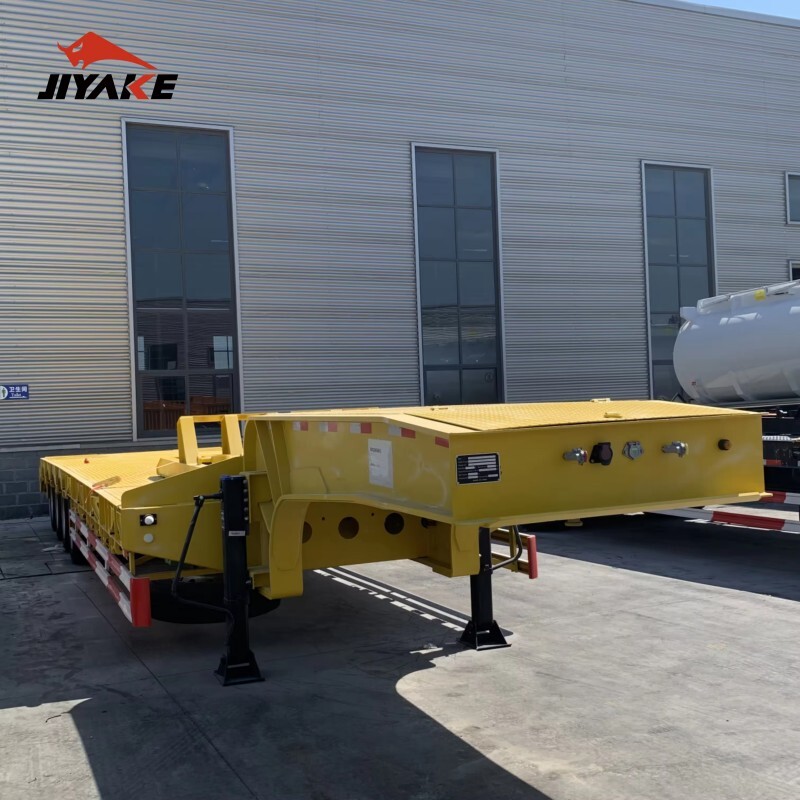

Is a 3 axle lowbed trailer suitable for hauling excavators?
A 3 axle lowbed trailer can be suitable for hauling an excavator, but three axles alone do not establish that it can carry a particular machine. The decision depends on the excavator’s transport weight and dimensions, the trailer’s actual payload and load distribution, the loading arrangements, and the limits along the complete route.
The decisive question is whether the excavator can be loaded, secured and delivered within those limits without disrupting the project schedule. A trailer that looks large enough on paper can still fail the assessment because of concentrated track loads, excessive transport height, restricted site access or an unsuitable tractor unit.
Start with the excavator’s transport configuration
Use the weight of the machine as it will actually travel, rather than relying only on the model name or an operating-weight figure in a brochure. The bucket, quick coupler, auxiliary attachments, fuel and any material left on the tracks can change the load. A hammer or spare bucket carried separately on the deck also consumes payload and needs its own securement.
Compare that total with the trailer’s rated payload, but establish what the rating covers. A stated capacity may depend on a particular load distribution, operating speed or support arrangement. It should not be treated as permission to place the entire weight at any point on the deck. Ask for the manufacturer’s load diagram and the permitted concentrated or track loads.
For example, an excavator with a transport weight of 32 tonnes placed on a trailer advertised for a 40-tonne payload has an apparent 8-tonne margin. That is only an initial screening result. It does not confirm that the tracks are supported over their full contact length, that each axle remains within its limit or that the tractor and trailer combination is legal on the intended route.
Where the weight is close to a limit, obtain a machine-specific weight and consider a weighbridge check of the loaded combination. Removing an attachment may make the move feasible, but the saving must be weighed against lifting equipment, labor and time needed to remove and refit it.
Check axle loads as well as total weight
The excavator’s position changes how its weight is shared between the trailer axle group and the tractor’s coupling. Moving the machine forward can increase the load carried by the tractor; moving it rearward can increase the load on the trailer axles. Either position can create an overload even when the trailer’s nominal payload has not been exceeded.
The trailer manufacturer or transport operator should calculate the expected distribution using the machine’s center of gravity, its proposed position and the dimensions of the combination. A loaded axle-weight check is valuable when tolerances are tight. The tractor’s capacity, tires, suspension, coupling and braking arrangement must also be compatible with the planned load.
Legal limits are separate from equipment ratings. Permitted gross and axle weights depend on the jurisdiction, axle spacing, vehicle configuration and permit conditions. A route that crosses a border may require different approvals or operating conditions on each side. Bridge restrictions and temporary road works can also prevent a move that is otherwise within general road limits.
Deck fit is more than overall length
A low deck can help reduce the loaded height, but it does not guarantee adequate clearance. Measure from the road to the highest point of the excavator in its specified transport position, including the boom, cab and any attachment. Compare the resulting height with the clearances on the actual route, not just the general limit for the road network.
Width deserves the same attention. Track width, counterweight and upper structure can determine whether the load projects beyond the deck or requires special authorization. Deck extensions are useful only if they are rated and configured to support the relevant loads; they should not be assumed to carry the excavator’s track weight merely because they provide extra width.
Deck length must accommodate the track contact area and the position required for correct axle loading. The boom and stick also need a transport position that respects the excavator manufacturer’s instructions and prevents movement or contact with the tractor. Confirm ground clearance at the transition onto the deck: a machine can fit once loaded yet scrape its undercarriage while crossing the ramp hinge.
Where dimensions are marginal, identify restrictive bridges, wires, turns and work-zone diversions before committing the trailer. A lowbed with a different deck height or geometry may solve the problem more effectively than trying to make an unsuitable combination fit.
Make loading and unloading part of the transport plan
Ramp capacity must match the excavator’s weight and the way that weight is transferred through its tracks. Check the manufacturer’s rating for the ramp pair, spacing and allowable loading conditions. Ramp angle, deck height and available approach length affect whether the machine can climb safely and clear the transition.
The loading area must support both the trailer and the machine without significant settlement or movement. It also needs enough level space for alignment and maneuvering. A trailer that can reach a site on the road may still be impractical if the unloading area is narrow, soft or sloped.
Before movement, agree on who directs the operation, where personnel must stand, and whether the site can control other traffic. Inspect ramps, hinges and locking devices, and follow the trailer and excavator manufacturers’ procedures. If the excavator is disabled or cannot safely travel under its own power, a separate recovery or lifting plan may be required; the presence of ramps does not make winching automatically safe.
Secure the machine for the whole journey
Transport preparation includes positioning and securing the boom, stick, bucket and any detached equipment according to the machine manufacturer’s instructions and applicable local rules. Use designated attachment points and appropriately rated tie-downs, with a securement arrangement designed for the machine’s weight and the forces expected during transport.
The trailer must provide suitable, rated anchor points in the necessary locations. Avoid assuming that a convenient structural member is an approved tie-down point. Protect chains or other restraints from sharp edges, prevent loose attachments from moving independently, and arrange checks and retensioning as required by the applicable procedure. Parking brakes or hydraulic pressure should not be treated as substitutes for the required external restraints.
When another trailer configuration is the better choice
A three-axle lowbed is a practical option when the excavator fits its structural ratings, axle distribution and deck geometry, and when the complete combination can use the planned route. It is less suitable when a compliant loading position cannot be achieved, the machine’s track loads exceed deck limits, or the loaded height and width make the move unworkable.
A higher-capacity or additional-axle configuration may address weight distribution, provided its own ratings and route permissions are adequate. A detachable-gooseneck or other loading arrangement may be worth considering when ramp angle, ground clearance or site access makes rear loading unsuitable. More axles or a different deck design should be evaluated against the actual load and route rather than treated as an automatic solution.
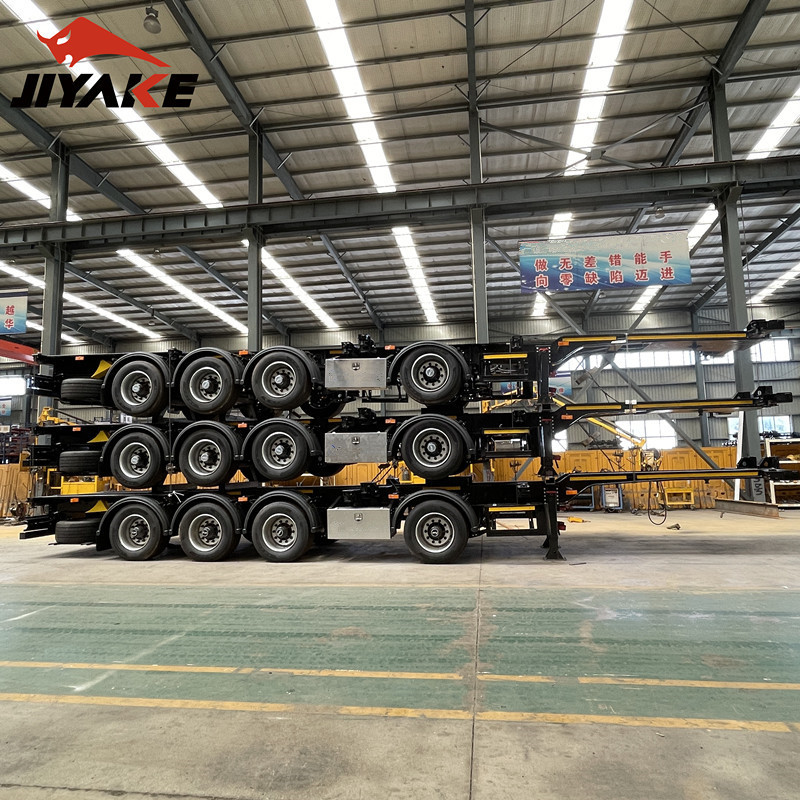
Cargo trailers also require careful distinction from equipment transporters. The listed 100 Ton Fence Cargo Trailer, for example, has a stated 30–40 tonne capacity and an 8,500 kg unladen weight in its supplied specifications. Those figures do not establish suitability for an excavator: its deck construction, track-load limits, loading provisions and tie-down points would need separate confirmation. The product title should not be used as a substitute for the specified rating.
Before committing to a 3 Axle Lowbed Trailer for sale, obtain the excavator’s transport dimensions and weight, the trailer’s load diagram and ramp ratings, and a route assessment for the proposed tractor-trailer combination. These documents allow the move to be assessed before delivery dates, permits and site resources are fixed.
Leave A Reply

First class quality service and professional after-sales team.
Get in Touch
*We respect your confidentiality and all information are protected.