




Recent Posts
 French Clients Visit JIYAKE Factory for Semi-Trailers and Used Trucks Inspection: Global Partners WelcomeOct 27, 2026
 Will a Fuel Tanker Trailer Fit Your Depot's Bottom-Loading System?Oct 15, 2026
- Aluminum vs. Carbon Steel Fuel Tanker Trailers: Which Should You Buy?Oct 15, 2026
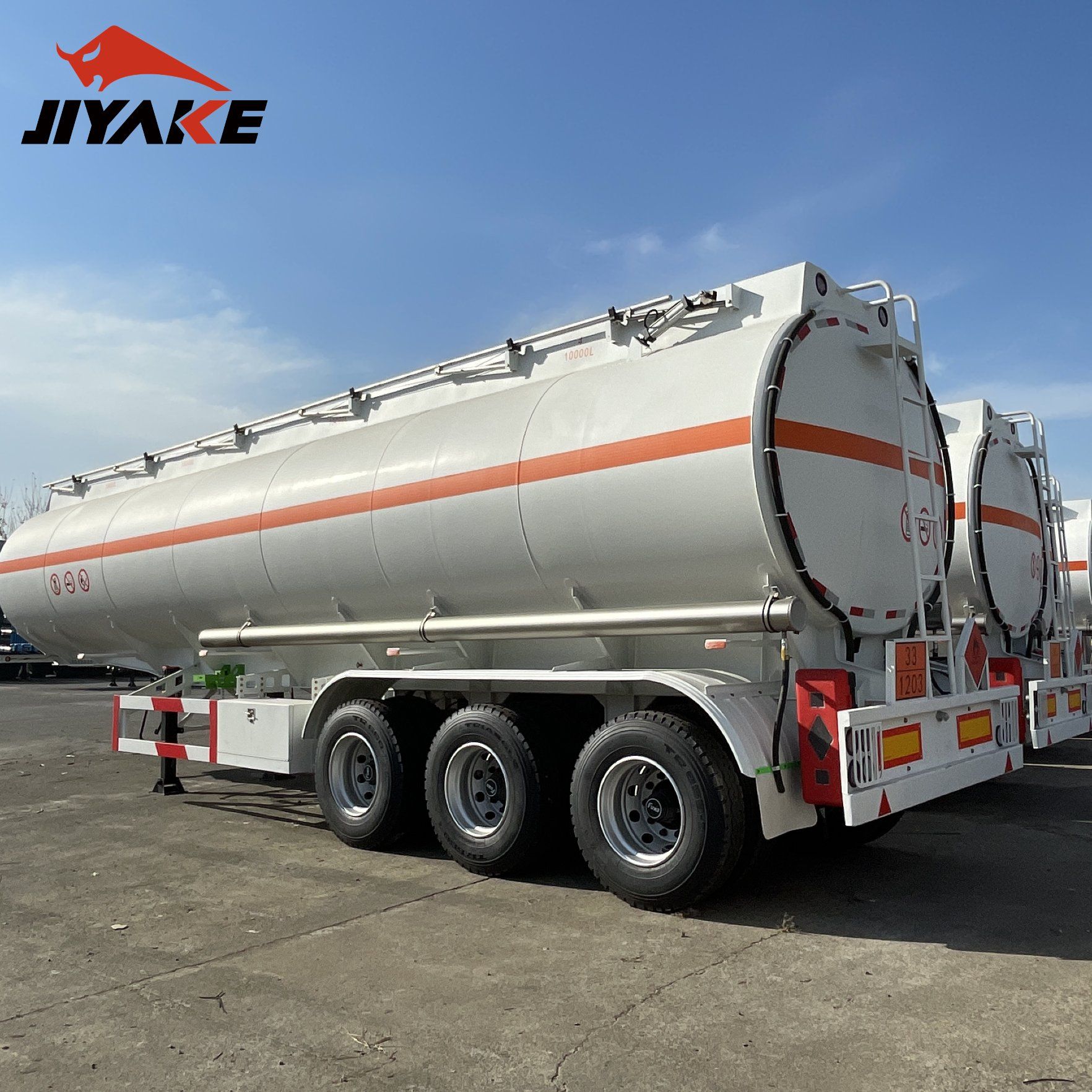
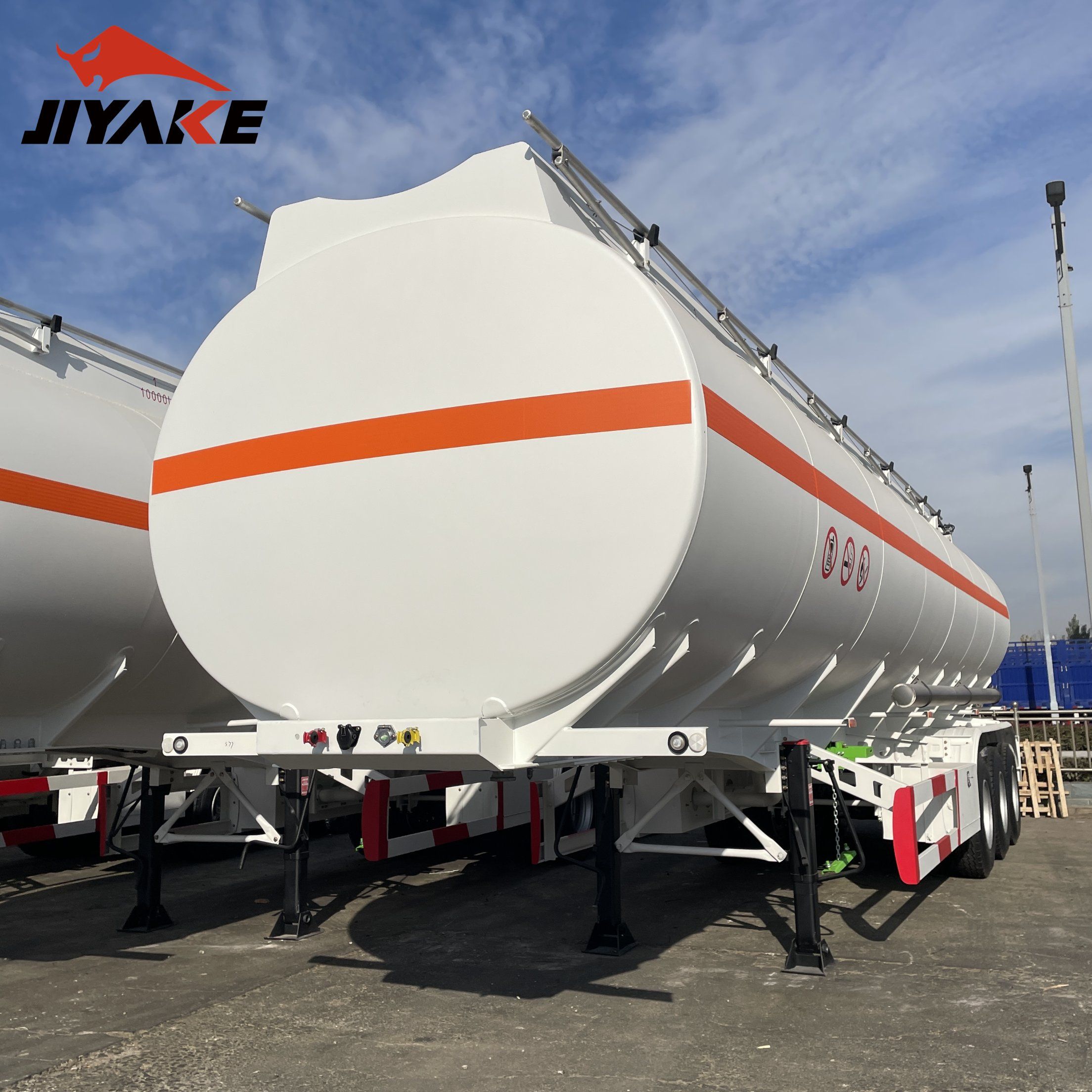

Fuel Tanker Trailer for Diesel Transportation
What Makes a Fuel Tanker Trailer for Diesel Transportation Fit for Real-World Hauling?
Diesel isn’t just fuel—it’s the operational backbone of construction sites, power plants, remote mining camps, and regional distribution networks across Southeast Asia, Central Asia, and Africa. When logistics teams source a Fuel Tanker Trailer for Diesel Transportation, they’re not buying hardware. They’re committing to uptime, regulatory compliance, corrosion resilience, and precise volumetric delivery—often under high ambient temperatures, dusty roads, or limited workshop support.
That’s why “certified” isn’t enough. CE marking matters—but so does how the tank shell is formed, how the chassis handles thermal expansion, and whether weld seams pass ultrasonic inspection—not just visual checks. At Shandong Jiyake Automobile Sales Co., Ltd., the design process starts with field feedback: what fails in humid coastal ports versus arid inland corridors, where vapor lock risks climb, or how grounding resistance shifts on unpaved loading ramps.
No Two Diesel Runs Are Identical
A 35,000-liter diesel trailer built for a refinery-to-distribution-center route in Vietnam faces different stresses than one deployed for mobile refueling at a hydroelectric site in Tajikistan. The former prioritizes flow rate consistency and anti-static bonding; the latter demands rugged suspension geometry, low-speed maneuverability on steep access roads, and robust venting for altitude changes. That’s why customization isn’t marketing language—it’s structural necessity. Main beams are sized per load profile, not catalog defaults. Manhole placement accounts for local operator height and PPE constraints. Even paint spec—polyurethane top coat over SA 2.5 blast-cleaned Q345B steel—is calibrated to resist UV degradation and chemical splash without blistering.
Our production line integrates CNC cutting, automatic tank welding, and large-radius bending—all under controlled environmental monitoring. Why? Because inconsistent heat input during longitudinal seam welding creates micro-cracks that accelerate stress corrosion in diesel’s trace sulfur compounds. Automated systems reduce human variability—not just for speed, but for repeatability you can verify with NDT reports.
When Payloads Get Heavy—and Dimensions Get Tricky
Diesel transport rarely happens in isolation. In energy projects or infrastructure logistics, the same fleet may shuttle fuel one day and oversized transformers the next. That’s where cross-platform engineering becomes critical—not as an upsell, but as a supply chain reality. For instance, when moving generator sets or wind turbine nacelles alongside daily diesel runs, operators often turn to heavy-duty lowbed solutions built with the same material discipline and quality control. The 8 Axle Lowbed Semi Trailer shares core fabrication standards: Q345B carbon steel main beams (500 mm tall, with 16/18/10 mm plate stratification), WABCO braking architecture rated for low-temperature steel tubing, and shot-blasted surfaces prepped to ≥100μm DFT. It’s not about bolt-on versatility—it’s about shared engineering rigor across vehicle families.
That consistency reduces spares complexity, simplifies technician training, and eases maintenance planning across mixed fleets—especially where OEM service reach is limited. You’re not choosing between a fuel tanker and a lowbed. You’re evaluating whether your supplier builds both to the same threshold of dimensional stability, weld integrity, and long-term fatigue resistance.
What to Confirm Before Finalizing Specifications
Don’t assume “CE-certified” covers local enforcement. Some markets require additional vapor recovery provisions, specific grounding lug specs, or third-party calibration of metering systems—even if the trailer itself meets EU ADR Annex B. Likewise, “corrosion-resistant” means different things in Jakarta’s salt-laden air versus Kazakhstan’s winter de-icing runoff. Ask for material mill certificates—not just finish descriptions—and verify weld procedure qualifications against ISO 15614-1, not internal checklists.
Also clarify lead time implications: custom baffle configurations, specialized coatings, or non-standard manway orientations affect build sequence. And remember—delivery isn’t complete when the trailer rolls off the lot. It’s complete when it passes first-load validation, including static pressure testing, leak detection, and documentation handover aligned with your country’s import clearance requirements.
Shandong Jiyake serves over 60 countries—not by scaling generic designs, but by aligning engineering decisions with how diesel actually moves where it’s needed most. If your next deployment hinges on reliability under variable conditions, start with the parameters that don’t change: steel grade, weld validation, surface prep standard, and documented process control—not just capacity or axle count.
Leave A Reply

First class quality service and professional after-sales team.
Get in Touch
*We respect your confidentiality and all information are protected.