





Aluminum vs. Carbon Steel Fuel Tanker Trailers: Which Should You Buy?
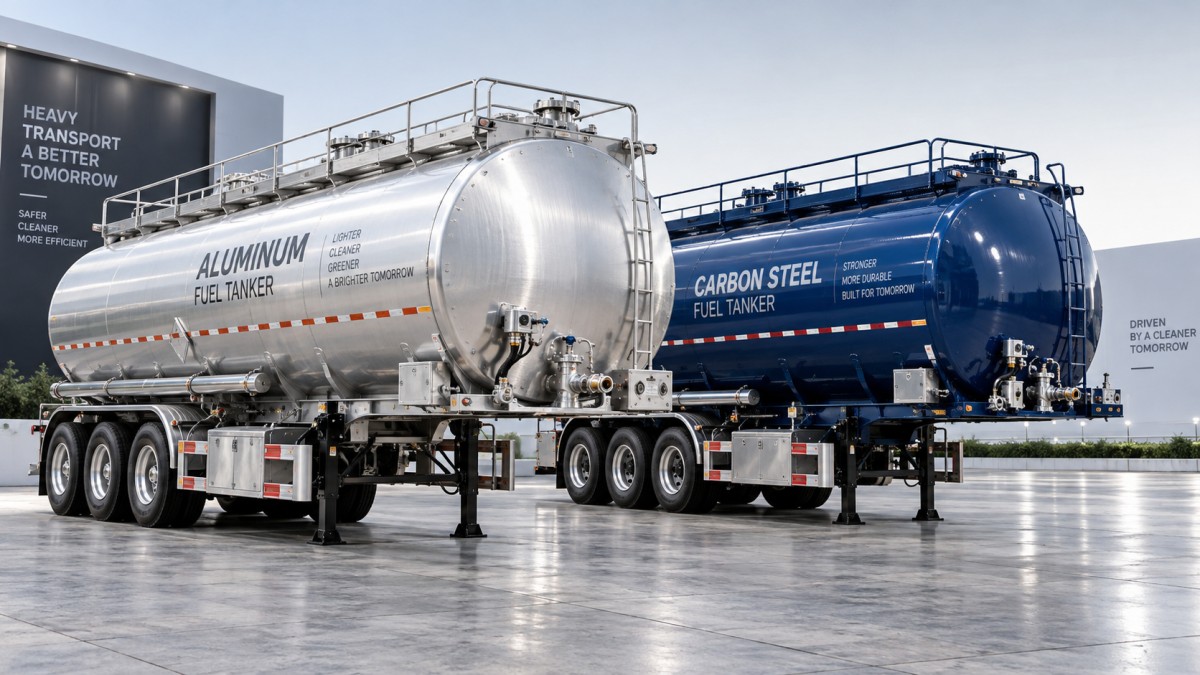
Choose aluminum when lower tare weight creates usable payload and the route supports enough loaded trips to recover the higher purchase cost. Choose carbon steel when initial cost and access to suitable repair facilities carry more weight in the decision. Both require a fuel-compatible tank specification, sound construction, and equipment suited to the delivery route. A lighter tank has limited financial value if compartment volume, axle distribution, or delivery size already restricts each load.
When comparing a Fuel Tanker Trailer For Sale, start with equivalent configurations. Tank capacity, compartment arrangement, chassis, suspension, pumping equipment, and safety fittings must be comparable before the material price difference means much.
Does lower tare weight increase the fuel delivered?
Aluminum generally allows a lighter tank structure than carbon steel, although the saving depends on alloy, shell thickness, reinforcement, and chassis design. Comparing material density alone exaggerates the difference because the completed structures require different designs.
The practical calculation begins with the complete combination:
Weight-limited cargo allowance = permitted combination mass − ready-to-load tractor and trailer mass.
Ready-to-load mass should include the actual tractor, operating fluids, hoses, pumps, spare wheel, and other carried equipment. Then compare that allowance with the mass of fuel permitted in the compartments at the intended loading temperature, allowing the required expansion space. The smaller allowance governs the load, subject to axle and coupling limits.
A tanker carrying a lighter fuel can reach its permitted filling volume before reaching its weight limit. In that situation, aluminum might reduce vehicle weight without increasing delivered liters. With a denser product, the same trailer could become weight-limited, making tare reduction more valuable. Use the actual fuel specification and loading conditions rather than a single assumed density.
Axle distribution can also prevent full use of the saving. A legal total combination mass does not guarantee legal axle loads. Obtain loading calculations for the planned compartment combinations, especially where deliveries progressively empty the trailer.
Corrosion resistance starts with the actual fuel
Aluminum resists many atmospheric exposures through its protective oxide layer, reducing dependence on exterior paint for corrosion protection. It is not universally compatible with every liquid described as fuel. Water contamination, additives, cleaning chemicals, and product changes deserve specific review.
Carbon steel requires an effective approach to external corrosion, particularly around supports, brackets, underside surfaces, and areas that retain road dirt. Internally, water collecting beneath the fuel creates a different exposure from the fuel itself. Drainage arrangements and contamination control therefore affect service life.
Specify the cargo precisely: fuel grade, blend composition where relevant, expected temperature, and any cleaning agents. Obtain written compatibility confirmation for the proposed tank material, seals, valves, hoses, and any lining. A lining introduces its own inspection and repair requirements; it should not be assumed necessary or suitable merely because the shell is steel.
Aluminum installations also need attention where dissimilar metals meet. Moisture and electrical contact between incompatible metals can cause galvanic corrosion. Isolation details, fasteners, drainage, and mounting arrangements deserve review alongside shell material.
Rough routes expose design and workmanship differences
Carbon steel is often associated with rugged service, but material alone does not establish durability. Road inputs pass through the suspension, chassis, mounting structure, and tank supports. Poor support geometry or concentrated loading can damage either material.
For construction or mining routes supplying equipment such as a 6X6 400HP Dump Truck, assess articulation, ground clearance, mounting loads, and outlet protection. The high-strength steel used in a dump body serves a different loading duty and does not establish the best material for a fuel tank.
Aluminum requires fatigue-sensitive details around welded joints and attachments. Carbon steel also develops fatigue cracks when repeated stresses exceed the capability of the design. Extra shell thickness alone does not resolve poor weld geometry or excessive chassis movement.
Ask for the specified tank material grade, thickness schedule, support design, weld inspection records, and applicable leak-test documentation. Compare these against the intended road conditions. A polished exterior or an unusually heavy shell provides little evidence of structural quality by itself.
Repair access changes the cost of downtime
Carbon steel fabrication skills and equipment are widely available in many markets. Aluminum repair requires appropriate welding equipment, contamination control, suitable consumables, and experience with the specified alloy. Local workshop availability can therefore outweigh a modest purchase-price difference.
However, ordinary steel welding capability does not qualify a workshop to repair a fuel tanker. Any hot work requires controlled removal of fuel residues and vapors, verified safe conditions, and an appropriate repair procedure. Structural repairs also need inspection and testing before return to service.
Before ordering, establish where each proposed tank could receive qualified repairs and how replacement valves, seals, and fittings would be sourced. A lower repair invoice has little value if the trailer waits weeks for a suitable facility or component.
Compare ownership costs using equivalent trailers
Separate the material premium from differences in equipment. A quotation that includes more compartments, a pump, additional metering, different running gear, or a heavier chassis cannot establish the price effect of aluminum alone.
A useful comparison includes purchase cost, financing, scheduled maintenance, coating work where applicable, inspections, repairs, and expected downtime. Add the contribution from extra delivered fuel only where the payload calculation demonstrates that the route can use it. Fuel savings from lower tare should be assessed against the actual duty cycle; avoid applying an unsupported universal percentage.
For a simple payback estimate, divide the aluminum price premium by its estimated annual net operating benefit. That benefit should reflect additional payload contribution and any supported operating savings, less additional costs. If it is negligible or negative, there is no payback under those assumptions. Keep resale value separate unless credible local evidence supports it.
Make the quotation specific enough to settle the choice
The final specification should identify the cargo, usable compartment capacities, loading limits, ready-to-load tare, axle-load calculations, material grades, and corrosion protection details. It should also define discharge equipment, bonding provisions, emergency shutoff arrangements, and documentation required for the destination. Acceptance requirements must be confirmed for the actual design and operating location.
Aluminum is the stronger choice when documented weight savings produce recurring operational value and qualified maintenance is available. Carbon steel is a sound choice when payload benefits are small, initial investment matters more, and corrosion control fits the maintenance plan. Resolve any remaining uncertainty with configuration-specific drawings and calculations before treating the price difference as a saving.
Leave A Reply

First class quality service and professional after-sales team.
Get in Touch
*We respect your confidentiality and all information are protected.