





Fuel Tanker Trailers for Sale: Match Capacity to Fuel Density and Routes
A fuel tanker trailer for sale should be evaluated against the litres it can legally and practically deliver on your routes. Nominal tank capacity is only one limit. Fuel density, the weight of the complete vehicle combination, individual axle loads, and permitted filling levels can all reduce the volume available for a trip.
Start by calculating the allowable fuel mass for the intended tractor and trailer, then convert that mass into volume using the fuel’s loading density. Check the result against compartment filling limits and route restrictions. A larger tank earns its place when the operation can use its additional volume without exceeding weight limits or compromising access, stability, or unloading.
Calculate usable litres before comparing tank sizes
The first useful number is the permitted cargo mass of the complete combination. Establish the applicable gross combination limit for the route and subtract the operating weight of the tractor and empty trailer. Include the driver, tractor fuel, hoses, tools, spare equipment, and other carried items. A trailer’s quoted tare weight alone cannot establish the available payload.
Gross weight is only the starting point. Tractor ratings, trailer structural ratings, coupling limits, axle-group limits, and tyre capacities may impose a lower ceiling. Registration conditions and restrictions on particular roads or bridges can reduce it further. Use the lowest applicable limit when developing the loading plan.
Weight-limited fuel volume in litres = allowable fuel mass in kilograms ÷ fuel density in kilograms per litre.
Consider a hypothetical combination with 30,000 kg available for fuel after all relevant weight checks. At an assumed loading density of 0.84 kg/L, the weight-limited volume is approximately 35,700 litres. At 0.74 kg/L, the same mass allowance corresponds to approximately 40,500 litres. These densities illustrate the calculation; the loading plan should use the specification for the actual product and temperature.
A nominal 40,000-litre tank would therefore reach the assumed mass limit before using its full volume with the denser fuel. With the lighter fuel, tank volume or permitted filling level could become the binding constraint. The larger shell does not create additional payload allowance.
Density and volume must also use a consistent temperature basis. A delivery quantity corrected to a reference temperature is not automatically the physical volume occupying the tank at loading temperature. Leave the required expansion space and apply the filling limits specified for the product, tank approval, and operating jurisdiction. Do not assume the advertised capacity is the permitted loading volume.
Request a clear distinction between geometric tank capacity, compartment capacities, permitted filling levels, and expected deliverable quantity. Residual product and drainage performance can affect the last figure. A quotation stating only total litres leaves too much unresolved for technical comparison.
Check the loading sequence, not just the fully loaded trailer
A combination can comply with its gross weight limit while overloading an axle group. Compartment position determines how the fuel load is shared between the tractor coupling and trailer axles. Tank length, kingpin location, axle placement, and the tractor’s own weight distribution all affect that balance.
Ask for axle-load calculations using the intended tractor configuration. Assess departure from the terminal, intermediate delivery states, and the return condition. For multi-drop work, the most restrictive case may occur after one compartment has been emptied, when the remaining fuel is concentrated toward one end of the trailer.
Compartment selection should follow delivery quantities as well as total capacity. Several smaller compartments can support separate products and customer drops, but partitions, valves, and associated pipework add weight and service points. Fewer large compartments may suit dedicated bulk transfers, provided the resulting loading and discharge patterns remain acceptable.
Partial loading deserves particular attention. Liquid movement can influence vehicle response during braking and cornering. Baffles and compartment divisions manage different aspects of that movement, and their presence does not establish that every partial-fill condition is acceptable. Obtain the manufacturer’s permitted loading conditions and operating instructions for the actual tank design.
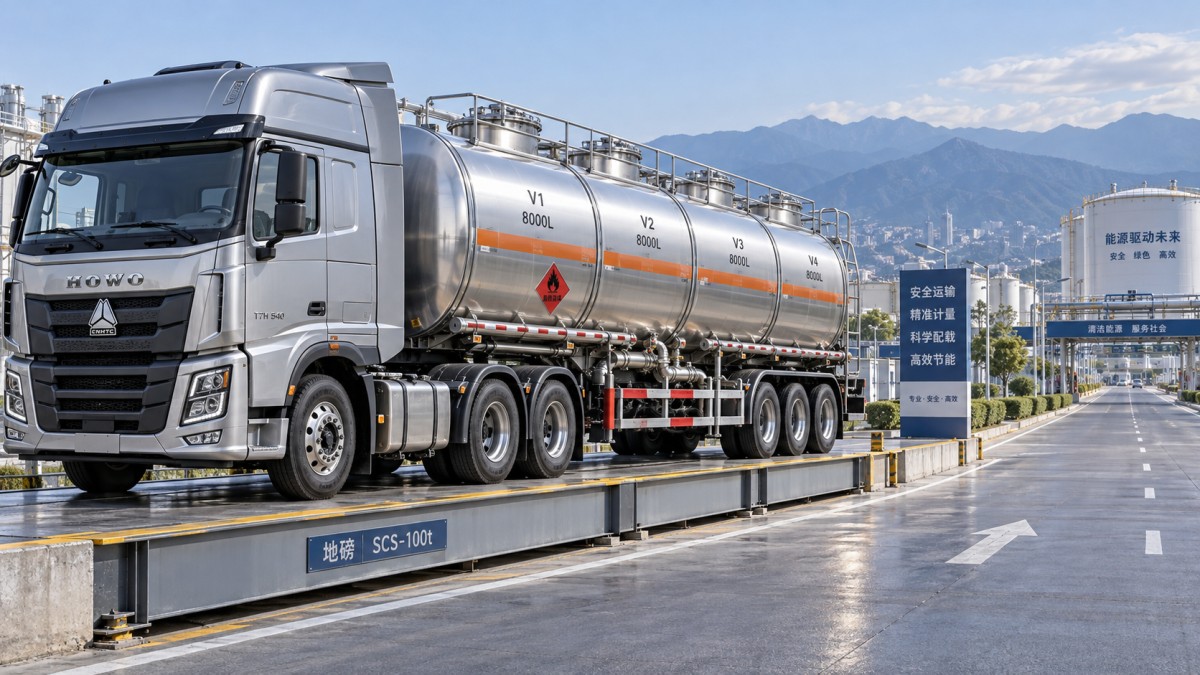
A useful evaluation drawing should show compartment positions and volumes, kingpin and axle locations, and calculated loads for the proposed delivery sequence. This makes an otherwise attractive capacity figure testable against the work the trailer will perform.
Let the limiting route shape the specification
Route assessment should extend beyond the main highway. Terminal approaches, bridges, depot entrances, filling stations, and unloading yards may determine whether the combination is usable. Check overall dimensions, turning clearance, rear overhang, ground clearance, and the space needed to position the vehicle for discharge.
A shorter tank or lower-volume configuration can be the better choice where access constraints would force a larger unit to detour, transfer product, or miss delivery points. Compare expected delivered litres per operating day alongside litres per departure. Include journey time, loading queues, unloading time, and restrictions that affect the actual schedule.
On sustained descents, braking suitability depends on the whole combination. Review the tractor’s auxiliary braking capability, trailer service brakes, brake compatibility, and the thermal demands of the route at operating weight. An electronic braking or stability feature should be assessed together with its compatibility, commissioning requirements, and maintenance support.
Rough approaches and uneven unloading areas create another set of constraints. Suspension travel, underbody protection, discharge-valve position, and clearance around pipework deserve inspection. A nominally suitable trailer can become operationally awkward if its outlets are exposed to ground strikes or its hose connections cannot be reached safely at customer sites.
Discharge arrangements also affect usable capacity. Confirm whether deliveries rely on gravity or a pump, the receiving connection requirements, hose lengths, and any vapour-return interface. Assess how the tank drains in the permitted unloading position. Product that remains trapped in compartments or pipework reduces delivery accuracy and complicates product changes.
Compare construction choices against the same operating duty
Lower tare weight can increase fuel payload where mass is the controlling limit. Its value is smaller when tank volume, customer order size, or site access already caps the load. Compare tare weights on an equivalent equipment basis, including pumps, meters, hoses, spare wheels, walkways, and protection systems.
Material selection requires more than a weight comparison. Check compatibility with the exact fuels and additives, along with seals, valve components, pipework, and any internal coating. Repair capability along the operating corridor matters too: a weight saving should be considered alongside inspection needs, repair procedures, and access to suitable service facilities.
For a used trailer, establish whether the advertised configuration matches its present condition and documents. Repairs, replacement running gear, added equipment, or altered compartments can change tare weight and load distribution. Review inspection records, tank integrity, valve operation, braking condition, and the evidence supporting approval for the intended service.
For a new build, require the quoted tare to identify its equipment basis and whether it is estimated or measured. Where a small weight difference decides the purchasing case, make the agreed completed configuration and weighing procedure explicit before accepting a payload claim.
The final comparison should use one operating scenario across every candidate. Give each supplier the same tractor details, fuels and loading densities, route limits, delivery quantities, and discharge requirements. Request:
- Permitted loading volumes for each fuel, including the applicable filling restrictions.
- Completed operating weights and axle-load calculations for departure and intermediate delivery states.
- Compartment drawings, permitted partial-loading conditions, and a workable discharge sequence.
- Dimensions, braking compatibility, material specifications, and documentation applicable to the intended service.
These answers reveal where additional tank volume has practical value. A larger unit may suit a lighter fuel on an unrestricted bulk-transfer route; a smaller configuration may deliver the same legal fuel mass with better access and a more manageable unloading sequence. Select the capacity that survives the complete loading and route calculation, and carry those conditions into the purchase specification.
Leave A Reply

First class quality service and professional after-sales team.
Get in Touch
*We respect your confidentiality and all information are protected.