




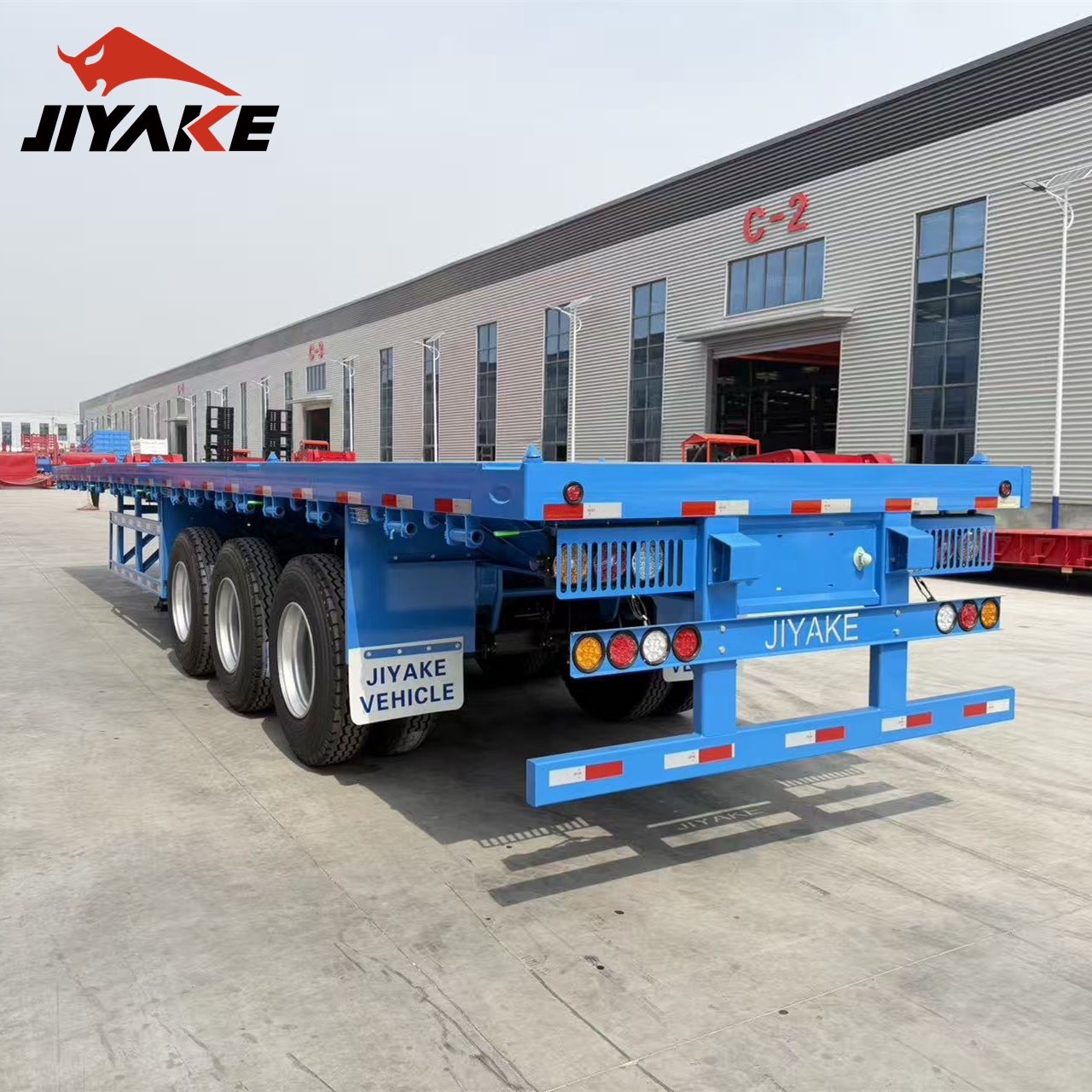
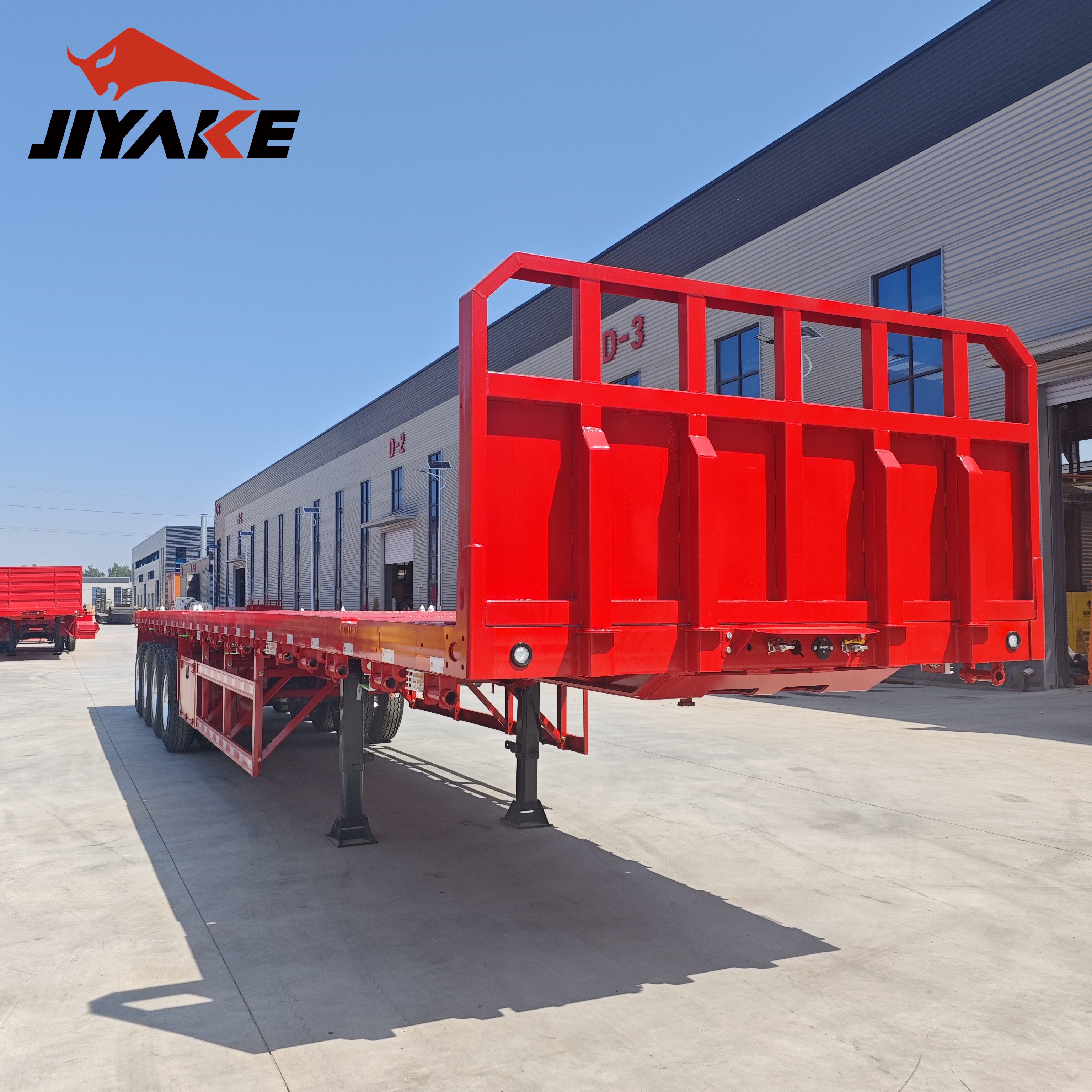

Financing a 40ft Flatbed Trailer: Look Beyond the Monthly Payment
A low monthly payment can make a 40ft flatbed trailer look affordable while leaving the business exposed to higher interest costs, a large final payment, or insufficient cash for maintenance. The stronger financing offer is the one that supports the trailer’s expected workload without creating an unacceptable cash shortfall during delivery, operation, or disposal.
The quoted 40ft flatbed trailer price is therefore only the starting point. Approval should rest on the delivered, operational cost of the asset, the full repayment schedule, and the cash contribution the trailer can realistically generate. A lower installment does not necessarily mean a lower cost—or a safer commitment.
Establish what the purchase price actually includes
Two quotations are not comparable unless they cover the same specification and delivery scope. An export quotation may exclude ocean freight, insurance, destination handling, import duties, registration, inspection, or modifications needed for local operation. The financing provider may fund the trailer invoice but require those additional costs to be paid immediately.
Build a delivered-and-ready-to-work cost before discussing the down payment. Separate recoverable taxes from permanent costs, but still include their timing in the cash forecast: a tax recovery does not eliminate the initial funding requirement.
The specification also needs to be commercially equivalent. Axle ratings, tare weight, braking equipment, tires, container locks where required, and load-securing provisions affect usable capacity and operating suitability. A cheaper trailer that cannot legally carry the intended load is not a financing saving.
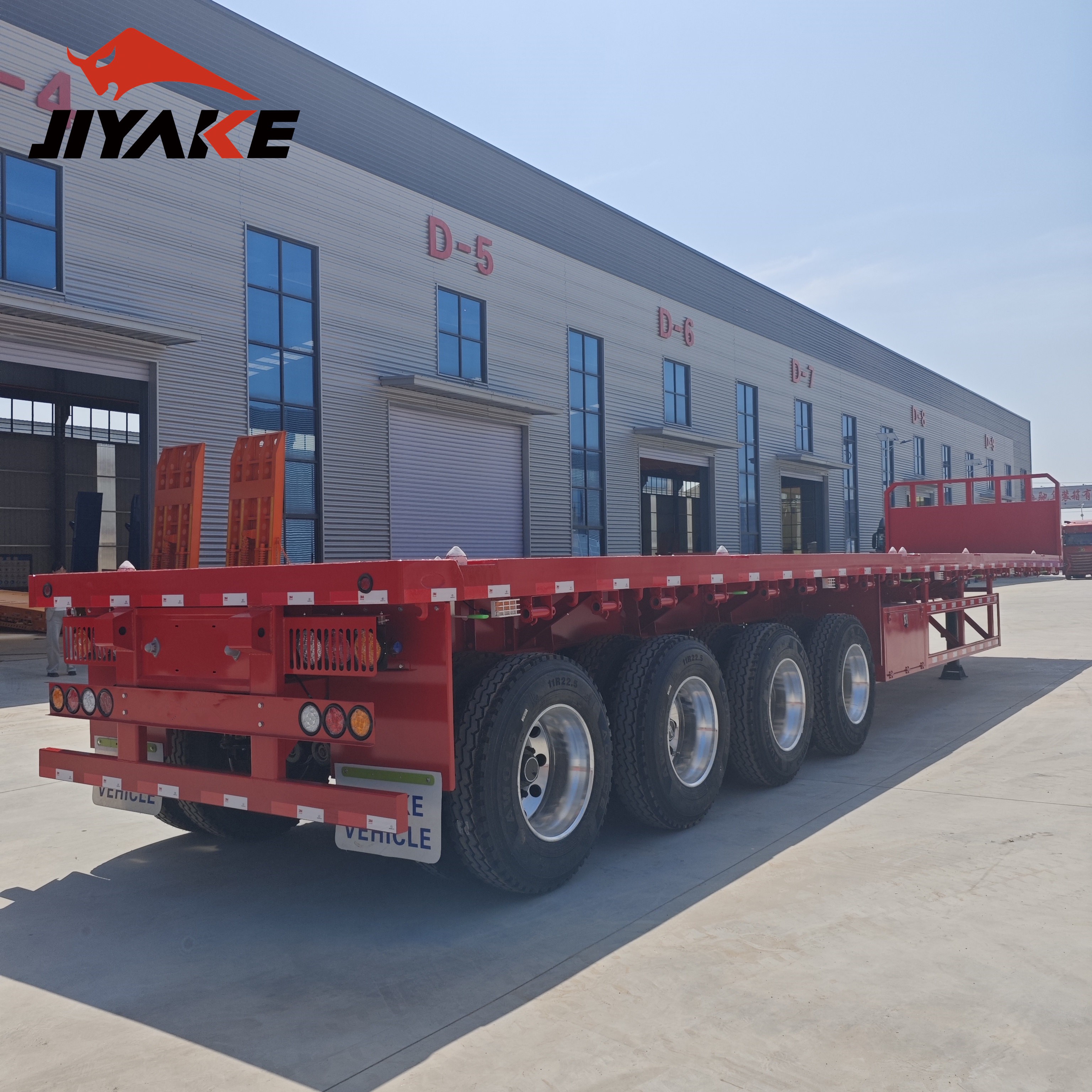
Equipment categories must remain distinct. A 4 Axle Lowbed Semi Trailer belongs in a separate assessment when machinery loading or deck-height requirements justify a lowbed configuration. Its price should not be treated as a direct benchmark for a conventional 40ft flatbed. Any discrepancy between a product title and its axle or capacity details must be resolved in the signed specification before financing is approved.
Put competing offers on the same repayment basis
Request a complete repayment schedule rather than relying on a headline rate. The comparison should identify the amount financed, deposit, payment frequency, interest calculation method, mandatory fees, final payment, and total amount payable. Establish whether the rate is fixed or variable and whether payments begin before the trailer is available for work.
A “flat” interest rate charged against the original principal is not directly comparable with a reducing-balance rate. Likewise, a lease rental may exclude an end-of-term purchase payment or impose return conditions. Compare actual dated cash flows, not just quoted percentages.
The following hypothetical example isolates the effect of extending the loan term. It assumes a $30,000 purchase price, a $6,000 deposit, and $24,000 financed at a fixed nominal annual rate of 10%, calculated monthly. Payments occur at month-end, with no fees or balloon payment. These are illustrative figures, not market quotations.
Totals are rounded independently. The longer term releases roughly $99 of monthly cash but adds about $1,400 in interest and another year of debt service. That trade-off can be justified if liquidity has a measurable operational value. It should not be mistaken for a reduction in acquisition cost.
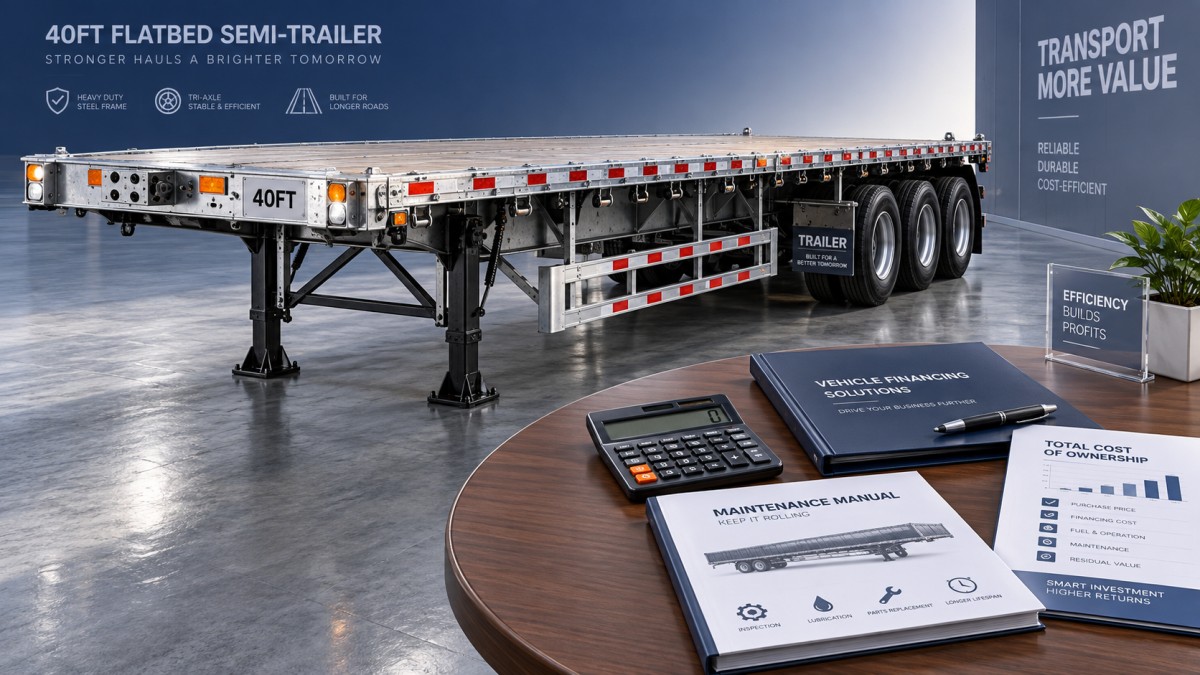
A balloon payment requires a separate test. It reduces installments by leaving principal unpaid until maturity; it does not remove that obligation. Compare the balloon with a conservative net disposal value and identify how any shortfall would be funded. Expected resale proceeds are not guaranteed cash, and refinancing should not be assumed to remain available.
Measure affordability against collected cash, not projected revenue
The trailer does not generate cash simply by being delivered. Registration, inspection, tractor availability, customer scheduling, and payment terms can delay the first receipt while finance charges have already started. A deposit that exhausts working capital may therefore be more dangerous than a moderately higher installment.
Model the cash contribution attributable to the trailer after incremental operating costs. Include costs such as tires, brakes, bearings, insurance, inspections, parking, and maintenance. Where the investment requires additional tractor capacity, drivers, fuel, or subcontracting, include those costs as well. Avoid charging costs twice if the transport margin already incorporates them.
A useful operating threshold is:
Required paid trips per month = (monthly debt service + fixed trailer cash costs + maintenance reserve) ÷ contribution per paid trip before those costs.
This works only if contribution reflects the actual route economics, including empty repositioning and relevant tractor and driver costs. Invoiced trips also need to be translated into collection dates. A profitable month on paper can still produce a repayment shortfall when customers pay late.
Test identifiable operating pressures rather than applying an arbitrary revenue reduction. Examples include losing a contracted movement, several weeks without work, a major tire replacement, or an additional customer credit period. The important result is the lowest cash balance and the funding required to keep payments current—not just the annual profit forecast.
Keep ownership cost and financing cash flow separate
A lifecycle cost comparison should include acquisition and commissioning costs, maintenance, insurance, inspections, financing charges, and disposal costs, less net resale proceeds. Use the same holding period and workload assumptions across alternatives.
Do not add both the purchase price and loan principal repayments into that ownership-cost total. Principal repays the acquisition funding; counting it again duplicates the asset cost. For the liquidity forecast, however, include the deposit and every scheduled repayment because each is a real cash movement.
Depreciation belongs in the accounting assessment, not as an additional cash payment. Tax deductions and interest treatment depend on the jurisdiction and contract structure. Any tax benefit should enter the model only when eligibility and timing are established.
Maintenance exposure also changes the financing decision. A term that leaves repayments outstanding when significant component renewal is expected can concentrate cash demands. Review maintenance support and parts availability alongside the repayment schedule; warranty coverage alone does not compensate for lost operating time.
Match the debt to the holding period—and the currency
A planned sale before loan maturity creates an exit calculation: expected sale proceeds less selling costs, outstanding settlement balance, and any early repayment charge. Compare those figures at the intended disposal date, not only at the end of the financing contract. A long term can leave the business owing more than the trailer can realize.
For cross-border purchases, distinguish the supplier-payment currency from the financing currency and operating-revenue currency. A foreign-currency loan may offer a lower quoted rate but create a repayment exposure if revenue is collected in another currency. Stress the exchange rate over the debt term and price any hedge separately rather than treating the initial conversion rate as permanent.
Contract terms can also change the effective risk. Check security over other assets, guarantees, compulsory insurance, late-payment charges, early settlement provisions, and restrictions on sale or cross-border use. Confirm who carries the cash burden if delivery is delayed and whether supplier payment milestones align with inspection and acceptance.
Make approval conditional on a funded downside
A defensible approval records the agreed specification, delivered cost, complete financing schedule, realistic operating contribution, and minimum liquidity reserve. Any balloon or early-disposal shortfall needs an identified funding source rather than an assumption of favorable resale or refinancing.
The lowest installment may be the right choice when preserving cash supports reliable operations and the additional financing cost is acceptable. But if affordability depends on uninterrupted utilization, immediate customer payment, and an optimistic resale value, the financing structure is too fragile—even when the monthly payment fits the budget.
Leave A Reply

First class quality service and professional after-sales team.
Get in Touch
*We respect your confidentiality and all information are protected.