



Recent Posts
 French Clients Visit JIYAKE Factory for Semi-Trailers and Used Trucks Inspection: Global Partners WelcomeOct 27, 2026
 Will a Fuel Tanker Trailer Fit Your Depot's Bottom-Loading System?Oct 15, 2026
- Aluminum vs. Carbon Steel Fuel Tanker Trailers: Which Should You Buy?Oct 15, 2026
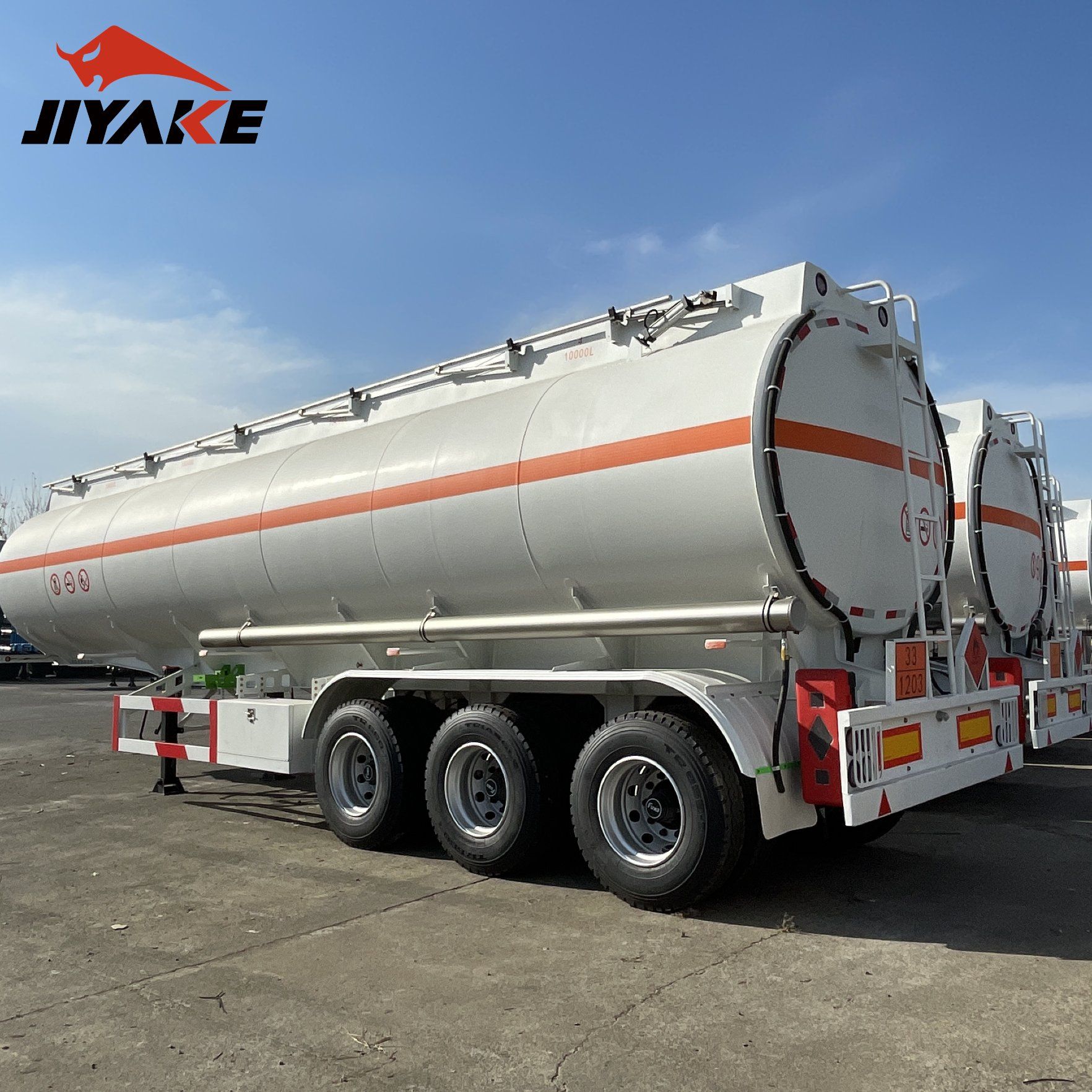
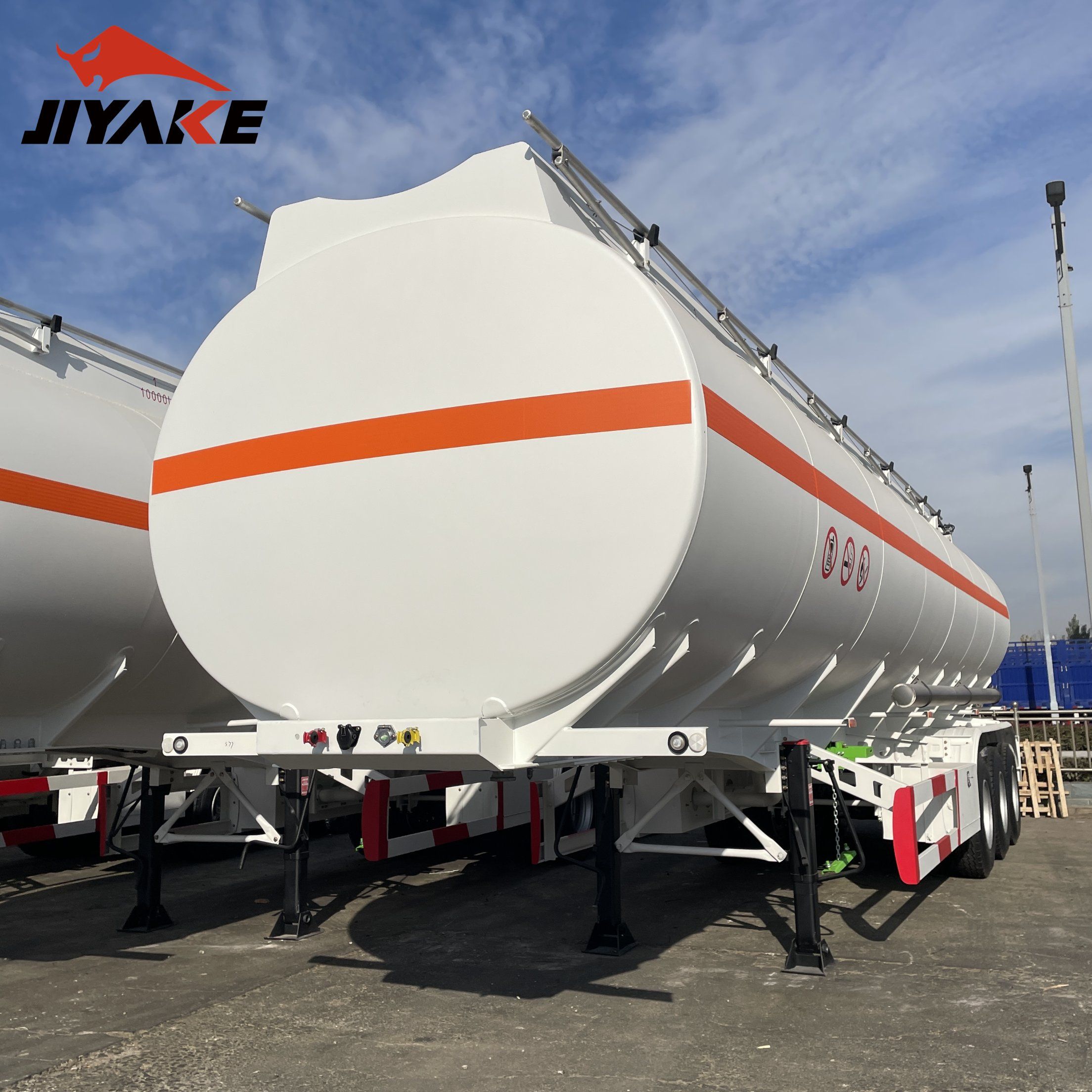

Fuel Tanker Trailer Maintenance Guide
Fuel Tanker Trailer Maintenance Guide: What Keeps It Running Safely in Real-World Conditions
Keeping your fuel tanker trailer in peak condition is essential for safety, compliance, and long-term cost efficiency—especially in demanding heavy-duty operations. This comprehensive Fuel Tanker Trailer Maintenance Guide covers critical inspection points, scheduled servicing intervals, common wear indicators, and best practices tailored for fleet operators and owner-operators across Southeast Asia, Central Asia, and Africa. Backed by Shandong Jiyake’s 20+ years of specialized semi-trailer and tank trailer manufacturing expertise—and supported by ISO-certified production facilities and advanced CNC, automatic welding, and tank-specific fabrication equipment—this guide ensures your fuel tanker trailer delivers maximum uptime, reliability, and ROI.
Where Failure Starts—And Why It Matters More Than You Think
Fuel tanker trailers don’t fail all at once. They degrade silently: a hairline crack in the tank seam, corrosion under the chassis rails, or fatigue in the suspension mounting brackets. In regions with high humidity, salt-laden coastal air, or unpaved rural roads, these issues accelerate. We’ve seen cases where minor weld discoloration—dismissed during routine checks—later revealed micro-fractures after 18 months of continuous operation. That’s why visual inspection isn’t enough. It must be paired with tactile checks, torque verification on critical fasteners, and periodic ultrasonic testing for tank integrity—especially near manholes, baffles, and discharge outlets.
The Non-Negotiables: Weekly, Monthly, and Annual Checks
There’s no universal schedule—but there *is* a hierarchy of urgency. Weekly checks should focus on visible leaks, tire pressure consistency (not just inflation level), brake lining thickness, and emergency shut-off valve function. Monthly attention shifts to suspension bushings, axle alignment signs (like uneven tire wear), and grounding strap continuity—critical for static dissipation during loading. Annually, you need full tank internal inspection, structural weld review, and certification renewal per local regulatory requirements. In many African and Central Asian jurisdictions, third-party verification is mandatory—not optional—for roadworthiness and hazardous goods transport licensing.
Why Fabrication Quality Changes Everything
A well-maintained trailer starts long before it hits the road. At Shandong Jiyake, our fuel tanker trailers are built using fully automated tank welding machines—ensuring consistent penetration depth and minimal heat distortion. Unlike manual welding, which introduces variability at every joint, this process reduces stress concentration points where cracks initiate. Our 300,000 m² facility integrates design, R&D, and production under one quality system—so when you inspect a baffle mount or rear frame bracket, you’re not checking against generic specs, but against the exact tolerances used during build. That consistency matters when you’re running 12-hour shifts on gravel haul routes in Laos or desert corridors in Sudan.
Real-World Upkeep: Beyond the Manual
Maintenance manuals often assume ideal conditions—clean workshops, calibrated tools, and trained technicians. Reality is different. Operators in remote areas frequently improvise: using diesel as a cleaner, re-torquing bolts without proper torque wrenches, or patching minor leaks with sealants not rated for hydrocarbon exposure. These shortcuts rarely cause immediate failure—but they mask deeper issues and shorten service life. One practical tip: keep a log not just of what was done, but *how* it was done—e.g., “replaced left-side leaf spring shackle bushing using hand torque, estimated 85 Nm.” Over time, that data reveals patterns—like repeated premature wear on specific components—which informs smarter spares planning and vendor selection.
When the Tractor Makes a Difference
Your fuel tanker doesn’t operate in isolation. Its performance ties directly to the tractor unit pulling it—especially in stop-start urban construction zones or steep mountain passes common across Vietnam and Kyrgyzstan. A mismatched powertrain can overheat brakes, induce excessive trailer sway, or overload suspension components. For example, the Foton Truck, with its 375 hp WEICHAI engine and 1500–2000 Nm torque band, provides strong low-end pull suited for loaded starts on rough terrain—reducing strain on the trailer’s fifth wheel and kingpin interface. Its 10-speed FAST transmission also allows finer gear selection, helping maintain optimal engine RPM and minimizing driveline shock transfer to the trailer.
Final Thought: Maintenance Isn’t Just About Avoiding Breakdowns
It’s about preserving resale value, meeting insurance requirements, and staying compliant when crossing borders—where documentation gaps can halt shipments for days. Every weld inspected, every bolt verified, every ground strap tested contributes to a verifiable chain of care. And that chain matters most when you’re not looking for it—when the next load is already scheduled, the driver is waiting, and the clock is ticking.
Leave A Reply

First class quality service and professional after-sales team.
Get in Touch
*We respect your confidentiality and all information are protected.