





Fuel Tanker Trailer Safety Requirements
Fuel tanker trailer safety requirements aren’t just a checklist—they’re the difference between routine operation and catastrophic failure. When transporting flammable liquids across highways, borders, or remote terrain, compliance isn’t about passing an audit. It’s about designing for physics: managing surge forces during braking, preventing static ignition during loading, resisting corrosion from aggressive fuels, and ensuring structural integrity under real-world fatigue—not lab conditions.
What Actually Matters in Real-World Fuel Tanker Trailer Safety
Many operators focus first on certifications—ADR, ISO 11654, or local DOT approvals—and stop there. But certification is only the baseline. What separates a compliant trailer from a *reliably safe* one lies in how those standards translate into physical execution.
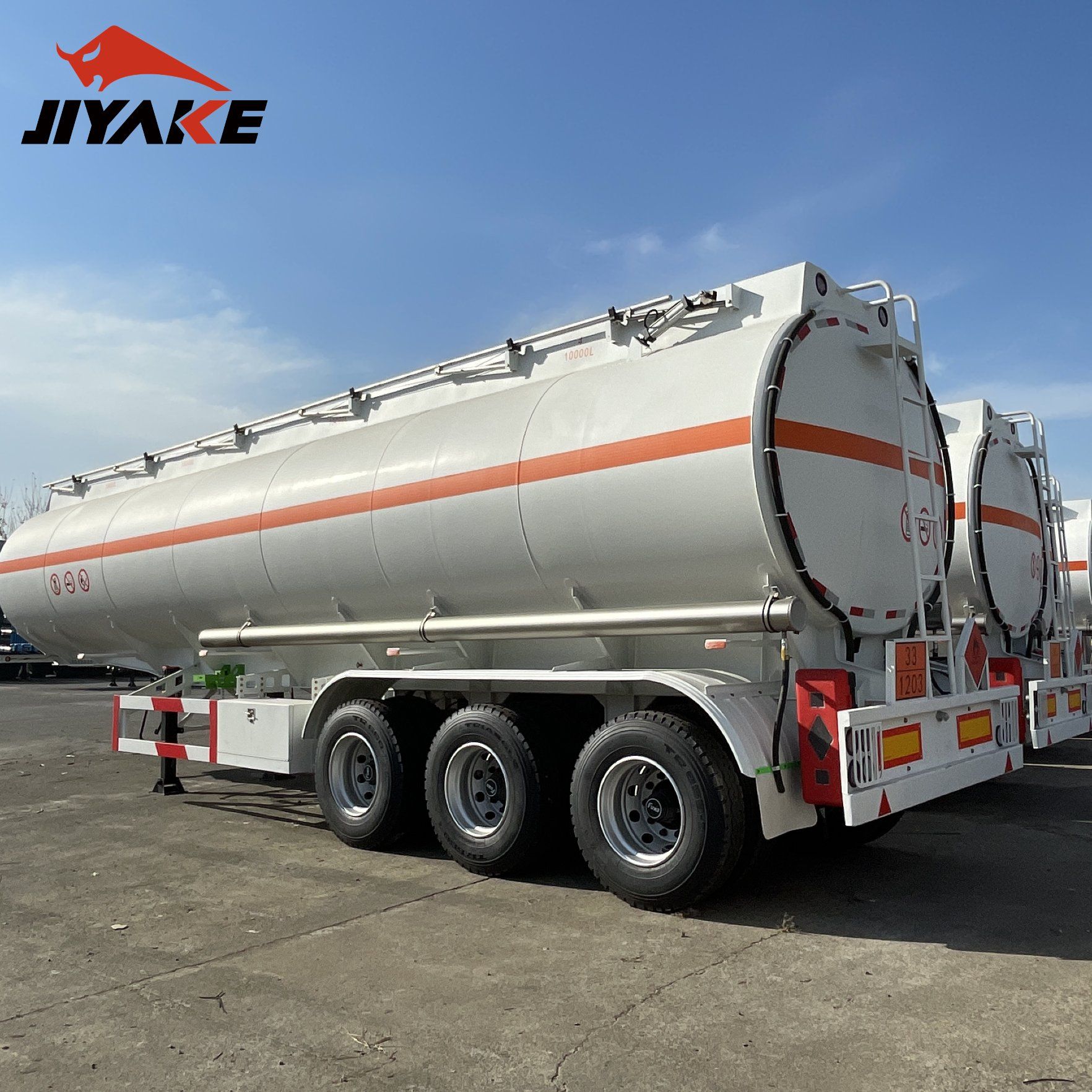
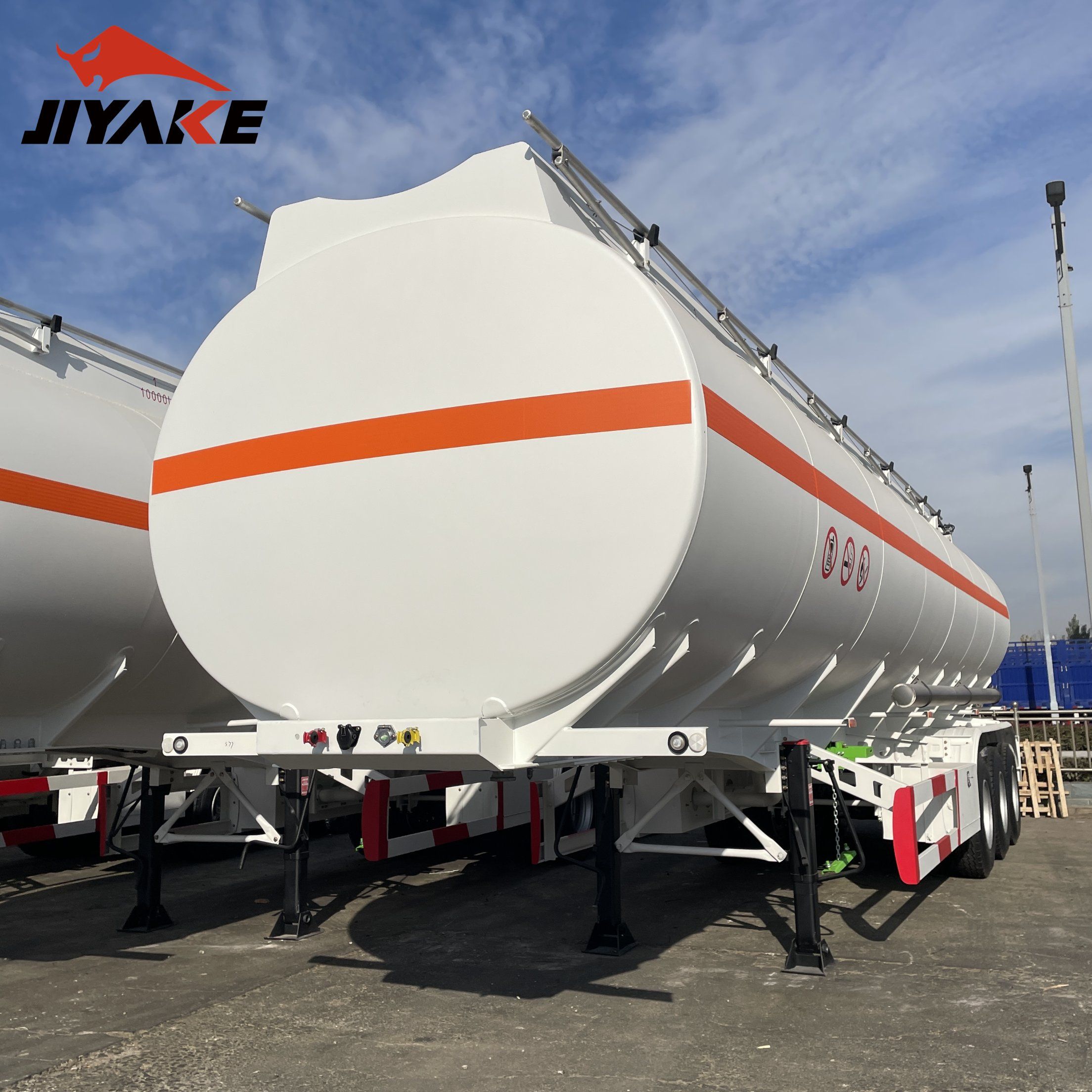
Take tank welding, for example. Manual welds may meet minimum code thickness but often lack consistency across long seams. At Shandong Jiyake Automobile Sales Co., Ltd., fuel tanker trailers use fully automated tank welding machines—ensuring uniform penetration, zero porosity, and traceable weld logs. This isn’t over-engineering; it’s preventing micro-fractures that grow under repeated pressure cycling and thermal expansion.
Similarly, anti-surge baffles aren’t just welded plates inside the tank. Their spacing, perforation pattern, and anchoring must match the specific density and viscosity of the intended fuel (e.g., diesel vs. aviation kerosene). Too few baffles? Risk of dangerous forward surge during emergency stops. Too many or poorly designed ones? Excessive internal stress at weld joints and accelerated fatigue—especially on rough roads common in Southeast Asia and African markets where our trailers operate daily.
Grounding & Bonding: Where Theory Meets Ground-Level Reality
Static discharge is the silent risk. A spark less than 0.2 millijoules can ignite vapor—well below what a human feels. Yet many fleets still rely on drag chains or assume chassis contact with pavement is sufficient. That’s unreliable: modern low-conductivity tires, dusty or dry road surfaces, and painted or corroded mounting points break the path to ground.
True grounding requires a dedicated, low-resistance path from the tank shell directly to earth *before* any valve opens. Our trailers integrate copper-alloy grounding studs with hardened stainless steel clamps, tested to maintain ≤10 ohms resistance—even after 5,000 cycles of connection/disconnection. This isn’t optional hardware; it’s the first line of defense during every loading event.
Emergency Shut-Offs: Speed, Reliability, and Human Factors
An emergency shut-off (ESO) system must close within 3 seconds—and stay closed. But speed means little if the actuator jams in dust, freezes in sub-zero temperatures, or requires excessive force from a fatigued driver. We use pneumatically assisted ESO valves with dual redundant solenoids and manual override levers positioned for gloved-hand access—tested across -30°C to +55°C ambient ranges.
Critically, the system is integrated with the tractor’s service brake circuit: if air pressure drops below 6 bar during transit, the ESO closes automatically. No driver action required. No reliance on memory or training alone.
Corrosion Resistance: Beyond “Stainless Steel” Labels
“Stainless” doesn’t mean universal. 304 stainless resists diesel well—but fails rapidly with ethanol-blended fuels or high-sulfur biodiesel. Using the wrong grade invites pitting, crevice corrosion, and hidden wall thinning. Our fuel tanker trailers specify 316L stainless or lined carbon steel based on the customer’s documented fuel composition—not generic assumptions.
We also isolate dissimilar metals rigorously: no direct aluminum-to-steel contact, no uncoated carbon steel brackets touching stainless tanks. Even fasteners are selected for galvanic compatibility—not just strength.
Structural Integrity: Not Just About Yield Strength
A 40-ton payload rating means nothing if the frame flexes excessively under load, transferring torsional stress to tank mounts. Our frames use high-tensile steel (S355JO) with CNC-cut, precision-welded crossmembers—designed to keep deflection under 12 mm at full load on a 15-meter wheelbase. Why does that matter? Because repeated flexing cracks welds, loosens baffles, and misaligns manways—creating leaks you won’t see until it’s too late.
This same attention applies to landing gear, kingpin assemblies, and suspension geometry. A 28-ton single-action landing gear isn’t just about lifting capacity—it’s about stability during unloading on uneven ground, reducing side-load on the fifth wheel during coupling, and minimizing vibration transfer to the tank.
For operations requiring maximum versatility—like moving support equipment, pipe racks, or modular fuel dispensing units between depots—we offer heavy-duty transport solutions built to the same structural philosophy. The Flatbed Trailer, for instance, uses a 3×13-ton FUWA axle setup, leaf spring suspension tuned for off-highway durability, and 12R22.5 tires rated for sustained 40-ton loads—proving that safety discipline extends beyond tanked vehicles to every link in the logistics chain.
Maintenance Isn’t Secondary—It’s Built Into the Design
Safety degrades silently. That’s why accessibility matters as much as materials. Our fuel tanker trailers feature wide-service hatches, non-corroding toolboxes mounted away from exhaust paths, and clearly labeled grounding points with wear-resistant markings. If a technician can’t inspect or test something easily—or if corrosion hides behind a bracket—they won’t. Design must remove the friction from proper maintenance.
Ultimately, fuel tanker trailer safety requirements converge where engineering precision meets operational honesty: knowing your fuel, your routes, your climate, and your maintenance discipline—not just your paperwork. That’s how reliability gets built in—not bolted on.
Leave A Reply

First class quality service and professional after-sales team.
Get in Touch
*We respect your confidentiality and all information are protected.