




Recent Posts
 French Clients Visit JIYAKE Factory for Semi-Trailers and Used Trucks Inspection: Global Partners WelcomeOct 27, 2026
 Will a Fuel Tanker Trailer Fit Your Depot's Bottom-Loading System?Oct 15, 2026
- Aluminum vs. Carbon Steel Fuel Tanker Trailers: Which Should You Buy?Oct 15, 2026
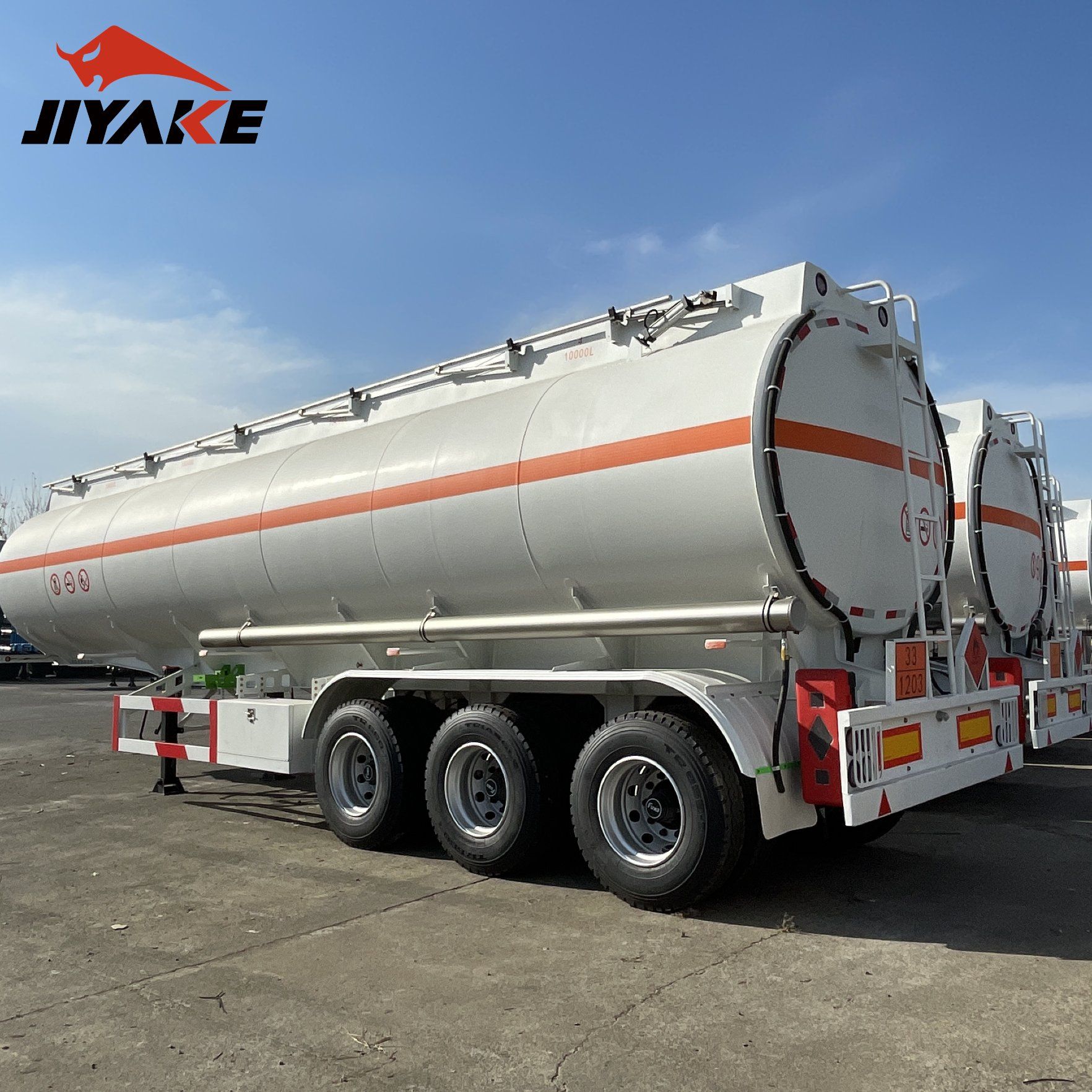
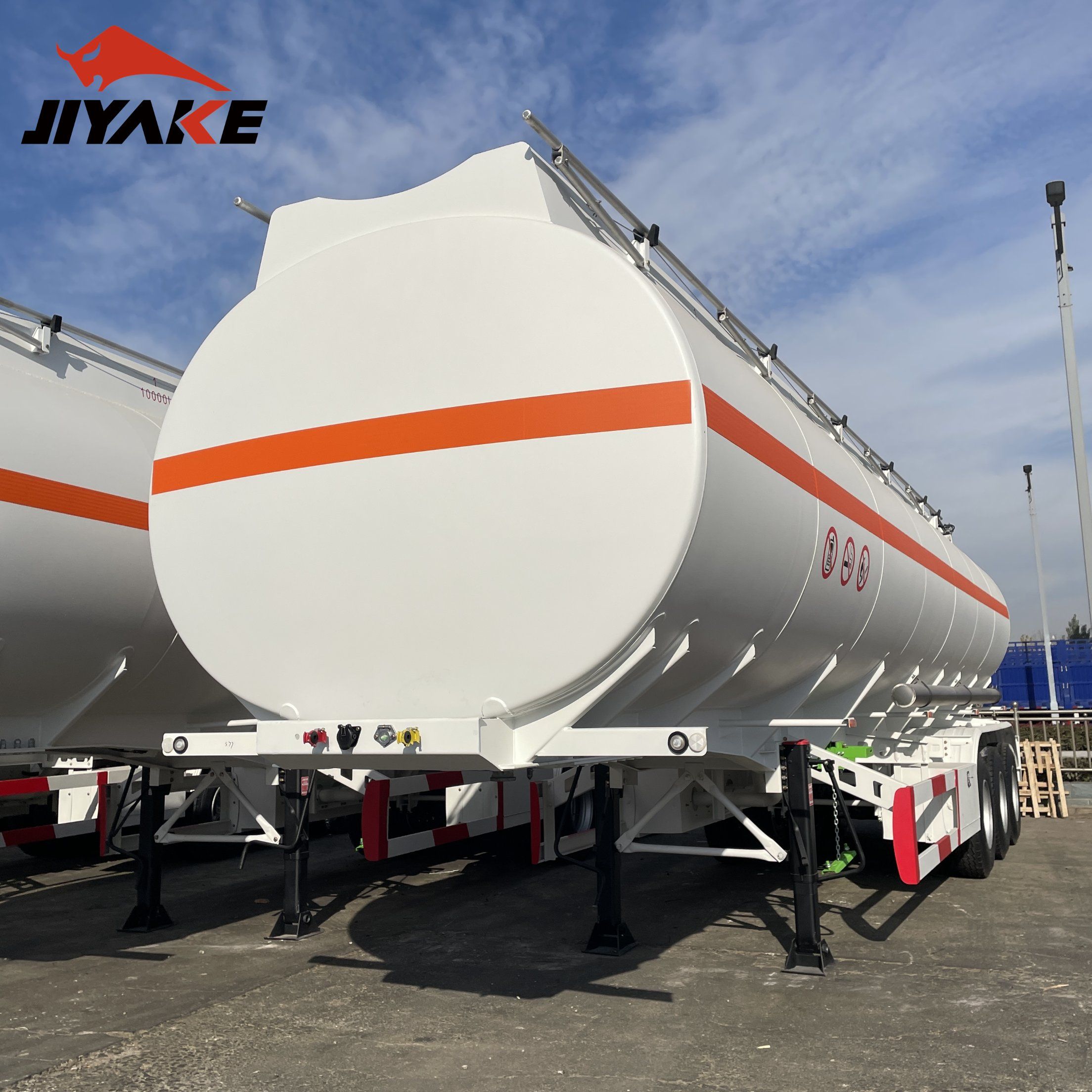

Aluminum vs Steel Fuel Tanker Trailer
Aluminum vs Steel Fuel Tanker Trailer: What Actually Moves the Needle for Heavy-Duty Fleets
Choosing between aluminum and steel for a fuel tanker trailer isn’t about picking a “better” material—it’s about matching material behavior to your operational reality. Payload margins, regional corrosion exposure, maintenance discipline, and even local repair infrastructure all tilt the balance one way or another. And while specs sheets list tensile strength or density, real-world durability emerges from how those numbers hold up after five years of gravel roads in West Africa, monsoon humidity in Vietnam, or salt-laden winter hauls across Kazakhstan.
Steel remains the default for good reason: it’s predictable, weldable with standard shop equipment, and repairable almost anywhere. A Q345B carbon steel structure—like the main beam on our 3 Axle Lowbed Semi Trailer, built with 16mm top and 18mm bottom plates—delivers proven load-bearing consistency under high-cycle stress. That same predictability extends to fuel tankers: steel tanks tolerate dents, gouges, and field repairs without compromising structural integrity. For operators running mixed fleets across remote regions where certified aluminum welders are scarce, that resilience matters more than theoretical weight savings.
Aluminum changes the math—but only if the math is being run correctly. Yes, an aluminum fuel tanker can shave 1.2–1.8 tons off tare weight versus an equivalent steel unit. That translates directly to more fuel per trip—roughly 3–5% higher payload on regulated axle weights. But aluminum’s advantage isn’t linear. It demands tighter tolerances in fabrication: inconsistent wall thickness, improper heat input during welding, or inadequate post-weld stress relief can trigger premature fatigue cracks near manways or baffles. At Shandong Jiyake, we use tank-specific automatic welding machines—not general-purpose rigs—to maintain consistent penetration and minimize distortion. That level of control separates field-serviceable units from ones that quietly degrade between inspections.
Corrosion resistance is often oversimplified. Aluminum forms a passive oxide layer—effective against atmospheric moisture but vulnerable to chloride-induced pitting, especially at weld seams or where dissimilar metals contact (e.g., stainless fittings on aluminum flanges). Steel, meanwhile, relies on coating systems: proper surface prep (SA 2.5 blast), zinc-rich primer, and polyurethane topcoat with ≥100μm DFT. We apply that same rigor across all our tankers—whether aluminum or steel—because failure rarely starts in the bulk material; it starts where protection breaks down.
Lifecycle cost? It’s not just purchase price plus fuel. Factor in downtime for repairs, availability of qualified technicians, spare part lead times, and residual value after 8–10 years. In markets where aluminum scrap commands premium pricing, resale may offset initial cost. But in others—particularly where regulatory inspection regimes focus heavily on visible weld integrity—steel’s repair transparency becomes an economic asset, not a compromise.
One thing doesn’t change: no material compensates for poor design. Baffle spacing, inlet/outlet placement, vapor recovery compatibility, and grounding continuity matter as much as alloy choice. Our fuel tanker production leverages CNC cutting for precision tank blanking and automated welding for repeatable seam quality—capabilities we’ve refined over years serving operators in Southeast Asia, Central Asia, and Africa. That integration—from R&D through final paint—is what lets us build aluminum units that stay tight and steel units that stay straight, trip after trip.
If you’re weighing options right now, start with two questions: What’s your dominant failure mode today—weight limitation or corrosion-related downtime? And where does most of your maintenance actually happen—in a dedicated shop or roadside with basic tools? The answer usually points more clearly than any spec sheet.
Leave A Reply

First class quality service and professional after-sales team.
Get in Touch
*We respect your confidentiality and all information are protected.