Welcome to Shandong Jiyake Automobile Sales Co., Ltd.





Recent Posts
 French Clients Visit JIYAKE Factory for Semi-Trailers and Used Trucks Inspection: Global Partners WelcomeOct 27, 2026
 Will a Fuel Tanker Trailer Fit Your Depot's Bottom-Loading System?Oct 15, 2026
- Aluminum vs. Carbon Steel Fuel Tanker Trailers: Which Should You Buy?Oct 15, 2026


{item.title}
{item.add_time}
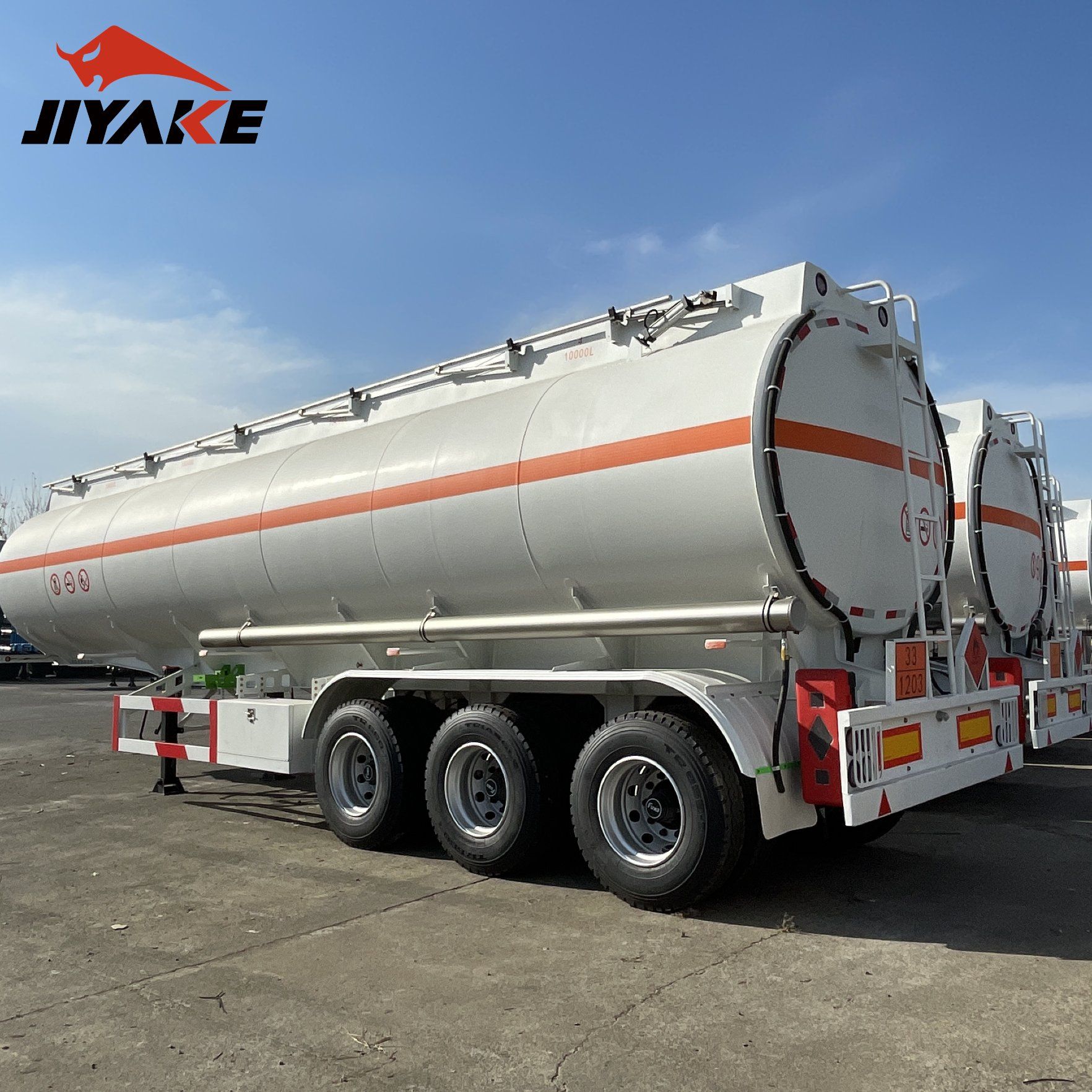
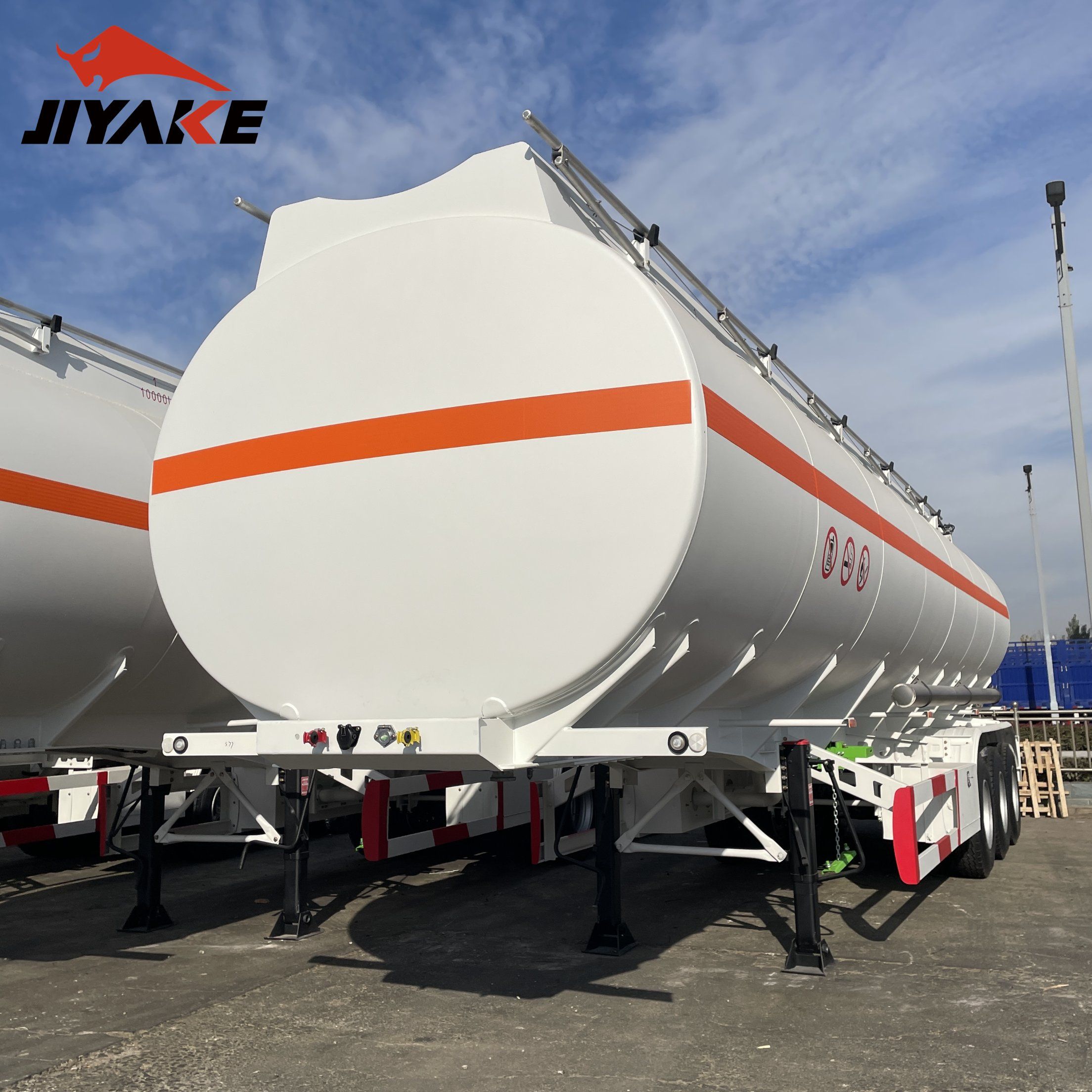
How Many Compartments Does a Fuel Tanker Need?
When you’re loading diesel into a 40-foot container at a remote depot in Zambia—or delivering gasoline and kerosene simultaneously to three villages across the Mekong Delta—you’re not just moving fuel. You’re managing risk, compliance, logistics efficiency, and real-world terrain constraints. And the first question that shapes all of those decisions? *How many compartments does a fuel tanker need?*
There’s no universal number—no “one-size-fits-all” answer stamped on a factory plate. What works for a single-product hauler in Kazakhstan won’t serve a multi-grade distributor in Nigeria. At Shandong Jiyake Automobile Sales Co., Ltd., we’ve engineered over 2,300 fuel tankers for clients across Southeast Asia, Central Asia, and Africa—and every compartment layout begins with a conversation, not a catalog.
Let’s start with the basics: compartments exist to separate incompatible products, meet regulatory load limits, and enable flexible unloading. A single-compartment tanker is simple, lightweight, and low-maintenance—but it only carries one product at a time. That means more trips, longer turnaround, and higher operational cost per liter delivered. In contrast, a 3-compartment design can carry petrol, diesel, and jet fuel in one run—ideal for airports or military supply chains where cross-contamination must be avoided and scheduling is tight.
But more compartments aren’t always better. Each bulkhead adds weight, complexity, and potential failure points. Weld seams multiply. Inspection intervals tighten. And in regions with rough roads and limited workshop access—like rural Ethiopia or mountainous Laos—over-engineering creates vulnerability. We’ve seen operators choose 2 compartments not because it’s optimal on paper, but because it balances segregation needs with repair simplicity: one for light distillates (gasoline), one for heavy (diesel or fuel oil), and enough structural margin to survive potholes that swallow axles.
Then there’s the geometry question: how do you fit those compartments *inside* a tank that also has to pass rollover stability tests, meet local axle weight laws, and still clear low bridges? Our CNC-formed tanks use variable-radius elliptical heads and tapered mid-sections—not just to maximize volume, but to position baffles where they reinforce longitudinal strength *and* dampen surge during braking. That’s why our 20,000-liter fuel tanker with 3 compartments weighs less than competitors’ 2-compartment models—without sacrificing ISO 11611 weld integrity or UN 1805 pressure testing compliance.
And here’s something rarely discussed: compartment count affects chassis integration. When a fuel tanker shares infrastructure with other fleet assets—like container-handling equipment—a modular approach matters. For example, our 2 Axle Skeleton Semi Trailer isn’t built for fuel, but its twist-lock-ready frame and adjustable ground clearance show how cross-platform thinking informs specialization. A fuel tanker designed for 45ft container terminals may borrow suspension tuning or axle spacing logic from that skeleton trailer—because in practice, fleets don’t buy isolated vehicles. They buy systems.
Regional nuance also shifts the math. In Indonesia, where small-scale retailers demand frequent top-ups of multiple fuels, 4- or 5-compartment units dominate—even though each compartment holds under 3,000 liters. In contrast, South African mining sites often specify dual-compartment tankers rated for 60-ton GVW, with one chamber reserved for emergency water ballast during uphill transit. And across West Africa, where seasonal flooding turns gravel roads into mud rivers, operators prefer fewer, larger compartments to minimize internal sloshing and maintain center-of-gravity control.
What doesn’t change? The need for traceability. Every compartment we build includes individual venting paths, segregated manways, dedicated level sensors, and optional RFID-tagged fill ports—so operators know *exactly* which grade went where, when, and through which valve. Because in fuel logistics, “I think it was diesel” isn’t an acceptable log entry.
We don’t sell compartments. We sell delivery confidence. Whether it’s a 2-compartment unit for a regional distributor in Uzbekistan or a 5-compartment, stainless-lined tanker for biofuel blending in Vietnam, the number emerges from real constraints—not spreadsheets. It’s shaped by your delivery map, your customers’ tank sizes, your maintenance capacity, and even the humidity level where your drivers refuel at dawn.
So before you finalize specs, ask yourself:
- Are you carrying compatible grades—or mixing ethanol-blended gasoline with aviation fuel?
- Do your depots have segregated unloading bays—or will you rely on sequential discharge?
- Is your route mostly highway—or does it include unpaved stretches where surge-induced stress peaks at 0.8g?
- And crucially: when a weld fails at 3 a.m. in a border zone with no certified tank welder nearby, how many compartments can your team realistically isolate and repair without replacing the whole vessel?
That’s where engineering meets experience. Not theory. Not templates. Just steel, science, and the quiet certainty that comes from knowing your tanker won’t just hold fuel—it’ll hold up, mile after mile, season after season.
At Jiyake, we measure success not in compartment counts—but in how few times a driver has to call for help.
Leave A Reply

Shandong Jiyake Automobile Sales Co., Ltd.
First class quality service and professional after-sales team.
+86 13864149117
admin@sdjiyake.com
Room 1003, No.11 Wanda Plaza, Jingsi Road, Shizhong District, Jinan
Get in Touch
*We respect your confidentiality and all information are protected.