




Can shorter skeletal trailer dimensions improve urban deliveries?
Yes, shorter skeletal trailer dimensions can improve urban deliveries when the freight is containerized and the route includes narrow access roads, compact turning areas, shared loading bays, or short booking windows. The gain comes from reducing the swept path of the tractor-trailer combination and lowering the amount of space needed to align with a loading point. That can remove delays caused by repeated shunting, blocked site entrances, or missed delivery slots.
The benefit has a boundary: a shorter chassis is not automatically the better choice. Container length, permitted gross combination weight, axle loading, coupling geometry, and the space available at both ends of the journey must be assessed together. A trailer that turns easily but cannot carry the required container configuration, or that concentrates too much load on an axle group, creates a different operational problem.
Where reduced length changes the delivery outcome
Urban sites often constrain the final few hundred metres rather than the main road journey. A skeletal trailer may need to turn from a two-lane street into a gate with parked vehicles, position beside temporary barriers, and reverse to a container unloading area without blocking public traffic. Overall combination length affects every one of these movements.
Shortening the skeletal chassis can reduce rear swing during a turn and reduce the width of the path traced by the rear wheels. This is especially useful where the tractor must begin a turn late because of walls, kerbs, site hoarding, utility poles, or vehicles waiting at the entrance. Less steering correction also makes reversing more predictable when there is limited clear space behind the container.
Yet the trailer body is only one part of the geometry. A long tractor wheelbase, a forward kingpin position, or a container set far behind the kingpin can offset part of the benefit. The relevant measurement is the complete vehicle envelope: tractor, fifth-wheel position, trailer wheelbase, rear overhang, container length, and the expected steering angle. Reviewing a trailer drawing alone can give a misleading answer.
Match the chassis to the container pattern
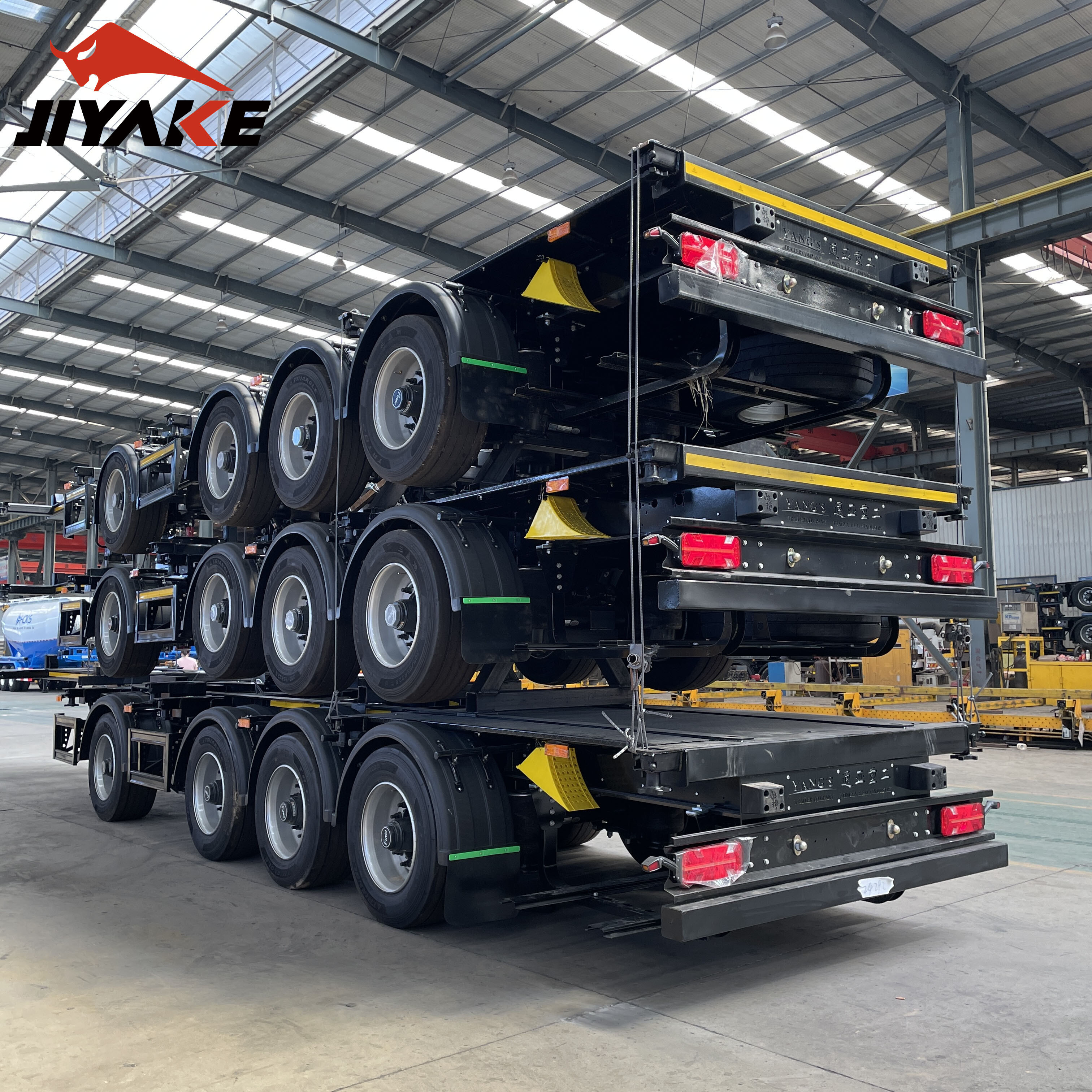
Before selecting shorter skeletal trailer dimensions, establish which containers will actually arrive at the site. A regular movement of one container size can justify a dedicated compact configuration. Mixed work involving different container lengths requires enough locking positions to secure each permitted load correctly, without improvised placement or unused structure that increases overall length.
Container twist locks must align with the corner castings designed for that load position. A container that is physically supported but not locked at the intended points is not an acceptable urban-delivery arrangement. Lock location also influences axle distribution. Moving a heavy container even a modest distance relative to the axle group and kingpin changes the load carried by the tractor and trailer axles.
Payload planning cannot be separated from manoeuvrability
A shorter skeletal design should be evaluated using the actual cargo mass and its position inside the container, not only the container’s nominal maximum weight. Dense materials loaded toward one end can create an unfavourable axle balance even when total mass remains within the intended transport capacity. The issue becomes more visible on uneven construction access roads, where suspension movement changes the instantaneous load carried across the axle group.
For a site delivery, the loading plan should identify the container type, gross mass, expected centre of gravity, lock positions, and destination unloading method before dispatch. This avoids discovering at the gate that a container must be turned, repositioned, or held outside the site because it cannot be placed in the planned unloading area.
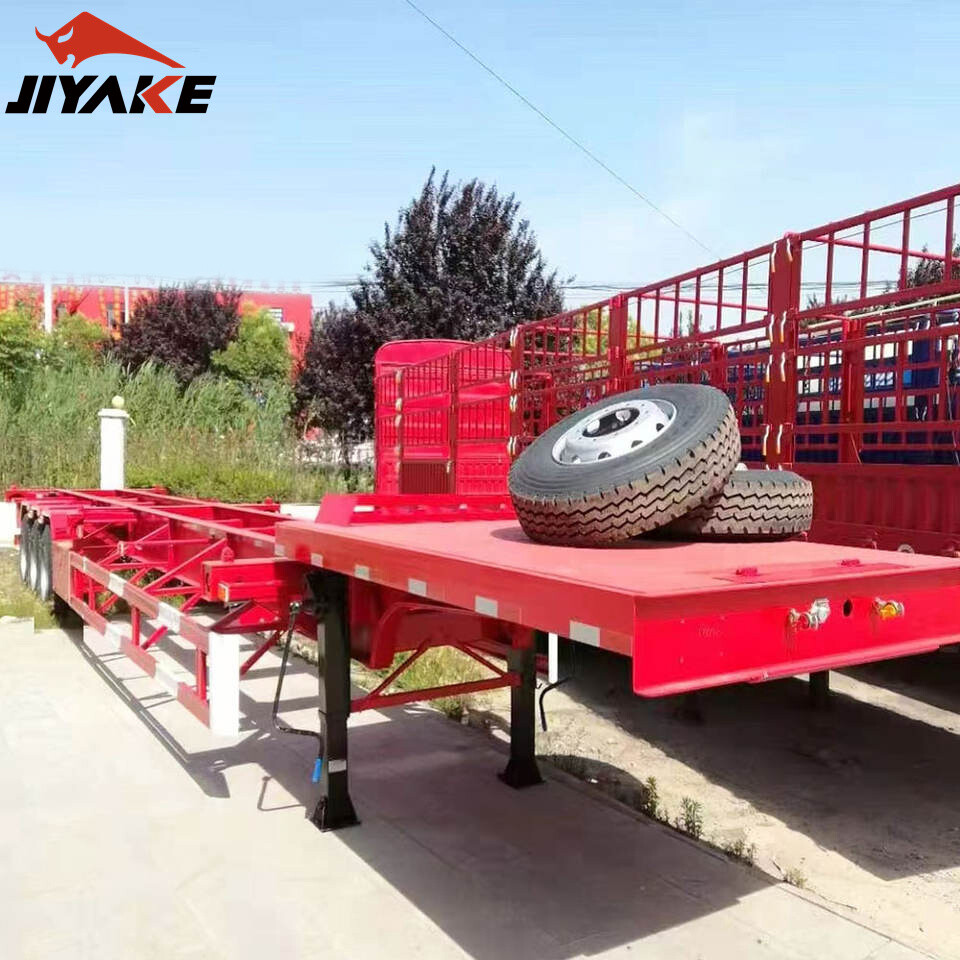
Longer open-deck trailers remain appropriate when the delivery involves machinery, steel sections, or irregular items that do not fit a containerized skeletal arrangement. For example, a 3 Axle Flatbed Trailer with a 12,500 mm by 2,500 mm platform and a 40-ton loading capacity addresses a different transport task: it gives direct loading access for heavy or irregular cargo. Its three-axle layout, container lockers, and available kingpin options illustrate why platform length, axle arrangement, and load restraint features must be considered as a package rather than as isolated specifications.
Access surveys should use vehicle movement, not site sketches alone
A gate width shown on a site plan does not prove that a vehicle can enter. The approach angle, opposite kerb line, gate setback, parked vehicles, gradient, and turning space immediately inside the gate determine whether the combination can align safely. A compact skeletal trailer can solve an entrance problem, but it will not solve a gate that requires the tractor to cross an obstruction or a yard with no room to straighten before reversing.
A useful route review records the tightest turn, the narrowest usable passage, the reversing distance, overhead constraints, and the available escape path if the unloading point is occupied. It should also separate permanent constraints from temporary ones. A delivery route that works on a quiet afternoon may fail during concrete pours, crane activity, shift changes, or material staging.
At the unloading point, allow for the movement of the container handler, reach stacker, crane, or forklift arrangement being used. A trailer may reach the bay successfully but still need more lateral clearance for lifting equipment than the site has reserved. Where container unloading is by crane, confirm that outrigger positions and exclusion areas do not obstruct the vehicle’s departure route.
Compliance and stability need early confirmation
Reducing chassis length can change how mass is shared between the kingpin and trailer axles. This affects both legal axle limits and vehicle behaviour under braking. The technical review should use the proposed tractor configuration and the heaviest expected container load, including the load distribution within the container. A nominal payload figure is insufficient because it does not show where the weight is carried.
Suspension type, tyre condition, brake response, coupling height, and landing-leg clearance also matter on uneven urban access routes. Repeated contact with steep ramps or raised drainage channels can damage low-mounted components or destabilize a load during slow-speed transitions. Ground clearance must be checked with the trailer loaded, because frame attitude changes under real axle and kingpin loads.
Shorter equipment may also allow a delivery to use an access route that is unsuitable for a longer combination, but route permissions and local restrictions should be confirmed for the precise vehicle configuration. Treating a shorter trailer as automatically compliant because it is easier to turn is a common planning error.
Build the delivery sequence around the compact configuration
The operational value of a shorter skeletal trailer appears when the dispatch sequence reflects its limits. The container should be assigned to the correct lock positions before departure. The driver needs the current site access arrangement, arrival window, contact point, and unloading order. Site personnel need to keep the turning zone and reversing path clear until the vehicle leaves, rather than clearing space only for arrival.
- Confirm the actual container size and loaded mass before allocating the trailer, particularly where load contents vary between consignments.
- Use a swept-path review for the gate, the internal turn, and the unloading position; one successful turn on the route does not prove the return movement will work.
- Reserve enough space for unloading equipment and for the tractor to pull forward after the container is removed.
- Inspect twist locks, chassis condition, tyres, brakes, lights, and landing gear as part of normal dispatch preparation, since low-speed urban manoeuvres expose defects that highway travel may not reveal.
Shorter skeletal trailer dimensions improve urban delivery performance when they are chosen around a repeatable container pattern and a measured site constraint. The strongest result is not simply a smaller trailer; it is a configuration whose locks, axle positions, turning path, load plan, and unloading space all agree with the work happening at the destination.
Leave A Reply

First class quality service and professional after-sales team.
Get in Touch
*We respect your confidentiality and all information are protected.