





How skeletal trailer dimensions influence tire wear patterns
How Skeletal Trailer Dimensions Influence Tire Wear Patterns
Skeletal trailer dimensions affect far more than container fitment and turning clearance. They influence axle loading, wheel alignment under load, suspension movement, and the path each tire follows through a turn. When those relationships are not controlled, tire wear often becomes the first visible warning sign: one shoulder wears faster, a pair of tires scrubs across the tread, or an axle position repeatedly runs hotter than the rest.
For quality-control and safety managers, tire wear should not be treated only as a maintenance issue. It can indicate a dimensional, fabrication, loading, or coupling problem. In skeletal trailer operations, where chassis are expected to carry containers of different lengths and mass distributions, a trailer that appears compliant when unloaded may behave very differently when carrying a concentrated or rear-biased load.
Dimensions determine how forces reach the tire contact patch
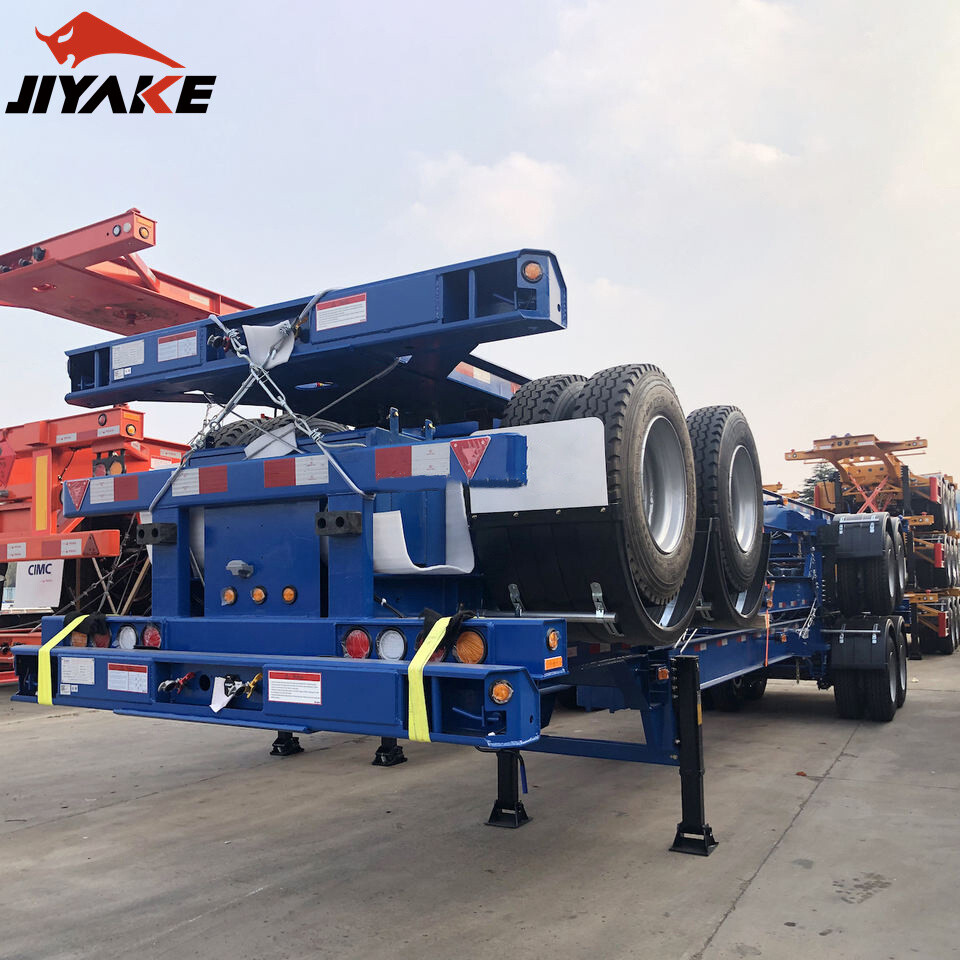
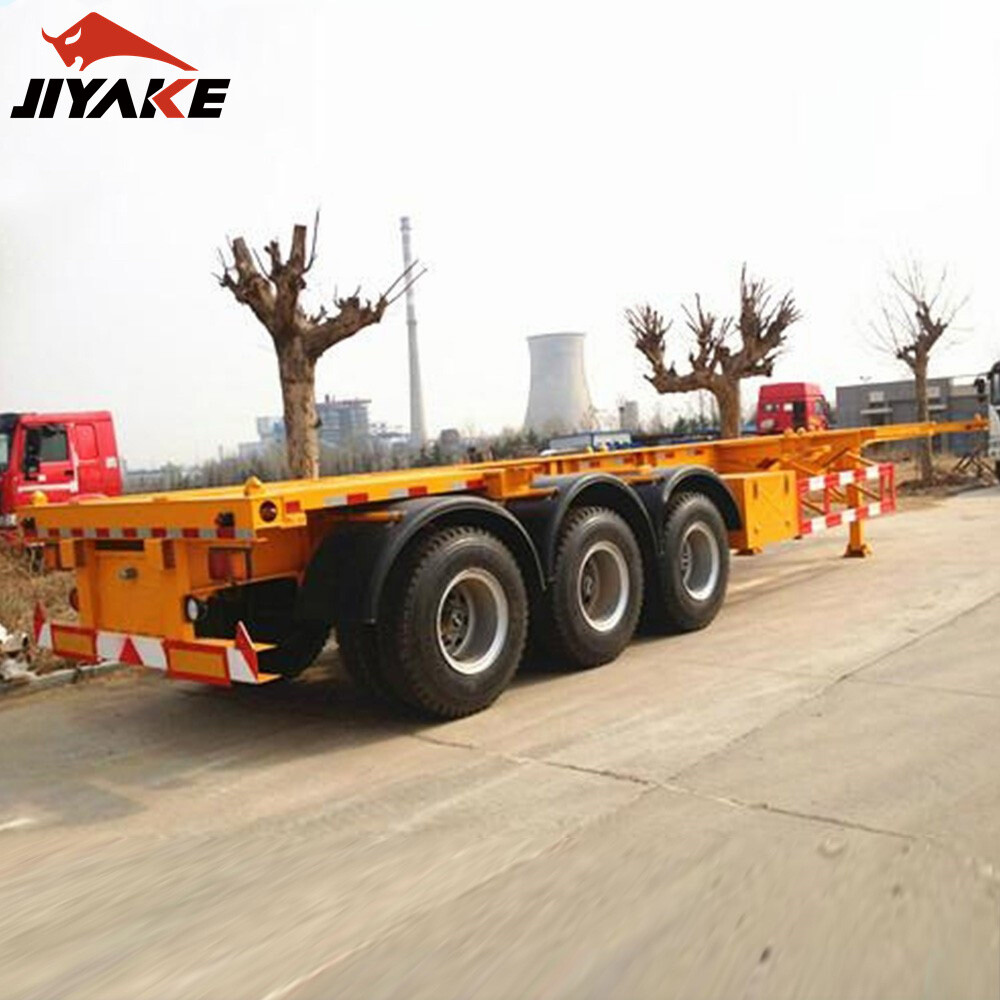
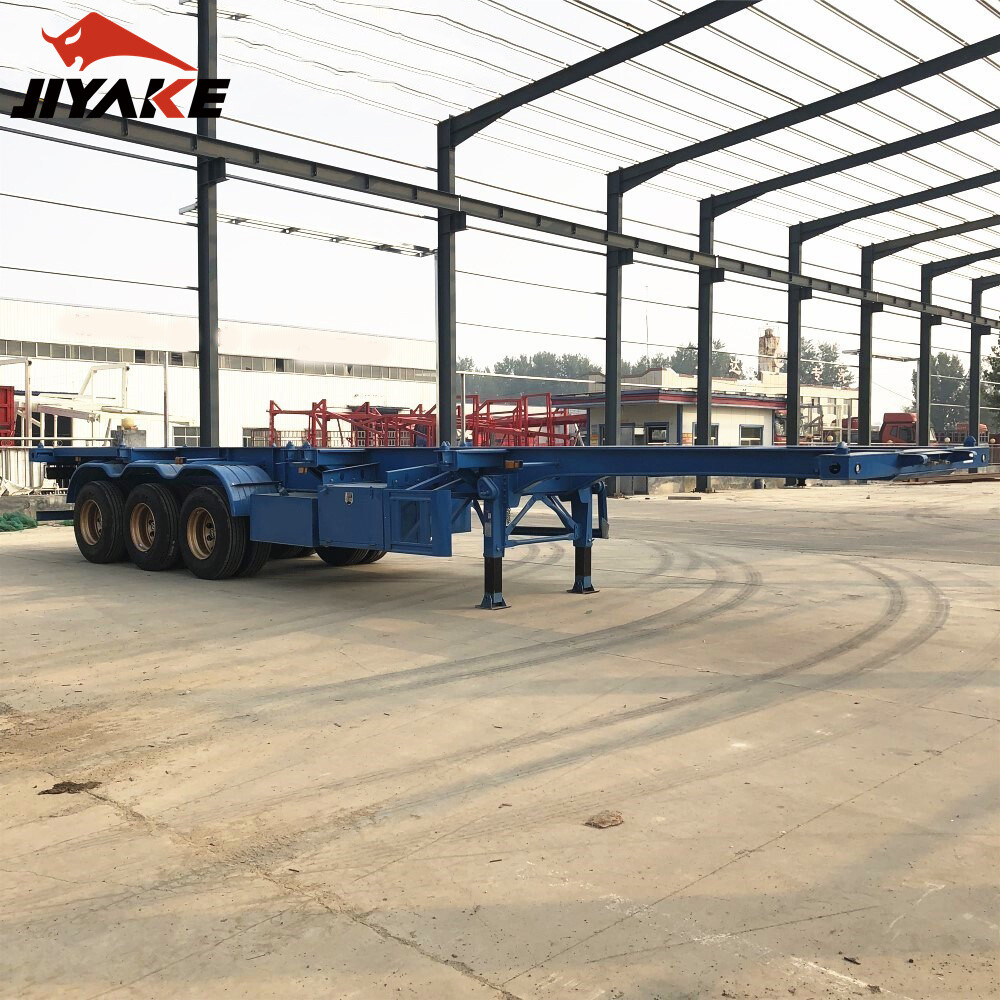
A tire wears normally when it rolls with stable vertical load, correct inflation, and minimal lateral scrub. Skeletal trailer dimensions affect all three conditions indirectly. The principal variables are overall chassis length, kingpin-to-axle-group distance, axle spacing, suspension mounting position, track consistency, deck or frame height, and the location of container locking points.
The key question is not whether a chassis is simply long or short. It is where the loaded container’s center of gravity sits relative to the kingpin and axle group. A change in that relationship redistributes vertical force between the tractor drive axles and trailer axles. If too much load remains on the trailer bogie, tire deflection and heat increase. If the trailer axles are comparatively light, tires may be more vulnerable to irregular wear from bouncing, braking lock tendency, or reduced stability on rough surfaces.
This is particularly relevant for extendable or multi-container skeletal trailers. Locking a shorter container in a position not intended for its actual loading pattern may shift the axle reaction significantly. The twist locks may engage correctly, yet the tire-loading result can still be poor. Quality checks therefore need to consider the approved container positions, expected gross mass, and practical cargo distribution inside the container—not only the geometry of the bare chassis.
Axle spacing and scrub wear in turns
Multi-axle skeletal trailers cannot allow every wheel to follow the same circular path during a tight turn. Fixed axles resist the different path lengths required by the inner and outer tires, creating lateral scrub. This is a normal physical effect, but it becomes more severe as axle-group geometry, turning environment, tire condition, and load rise interact.
Longer axle spreads generally improve load distribution and straight-line stability, but they can increase low-speed tire scrub in terminals, depots, ports, and urban delivery yards. Closely spaced axles may reduce that scrub tendency, yet they can impose other design and load-distribution constraints. There is no universally superior axle spacing; the suitable arrangement depends on applicable regulations, container configuration, route geometry, and permitted axle loads.
A common mistake is to identify all shoulder wear as an alignment fault. Alignment may indeed be the cause, but repeated tight maneuvering with a heavily loaded fixed tri-axle group can produce a characteristic scrub pattern even when static measurements are acceptable. The inspection process should therefore record operating conditions. Tires used mainly in highway corridors should not be evaluated by exactly the same wear expectations as tires repeatedly exposed to confined-yard turns.
What uneven patterns can reveal
Frame accuracy matters after the trailer enters service
Nominal skeletal trailer dimensions on a drawing are only the starting point. The more important control is whether kingpin, axle centers, suspension brackets, cross-members, and twist-lock stations remain in their intended relationship after welding, assembly, and service loading. A small geometric deviation can be amplified over the length of the chassis, especially when axles are mounted as a group.
For this reason, dimensional inspection should not stop at overall length and width. A practical release inspection normally includes axle-center consistency, axle squareness to the chassis datum, kingpin alignment, suspension mounting symmetry, ride-height condition, and the condition of structural members around the axle and landing-leg areas. Measurements should be taken on a suitable level surface and assessed using the manufacturer’s drawings and the relevant market requirements.
It is also worth separating manufacturing alignment from in-service alignment. A skeletal trailer can leave the factory correctly built and later develop tire wear after curb impacts, overload events, loose U-bolts, damaged torque rods, worn bushes, or frame repairs. Where recurring wear appears on the same position, a full inspection should include suspension travel and loaded condition rather than relying on an unloaded laser alignment check alone.
Deck height, coupling height, and tractor compatibility
Deck height influences the trailer’s center of gravity and the angle at which the chassis runs behind the tractor. A mismatched fifth-wheel height can leave the skeletal frame nose-high or nose-low. Beyond clearance concerns, this may alter axle loading and suspension geometry. On air-suspension equipment, incorrect ride height can change axle alignment characteristics and reduce the effectiveness of load equalization.
The tractor therefore belongs in the tire-wear assessment. A 6x4 unit with a 3.5-inch traction pin arrangement and 12.00R20 radial tires, for example, must be matched to the trailer’s coupling design, intended loading capacity, and local operating limits. The Right-hand drive 400HP Tractor truck is configured for long-distance freight and logistics work, with service, parking, and auxiliary braking systems. Its suitability in a trailer combination still depends on fifth-wheel setting, laden chassis attitude, and the approved coupling specifications—not engine output alone.
In fleets that interchange tractors frequently, coupling-height checks are especially useful. A trailer may wear tires consistently when pulled by one tractor specification and show a different pattern when paired with another. That is a reason to review combination compatibility before replacing tires or repeatedly adjusting axles.
A more useful quality-control routine
The best inspection routine links tire evidence to dimensional evidence. Start with tire position, wear photographs, pressure history, and axle-load records where available. Then compare left-to-right tread depth and check whether the pattern follows an individual wheel, an axle, or the entire axle group. That distinction narrows the investigation. A single tire can point to inflation, wheel-end, or brake issues; a complete axle pattern is more likely to involve alignment, suspension, or scrub; a group-wide pattern may indicate loading and chassis geometry.
Before accepting a new skeletal trailer design or a modified wheelbase, confirm the intended container lengths, locking locations, axle arrangement, tire specification, tractor fifth-wheel range, and the legal limits applicable to the operating route. The applicable dimensional and axle-load rules vary by country, and exported equipment should be reviewed against the destination market rather than assumed to fit every road network.
Manufacturing capability supports this work when it is tied to inspection discipline. Shandong Jiyake Automobile Sales Co., Ltd. integrates vehicle design, production, trade, and fittings manufacturing across a 300,000 m² facility with approximately 500 employees. Its production equipment includes CNC cutting, automatic welding, bending, and tank-welding machinery, supporting a broad range of semi-trailers and special vehicles supplied to markets in Southeast Asia, Central Asia, and Africa. For skeletal trailers, the relevant question is how those fabrication controls are translated into verified chassis and axle geometry for the specified route and container duty.
Tire wear is rarely caused by one dimension in isolation. It is usually the result of geometry meeting load, maneuvering, suspension condition, and tractor compatibility. A quality team that treats abnormal wear as a measurable chassis-performance signal can identify issues earlier, make better decisions on alignment or repair, and avoid replacing tires without addressing the reason they wore out.
Leave A Reply

First class quality service and professional after-sales team.
Get in Touch
*We respect your confidentiality and all information are protected.