





Skeleton Trailer Cost: Comparing Frame, Axle, and Container Lock Options
Evaluating skeleton trailer cost requires more than comparing a supplier’s quoted purchase price. For a commercial assessor, the real investment is shaped by frame steel grade, axle configuration, container lock layout, payload target, operating roads, and the maintenance burden likely to emerge over years of service. Two chassis may look similar in a quotation sheet, yet perform very differently after repeated port turns, long-haul container movements, or rough-road operations.
The most useful question is not “Which skeleton trailer is cheapest?” It is “Which specification delivers the required container-handling capacity at an acceptable lifetime cost?” That distinction matters when a fleet is balancing capital expenditure, transport availability, cargo safety, and residual value.
Where Skeleton Trailer Cost Actually Comes From
A skeleton trailer, also called a container chassis, is built around a relatively simple concept: a longitudinal frame, cross-members, suspension, axles, wheels, brakes, landing gear, king pin, and container locking devices. But each of those components can change the final cost materially. The specification becomes even more important when the trailer is intended for 20 ft, 40 ft, or multi-position container work.
Buyers sometimes focus too heavily on the visible steel structure because it is easy to inspect. Steel matters, certainly, but it is only one part of the cost equation. A low initial price may reflect lighter material, basic locks, lower-grade bearings, limited brake configuration, or components that are difficult to replace in the destination market. None of those choices is automatically wrong; they simply need to match the duty cycle.
For example, a chassis used for controlled routes between a warehouse and a nearby terminal faces different stresses from a unit making long intercity runs with loaded containers on uneven roads. The second application generally places greater value on reinforced frame sections, dependable suspension, recognised axle components, and more robust locking hardware.
Frame Design: The Largest Structural Influence on Price
The main frame is the foundation of a skeleton trailer’s working life. Its cost is influenced by steel grade, beam profile, plate thickness, cross-member design, welding quality, and corrosion protection. Assessors should compare these details rather than accepting descriptions such as “heavy-duty frame” without supporting specifications.
Steel grade and beam geometry
Higher-strength structural steel can improve the balance between weight and load-bearing capability, but material selection must be paired with sound engineering. The web and flange dimensions of the main beam, reinforcement around high-stress zones, and the transitions near the king pin and suspension mounts all affect fatigue resistance. A trailer that is economical on paper but develops cracks near repeated load points can quickly become the more expensive purchase.
Ask the supplier to clarify the main beam construction, cross-member spacing, and areas of local reinforcement. This is particularly relevant for operators carrying consistently heavy 40 ft containers or using routes with potholes, gradients, unpaved access roads, and frequent braking.
Paint and corrosion protection
Coastal terminals, humid climates, road salt, and chemical residue can shorten chassis life if surface preparation is weak. A proper blasting and coating process adds cost upfront, yet it can reduce corrosion-related repairs and make condition inspections easier. The assessor should identify what surface treatment is included, whether paint reaches concealed structural areas, and how touch-up repairs will be handled after normal service damage.
Frame cost should therefore be assessed as a durability decision, not just a weight-of-steel decision. The lightest chassis is not always the least expensive over its operating life, and the heaviest chassis is not automatically the most suitable one.
Axles, Suspension, and Running Gear: The Cost Drivers That Keep Moving
Axles and suspension may account for a substantial share of the skeleton trailer cost because they determine load distribution, ride behaviour, tyre wear, and serviceability. A three-axle layout is common for heavier container operations, but capacity alone does not explain the whole value proposition.
A recognised axle brand can command a higher price, but the decision is often justified where fleets need predictable spare-part access and familiar service procedures. For a buyer operating across several countries, standardisation may be more valuable than the small saving achieved through a less common component package.
Leaf spring suspension remains a practical choice for many heavy-duty transport environments. It is relatively straightforward to service and can be well suited to challenging roads when properly specified. However, assessors should inspect spring pack capacity, suspension bracket welding, equaliser design, and bushing material. These less visible details influence how the chassis ages under repeated loading.
Container Lock Options: Small Components, Serious Operational Consequences
Twist locks are among the most important safety and productivity items on a container chassis. Their individual cost is modest compared with the frame or axle set, which can lead buyers to underestimate their significance. In reality, lock placement, operating mechanism, finish, and ease of inspection all have a direct effect on loading speed and cargo security.
A typical configuration may include locks for a 40 ft container, with additional positions or extendable arrangements for alternative container lengths. Before comparing quotations, verify exactly what the lock count means. Are all locks functional and supplied as complete assemblies? Does the layout support 20 ft containers in the required positions? Are the locks manual, retractable, or part of a sliding extension system? Can yard personnel operate them reliably while wearing gloves and working in dusty or wet conditions?
More locks do not automatically mean better value. The right arrangement is the one that matches the container mix in the operating plan. A fleet that only moves 40 ft containers may not need the same flexibility as a logistics provider serving shipping lines, depots, and mixed 20 ft/40 ft contracts. Still, under-specifying lock positions can create costly operational restrictions later.
Pay attention to lock accessibility as well. A robust lock that is difficult to engage, hard to inspect, or exposed to impact damage can slow every terminal cycle. In commercial terms, a few minutes lost per turn can matter more than a small reduction in chassis purchase cost.
Payload Is Not Just a Number on a Specification Sheet
Payload requirements influence almost every part of the build: frame structure, axle rating, tyre selection, suspension, landing gear, king pin, and brake system. The trailer should be evaluated against legal road limits as well as its engineering capacity. A chassis capable of carrying a high load does not give an operator permission to exceed axle-load restrictions on local roads.
Commercial assessors should define the expected operating weight in realistic terms. Consider the container tare weight, typical cargo density, route regulations, fuel and equipment allowances, and the likely frequency of maximum-load movements. If maximum payload is only occasional, an overly heavy specification may increase capital cost and tare weight without delivering proportional value. If heavy container movements are routine, under-specification can cause premature wear and more downtime.
The coupling interface deserves equal attention. A 50 mm or 90 mm king pin option must align with the tractor unit and regional operating standard. Similarly, landing gear should be chosen for the actual loading conditions rather than treated as an incidental accessory. Strong support legs are especially important where trailers are dropped and picked up repeatedly in busy yards.
Comparing a Skeleton Chassis with a Flexible Open-Deck Alternative
Not every operation needs a dedicated container skeleton. Where the cargo profile includes containers as well as machinery, steel products, or irregular loads, an open-deck platform may provide broader use. This is why procurement teams sometimes compare a container chassis against a Flatbed Trailer during asset planning.
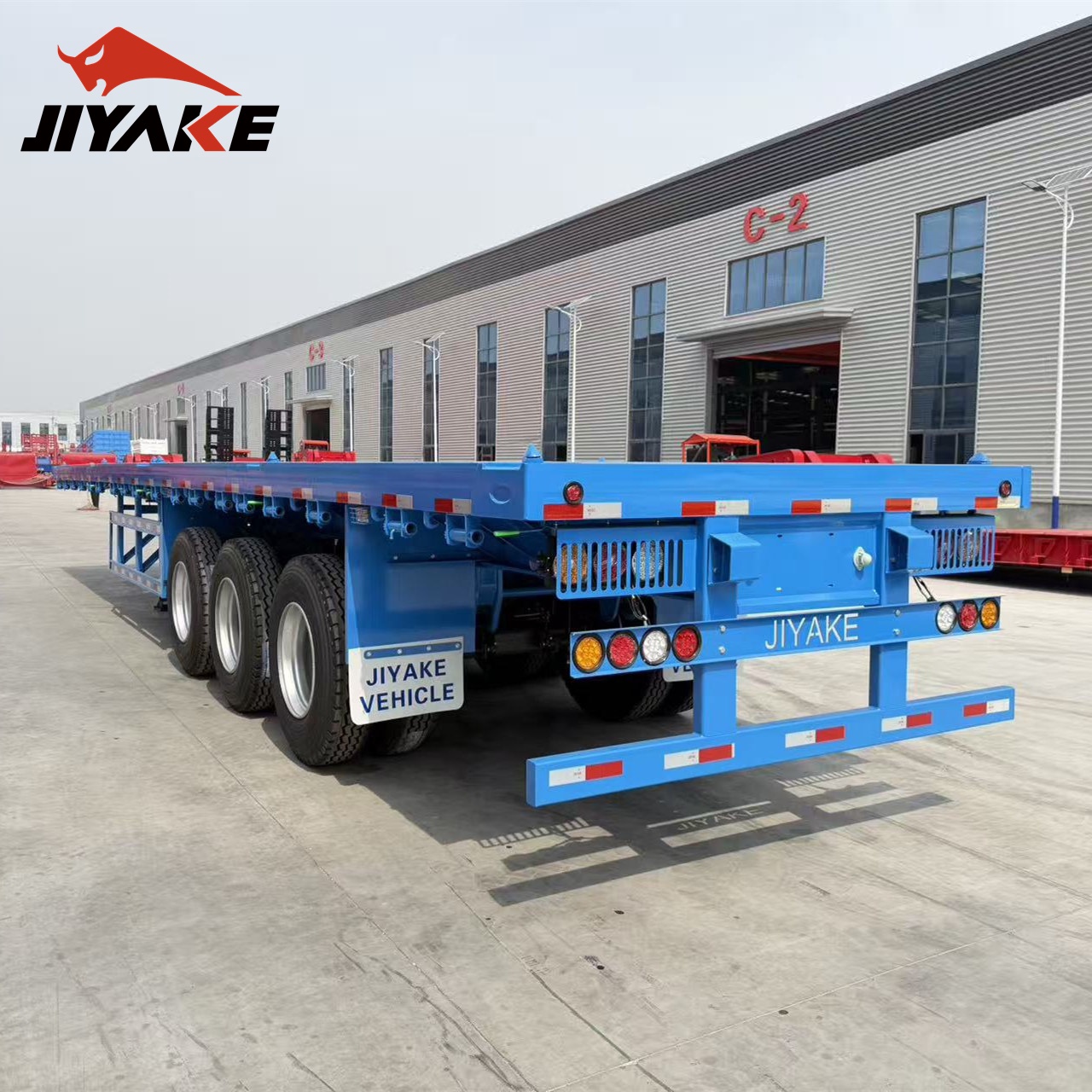
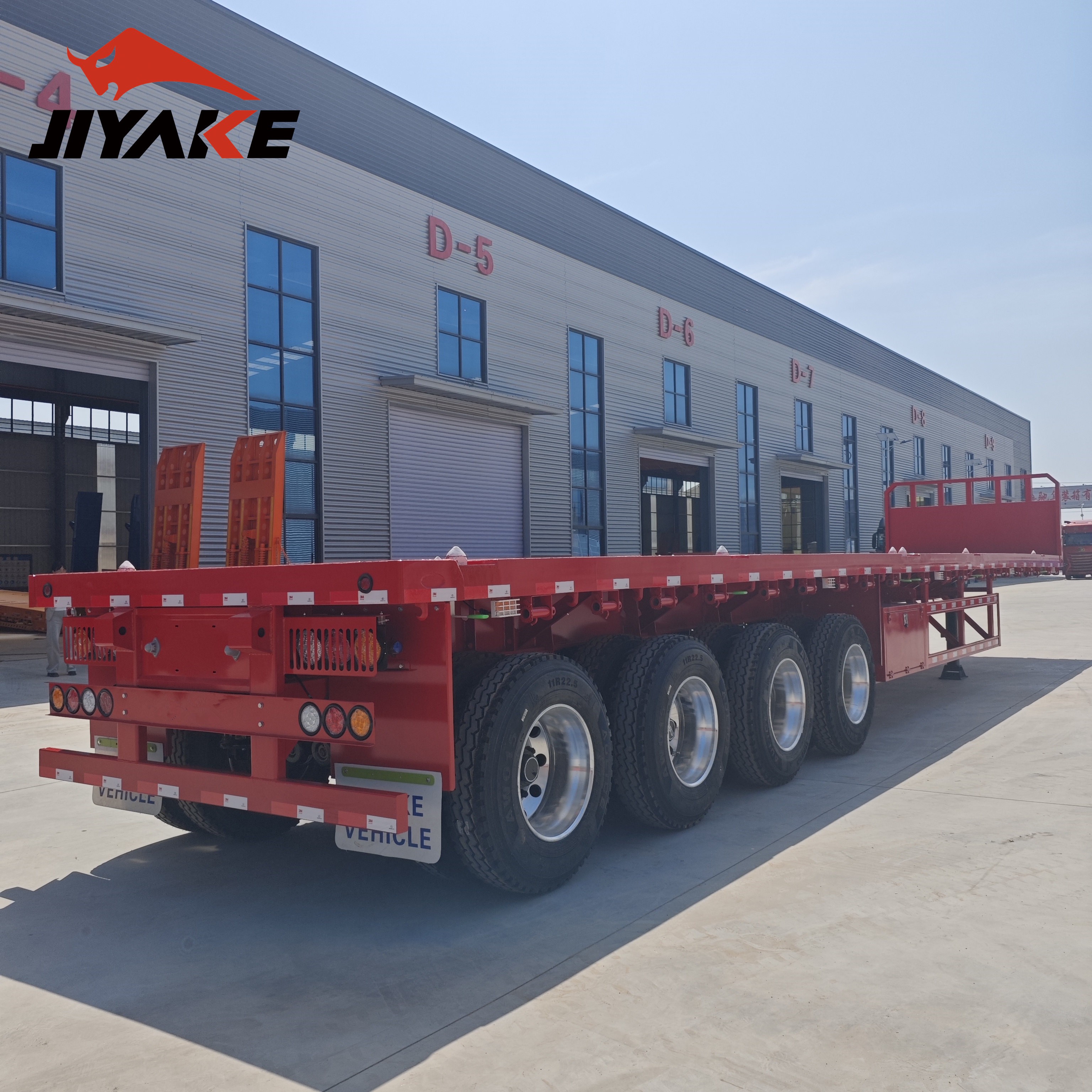
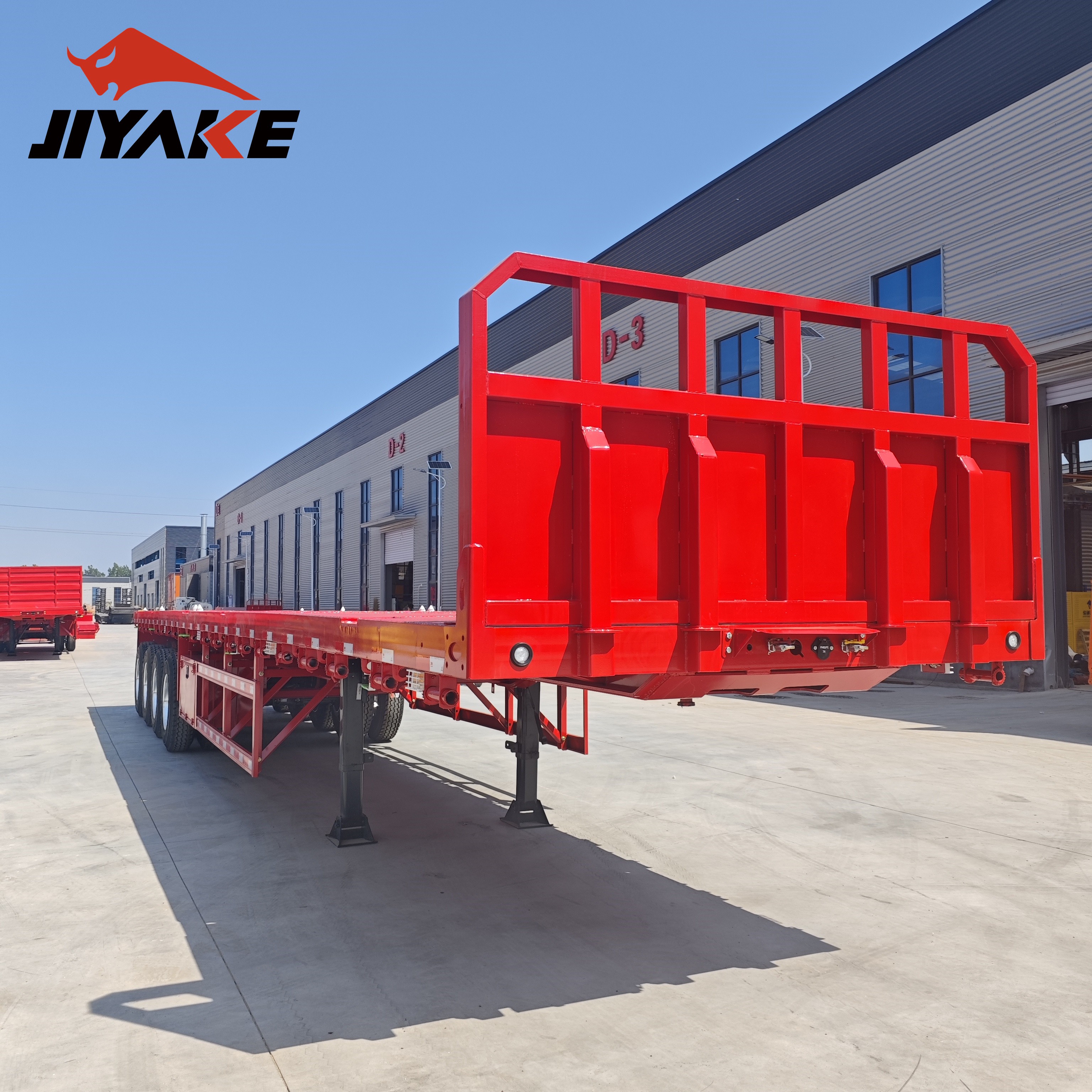
A 40-ton open-deck configuration with three 13-ton axles, leaf spring suspension, 12 container lockers, 12R22.5 tyres, and 28-ton single-action landing gear illustrates how one trailer can combine container-locking capability with accessible loading space. Its 12,500 mm by 2,500 mm deck footprint can suit oversized or irregular freight where side-free loading is valuable. Yet it will not necessarily replace a purpose-built skeleton chassis in high-frequency container shuttle work. The better choice depends on utilisation: dedicated container throughput versus broader freight flexibility.
When comparing these asset types, avoid treating the purchase price as the deciding number. Model expected loaded kilometres, empty repositioning, loading time, cargo range, and utilisation across the year. A dedicated skeleton may create stronger productivity in a stable container contract, while a versatile platform may reduce idle time in a mixed-cargo business.
A Practical Method for Reviewing Supplier Quotations
For a meaningful skeleton trailer cost comparison, ask each supplier to quote against the same written specification. Without a common baseline, the lowest figure may simply represent fewer locks, lower-rated running gear, lighter steel, or excluded accessories.
- Frame: request main beam dimensions, steel grade, cross-member details, welding process, and coating system.
- Container handling: define container sizes, lock positions, lock type, and whether extensions or sliding mechanisms are included.
- Running gear: list axle brand and rating, suspension type, tyre size and quantity, wheel specification, and brake arrangement.
- Coupling and support: confirm king pin size, landing gear capacity, spare tyre carriers, and tractor compatibility.
- Commercial scope: establish delivery terms, documents, warranty boundaries, spare parts, inspection requirements, and any assembly exclusions.
It is also wise to separate “included” from “available.” A supplier may be able to offer a component option, but that does not mean it is included in the quoted unit. This basic distinction prevents unpleasant revisions during final specification approval.
Think in Terms of Cost per Productive Year
The most defensible procurement decision considers acquisition cost, maintenance, tyre consumption, repair exposure, downtime risk, and usable life. A chassis that costs less but spends more time awaiting parts or structural repair may weaken the business case quickly. Conversely, adding every available option can dilute returns if the trailer is used only lightly on predictable routes.
Shandong Jiyake Automobile Sales Co., Ltd. supports commercial vehicle buyers with semi-trailers and specialised transport equipment for markets across Southeast Asia, Central Asia, and Africa. Its production resources include CNC cutting, automatic welding, large bending equipment, and dedicated tank manufacturing processes. For buyers assessing container chassis requirements, the practical benefit of working with an experienced manufacturer is the ability to discuss configuration in operational terms rather than selecting from a generic price list.
Before approval, bring operations, maintenance, and finance into the same review. Operations can confirm container mix and loading conditions; maintenance can identify parts and service concerns; finance can compare lifecycle cost against the contract or route revenue. That three-way conversation usually reveals whether a lower initial quotation is a genuine saving or merely a postponed expense.
Final Procurement View
A well-judged skeleton trailer cost reflects the work the chassis must perform, not simply the materials visible at delivery. Frame strength protects against fatigue; correctly matched axles and suspension sustain daily use; suitable container locks keep loading secure and efficient; and a realistic payload specification prevents both overbuilding and underbuilding.
For commercial assessors, the strongest purchase decision is usually the one that documents these trade-offs clearly. Compare like for like, question vague specifications, and calculate value over productive years rather than only at the point of purchase. In container transport, the chassis is often the quietest part of the fleet—but when it is incorrectly specified, it quickly becomes the most expensive problem.
Leave A Reply

First class quality service and professional after-sales team.
Get in Touch
*We respect your confidentiality and all information are protected.