




Recent Posts
 French Clients Visit JIYAKE Factory for Semi-Trailers and Used Trucks Inspection: Global Partners WelcomeOct 27, 2026
 Will a Fuel Tanker Trailer Fit Your Depot's Bottom-Loading System?Oct 15, 2026
- Aluminum vs. Carbon Steel Fuel Tanker Trailers: Which Should You Buy?Oct 15, 2026
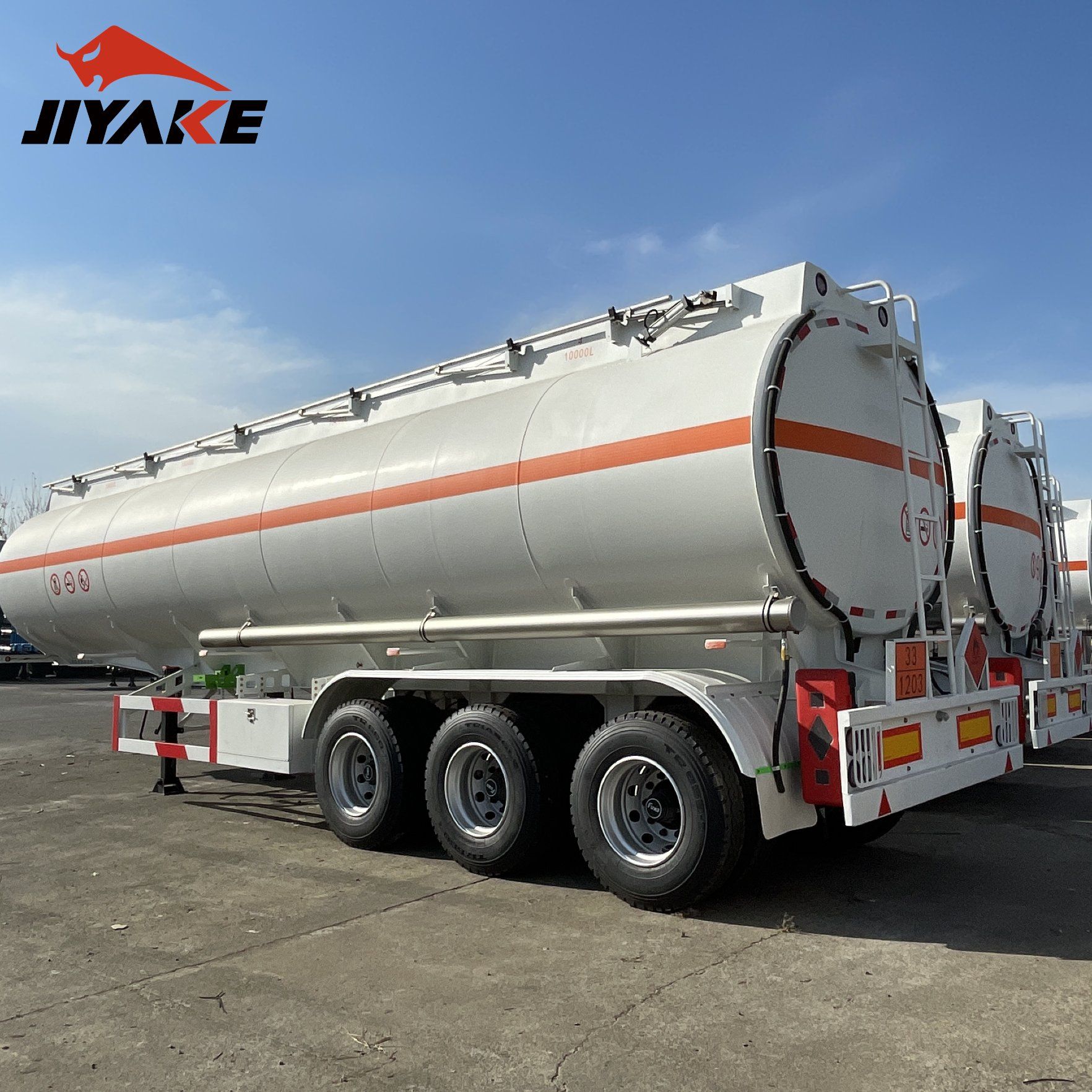
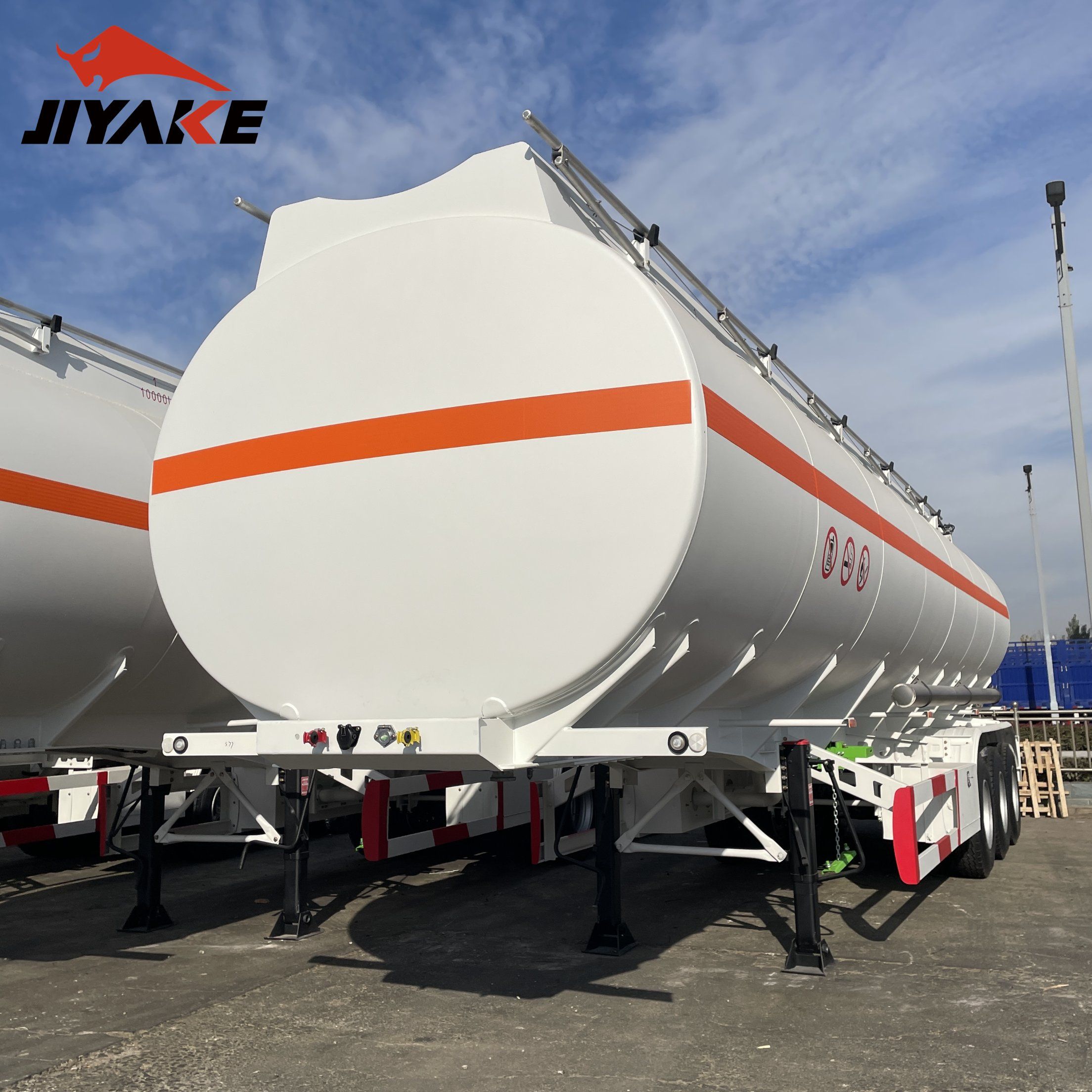

How to Choose a Fuel Tanker Trailer
Choosing the right fuel tanker trailer isn’t just about capacity or price—it’s about matching design, material, and certification to your operational environment and regulatory landscape. In regions like Southeast Asia, Africa, or Central Asia, where road conditions vary widely and infrastructure for maintenance or emergency response may be limited, a mismatch in axle load distribution, tank integrity, or braking performance can lead to downtime, safety incidents, or non-compliance during cross-border transport.
The core decision hinges on five interdependent factors: tank construction (material and thickness), volumetric vs. weight-based loading constraints, axle configuration and suspension type, braking system adequacy for loaded mass and descent gradients, and certification alignment with local or regional transport codes (e.g., ADR, GCC, or national road authority requirements). If your operation involves frequent unloading at remote batching plants or large-scale construction sites—where dust control, product purity, and rapid turnaround matter—then structural rigidity, sealing integrity, and discharge efficiency become non-negotiable, not optional upgrades.
Tank Material and Structural Integrity
Aluminum tanks offer weight savings but are more susceptible to impact damage on rough terrain and less resistant to certain chemical residues over time. Carbon steel—especially Q235A grade—is widely preferred in heavy-duty fuel and dry bulk applications for its balance of strength, weldability, and cost-effectiveness. For cement transport, where abrasion resistance and long-term pressure retention are critical, 4 mm Q235A steel forms the main tank body, while end plates use 6 mm thickness to withstand repeated pneumatic discharge cycles and mechanical stress during coupling/uncoupling. This layered approach ensures leak-proof integrity without over-engineering the entire structure.
Capacity, Weight Distribution, and Axle Configuration
A 40 m³ Cement Bulker Trailer rated for 40–60 ton loading must maintain legal axle loads across varying payload densities. Cement has a bulk density of ~1.2–1.5 t/m³, meaning full volume doesn’t always equal maximum weight—and vice versa. Overloading based solely on volume risks exceeding axle limits; underloading based only on weight wastes transport efficiency. Three 13-ton Fuwa axles with common leaf spring suspension provide predictable load-sharing and service simplicity in environments where air suspension parts or skilled technicians are scarce. The 12R22.5 tires (12 units) support this configuration while offering proven durability on unpaved access roads typical at construction sites.
Discharge System Reliability
Pressurized pneumatic discharge isn’t just convenient—it’s essential for maintaining product quality and reducing silo contamination. A 4-inch disc valve paired with a 4-inch seamless steel discharge pipe minimizes clogging and wear, especially when handling fly ash or blended cements with finer particles. The 500mm manhole cover (3 sets) allows safe, routine inspection and cleaning without compromising tank pressure integrity. Unlike gravity-fed systems, this setup enables fast, dust-free unloading directly into elevated silos—cutting cycle time by up to 40% compared to manual or auger-based alternatives in field observations.
Braking and Safety Systems
Fuel and cement trailers operate under high inertia loads. Standard drum brakes may fade on extended descents common in hilly regions of East Africa or Central Asia. “6 big chamber” braking systems—referring to dual-circuit, high-volume air brake chambers—deliver stronger, more consistent stopping force across all axles. This is especially important when descending from high-elevation quarries or ports, where thermal fade and brake imbalance pose real risks. Combined with proper kingpin selection (2-inch or 3.5-inch depending on tractor compatibility), landing gear rated at 28 tons ensures stable, secure coupling—even on uneven ground.
Manufacturing Consistency Matters
Weld quality determines whether a tank holds pressure, resists fatigue cracks, or leaks at seam joints after thousands of loading cycles. CNC cutting and automatic tank welding—capabilities available at Shandong Jiyake’s 300,000 m² facility—reduce human variability in joint preparation and heat input. This translates to uniform weld penetration, minimal distortion, and verified leak-tightness before delivery. It’s not about adding features; it’s about eliminating failure points that only surface under real-world stress—not lab tests.
When evaluating fuel tanker trailers—or any pressurized or high-mass bulk carrier—start with your heaviest, most frequent load scenario, then verify each component against that condition: tank wall thickness at stress points, axle rating per axle group, brake chamber volume relative to gross vehicle weight, and discharge pipe diameter versus expected flow rate. Anything specified beyond those thresholds adds cost without benefit; anything below invites risk. The Cement Bulker Trailer exemplifies this principle: no oversized valves, no redundant certifications, no over-spec’d materials—just calibrated engineering for demanding, real-world logistics.
Leave A Reply

First class quality service and professional after-sales team.
Get in Touch
*We respect your confidentiality and all information are protected.