




Recent Posts
 French Clients Visit JIYAKE Factory for Semi-Trailers and Used Trucks Inspection: Global Partners WelcomeOct 27, 2026
 Will a Fuel Tanker Trailer Fit Your Depot's Bottom-Loading System?Oct 15, 2026
- Aluminum vs. Carbon Steel Fuel Tanker Trailers: Which Should You Buy?Oct 15, 2026
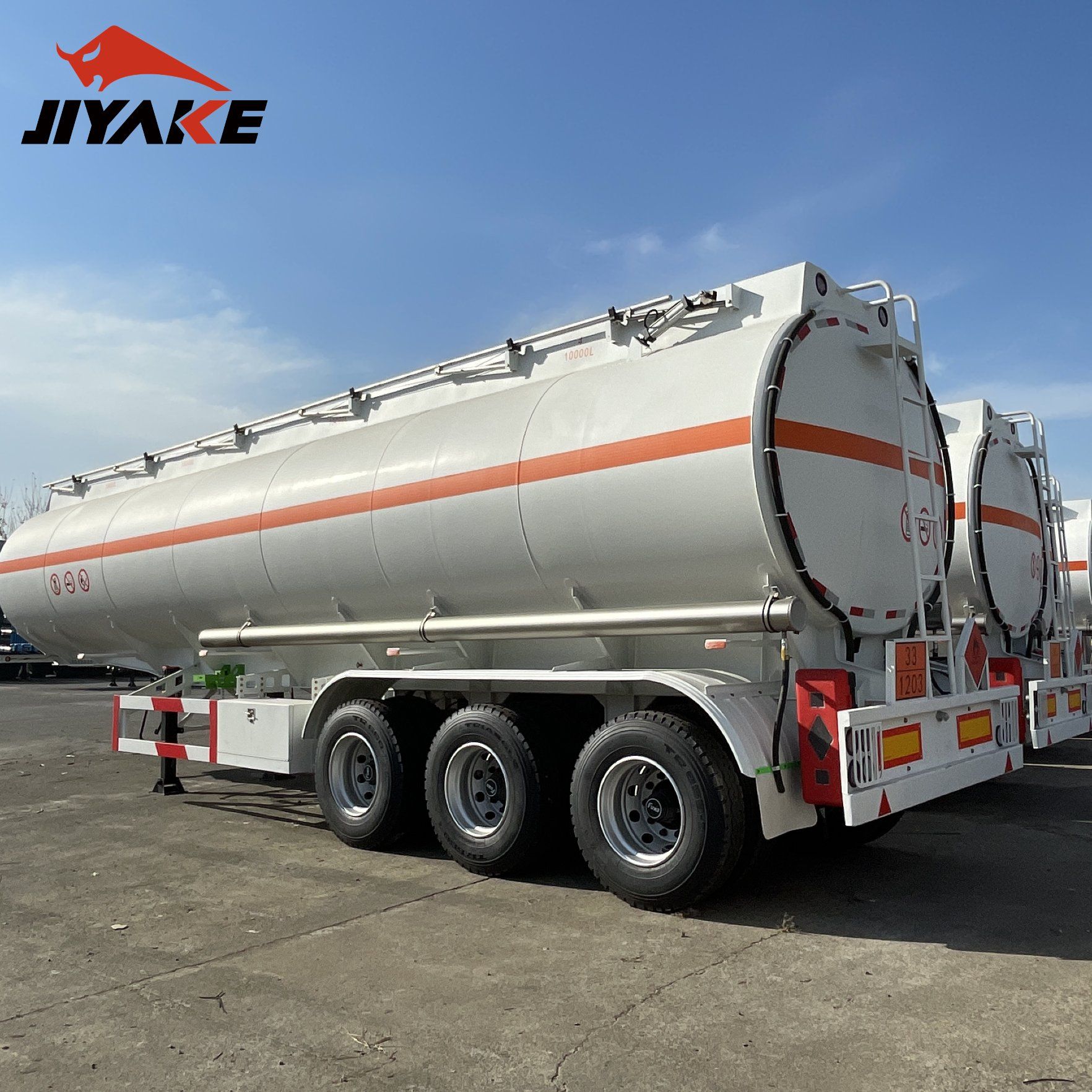
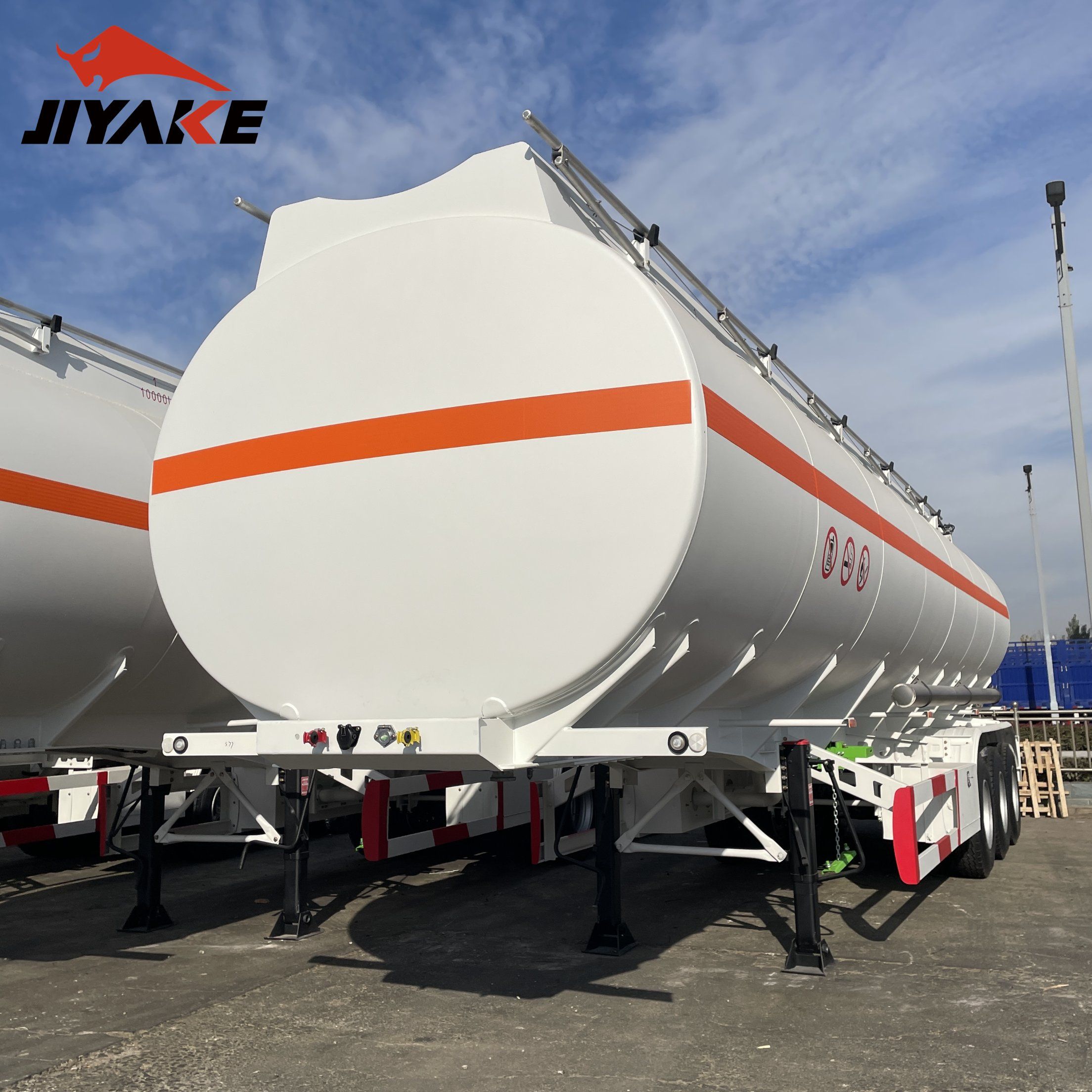

30m³ vs 40m³ Fuel Tanker Trailer
30m³ vs 40m³ Fuel Tanker Trailer: Which Delivers Better ROI for Your Fleet?
For fuel logistics operators across Southeast Asia, Central Asia, and Africa, the choice between a 30m³ and 40m³ fuel tanker trailer isn’t just about volume—it’s about balancing payload efficiency, axle load compliance, urban access, maintenance cost, and long-term fleet productivity. At Shandong Jiyake Automobile Sales Co., Ltd., we manufacture both configurations to ADR/ECE-compliant standards using high-strength Q345 steel tanks, fully automated tank welding lines, and precision CNC-formed chassis frames—ensuring zero leakage, structural integrity, and seamless integration with prime movers like our Tractor Truck.
Real-World Payload & Regulatory Constraints
A 40m³ trailer carries ~32,000 kg of diesel (density ~0.8 g/cm³), pushing close to legal gross vehicle weight limits in many markets—especially when paired with heavy-duty tractors. In countries with strict axle load regulations (e.g., Vietnam, Kenya, Kazakhstan), exceeding 36–38 tons GVW triggers permit requirements, route restrictions, or fines. The 30m³ model typically operates at 24,000–26,000 kg loaded—well within standard 3-axle semi-trailer limits without special permits. This makes it ideal for last-mile delivery in congested cities or mountainous regions where maneuverability and bridge weight allowances matter more than raw capacity.
Fuel Efficiency & Operational Cost per Litre Delivered
While the 40m³ unit moves 33% more fuel per trip, its higher tare weight (~8,200 kg vs. ~6,800 kg for 30m³) increases fuel consumption by 7–10% over 500 km—especially on hilly terrain. Our field data from 12-month fleet trials in Nigeria and Uzbekistan shows that 30m³ units achieve 1.8–2.1 km/L with a 380hp Tractor Truck, versus 1.5–1.7 km/L for 40m³ counterparts. When factoring tire wear (11pcs of 12.00R20 radials), brake pad replacement cycles, and suspension servicing, the 30m³ configuration delivers 12–15% lower TCO per 1,000 liters delivered in mixed urban/intercity operations.
Tank Design, Safety & Certification Readiness
Both capacities use identical safety architecture: internal baffles certified for UN ECE R105 impact resistance, vapor recovery systems compliant with ISO 10457, and grounding kits meeting IEC 60079-14 for hazardous area operation. However, the 40m³ design requires thicker tank walls (6 mm vs. 5 mm) and reinforced manhole assemblies—adding weight but enabling longer inter-terminal hauls. All units undergo 100% ultrasonic weld inspection and 3-bar hydrostatic testing before shipment. Our ISO 9001-certified facility ensures every trailer meets local registration requirements—from GCC vehicle type approval to South African SABS certification.
Chassis Integration & Tractor Compatibility
Optimal performance hinges on matching trailer capacity with tractor capability. Our 380hp Euro 3 Weichai-powered Tractor Truck (6×4 drive, Fast 10+2 gearbox, 40-ton GCW rating) pairs seamlessly with either trailer—but delivers superior gradeability and thermal management with the 30m³ unit on sustained 6% gradients. For flat, high-volume corridors (e.g., refinery-to-depot routes in Saudi Arabia or Indonesia), the 40m³ model maximizes daily throughput when coupled with this tractor’s high-torque powertrain and driver-centric sleeper cab.
Which One Fits Your Operation?
Choose 30m³ if: you operate in dense urban networks; face frequent axle-weight inspections; prioritize low maintenance frequency and driver retention; or serve fragmented retail fuel stations requiring multiple small deliveries per day. Choose 40m³ if: your routes are predominantly highway-based; you have centralized depots with bulk unloading infrastructure; and your regulatory environment allows 40-ton GCW without surcharges. At Jiyake, we don’t sell “one-size-fits-all”—we engineer solutions aligned to your cargo profile, road laws, and total cost of ownership. With 300,000 m² production capacity, automated tank welding, and 60-country service experience, we deliver not just trailers—but optimized fuel logistics systems.
Leave A Reply

First class quality service and professional after-sales team.
Get in Touch
*We respect your confidentiality and all information are protected.