




Recent Posts
 French Clients Visit JIYAKE Factory for Semi-Trailers and Used Trucks Inspection: Global Partners WelcomeOct 27, 2026
 Will a Fuel Tanker Trailer Fit Your Depot's Bottom-Loading System?Oct 15, 2026
- Aluminum vs. Carbon Steel Fuel Tanker Trailers: Which Should You Buy?Oct 15, 2026
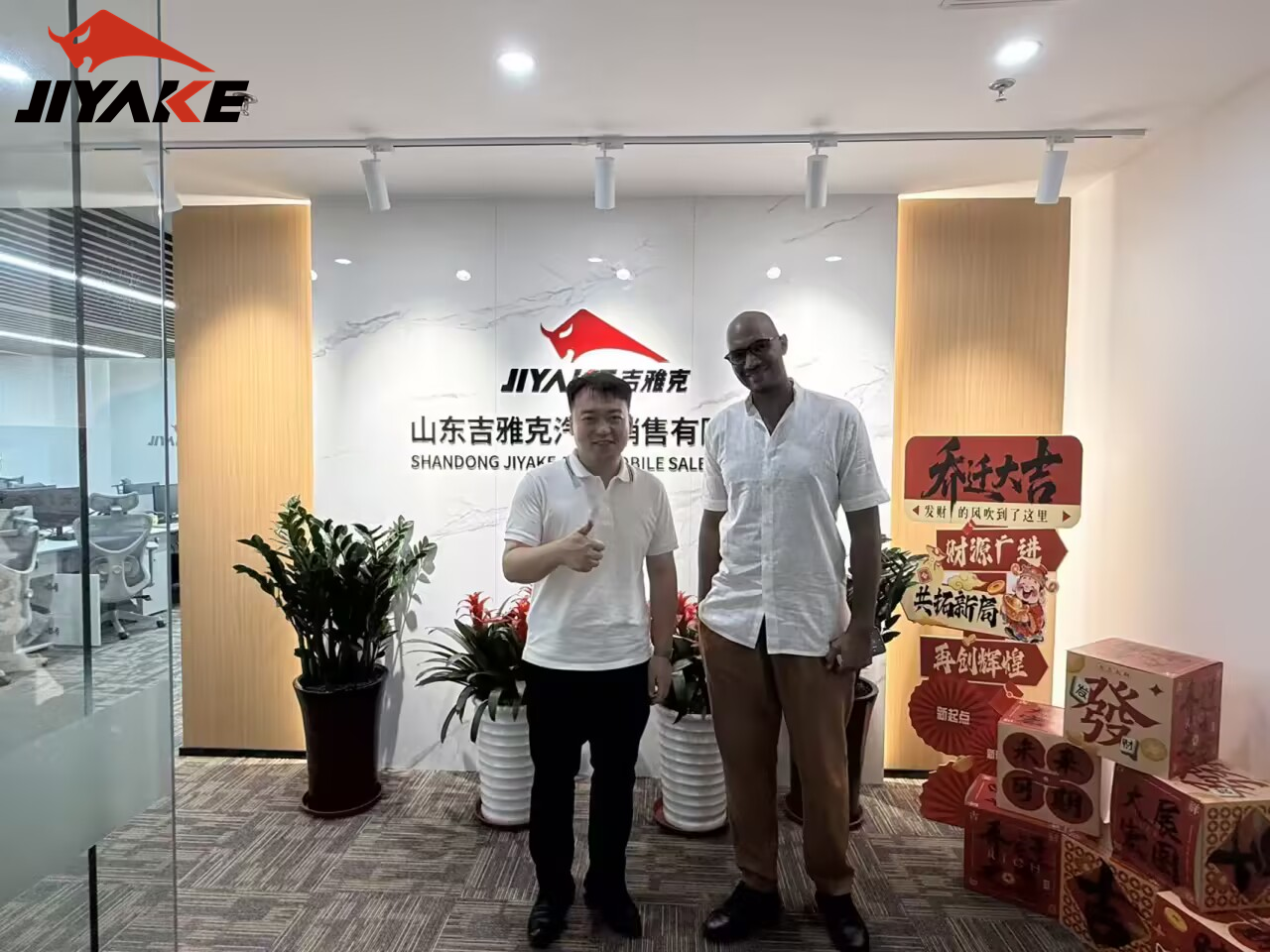
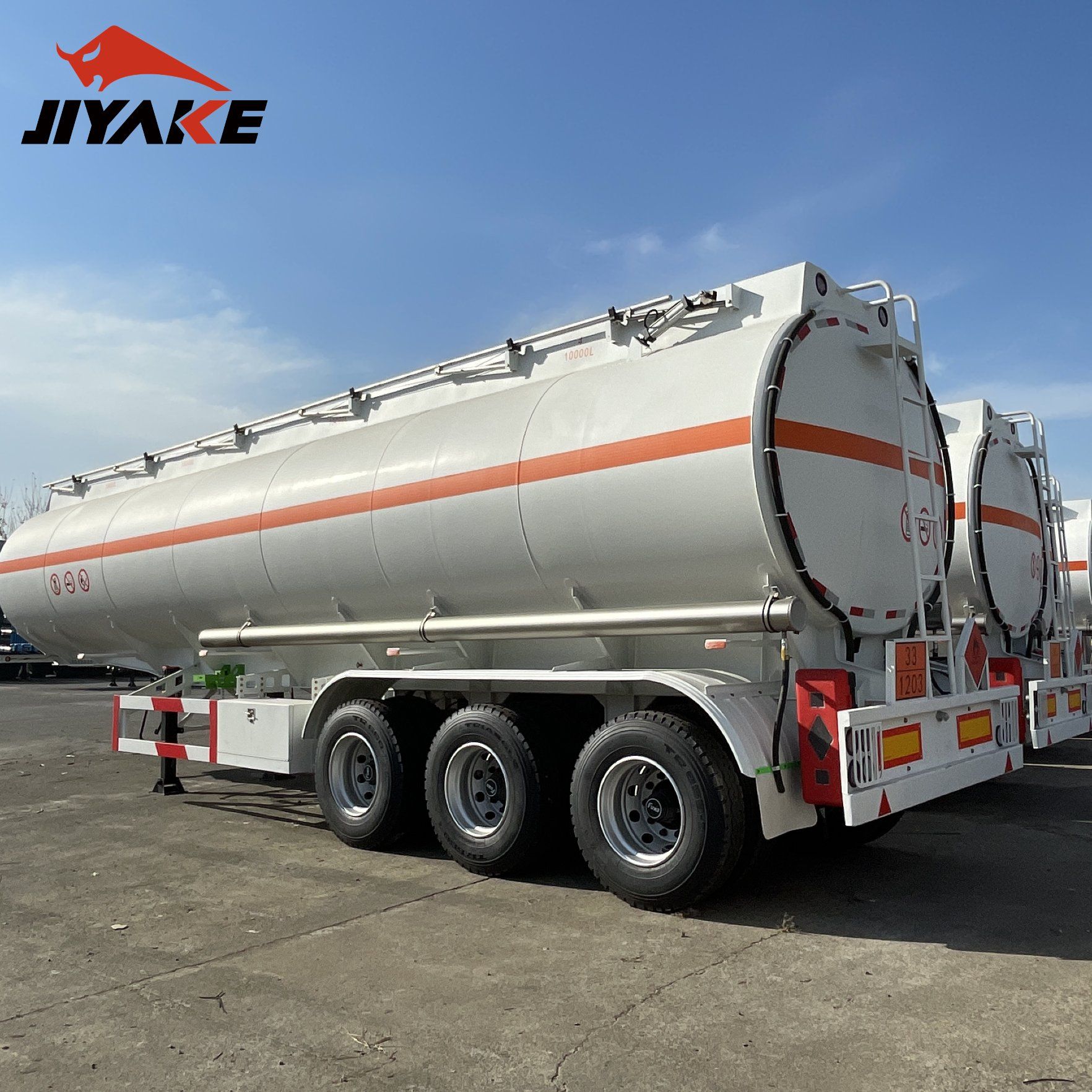
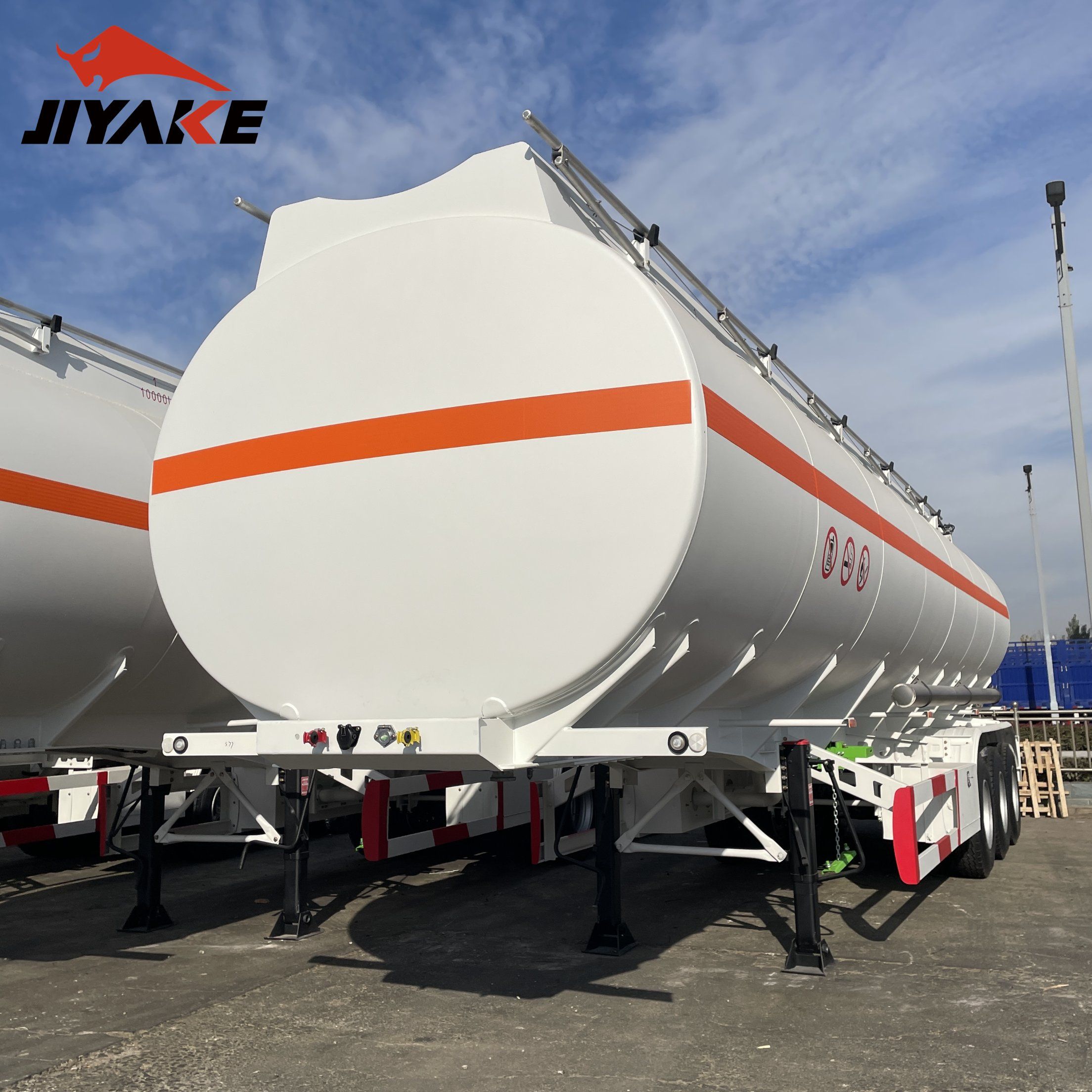

Fuel Tanker Trailer Price Guide
Fuel Tanker Trailer Price Guide: What Actually Moves the Needle on Cost?
If you’re comparing fuel tanker trailer prices — whether for a new fleet rollout in Nigeria, a replacement cycle across Southeast Asian oil logistics hubs, or a tender bid for a Middle Asian refinery contract — you’re likely hitting the same wall: quotes vary wildly, and the lowest number rarely reflects the true cost of ownership. This isn’t about “getting a good deal.” It’s about understanding which variables drive price *and* which ones silently erode reliability, compliance, or service life. Below is what experienced procurement managers, regional distributors, and transport operators consistently tell us matters most — not what sales brochures highlight.
Price Isn’t Set by Capacity Alone — It’s Anchored in Structural Integrity and Certification
A 40,000-liter fuel tanker trailer priced at $38,000 looks compelling — until you learn the tank shell uses 3.5mm Q235A steel instead of the 4–5mm minimum required for sustained hydrocarbon transport under ADR Class 3 pressure cycling. Thin-walled tanks fatigue faster, especially on unpaved haul routes or in high-temperature environments common across Africa and Central Asia. That “savings” often translates to premature weld cracking, increased inspection downtime, or rejection at border checkpoints where tank thickness is verified with ultrasonic gauges.
Similarly, axle configuration doesn’t just affect load rating — it affects price *and* long-term maintenance exposure. A three-axle layout with Fuwa 13-ton axles (as used in our Cement Bulker Trailer) adds structural redundancy and weight distribution that supports consistent 35–45 ton GCW operation over 5+ years. But cheaper alternatives may use generic 10-ton axles with non-replaceable brake chambers — a false economy when roadside repairs cost 3–4x more than scheduled servicing.
Compliance Isn’t a Checkbox — It’s a Cost Multiplier (or Avoidance)
ADR certification isn’t optional in Europe — but many buyers assume its absence lowers cost. In reality, skipping ADR-compliant design (e.g., mandatory emergency shut-offs, vapor recovery ports, flame arrestors, and impact-resistant manhole covers) doesn’t reduce manufacturing cost — it shifts risk downstream. Non-ADR units frequently require costly retrofitting before entering EU-aligned markets like Turkey or Morocco. Worse, some African and ASEAN countries now enforce ADR-aligned technical inspections at ports — meaning non-certified trailers sit idle while owners scramble for third-party validation.
The same applies to ISO 9001 production oversight. Factories without certified welding procedure specifications (WPS), traceable material heat numbers, or automated tank seam welding often cut corners on internal reinforcement rings or nozzle weld penetration — defects invisible during visual inspection but exposed under repeated vacuum/pressure cycles. You won’t see that in a spec sheet. You’ll see it in your unscheduled repair log after 18 months.
Customization Has Real Trade-Offs — Not Just Options
“Customizable” sounds flexible — but in practice, most fuel tanker trailer price differences stem from four decisions with cascading consequences:
- Tank material grade: Q235A is standard for diesel/kerosene; Q345R or stainless steel (304/316L) is needed for aviation fuel, ethanol blends, or aggressive additives. The latter adds 22–35% to base price — but prevents corrosion-induced contamination claims that can void insurance coverage.
- Discharge system type: Bottom-unloading via 4-inch disc valves (like those on our bulk cement models) offers fast, dust-free transfer — but requires precise silo interface alignment. Top-loading with vapor-balanced hatches reduces infrastructure dependency but slows turnaround by 3–7 minutes per load. That time loss compounds across 200+ annual deliveries.
- Suspension & tire package: Leaf spring suspension works for stable, paved corridors. But air-ride systems — while adding $4,000–$6,500 — cut payload stress on sensitive fuel metering systems and extend pump seal life by ~40% in stop-start urban delivery cycles.
- Braking architecture: “6 big chamber” setups (standard on heavy-duty tankers) provide predictable fade resistance during long descents — critical in mountainous regions like Ethiopia or northern Vietnam. Dual-circuit ABS is increasingly mandated in Gulf Cooperation Council (GCC) tenders, yet many low-cost units still ship with mechanical-only systems.
What “Competitive Pricing” Really Means in Practice
At Shandong Jiyake, we quote fuel tanker trailers starting from $42,500 (FOB Qingdao) for a 35,000L ADR-compliant unit with Q235A/4.5mm shell, Fuwa 13T axles, 12R22.5 tires, and full pneumatic discharge. That’s not the lowest number available — but it’s the lowest price where every component meets documented durability thresholds for 5-year commercial operation in demanding climates.
Why? Because our CNC-cutting and tank-automatic-welding lines eliminate manual weld inconsistencies — reducing post-fabrication rework by 60% versus conventional workshops. That efficiency isn’t passed on as discounting; it’s invested in thicker end plates, redundant safety valves, and batch-traceable steel sourcing. You pay for consistency — not just volume.
This approach explains why our units operate reliably in places like Kazakhstan’s -40°C winters and Kenya’s red-dust corridors — environments where “budget” trailers fail within 12–18 months due to brittle fracture or seal degradation.
Next Steps: How to Turn Price Data Into Procurement Clarity
Before requesting another quote, ask your supplier three questions — and insist on written answers:
- Can you provide the WPS documentation and material test reports (MTRs) for the tank shell and nozzles used in this specific configuration?
- Which ADR annexes (e.g., 6.8.2.2 for manhole strength, 6.8.2.5 for emergency shut-off timing) does this unit comply with — and has it been tested by an accredited body?
- What is the average field failure rate for the braking system and discharge valve assemblies over the first 24 months — based on warranty claim data, not theoretical MTBF?
If answers are vague, delayed, or refer only to “industry standards,” treat the quote as preliminary — not actionable. Real price transparency starts with verifiable process control, not catalog numbers.
For operators evaluating total cost of ownership beyond initial sticker price, the real leverage lies not in negotiating line items — but in aligning specification rigor with actual operating conditions. A $4,200 premium for ADR-compliant vapor recovery today avoids $18,000 in port detention fees tomorrow. That math doesn’t change with currency fluctuations — only with attention to detail.
Leave A Reply

First class quality service and professional after-sales team.
Get in Touch
*We respect your confidentiality and all information are protected.