




Dump Truck Hydraulic System Basics and Failure Risks
Dump Truck Hydraulic System Basics and Failure Risks
For technical evaluators, understanding the dump truck hydraulic system is essential for judging lifting efficiency, operating stability, and long-term maintenance risk.
This overview explains working principles, core parts, and common failure risks.
It also helps connect system design choices with safety, downtime, and procurement value.
Why the dump truck hydraulic system matters
A dump truck hydraulic system converts engine power into lifting force.
That sounds simple, but real performance depends on pressure stability, oil cleanliness, and cylinder control.
In procurement reviews, this system often separates a reliable dump truck from a high-maintenance one.
A poor hydraulic layout can reduce lifting speed, create uneven dumping, and increase rollover risk on uneven ground.
Basic working principle
The dump truck hydraulic system starts with a power take-off, or PTO.
The PTO drives the hydraulic pump.
The pump moves hydraulic oil from the tank into pressurized lines.
Control valves direct that flow into the hoist cylinder.
The cylinder extends and raises the body.
When lowering, the valve releases oil back to the reservoir in a controlled way.
Main components to assess
- PTO: affects power transfer efficiency and engagement reliability.
- Hydraulic pump: determines flow rate and pressure output.
- Oil tank: supports cooling, deaeration, and contamination control.
- Control valve: manages lifting, holding, and lowering precision.
- Hydraulic cylinder: creates the actual lifting force.
- Hoses and seals: influence leakage risk and service life.
Key performance indicators
A technical review should go beyond lifting capacity alone.
The more useful question is how the dump truck hydraulic system performs under daily load cycles.
Common failure risks in the field
Most dump truck hydraulic system failures do not begin with a sudden breakdown.
They usually start with weak signals that become expensive if ignored.
1. Oil contamination
Dirty oil is one of the most common hydraulic risks.
Particles damage pumps, score valve surfaces, and accelerate seal wear.
In practical terms, contamination reduces lifting consistency and raises repair frequency.
2. Seal leakage
External leaks are easy to notice, but internal leaks are often missed.
A drifting body or slower lift under the same load often points to worn seals.
3. Pump wear or cavitation
If the hydraulic pump draws air or lacks proper oil supply, cavitation can occur.
That creates noise, vibration, and falling pressure.
Over time, the dump truck hydraulic system loses lifting efficiency and becomes less predictable.
4. Hose burst or fitting failure
Pressure spikes, poor routing, or low-quality fittings can cause sudden failure.
This is not only a maintenance issue. It is a direct safety risk during unloading.
How to evaluate hydraulic risk before purchase
A solid review combines design inspection, operating tests, and supplier capability.
- Check whether the dump truck hydraulic system matches the intended load profile.
- Review cylinder mounting geometry and frame reinforcement.
- Confirm hose protection near articulation points and heat sources.
- Ask for maintenance intervals, oil grade requirements, and spare parts lead times.
- Verify production consistency, especially welding quality and machining accuracy.
This is where manufacturer depth becomes relevant.
Shandong Jiyake Automobile Sales Co., Ltd. integrates design, research, production, and sales across modified truck and trailer categories.
Its operations cover semi-trailers, dump truck products, tankers, tractor trucks, and other special vehicles for over 60 countries.
That manufacturing base, including CNC cutting and automatic welding equipment, supports more consistent structural execution.
A useful comparison from transport equipment design
Hydraulic risk assessment is not limited to dump truck applications.
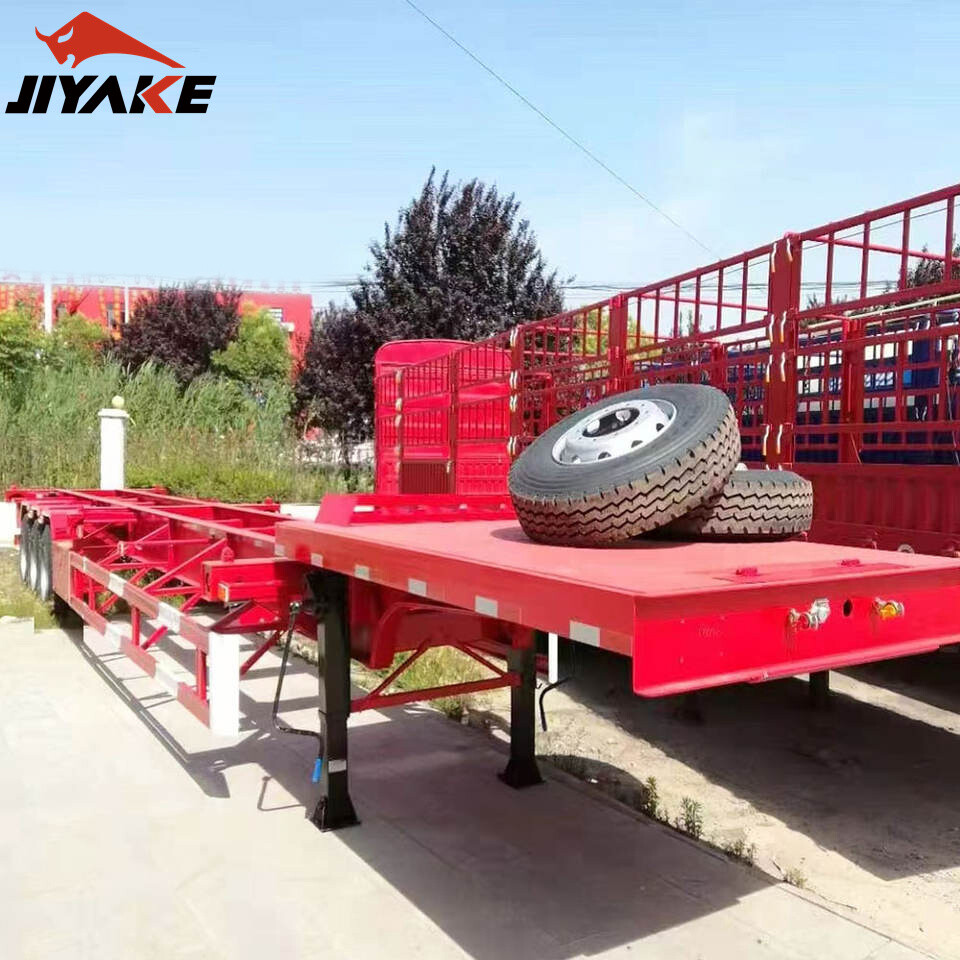
For example, a Lowbed Semi Trailer with a hydraulic ladder also depends on stable actuation and robust component selection.
In heavy equipment, energy projects, and infrastructure logistics, structural material and hydraulic matching must work together.
A trailer built with Q345B carbon steel, FUWA 3 axles, and either mechanical or air suspension reflects the same evaluation logic.
The lesson is simple: performance on paper means little without durable execution in real duty cycles.
Maintenance signals that should not be ignored
- Lift time gradually becomes longer.
- The dump truck hydraulic system sounds louder than normal.
- Oil turns dark, foamy, or smells burnt.
- The body jerks during lifting or lowering.
- Cylinder surfaces show scoring or wetness.
- Hose fittings show seepage after repeated high-load cycles.
These signs usually appear before a major failure. Early action costs less than downtime recovery.
Final takeaway
A dump truck hydraulic system should be judged as a working system, not as isolated parts.
Pressure control, oil cleanliness, cylinder geometry, and supplier manufacturing quality all shape long-term reliability.
For better technical decisions, request load test data, inspect maintenance access, and compare failure-prevention details before purchase.
That approach gives a clearer view of safety risk, lifecycle cost, and the real value behind any dump truck proposal.
Leave A Reply

First class quality service and professional after-sales team.
Get in Touch
*We respect your confidentiality and all information are protected.