




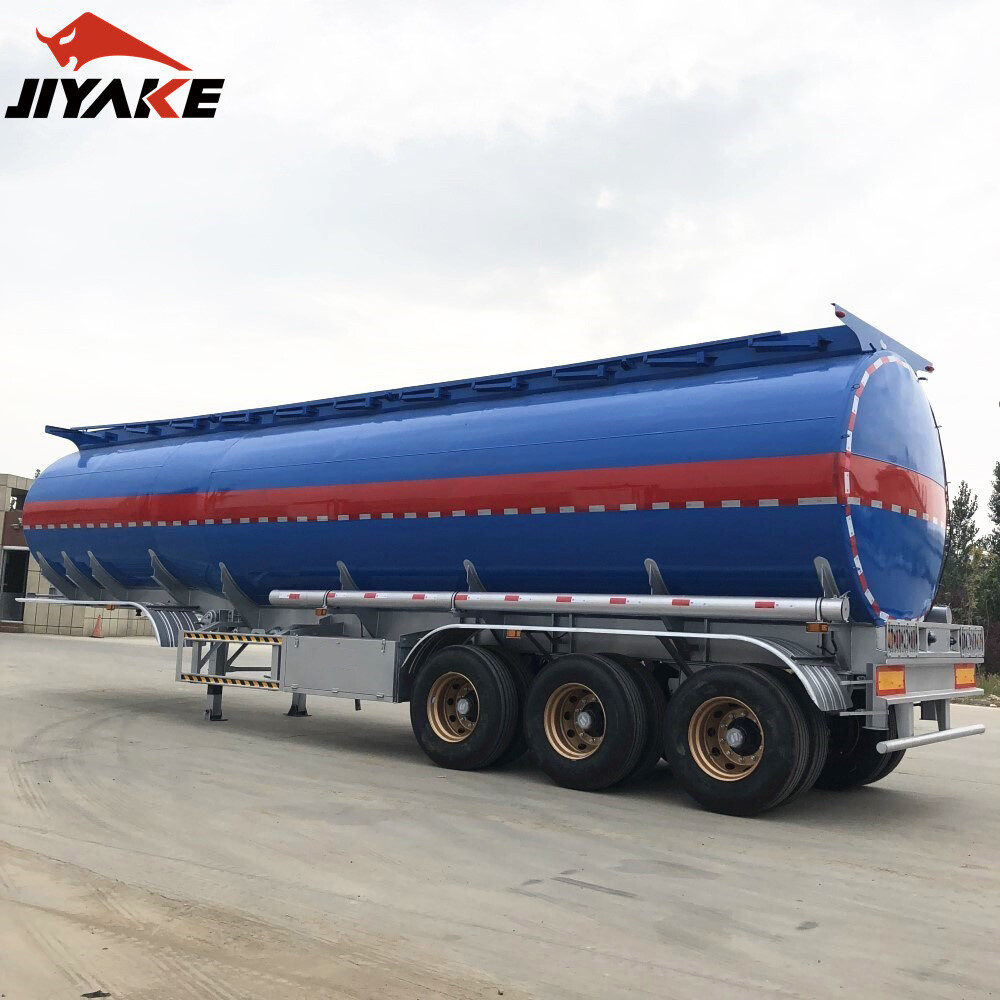

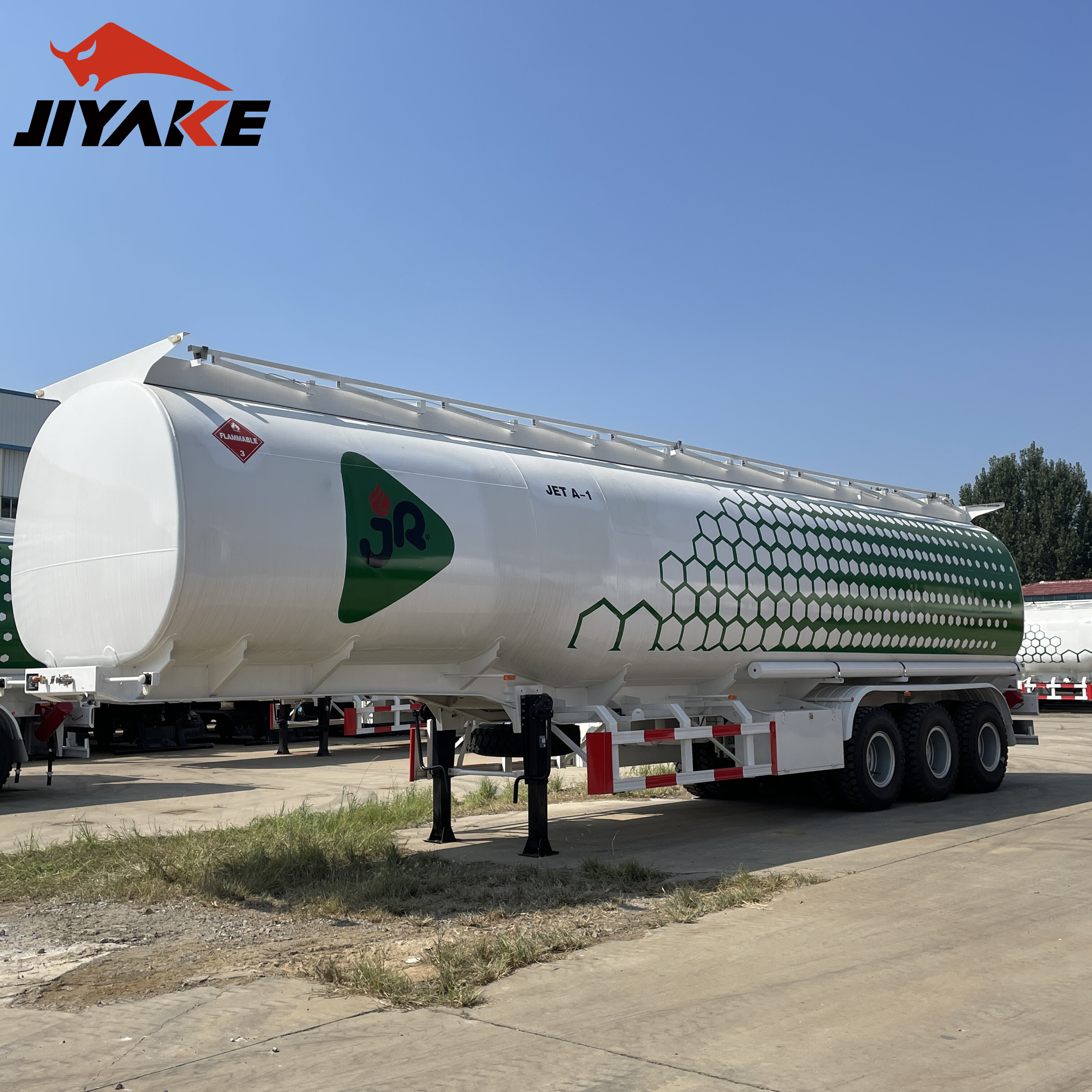
Which safety features have the biggest effect on fuel tanker trailer price?
A fuel tanker trailer can look competitively priced on a quotation until the procurement team compares the safety specification line by line. The largest price differences usually come from the systems that control fuel release, vehicle stability, and fire risk—not from cosmetic options or minor accessory changes. For buyers evaluating Fuel Tanker Trailer Price, reinforced tank construction, rollover protection, emergency shut-off equipment, compliant loading and discharge arrangements, and advanced braking systems usually have the greatest effect on the initial investment.
The practical issue often appears when two trailers have similar capacity, axle count, and overall dimensions but substantially different quotations. One may be built for basic transport conditions, while the other includes stronger tank protection, more complete emergency controls, safer valve arrangements, and braking equipment suited to frequent highway operation. The lower-priced unit may still be appropriate in a limited operating environment, but it should not be treated as an equivalent specification without checking the risk controls behind the price.
Tank construction is usually the first major cost driver
The tank itself is the most important safety-related component because it contains flammable cargo under changing road, temperature, and pressure conditions. Material grade, plate thickness, welding quality, internal compartment design, and reinforcement around stress points all affect cost. A tank that is designed to resist vibration, pressure variation, and road-induced flexing will generally require more material and more controlled fabrication than a basic vessel.
Buyers should pay close attention to the following areas:
- Tank shell and end-plate thickness: These affect structural durability and resistance to deformation. Thickness alone is not enough; the full design must match the intended fuel type, volume, and operating conditions.
- Internal baffles or compartment separation: These help manage liquid surge. A partially filled tank can create significant load shift during braking or turning, so the internal layout has a direct connection to handling stability.
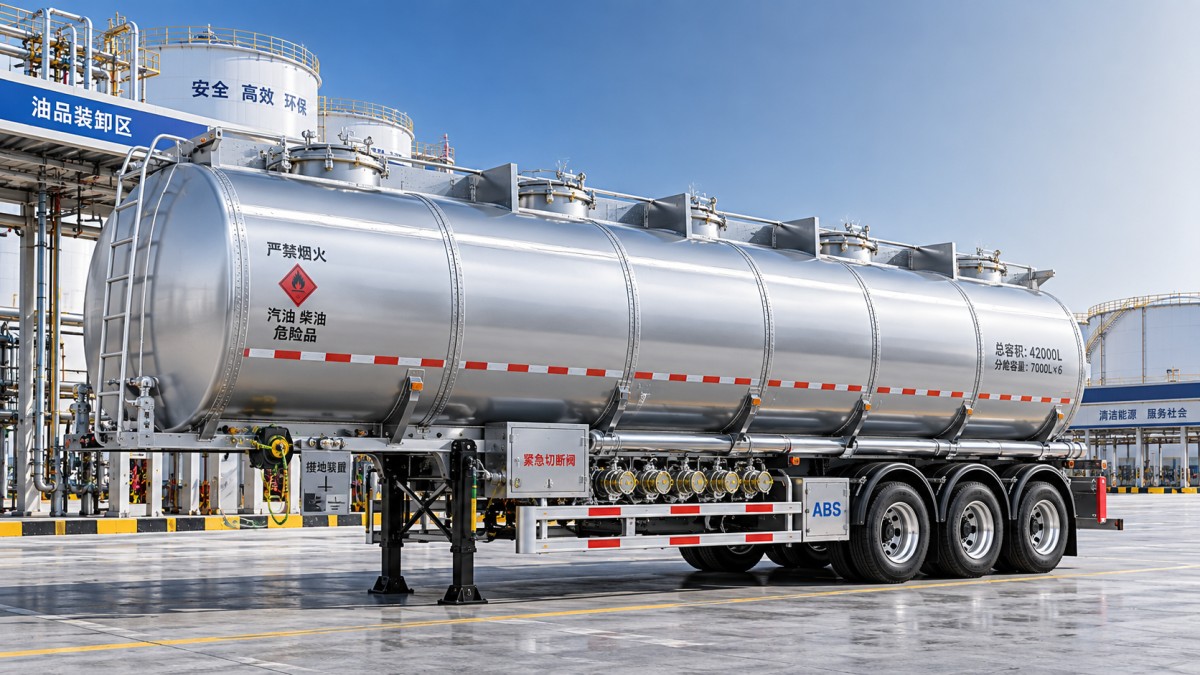
- Manhole covers and sealing systems: Better covers, gaskets, pressure-relief arrangements, and locking mechanisms can raise the price but reduce the chance of leaks or unintended opening.
- Weld inspection and surface treatment: Controlled welding, tested seams, and appropriate internal or external protection may increase manufacturing cost while reducing corrosion and leakage risk over the trailer’s service life.
Procurement teams should avoid comparing tank material only by a short description such as “carbon steel” or “aluminum.” Ask for the tank layout, shell and head thickness, compartment count, baffle arrangement, welding process, and protection at fittings. These details reveal whether the quoted tanker is designed around real operating stresses or simply around nominal capacity.
Rollover prevention can change both chassis and braking cost
Fuel tankers have a relatively high center of gravity, especially when tank geometry, fill level, and cargo movement are not carefully managed. A rollover event can turn a vehicle incident into a fuel-release and fire emergency. Features intended to reduce this exposure can materially affect trailer price because they involve the chassis, suspension, braking circuit, and sometimes electronic control equipment.
At the basic level, a properly matched axle group, suspension system, tires, wheels, and brake chambers provide the foundation for stable travel. Higher-specification configurations may include anti-lock braking systems, electronic braking systems, roll stability support, load-sensing brake control, or upgraded suspension components. The exact package depends on the tractor, road profile, permitted payload, and the regulatory requirements that apply where the trailer will operate.
Not every route requires the most advanced electronic package. A fleet operating mostly at low speeds within a controlled terminal may evaluate the benefit differently from a fleet handling long-distance deliveries, uneven roads, frequent roundabouts, mountain routes, or dense urban traffic. The right question is not whether an option is “premium,” but whether it reduces a credible operating risk that the fleet faces regularly.
Emergency shut-off and bottom-discharge protection deserve close scrutiny
A substantial portion of the safety premium in a tanker trailer may be found around the loading and discharge system. Fuel movement is often where leaks, overflows, hose failures, and ignition hazards become most likely. A low initial quotation may omit redundancy or use simpler hardware in areas where a failure can be expensive to contain.
Important equipment can include emergency shut-off valves, remotely operated closure mechanisms, protected bottom outlets, shear protection for exposed valves, secure hose connections, and systems that allow product flow to be stopped quickly. The intended operating procedure matters. A trailer used for frequent loading and delivery cycles needs valve equipment that can tolerate repeated use and still close reliably under emergency conditions.
During quotation review, request a clear answer to these questions:
- Which valves are manually operated, and which can be closed remotely?
- What happens if the trailer is struck near a bottom outlet or discharge pipe?
- Are the valves protected from road debris and accidental impact?
- How are hose connections, caps, and seals retained during transport?
- Is the system configured for the loading method and fuel products the fleet actually handles?
These components may seem smaller than the tank body, yet their effect on total risk is large. A well-designed emergency isolation arrangement can be more valuable than an inexpensive capacity upgrade that does not improve containment.
Grounding, bonding, and vapor control are not minor accessories
Static electricity is a serious consideration whenever flammable liquids are transferred. Grounding and bonding equipment, conductive transfer paths, reliable connection points, and clearly integrated operating controls can add cost, but they are fundamental safeguards during loading and unloading. Their value depends on correct use, so the trailer design should make the safe process practical rather than difficult for operators to follow.
Vapor-control provisions can also influence price. Depending on the fuel product and local operating requirements, a tanker may need vapor recovery connections, sealed vents, pressure-vacuum relief equipment, or compatible loading interfaces. These features should be assessed as a complete transfer system. Installing one higher-grade fitting while using incompatible hoses, poorly protected connections, or unsuitable loading procedures does not create the intended safety benefit.
Buyers should confirm compatibility with terminal equipment before finalizing the specification. This is especially important when trailers will serve more than one depot, fuel type, or unloading arrangement. Modifying ports, valves, or vapor connections after delivery can be more disruptive and expensive than specifying them correctly at the beginning.
Fire protection and electrical design affect the quote in different ways
Fire extinguishers, mounting brackets, warning markings, reflective materials, protected electrical wiring, emergency lighting, and isolation devices are often grouped into a general “safety package.” They should not be evaluated as a single generic line item. Some are visible accessories; others are integrated into the trailer’s electrical and chassis design.
Look for secure extinguisher mounting locations that remain accessible, protected cable routing, sealed connectors where appropriate, robust rear lighting protection, and clearly positioned emergency controls. The incremental cost of each item may be modest compared with tank construction or braking, but weak execution can create persistent maintenance issues. Loose brackets, damaged wiring, or poorly routed cables can undermine a specification that looked complete on paper.
Why the cheapest safe-looking specification may cost more later
A purchase decision based only on the lowest Fuel Tanker Trailer Price can create higher costs through downtime, parts replacement, difficult inspections, cargo loss, or operating restrictions. The better comparison is the cost of a usable trailer over its planned service period. That means considering maintenance access, replacement-part availability, valve serviceability, brake component compatibility, corrosion protection, and the ability to inspect critical areas without excessive disassembly.
It is also useful to separate essential safety features from optional convenience features. Emergency shut-off capability, secure containment, stable braking behavior, proper grounding provisions, and protected discharge equipment should be treated as core requirements. Cosmetic upgrades, nonessential storage arrangements, or appearance-focused additions can be considered later if the budget is constrained.
A practical way to compare supplier quotations
Ask each supplier to provide a configuration sheet that lists safety equipment separately from capacity and chassis details. Avoid accepting broad wording such as “standard safety system.” The comparison should identify the tank material and thickness, compartment and baffle design, manhole arrangement, brake type, suspension, valve layout, emergency closure method, grounding points, electrical protection, and included fire-control equipment.
Fleets that buy several trailer types can use the same comparison discipline without assuming that the specifications are interchangeable. For example, a Cement Bulker Trailer may use a 6-big-chamber braking system, three 13-ton axles, and a 28-ton landing gear arrangement for dry bulk transport, but a fuel tanker requires a separate review of liquid-surge control, fuel containment, transfer safety, and ignition-risk protection.
The biggest safety-related price increases are normally justified when they improve containment, prevent unstable vehicle behavior, or allow fuel flow to be stopped quickly. Before approving a quote, match those features to the fleet’s actual cargo, route, loading method, and maintenance capability. A trailer is not truly lower cost simply because its purchase figure is lower; it must also provide the safety margin required for the work it will perform.
Leave A Reply

First class quality service and professional after-sales team.
Get in Touch
*We respect your confidentiality and all information are protected.