




How axle configuration changes fuel tanker trailer price
How Axle Configuration Changes Fuel Tanker Trailer Price
Fuel Tanker Trailer Price is often discussed as if it were determined mainly by tank volume, steel thickness, or pump equipment. In real commercial evaluations, axle configuration can change the number more than buyers expect. A two-axle tanker and a three-axle tanker with similar tank capacity may look close on a quotation sheet, but they are built for different loading assumptions, road conditions, tire loads, and regulatory environments.
For a business evaluator, the question is not simply whether more axles cost more. They do. The more useful question is whether the added axle cost prevents operational restrictions, excessive tire replacement, poor load distribution, or underused tanker capacity. A lower purchase price can become expensive when the trailer cannot legally or practically carry the volume planned for the route.
Why axle count affects the quotation before the trailer leaves the factory
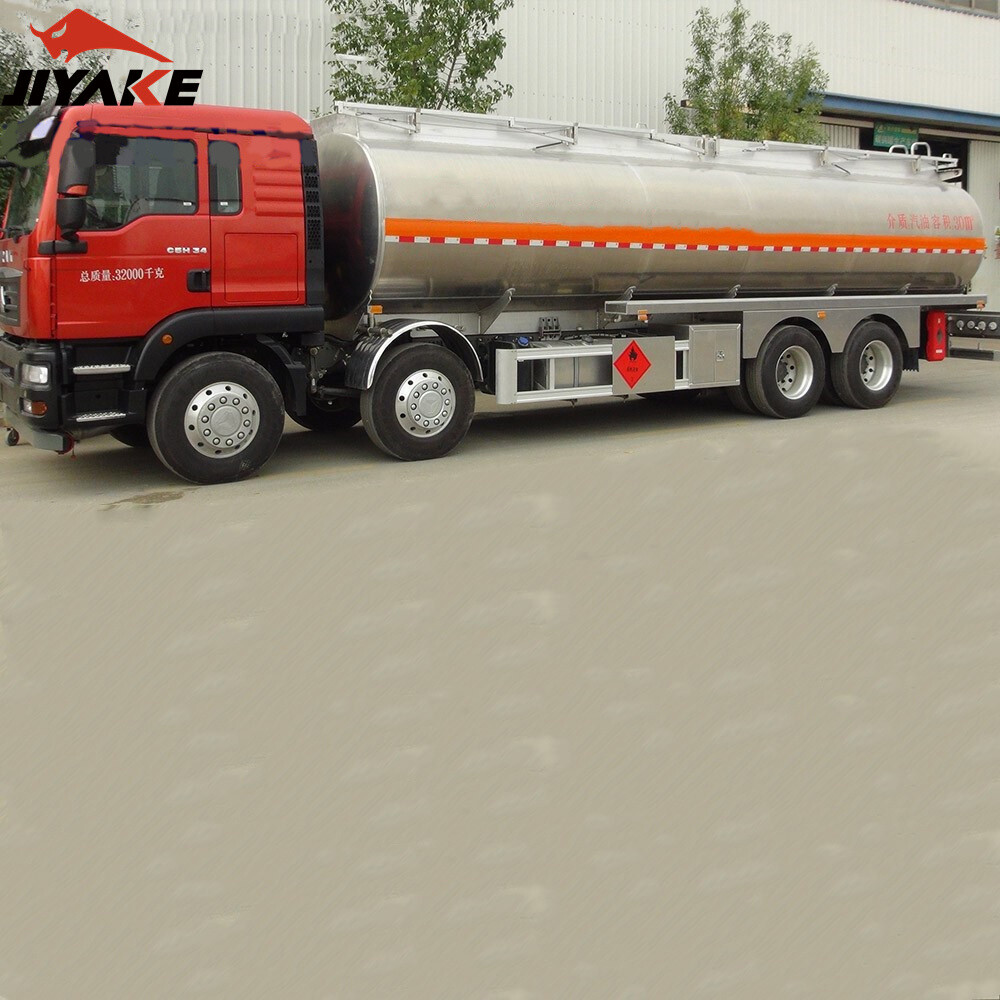
Each additional axle introduces more than an axle beam. It normally means extra suspension components, wheels and tires, hubs, brakes, air lines or mechanical linkages, wiring, mounting brackets, and reinforced structural connections beneath the tanker frame. Depending on the specification, a three-axle fuel tanker may also require a different chassis layout, a longer frame, improved braking arrangement, or a lifting axle system.
That is why comparing Fuel Tanker Trailer Price by tank capacity alone is unreliable. A buyer may receive two offers for nominally similar volumes and assume the cheaper trailer is better value. One may have fewer axles, lighter suspension, smaller tires, or a configuration intended for lower gross vehicle weight. The other may have been priced for heavier payload distribution and rougher intercity operation. Neither is automatically right or wrong; they are simply different technical solutions.
The axle brand, suspension type, brake setup, and tire specification also matter. A basic mechanical suspension arrangement may keep the initial cost down, while air suspension can add expense but may offer a different ride characteristic and load-management advantage where the operating environment supports it. Buyers should ask suppliers to identify these items clearly instead of accepting a single line called “3-axle tanker trailer.”
Two axles: lower entry cost, narrower operating window
A two-axle fuel tanker trailer is often attractive for regional distribution, shorter routes, lower-volume delivery programs, and operations where road access is tight. It generally uses fewer running components, so the initial purchase cost and routine inspection workload can be lower. Turning behavior may also be more manageable in depots, service stations, and constrained delivery yards.
The limitation is payload distribution. Fuel is dense enough that a seemingly modest increase in tank volume can push axle loading beyond what the intended road network, tractor specification, or local rules allow. A two-axle trailer may be entirely appropriate for a controlled route, but it should not be selected merely because the tank shell can physically hold a larger volume. Usable volume and legal transport volume are not always the same thing.
There is also a tire-wear consideration. When a tanker regularly operates near the upper end of its load allowance, axle alignment, suspension condition, and tire selection become less forgiving. Uneven tire wear is not always an axle-quality problem; it can indicate that the configuration is being asked to handle a route or payload pattern it was not designed around.
Three axles: the common commercial balance
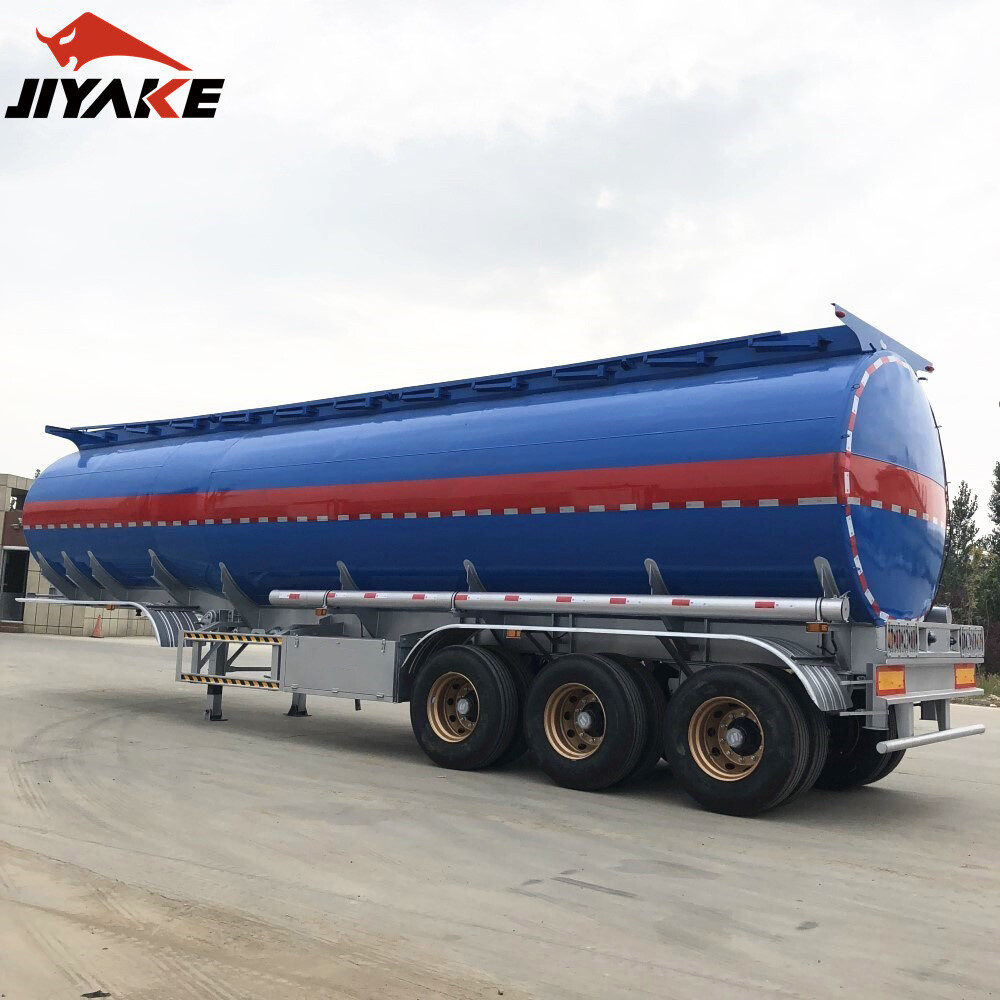
For many medium- and higher-capacity fuel transport applications, three axles provide a practical balance between purchase cost and payload potential. The additional axle spreads the load across more tires and contact points, which can make a higher-capacity tanker more workable on longer routes or less consistent road surfaces. It also gives designers more flexibility when positioning the tank, landing gear, piping, and rear discharge equipment.
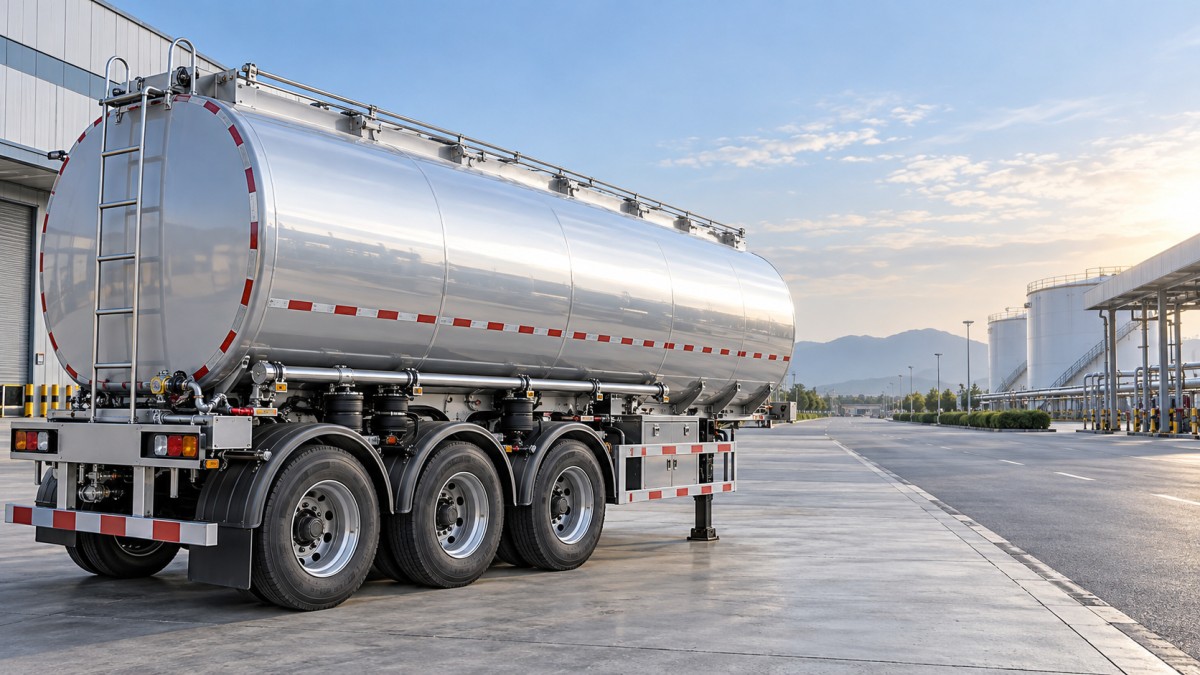
That flexibility comes with trade-offs. A three-axle trailer has more tires to buy, more brake components to inspect, and more suspension points that need maintenance attention. It may also have greater scrub during tight turns, particularly on uneven yard surfaces. These are not reasons to avoid the configuration. They are operating costs that should be included in a lifecycle comparison rather than ignored because the purchase department is focused on the initial quote.
In practice, a well-matched three-axle tanker can be cheaper to operate than an overloaded two-axle alternative, even when its initial price is higher. The deciding factor is route reality: delivery volume per trip, road quality, daily mileage, turning space, tractor compatibility, and local axle-load enforcement.
Higher-capacity and special axle layouts are not automatically better
Four-axle or specialized axle arrangements are usually considered when the tank volume, product density, terrain, or local transport limits demand additional load distribution. They can support a more ambitious transport plan, but the price increase is not limited to the running gear. The frame, tank supports, braking system, and sometimes the tractor-trailer combination may need closer engineering review.
This is where buyers can make an expensive mistake: specifying the largest possible configuration without checking delivery access. A longer, multi-axle trailer may carry more fuel on the highway but lose time at small service stations, industrial yards, or rural sites where maneuvering space is limited. If a delivery program requires several small drops each day, a very large tanker may not improve economics after all.
The same logic appears in water distribution fleets. A 6x4 Water Truck with capacities from 5,000 to 20,000 liters must be matched to site conditions, not chosen only for maximum volume. Construction sites, mining operations, road maintenance work, and agricultural irrigation all place different demands on chassis loading, ground conditions, and turning access. Fuel tanker procurement deserves the same discipline.
What should be compared beyond the base Fuel Tanker Trailer Price?
A meaningful commercial comparison should separate the trailer price from the operating assumptions behind it. Before approving a specification, it is sensible to review:
- required tank volume versus the actual payload permitted on planned routes;
- axle spacing, axle capacity, suspension type, and tire specification;
- tractor fifth-wheel load and the intended tractor configuration;
- road surface quality, gradients, depot turning radius, and delivery-point access;
- braking, piping, compartment layout, and discharge equipment required for the fuel being carried;
- availability of replacement tires, brake parts, seals, and service support in the operating market.
Local transport rules are especially important. Weight limits, axle-load requirements, tanker equipment rules, and road-access restrictions vary by country and may differ between regions. These items should be verified against the intended operating location before finalizing an axle count. It is risky to assume that a configuration accepted in one market will be suitable in another.
Build quality matters more as the axle system becomes more complex
More axles place more demands on fabrication accuracy. Alignment of suspension mounting points, frame geometry, welding quality, and tank-to-chassis support design can influence how evenly the trailer runs over time. On fuel tankers, vibration and repeated load cycles deserve particular attention because the cargo moves within the tank and route conditions are rarely ideal.
Manufacturers with integrated capability can be easier to evaluate because buyers can ask how cutting, bending, tank forming, welding, and final assembly are controlled within the production process. Shandong Jiyake Automobile Sales Co., Ltd. operates across modified truck production, trade, and fittings, with equipment including CNC cutting, automatic welding, large bending, canning, and tank automatic welding machinery. For evaluators sourcing across Southeast Asia, Central Asia, or African markets, the useful discussion is not just factory scale; it is whether the supplier can translate route requirements into a clear axle, tank, and chassis specification.
A practical way to make the decision
Start with the route and delivery schedule, then work backward to the tanker. Estimate the volume needed per trip, identify the tightest road or delivery point, confirm the relevant gross and axle-load limits, and only then compare two-, three-, or higher-axle designs. Request a detailed specification sheet that shows what is included in the quoted price, especially tires, axles, suspension, brakes, tank thickness, compartments, and discharge equipment.
The lowest Fuel Tanker Trailer Price is often the correct choice only when the route genuinely supports a lighter configuration. If delivery volume, road conditions, and compliance requirements point toward additional axles, paying for the appropriate layout upfront is usually the more defensible business decision. The trailer should fit the work it will do every day, not just the number that looks best in the first quotation.
Leave A Reply

First class quality service and professional after-sales team.
Get in Touch
*We respect your confidentiality and all information are protected.