




Which deck height is right for a lowbed trailer for sale?
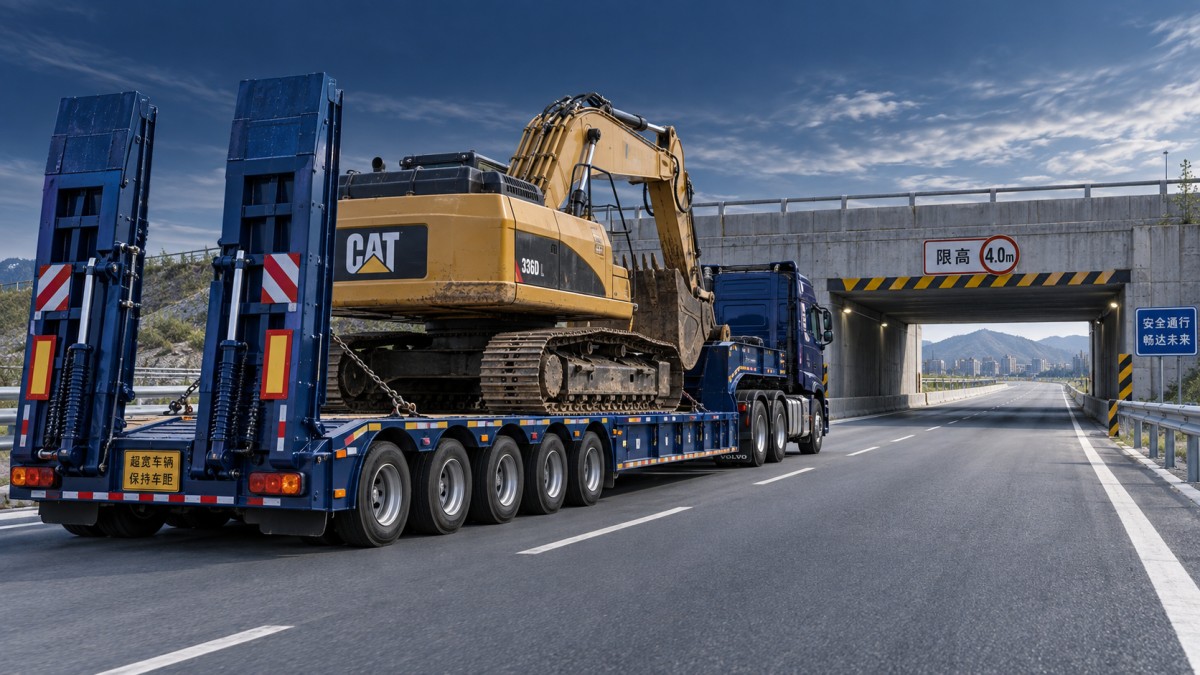
A low deck is not automatically the right choice for every heavy-haul job. The correct deck height depends on the combined height of the cargo and trailer, the clearance available on planned routes, the way equipment will be loaded, and whether the load needs to remain stable through turns, uneven access roads, and loading ramps. When evaluating a Lowbed Trailer For Sale, procurement teams should start with the required loaded height rather than choosing the lowest platform by default.
This decision becomes urgent when a machine appears to fit the trailer capacity but exceeds bridge, power-line, gate, or site-clearance limits once it is loaded. A deck that is too high can create permit and route-planning problems. A deck that is unnecessarily low may add purchase cost, reduce flexibility for normal cargo, or require more careful loading practices. The practical goal is to use the lowest deck height that solves the clearance requirement without creating avoidable operational limitations.
Start with the loaded transport height
The first calculation is straightforward: add the cargo height to the trailer deck height, then allow for any raised points such as exhaust stacks, cab roofs, booms, protective frames, or loose accessories. Do not rely only on the equipment brochure height. Machinery may be transported with a boom folded, a blade removed, tires inflated differently, or attachments positioned above the main body.
For example, a compact excavator may travel comfortably on a standard flat platform, while a tall crawler crane component or agricultural machine may require a lower deck simply to remain within route limits. The cargo’s highest point matters more than its average height. Procurement specifications should therefore request a transport-ready height from the operating team, not only overall machine dimensions.
- Measure the actual loading configuration, including attachments and removable parts.
- Identify whether the machine can be lowered, folded, or partially disassembled.
- Check the route for fixed restrictions before selecting the deck design.
- Allow for suspension movement and road unevenness rather than planning to the exact clearance limit.
Where regular routes include low bridges, site entrance canopies, utility crossings, or restricted industrial facilities, deck height often becomes a routine operating factor rather than an occasional permit issue.
Match deck height to the cargo type, not only the rated payload
Two loads with the same weight can need very different trailers. A low, dense steel component may be governed mainly by axle loading and load distribution. A tall wheeled loader, drilling rig, transformer assembly, or construction machine can be limited by overall height and center of gravity. The trailer must address both.
A lower main deck reduces the center of gravity of the combined load. This can improve stability when negotiating curves, roundabouts, uneven construction sites, or sloped loading areas. However, the lowest configuration is not always ideal for cargo that has good height clearance but needs a long, uninterrupted platform, frequent side loading, or easy access for forklifts.
Deck height should also be considered alongside the trailer’s own ground clearance. Lowering the cargo platform does not mean the trailer should be vulnerable to scraping on ramps, rough yards, ferry approaches, or temporary site roads. A lowbed configuration needs enough underbody clearance for the route conditions it will face in practice.
Loading method can change the answer
Ramp loading is one of the most important practical factors. A low deck can reduce the climb angle for tracked and wheeled equipment, which may make loading safer and reduce the risk of underside contact. Yet the geometry must be assessed as a complete system: ramp length, ramp angle, machine approach angle, breakover angle, trailer deck height, and the surface condition of the loading area all affect whether a machine can board safely.
Machines with long wheelbases, low ground clearance, or projecting attachments may ground out at the transition between ramp and deck. In these cases, a lower platform alone may not solve the problem. Longer ramps, hydraulic ramps, a detachable gooseneck arrangement, or a different loading sequence may be more suitable.
Loading from a dock or by crane introduces different priorities. A deck that is too low may not align well with available dock heights. Crane-loaded cargo requires clear access to lifting points, stable support under concentrated loads, and enough open deck area for positioning. Before issuing a purchase order, document how each major cargo category enters and exits the trailer.
Check the relationship between deck height and axle layout
Deck height cannot be evaluated separately from axle capacity, suspension, tire size, kingpin loading, and fifth-wheel height. A trailer may have enough nominal payload capacity but still perform poorly if the cargo center is positioned incorrectly. Heavy machinery often has uneven weight distribution because of engines, counterweights, booms, tracks, or mounted tools.
The procurement specification should identify the expected center of gravity and the preferred loading position for each recurring machine. This helps determine whether the deck length and axle spacing can distribute weight appropriately between tractor, trailer axles, and any additional axle groups. It also avoids a common purchasing error: selecting a trailer only by its maximum rated tonnage.
Suspension design affects both deck height and operational behavior. Leaf spring suspension is widely used for robust hauling applications, but loaded ride height, equalization, and maintenance access should be reviewed with the intended axle configuration. Tire selection also affects effective deck height. A larger tire diameter can change platform height and should not be ignored when comparing quotations.
When a flatbed may be the more efficient choice
Not every requirement described as “heavy equipment transport” calls for a lowbed. A conventional flatbed can be more efficient when cargo height is manageable, loading is frequently performed from the side, and the operation needs a broad open platform for varied loads. Construction materials, steel products, machinery modules, and irregular cargo may benefit from this simpler layout when route clearance is not the controlling issue.
For example, the 3 Axle Flatbed Trailer is configured as an open-deck transport platform with a 40-ton loading capacity, three 13-ton FUWA axles, leaf spring suspension, and a 12,500 mm by 2,500 mm deck envelope. Its 12 container lockers and open loading access can be useful where cargo securing flexibility and general logistics use matter more than reducing total loaded height. It should be assessed as a flatbed option, not treated as a substitute for a true lowbed where clearance demands drive the decision.
This distinction matters for fleet planning. Buying only lowbed trailers for every heavy load can leave expensive equipment underused on routine transport tasks. Buying only flatbeds can force repeated route restrictions or special loading arrangements for taller machines. A mixed fleet may be justified when both cargo profiles occur regularly.
Build the specification around real operating conditions
Before comparing suppliers, create a short operating profile instead of sending only a payload requirement. Include the tallest and heaviest routine loads, loading method, route surfaces, expected trip distances, tractor fifth-wheel height, and any recurring clearance restrictions. Also note whether loads are concentrated in one area or spread across the deck.
Ask for the following details in the trailer quotation:
- Unladen deck height and deck height at the expected operating load.
- Ground clearance at critical underbody points.
- Usable deck length, width, and the height of any raised sections.
- Ramp type, ramp length, and expected loading angle.
- Axle ratings, axle spacing, tire specification, and suspension type.
- Kingpin size and compatibility with the intended tractor unit.
- Rated tie-down locations and cargo-securing arrangement.
A drawing is particularly valuable because advertised overall dimensions do not always show the height transitions between gooseneck, main deck, axle area, and rear ramps. These transitions determine where a machine can sit and whether its tracks, wheels, or attachments will clear the trailer structure.
Make the final selection by frequency of use
Choose the lower deck when tall equipment is a regular part of the workload, route clearances are tight, or stability benefits justify the specialized configuration. Choose a higher, more conventional platform when the cargo is generally low-profile and operational flexibility, deck access, or simpler loading is more valuable. Where only occasional oversized machinery requires extra-low transport height, it may be more economical to reserve a specialist lowbed for those jobs rather than specifying every trailer around an infrequent load.
The right answer is therefore based on the highest recurring cargo and the most restrictive route, not on the trailer’s appearance or its maximum capacity alone. A properly specified deck height reduces loading complications, protects route access, and gives the transport team a platform that can be used consistently rather than only under ideal conditions.
Leave A Reply

First class quality service and professional after-sales team.
Get in Touch
*We respect your confidentiality and all information are protected.