




Can a lowbed trailer for sale handle your excavator axle loads?
An excavator can be moved safely on a lowbed trailer only when the trailer’s individual axle ratings, permitted gross combination weight, deck layout, and actual load position all work together. A trailer advertised with a high payload is not automatically suitable for your machine. An excavator may fit physically on the deck yet still overload the rear trailer axles, the tractor drive axles, or a bridge-sensitive axle group once fuel, attachments, ramps, and securement equipment are included.
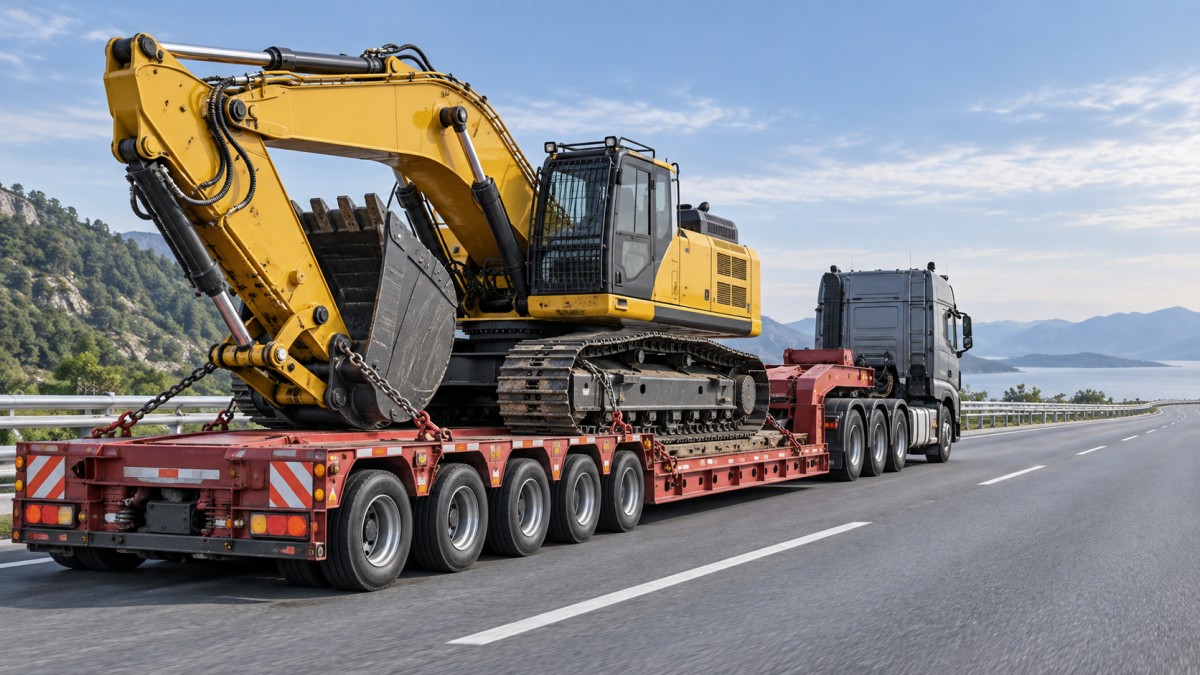
This problem often appears when a buyer compares only the excavator operating weight with the stated capacity of a Lowbed Trailer For Sale. The machine is loaded, the boom is tucked in, and the trailer seems level at first glance. But the center of gravity may sit too far rearward, especially with a heavy counterweight, long boom, hydraulic breaker, or bucket still attached. The result can be uneven tire loading, poor steering response, excess axle stress, and a transport configuration that may not meet the route or local road requirements.
Start with axle loads, not the advertised payload
Payload is the total cargo weight a trailer is designed to carry under stated conditions. Axle load is the weight actually transferred onto each axle or axle group after the excavator is positioned and coupled to a tractor. These are related, but they are not the same measurement.
A trailer rated for 60 tonnes, for example, is not necessarily acceptable for every 60-tonne excavator. The gross load calculation must include the trailer tare weight, the excavator’s operating configuration, removable and non-removable attachments, blocks or mats carried on the deck, chains, binders, and any accessories transported with the machine. The tractor also has its own axle limits and fifth-wheel loading limit.
The basic transport relationship is:
Gross combination weight = tractor weight + trailer weight + excavator weight + transported accessories.
That total then has to be distributed across the steer axle, drive axle group, trailer axle group, and any additional axle groups used in the configuration. A safe decision is based on those actual weights, not on a single capacity number in a sales listing.
Why excavator geometry changes the answer
Excavators do not place weight on a trailer like a uniform rectangular load. Their counterweight concentrates substantial mass near the rear of the upper structure. The boom, stick, bucket, quick coupler, and optional work tool can shift the balance point forward or backward depending on how they are stowed. Track length also affects where contact load is applied to the deck.
Before selecting a trailer, obtain the excavator’s transport dimensions and weight in the condition it will actually travel. Manufacturer literature may list several figures: base machine weight, operating weight, shipping weight, and weights with different undercarriages or attachments. Use the relevant transport configuration rather than the lightest published figure.
- Measure or confirm the machine’s overall length, track width, height, and track contact length.
- Identify the approximate center of gravity; do not assume it is in the geometric center of the machine.
- Include the heaviest attachment expected to remain installed during transport.
- Check whether the boom can be lowered into a position that reduces height without shifting too much weight toward one end of the deck.
- Allow for the weight of loading ramps, detachable gooseneck components, and securement gear.
A machine with a similar operating weight but a longer rear overhang can create a very different axle-load result. This is why a lowbed selected for one excavator model may not be the right choice for another model in the same weight class.
Use the load position to control the axle split
Once the excavator is on the deck, moving it a relatively short distance can significantly change the load carried by the kingpin and trailer axles. Moving the machine forward generally transfers more weight toward the tractor through the fifth wheel. Moving it rearward tends to add load to the trailer axle group and can reduce tractor drive-axle loading.
Neither extreme is desirable. Too little load on the tractor drive axles can reduce traction and stability. Too much kingpin load can exceed tractor or coupling limits. Too much weight over the trailer axles can overload tires, hubs, suspension components, or road-legal axle limits. A practical loading plan aims for a balanced split that remains within every rated component and applicable operating restriction.
What to verify before approving a position
Use a scale or a competent weight-distribution calculation based on verified dimensions and component weights. Visual judgment is useful for spotting obvious problems, but it cannot confirm axle compliance.
Match the trailer structure to the duty cycle
Axle ratings alone do not decide whether a lowbed is appropriate. The main beam, cross-members, deck, neck design, suspension, ramps, and tie-down points all need to suit the excavator and how often it will be moved. Occasional transport on smooth paved roads is different from repeated loading at rough construction sites, quarry access roads, or infrastructure work zones.
Pay close attention to the loaded deck height. Lower decks help reduce overall transport height and can improve stability, but they must still provide adequate ground clearance during turns, ramps, uneven entrances, and temporary site roads. A detachable gooseneck or hydraulic loading arrangement may make loading easier for tracked equipment, but the added components and configuration also affect tare weight and axle distribution.
The deck width should fully support the tracks or use properly engineered widening arrangements. Do not rely on a narrow deck with unsupported track edges merely because the excavator can be driven onto it. Track loading needs to be spread across a deck structure designed for that contact pattern.
For unusually heavy excavators, long machines, or projects where route conditions vary, a modular configuration may provide more control over axle grouping and load balance. A Hydraulic Modular Trailer is designed around connectable hydraulic modules and independent suspension, allowing the platform arrangement to be adapted to larger loads and demanding ground conditions. Its stated 100T payload configuration uses four 13T oil-lubricated axles, while the Q355B heavy-duty I-beam structure, optional sizing, and air-suspension option should still be reviewed against the specific excavator, tractor, route, and local operating limits. Capacity on paper is not a substitute for a complete axle-load plan.
Do not overlook tires, suspension, and braking
A trailer axle group can only perform as well as its lowest-rated supporting component. Tire load index, wheel rating, axle capacity, suspension capacity, brake condition, and coupling rating all need to align. Overloading may first show up as excess tire heat, uneven wear, suspension settling, or unstable handling rather than a visible structural failure.
Suspension type matters on uneven sites. Air suspension can help maintain deck level and improve ride characteristics, while mechanical arrangements may be preferred for particular applications. Regardless of suspension type, loading must remain balanced during turns, on cross-slopes, and when passing from paved roads onto rough ground. A machine that is correctly loaded on level concrete may transfer weight differently when one side of the trailer rides higher than the other.
Brake equipment should also be considered in relation to the loaded gross weight. The trailer’s braking system, tractor compatibility, air supply, electrical connections, and any anti-lock braking equipment must be in proper working condition. Heavy equipment transport leaves less margin for poor brake adjustment or mismatched equipment.
Securement is part of the load calculation
An excavator must be restrained against forward, rearward, and lateral movement. The number, location, rating, and angle of chains or other approved securement devices depend on the machine, trailer, and operating requirements. Tie-down points should be part of the trailer selection, not an afterthought. They need to be positioned so that securement can be applied without damaging hoses, track components, cylinders, or the deck.
Lower the attachment as required for transport, engage the machine’s travel-locking procedures where applicable, and avoid relying on hydraulic pressure alone to hold moving components in place. Check that chains do not rub against sharp edges and that binders remain accessible for inspection. Added chains and tools may seem minor, but they belong in the real transport weight assessment.
When the answer is “not with this configuration”
A lowbed may be unsuitable even when its nominal payload exceeds excavator weight. Warning signs include a trailer axle group near its maximum rating before attachments are added, a kingpin load beyond the tractor’s permitted value, insufficient deck width for tracks, poor ramp approach angle, limited ground clearance, or no practical way to place the excavator at a balanced position.
In that situation, the safer response is not to accept a marginal setup. Consider a longer deck, more axle capacity, a different neck arrangement, a wider platform, a modular axle arrangement, or a transport plan that removes attachments where practical. Confirm the final configuration with actual axle weights before routine use, particularly when the excavator, attachment package, tractor, or route changes.
The right trailer is the one that carries your excavator within the limits of every axle group and component while keeping the machine properly supported, secured, and maneuverable. Treat the advertised rating as a starting point; the final decision should be based on verified loaded axle weights and the exact transport configuration.
Leave A Reply

First class quality service and professional after-sales team.
Get in Touch
*We respect your confidentiality and all information are protected.