




Recent Posts
 Thailand Clients Visit JIYAKE to Inspect Brand-New Semi-Trailers and Reach Cooperation AgreementNov 21, 2026
 Guinea Clients Visit JIYAKE to Inspect Brand-New SINOTRUK Vehicles and Reach Strategic CooperationNov 21, 2026
 When can an electric dump truck work on a fixed site?Oct 30, 2026

How certification requirements affect fuel tanker trailer price
For quality control and safety managers, Fuel Tanker Trailer Price is not simply a number on a quotation sheet. It is a visible result of many less-visible decisions: tank material selection, welding procedures, pressure and leak testing, compartment design, braking performance, electrical protection, documentation, and the level of third-party verification required for the trailer’s intended market.
A low initial price can be attractive when fleets are under budget pressure. Yet in the transport of gasoline, diesel, aviation fuel, and other flammable liquids, an incomplete compliance package or an unverified manufacturing process can create costs that are far greater than the original saving. Delayed registration, failed inspections, cargo restrictions, repairs before delivery, and increased incident exposure all change the real cost of ownership.
Why certification changes the Fuel Tanker Trailer Price
Certification is often described as a regulatory requirement, but in practice it is a manufacturing discipline. A tanker built for a market with stringent dangerous-goods transport rules must be designed, fabricated, tested, and documented in a controlled way. Each of these steps adds labor, equipment time, inspection resources, and traceable records.
The exact rules depend on the destination country and transport route. A tanker intended for ADR-related operations, for example, may require a different approval pathway from one supplied to a domestic African, Southeast Asian, or Central Asian market. International buyers should never assume that a tanker accepted in one jurisdiction will automatically meet another jurisdiction’s registration or inspection rules.
When comparing offers, safety managers should ask a more useful question than “Which supplier has the lowest price?” Ask: What requirements are included in this price, and what remains the buyer’s responsibility after delivery?
1. Certified materials cost more because they must be traceable
The tank shell, heads, baffles, piping, valves, manholes, and structural supports must be suitable for the product being carried and the operating conditions. Material cost is not limited to the grade itself. It also includes mill certificates, batch identification, incoming inspection, storage controls, and traceability through fabrication.
For a quality team, traceability matters because a material certificate only has value when it can be connected to the actual plate or component installed on the tanker. If a quotation does not clarify material origin, thickness tolerance, corrosion allowance, or certificate availability, its low price may reflect a lower documentation burden rather than a more efficient production process.
Tank material selection may also vary with the cargo. A tanker designed for common petroleum products is not necessarily appropriate for every chemical liquid. Buyers should define the liquid, expected temperature range, filling method, unloading method, and cleaning regime before approving the design.
2. Welding qualification and inspection add real production time
A fuel tanker is a pressure-containing vehicle body exposed to vibration, thermal changes, road impact, and repeated loading cycles. Its welds are not cosmetic details. They influence leak resistance, structural durability, and the integrity of internal baffles and external fittings.
Certified or tightly controlled production normally requires approved welding procedures, qualified welders, defined consumables, welding records, and inspection checkpoints. Depending on the applicable standard and customer specification, inspection may include visual examination, dimensional checks, non-destructive testing at selected locations, and final pressure or leak testing.
These controls affect the Fuel Tanker Trailer Price because they require trained personnel and a slower, more accountable workflow. A manufacturer that rushes through fit-up, skips process records, or performs only superficial testing can offer a lower number—but the buyer is then carrying more uncertainty.
3. Safety equipment is a system, not a list of accessories
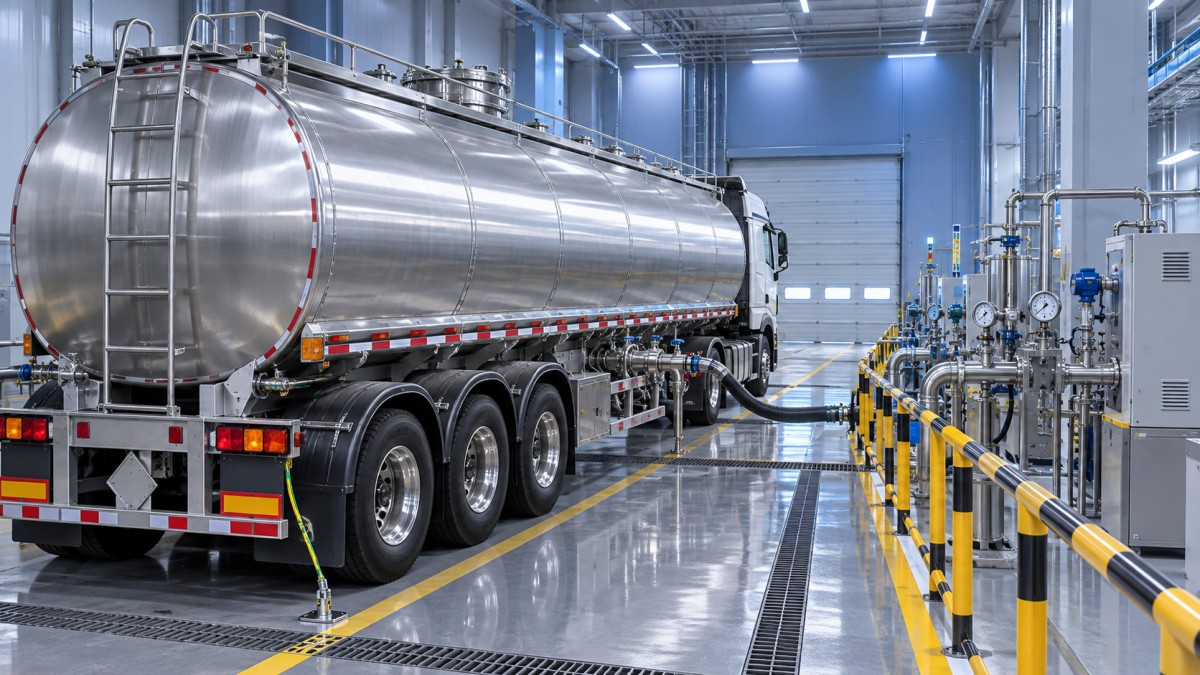
Emergency shut-off arrangements, bottom loading or unloading hardware, pressure-vacuum venting, anti-overflow provisions, grounding points, fire extinguishing equipment brackets, rear underrun protection, conspicuity markings, and protective guards may all be required or specified for fuel transport. Their cost is shaped by component quality, installation accuracy, testing, and compatibility with the tank layout.
Electrical equipment deserves particular attention. Lighting, harness routing, connectors, reflectors, and grounding arrangements need to be appropriate for the operating environment. A poorly protected electrical circuit may become a maintenance issue long before it becomes a safety event; either way, it is not an area where a purchasing comparison should stop at the component count.
Brake and running gear specifications also influence compliance and lifecycle risk. Safety managers should verify axle ratings, suspension configuration, brake chamber selection, relay valves, air tank capacity, tyre requirements, and compatibility with the tractor unit. A compliant tanker body mounted on an inadequately specified chassis is still a fleet risk.
Documentation is often the hidden line item
Two tankers can look nearly identical from a distance while having very different handover packages. The difference becomes clear when the vehicle reaches a regulatory inspection, an insurance review, or an internal audit.
A robust delivery file may include drawings, tank capacity data, material certificates, welding and inspection records, pressure or leak-test reports, component certificates, operating instructions, maintenance guidance, and identification information. Where applicable, buyers may also need approval documents from recognized inspection bodies or evidence aligned with local roadworthiness and hazardous-goods requirements.
Producing, reviewing, and maintaining those records takes time. It also creates accountability. For a safety department, that is not administrative excess; it is the evidence needed to demonstrate that the trailer was built against an agreed technical basis.
Be careful with the phrase “certified tanker”
This phrase can mean very different things. It may refer to a tank test report, a factory quality certificate, a component certificate, a third-party inspection, or full approval for a particular national standard. None should be treated as interchangeable.
Before issuing a purchase order, request a written compliance matrix. It should show the destination country, applicable standard or regulation, required tests, document issuer, inspection stage, and the party responsible for registration or final approval. If the supplier cannot identify these items clearly, the quoted price cannot be compared fairly with a quote that does.
A practical quotation review for QC and safety teams
Rather than reviewing price only at the end of procurement, involve quality and safety personnel before the supplier is selected. A useful review can focus on the following questions:
- What fuel products and operating conditions has the tank been designed for?
- Which regulation, customer specification, or local approval requirement is included in the offer?
- Are tank material grades, nominal thicknesses, and traceability documents defined?
- What welding controls and test methods will be used, and will reports be provided?
- Which valves, hoses, venting devices, manholes, braking components, and electrical parts are included by brand and model?
- Will the buyer receive capacity calibration information and clear operating instructions?
- What is excluded: third-party inspection, export documentation, local registration, spare parts, or commissioning support?
This checklist turns a broad price discussion into a technical comparison. It can also prevent a common procurement mistake: accepting an apparently complete quotation that excludes the very approvals needed to put the unit into service.
Certification requirements should match the route, not just the factory
Over-specification can increase capital cost without improving the fleet’s actual compliance position. Under-specification is more dangerous: it can leave a trailer unsuitable for border crossings, oil depot entry rules, customer audits, or future route expansion.
For fleets serving multiple regions, the best approach is usually to define the strictest realistic operating requirement early, then confirm that the proposed tank, chassis, and documentation package can support it. This is especially important when a trailer may be transferred between subsidiaries or sold into another market later in its service life.
Manufacturing capability also matters. A producer with CNC cutting, automatic tank welding, large bending equipment, and controlled surface preparation can support repeatability, but machinery alone does not prove compliance. Buyers should still evaluate inspection practices, records, subcontracted component control, and final acceptance procedures.
The same principle applies across specialized transport equipment. For example, a Lowbed Semi Trailer used in energy or infrastructure logistics requires its own structural, braking, and load-control verification. The certification route differs from fuel transport, but the procurement lesson is identical: a trailer’s safe value lies in the relationship between design, manufacturing evidence, and real operating conditions.
Price should be evaluated as risk allocation
A higher Fuel Tanker Trailer Price does not automatically mean better compliance, and a competitive offer is not automatically unsafe. The important distinction is transparency. A credible supplier can explain what is included, identify the governing requirement, show how the tank will be tested, and state what documentation will accompany delivery.
For quality control and safety managers, that clarity is the foundation of a sound decision. It helps protect drivers, cargo, nearby communities, and the fleet’s operating license. More importantly, it ensures that the price approved today reflects a tanker trailer that can be inspected, operated, maintained, and trusted throughout its working life.
Leave A Reply

First class quality service and professional after-sales team.
Get in Touch
*We respect your confidentiality and all information are protected.