




Is a three-axle lowbed trailer for sale enough for your equipment?
Is a Three-Axle Lowbed Trailer for Sale Enough for Your Equipment?
When assessing whether a three-axle Lowbed Trailer For Sale can handle your equipment portfolio, capacity is only the starting point. Buyers must consider payload weight, axle distribution, deck dimensions, road regulations, loading frequency, and long-term operating costs. For contractors, fleet managers, and procurement evaluators, the right lowbed trailer should deliver safe transport, reliable structural performance, and measurable value across demanding heavy-haul applications.
The question is rarely “Can the trailer move this machine once?” A more useful question is: “Can it move this machine repeatedly, legally, and with an acceptable safety margin across the routes we actually use?” That distinction matters when a trailer is expected to serve several projects, equipment types, and road conditions rather than one predictable haul.
Start with the equipment portfolio, not the advertised payload
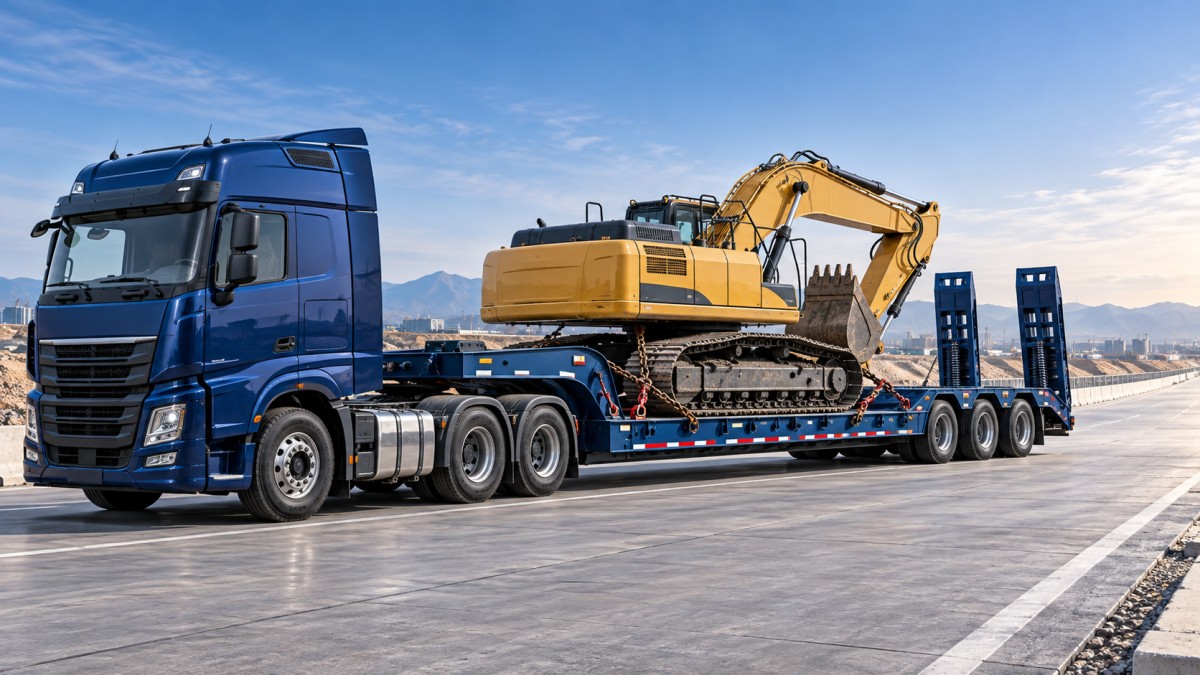
A three-axle lowbed is often a practical choice for transporting excavators, bulldozers, loaders, road rollers, drilling equipment, and other construction machinery. Yet an advertised payload figure alone does not confirm suitability. The operating weight of a machine may change after adding buckets, breakers, counterweights, fuel, attachments, spare parts, or protective equipment.
Procurement teams should build a realistic load list before comparing a Lowbed Trailer For Sale. Include the heaviest routine machine, not only the most commonly moved unit. Then add the weight of removable attachments, loading ramps, chains, binders, mats, and any tools normally carried with the equipment. A trailer that appears sufficient on paper can become a tight, high-risk choice when the actual working configuration is loaded.
It is also wise to define an internal reserve rather than operating permanently at the maximum stated rating. A sensible margin supports better handling, reduces stress on suspension and tires, and gives the fleet more flexibility when a larger attachment or replacement machine enters service.
Three axles distribute load—but distribution still decides the outcome
Three axles can provide a solid foundation for many medium-to-heavy equipment transport tasks. Compared with lighter configurations, they can spread load more effectively and improve stability. However, the axle count does not eliminate the need for proper positioning.
A tracked excavator placed too far forward may overload the tractor’s drive axles or the trailer’s front section. Positioned too far rearward, it can create insufficient kingpin load, unstable steering behavior, or excessive rear axle loading. The machine’s center of gravity, track length, ground clearance, and attachment location all influence where it should sit on the deck.
For this reason, evaluate more than the trailer’s gross capacity. Ask the supplier for axle load guidance, recommended loading positions, suspension details, tire specifications, and kingpin or fifth-wheel loading information. The best configuration is one that works with the intended tractor unit and remains compliant on the routes where the equipment will travel.
Deck length and height can be more limiting than weight
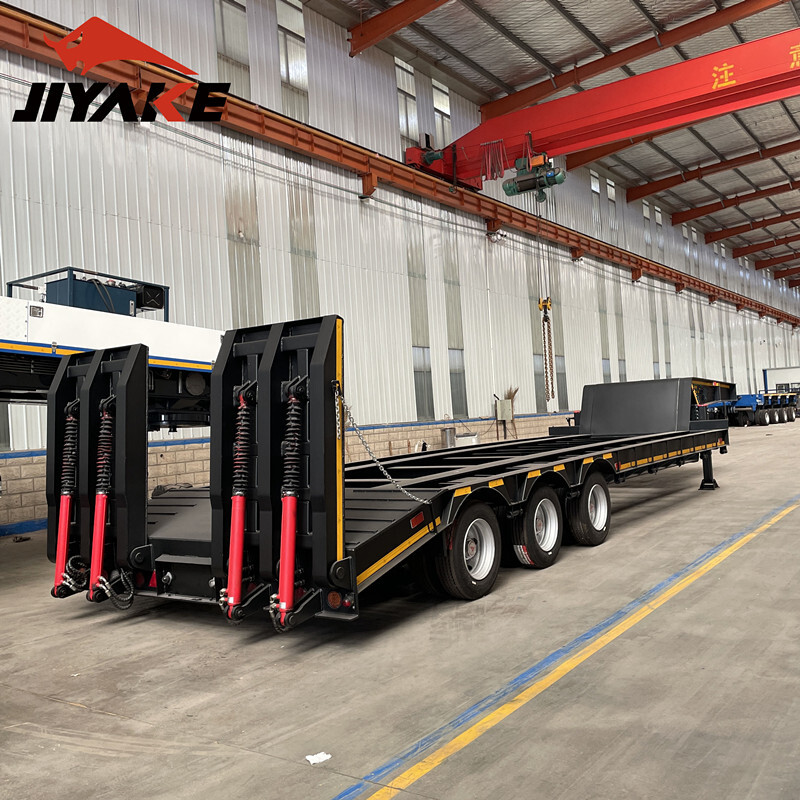
Many buying mistakes begin when a trailer is selected around tonnage but not around machine geometry. A lowbed deck must accommodate the overall length and track or wheelbase of the equipment while preserving space for securement points. If the boom, blade, bucket, or rear counterweight extends beyond a practical loading position, a nominally adequate deck can become difficult to use safely.
Deck height deserves the same attention. Lowbed trailers are valued because they reduce overall transport height, particularly for tall machinery. Still, the final loaded height depends on the machine, tire size, suspension arrangement, deck construction, and any raised sections near the gooseneck or rear platform. Oversize height restrictions can quickly change a normal transport job into a permit-dependent operation.
Before committing, compare the trailer’s usable deck dimensions with the widest, tallest, and longest equipment in the fleet. Consider ramp angle as well. Low-clearance machinery, pavers, rollers, and equipment with long wheelbases may need a gentler approach angle to avoid grounding during loading.
Road rules may determine whether three axles are enough
A three-axle lowbed trailer can be a strong commercial choice, but it must fit the legal environment of the operating region. Axle-load limits, gross combination weight limits, bridge regulations, tire requirements, and oversize permit rules vary between countries and sometimes between provinces or local jurisdictions.
For evaluators serving projects in Southeast Asia, Central Asia, or African markets, route conditions add another layer to the decision. Road quality, bridge capacity, construction access roads, and inspection practices may differ substantially from the regulations on paper. A trailer intended for regular cross-border work should be assessed against the most restrictive practical route, not only the easiest route.
If heavy equipment is frequently moved over rough access roads, also examine frame reinforcement, suspension durability, landing gear stability, ramp construction, electrical protection, and brake system serviceability. A trailer that performs well on paved highways may require a more robust specification for quarry entrances, mining areas, or remote construction sites.
Match the trailer to the tractor, not just to the machine
The tractor and lowbed work as one transport system. Fifth-wheel height, traction, braking capability, engine torque, transmission gearing, fuel range, and cooling performance all affect the result. This is particularly important when loads are hauled through urban congestion, steep grades, unpaved roads, or long-distance corridors.
Where a fleet also requires engineering transportation, a 6x4 heavy-duty tractor or dumper-based platform may be part of the wider evaluation. For example, the Foton Truck range includes diesel-powered 6x4 configurations designed for engineering transport, with 351–450 hp options and substantial torque availability. Such specifications may be relevant when evaluating whether the towing vehicle can start, control, and stop a loaded three-axle lowbed under real jobsite conditions.
That does not mean more horsepower automatically solves every transport problem. The correct pairing depends on total combination weight, terrain, local traffic conditions, and the frequency of loaded travel. A well-matched tractor-trailer combination generally creates less wear, better fuel discipline, and fewer compromises for drivers.
A quick decision test for procurement teams
A three-axle configuration is likely to be enough when the fleet’s regular machinery remains within its engineered payload range, loads can be positioned without exceeding axle limits, deck dimensions suit the equipment, and planned routes do not create recurring permit or bridge-capacity problems.
It may be time to consider a higher-capacity or more specialized arrangement when the business routinely handles machines near the top of the trailer’s rating, carries oversized excavators with heavy attachments, operates on weak roads, or expects upcoming projects to involve heavier equipment. Buying too close to the limit may reduce the trailer’s useful life and force another purchase sooner than expected.
It is equally important not to over-specify without reason. A larger multi-axle trailer may bring higher acquisition cost, more tire and maintenance expense, greater empty weight, and more complicated maneuvering. For a company whose typical work involves moderate-sized construction machinery, a properly built three-axle unit can be the more balanced investment.
What to inspect before placing an order
Beyond dimensions and rated capacity, inspect the quality of the main beam, cross members, welding consistency, deck plate, ramp hinges, suspension components, braking layout, and tie-down points. Ask how easily wear parts can be sourced in your operating market. A trailer’s long-term value is strongly connected to maintenance access, not simply its initial quotation.
Manufacturing capability also matters when the trailer needs a customized deck length, ramp style, axle arrangement, or reinforcement package. Shandong Jiyake Automobile Sales Co., Ltd. integrates product design, development, production, and sales across its modified-truck business, supported by facilities for CNC cutting, automated welding, bending, and specialized tank fabrication. For buyers, this type of production base can be relevant when a standard lowbed needs to be adapted to a particular equipment mix or regional operating condition.
The strongest buying decision is therefore not based on three axles alone. It is based on a documented match between equipment weights, load geometry, axle distribution, towing capacity, route restrictions, and maintenance reality. If that match is clear, a three-axle Lowbed Trailer For Sale can be a dependable and financially sensible choice. If important assumptions remain uncertain, resolve them before signing—not after the first overloaded machine reaches the loading ramp.
Leave A Reply

First class quality service and professional after-sales team.
Get in Touch
*We respect your confidentiality and all information are protected.