




How to assess weld consistency from a dump trailer manufacturer
How to Assess Weld Consistency from a Dump Trailer Manufacturer
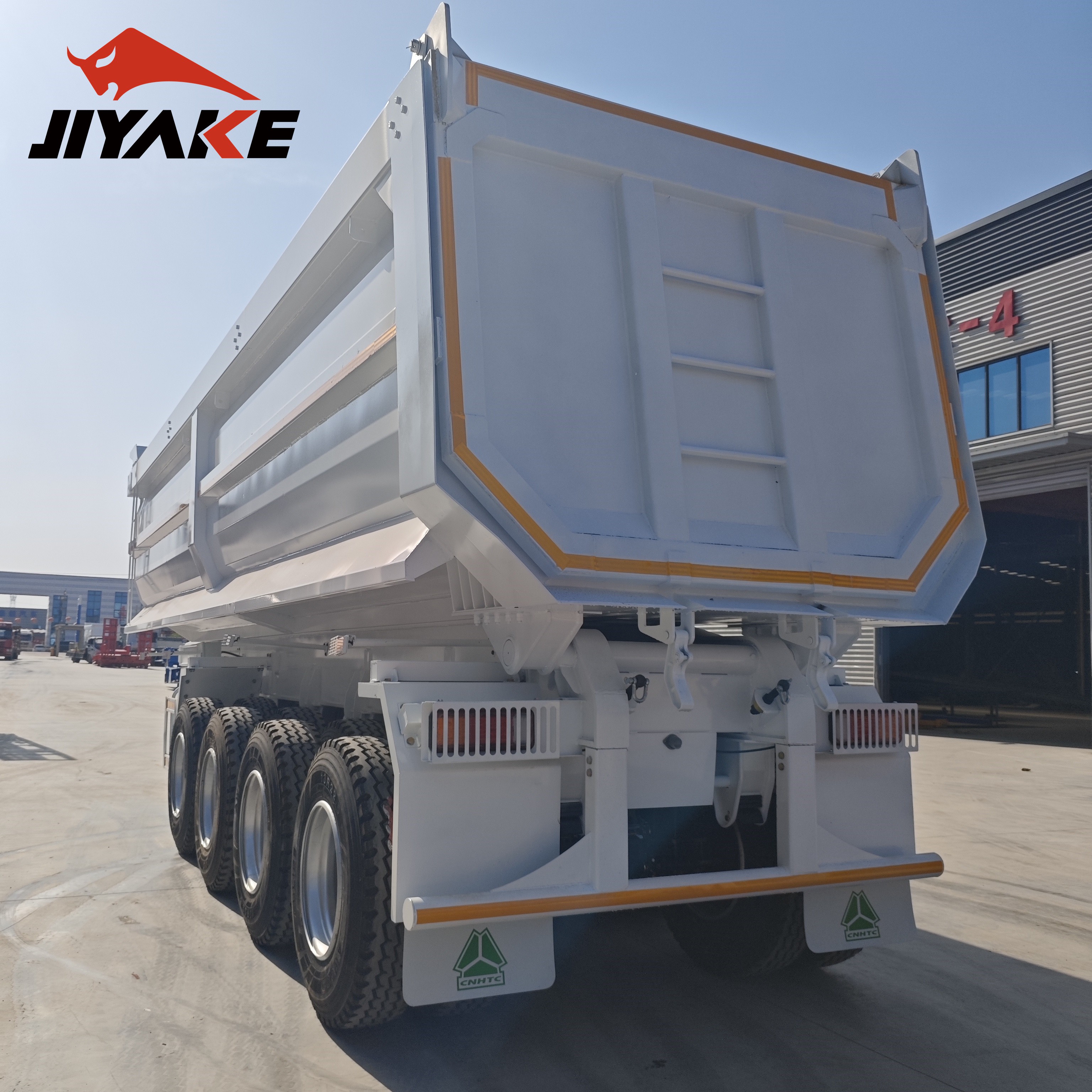
Assessing weld consistency is essential for quality-control and safety teams responsible for dump trailer reliability. When evaluating a Dump Trailer Manufacturer, look beyond surface appearance to welding procedures, joint uniformity, penetration, defect-control records, and inspection capability. A dump body is repeatedly exposed to concentrated loads, vibration, twisting during off-road travel, and high local stress while tipping. Welds at the chassis, body crossmembers, hinge area, front bulkhead, hydraulic-cylinder supports, and tailgate structure therefore deserve more scrutiny than cosmetic seams.
The practical question is not whether a trailer has a few visible weld marks. It is whether the manufacturer can produce the same acceptable joint quality across units, shifts, material batches, and trailer configurations. Consistency is a process outcome. It depends on joint preparation, fixture accuracy, welder qualification, consumable control, equipment settings, inspection discipline, and the willingness to stop and repair nonconforming work before coating hides it.
Start with the high-consequence weld locations
A quality review should begin with a drawing or structural layout, then follow the load path rather than simply walking around the finished trailer. On a dump trailer, the most critical areas commonly include the kingpin or front connection structure, longitudinal chassis members, suspension mounting brackets, hoist mounting points, tipping hinges, subframe crossmembers, body-to-subframe connections, and tailgate pivots. These locations transfer dynamic loads and are more likely to reveal the consequences of poor fit-up or inadequate fusion.
Inspectors should ask whether the weld type matches the joint function. A fillet weld may be appropriate in one connection and insufficient in another. Joint geometry, plate thickness, access for welding, expected load direction, and fatigue exposure all matter. A broad, smooth-looking bead cannot confirm adequate penetration. Conversely, a slightly uneven surface is not automatically a structural failure. The assessment has to connect the visual condition with the specified welding procedure and the intended duty cycle.
What visual inspection can reveal—and what it cannot
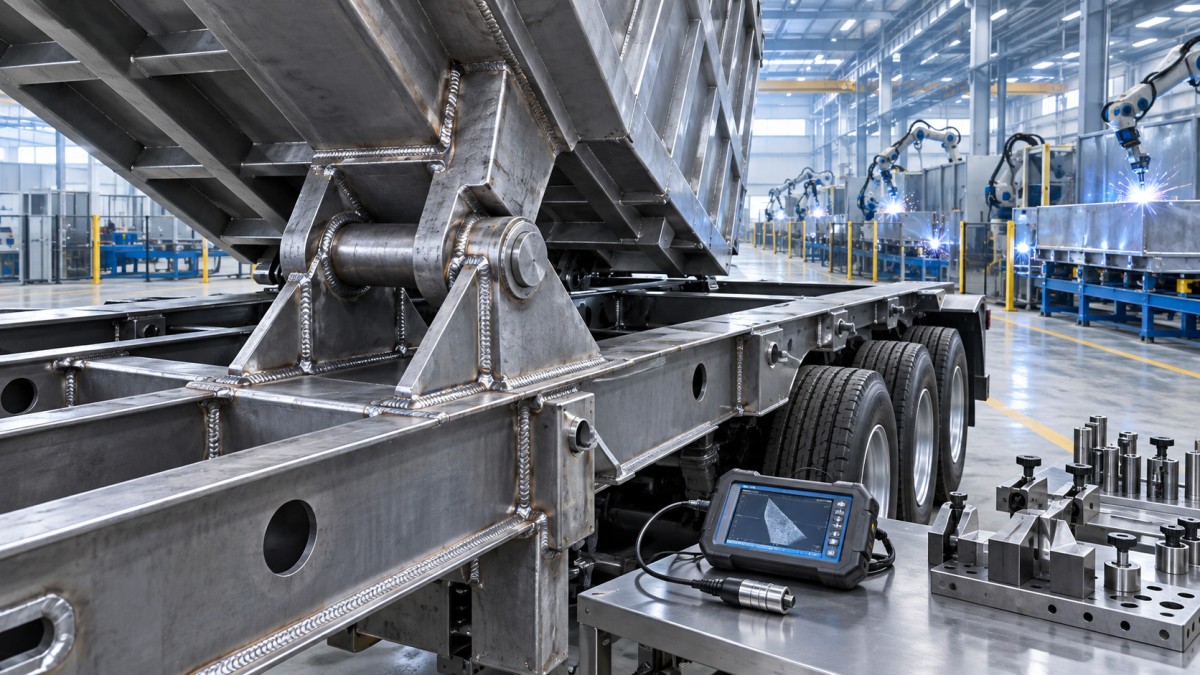
Visual inspection is the first gate, not the entire quality system. It can identify inconsistent bead profile, abrupt starts and stops, excessive spatter, undercut, overlap, visible porosity, arc strikes outside the joint, cracks, incomplete crater filling, and poor cleanup before painting. In repetitive production, compare equivalent joints across several trailers. A stable process should produce broadly similar bead size, continuity, and placement where the same joint is welded under the same procedure.
Pay particular attention to transitions at the ends of stiffeners, brackets, and gussets. Sharp weld terminations can become fatigue initiation points, especially where a dump body flexes during loading and discharge. Also inspect areas that are difficult to access after assembly. If a manufacturer cannot show these joints before final closure, the buyer has less ability to verify workmanship.
Visual checks cannot reliably establish internal fusion, root condition, or subsurface discontinuities. For critical connections, the inspection plan may call for non-destructive testing such as magnetic particle testing, dye penetrant testing, ultrasonic testing, or radiographic examination. The correct method depends on material, joint design, access, and the acceptance criteria agreed for the project. A responsible supplier should explain which joints are tested, at what production stage, how samples are selected, and how rejected areas are documented and repaired.
Ask for process evidence, not verbal assurances
A capable Dump Trailer Manufacturer should be able to present a traceable chain from design intent to final inspection. The exact documentation will vary by market and contract, but quality and safety teams should normally request enough information to answer several basic questions:
- Is there a welding procedure specification for the relevant steel grade, joint type, position, consumable, and thickness range?
- Are welders or welding operators qualified for the work they perform, and are qualifications current under the applicable project requirements?
- How are incoming plates, structural sections, welding wire, electrodes, and shielding gases controlled?
- What inspection points exist before welding, after welding, and before paint or final assembly?
- How are defects recorded, repaired, reinspected, and prevented from recurring?
Documents should be meaningful rather than ceremonial. A procedure with no link to shop-floor parameters is weak evidence. During a factory audit, compare a procedure sheet with the actual machine setup, wire identification, joint preparation, and operator practice. If the production team cannot explain the controls in use, paperwork alone should not close the quality question.
Fixture control and automation matter, but they do not replace inspection
Repeatable welding begins before the arc is struck. Poorly cut plates, variable bevels, distorted components, or loose fixtures create gaps that force welders to compensate manually. That can lead to inconsistent heat input, oversized beads, distortion, or lack of fusion. CNC cutting equipment, bending machinery, and stable assembly fixtures can improve dimensional repeatability when they are properly maintained and verified.
Automatic welding is especially useful for long, repeatable seams, but it should not be treated as proof of quality by itself. Automated equipment still needs controlled parameters, correct torch alignment, sound fit-up, and monitoring of starts, stops, and intersections. Manual welding remains important around complex brackets, reinforcement plates, and tight-access locations. The best evaluation looks at how the manufacturer controls both production modes.
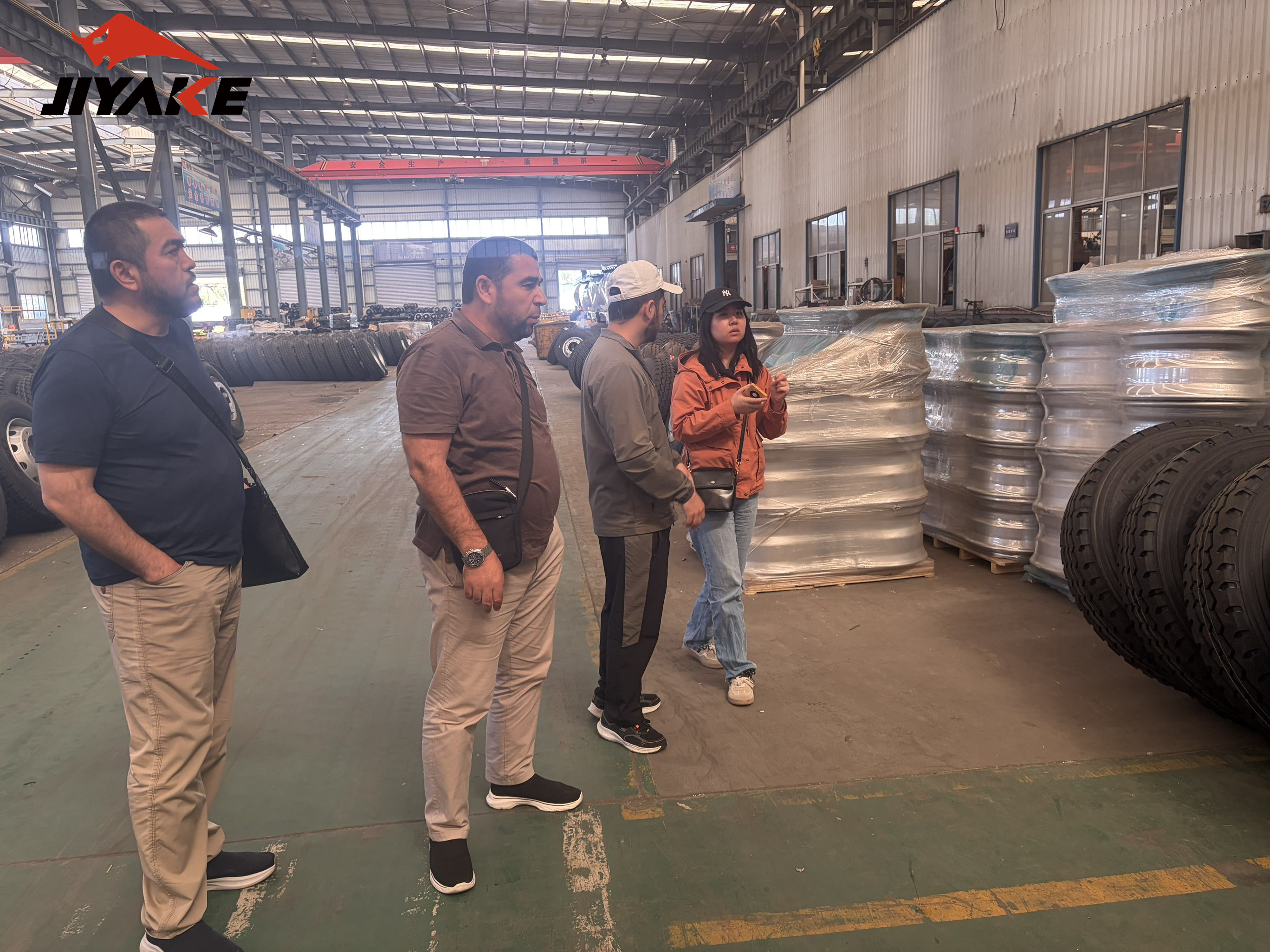
Shandong Jiyake Automobile Sales Co., Ltd. operates across product design, development, production, vehicle trading, and fittings production, with a portfolio that includes semi-trailers, tippers, tankers, tractor trucks, mixers, wreckers, timber trailers, and other special vehicles. Its 300,000 m² factory and workforce of 500 employees include CNC cutting, automatic welding, large bending, canning, and tank automatic welding equipment. For a buyer, those resources are useful starting indicators; the more important follow-up is to verify how equipment capability is translated into documented controls for the specific dump trailer model being assessed.
Use standards carefully and define acceptance before production
There is no single universal acceptance rule that automatically suits every dump trailer and export destination. Welding quality frameworks such as ISO 3834 may be relevant to a manufacturer’s welding quality management arrangements, while ISO 5817 is often referenced for quality levels of imperfections in fusion-welded steel joints. AWS D1.1 may also be considered in structural-steel contexts. Their relevance, edition, acceptance level, and contractual status must be confirmed for the specific trailer design and destination market rather than assumed.
The purchase specification should define critical joints, required inspections, sample frequency where applicable, repair rules, coating hold points, dimensional tolerances, and document handover. If local roadworthiness, body-building, or occupational safety requirements apply, align those requirements with the trailer’s intended payload and operating conditions. A trailer used on paved regional routes may face a different fatigue environment from one working in quarry access roads or construction sites.
Look at the trailer as part of the heavy-haul combination
Weld assessment becomes more relevant when the dump trailer is paired with a tractor unit for demanding logistics, heavy-load work, or line-haul operation. Chassis loading, coupling forces, road conditions, braking behavior, and load distribution affect the duty imposed on the trailer structure. For fleets evaluating a 6X4 tractor configuration, equipment such as the Shacman Tractor Truck can be reviewed alongside trailer specifications to confirm compatibility in operating mass, axle loading, tire selection, route conditions, and local regulatory requirements. The trailer weld review should not be isolated from these operating realities.
One useful audit practice is to inspect a partially completed unit and a finished unit from the same production period. The unfinished trailer exposes joint fit-up, access conditions, and weld sequence; the finished trailer shows distortion control, alignment, surface preparation, and final workmanship. Ask to see repair records for that production period as well. A manufacturer with a functioning nonconformance process should not claim that repairs never occur. The better sign is that repairs are controlled, reinspected, and used to identify process weaknesses.
A practical release decision
Before approving a supplier, quality teams should be able to link critical weld locations to drawings, procedures, inspection records, and final trailer identification. They should understand which joints receive enhanced examination, who authorizes repairs, and whether painting begins only after required checks are complete. Consistent geometry and clean visual appearance are encouraging, but traceability and defect control provide the stronger evidence.
For a new dump trailer program, the most effective next step is usually a joint quality plan agreed before fabrication: identify the fatigue-sensitive connections, specify the applicable acceptance criteria, establish inspection hold points, and retain records that can be reviewed during delivery and later maintenance. That approach gives safety managers a basis for decisions long after the trailer leaves the factory.
Leave A Reply

First class quality service and professional after-sales team.
Get in Touch
*We respect your confidentiality and all information are protected.