




Why tire wear can reveal alignment faults on a lowbed trailer
Why Tire Wear Can Reveal Alignment Faults on a Lowbed Trailer
Tire wear is easy to dismiss as a normal operating expense, especially on a lowbed trailer that spends its working life under heavy equipment, uneven site access roads, and frequent loading cycles. That is often a costly mistake. On a properly maintained trailer, tires should wear gradually and fairly evenly across the tread. When one shoulder disappears early, the tread develops a saw-tooth feel, or one axle seems to consume tires faster than the others, the trailer may be telling you that its running gear is no longer tracking correctly.
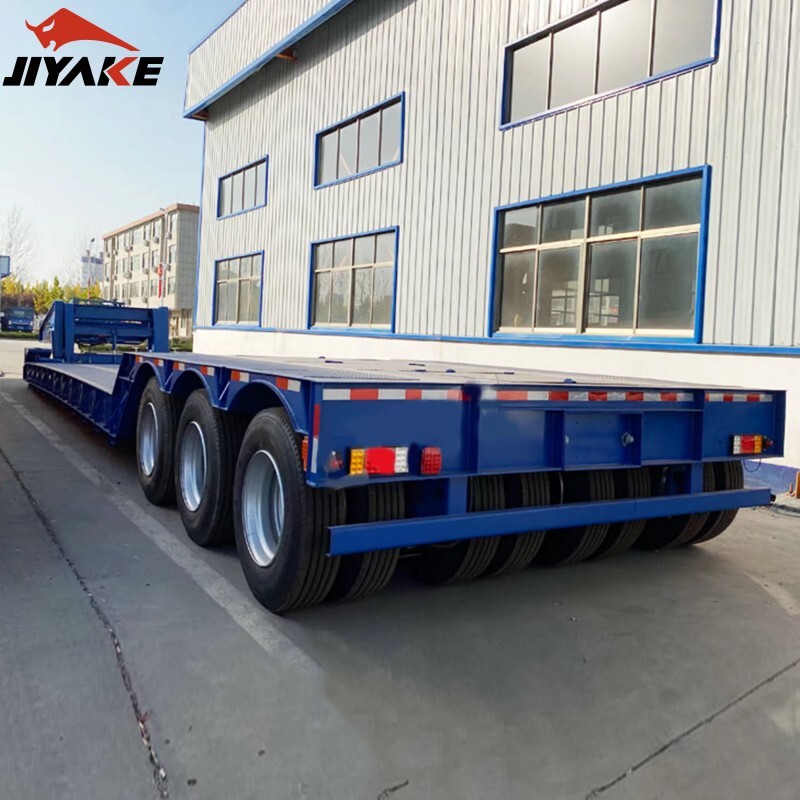
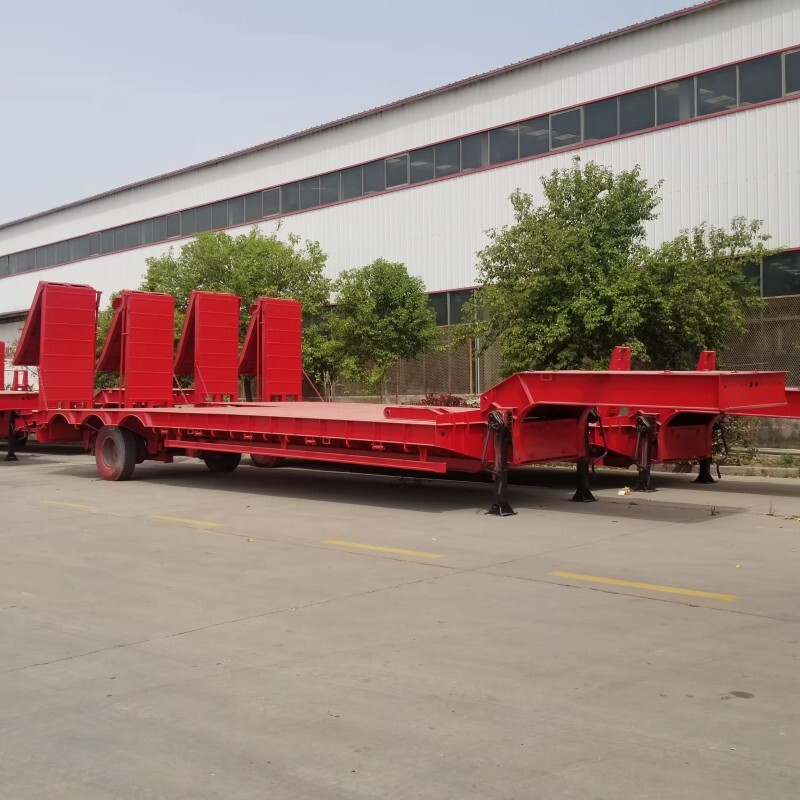
For an owner comparing a Lowbed Trailer For Sale, tire condition should be treated as evidence, not just a cosmetic detail. It can reveal how the trailer was loaded, whether the suspension has been stressed, and whether the axles, hubs, or frame geometry need attention. Replacing worn tires without finding the cause may only reset the problem for a few months.
The tread pattern usually points to the fault
Alignment is not limited to a simple “straight or crooked” question. A multi-axle lowbed relies on axles being positioned square to the centerline of the chassis and parallel to each other. If an axle is slightly skewed, the tire is dragged sideways as it rolls. That scrub may not be obvious from the driver’s seat, but it becomes visible on the tread.
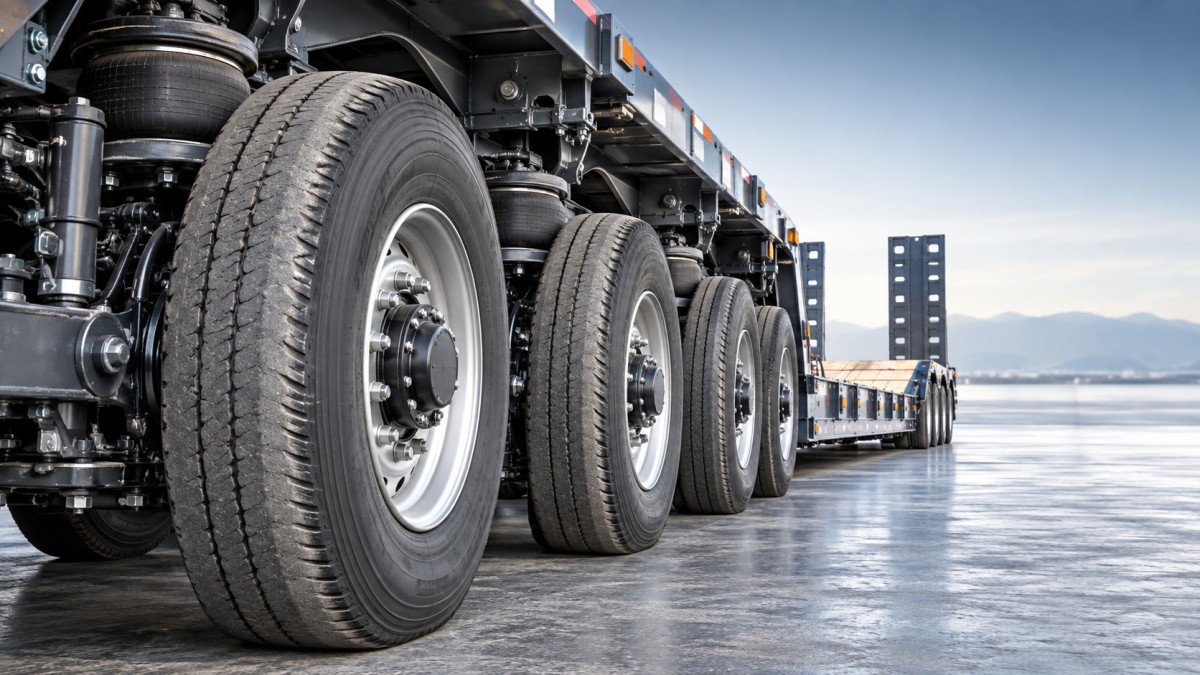
Outer-shoulder wear often suggests that the wheel is leaning outward under load or that the suspension is no longer holding the axle in its intended position. Inner-shoulder wear can point in the opposite direction, although tire pressure, bent wheels, and hub or bearing movement should also be checked before blaming alignment. Feathering—where one edge of each tread block feels sharp and the other feels rounded—is a familiar sign of lateral scrubbing. It is especially worth investigating when it appears across tires on the same axle.
Cupping or scalloped depressions are less conclusive. They can be related to shock absorption, loose suspension components, imbalance, or brake-related heat issues. A lowbed trailer often uses mechanical suspension arrangements that must tolerate severe load transfers during loading and unloading. Worn bushings, loose U-bolts, damaged equalizers, or a fatigued leaf spring can allow axle movement that looks much like a pure alignment issue. The practical approach is to inspect the whole axle-to-frame path rather than ordering an alignment immediately.
Why lowbed trailers are particularly vulnerable
A lowbed trailer has a demanding job. Excavators, loaders, drilling equipment, and other heavy machines do not always arrive perfectly centered, and their weight can shift as they cross the ramps or settle on the deck. Repeated side loading at the same point can stress suspension brackets and axle seats. A single hard impact with a pothole, rock, site curb, or ramp edge can also affect an axle beam, wheel-end component, or mounting position.
Overloading is another concern, but it is not the only one. A trailer can remain within its rated payload and still suffer uneven force distribution if the machine is positioned too far forward, too far back, or consistently offset to one side. The signs may emerge gradually: one group of tires gets hotter, a trailer seems reluctant to track behind the tractor, or the driver notices that the vehicle pulls slightly when braking. These are operational clues worth recording alongside tire inspections.
Road conditions matter as well. In mining, construction, and remote logistics work, the trailer may run between paved highways and rough access roads in the same day. That service profile calls for more frequent visual checks than a trailer used only on smooth, predictable routes.
Do not confuse alignment wear with basic tire-management problems
Before concluding that a lowbed has an alignment fault, rule out the simpler causes. Low inflation generally increases wear on both shoulders because the tire flexes excessively. Excessive inflation tends to concentrate wear near the center of the tread. Mismatched tire diameters on a paired axle can make one tire carry more work than its neighbor. A damaged rim, loose wheel fasteners, worn bearings, or brake drag can create a localized problem that alignment alone will not solve.
The useful distinction is consistency. Pressure-related wear often appears in a recognizable pattern across several tires that receive similar maintenance. Alignment-related scrub is more likely to be concentrated on a particular axle position or to show directional feathering. Take photographs before rotating or replacing tires. Mark the axle and wheel position. Without that record, an inspector loses the pattern that makes diagnosis possible.
A sensible inspection sequence
- Check cold tire pressure against the tire supplier’s load and inflation guidance.
- Compare tread depth across the inner shoulder, center, and outer shoulder of every tire.
- Run a gloved hand across the tread to identify feathering or irregular step wear.
- Inspect rims, wheel studs, hubs, bearings, brake condition, and signs of abnormal heat.
- Look at leaf springs, bushings, U-bolts, hangers, equalizers, and axle-seat weld areas for movement, damage, or loose hardware.
- If no obvious mechanical cause is found, have axle tracking and alignment measured with equipment suitable for heavy trailers.
It is important to measure after correcting worn or loose suspension parts. Aligning axles while bushes or mounting hardware still have play can produce a good reading in the workshop and poor tire life on the road.
What to inspect before buying a lowbed trailer
A buyer should walk around the trailer before focusing on paint, deck finish, or optional equipment. Look at all tire rows from both sides. Fresh paint on the wheels does not tell you much; tread shape does. Compare tires on the same axle and compare the front, middle, and rear axle groups. A trailer with uniformly aged tires may be easier to assess than one fitted with a mixture of nearly new and heavily worn tires, because mixed tires can hide a recurring wear pattern.
Then sight along the chassis and suspension from a safe distance. You are not trying to perform a precision alignment by eye, but obvious differences in axle position, damaged brackets, or uneven ride height deserve a closer inspection. Ask what payloads the trailer carried, what roads it worked on, and whether tire replacements were unusually frequent. These are better questions than simply asking whether the trailer has “good tires.”
For a new build, specify the trailer around the actual equipment being transported: axle configuration, deck loading arrangement, tire specification, suspension type, and the expected route conditions. A low initial purchase price is less attractive if the configuration creates recurring tire scrub on the jobs it will actually perform.
Fleet lessons also apply across different trailer types
The same discipline applies to other heavy trailer categories. Side-tipping units used in mining, construction, and bulk logistics also experience uneven loading and harsh site surfaces. For example, a Side Tipper Trailer built with a heavy-duty I-beam, high-strength steel structure, leaf-spring suspension, and 12R22.5 tire options still needs regular checks of tire condition and suspension mounting integrity. Robust construction helps, but it does not eliminate the effects of repeated impacts, incorrect loading practice, or neglected wheel-end maintenance.
Manufacturers with broad trailer production experience tend to see this connection clearly. Shandong Jiyake Automobile Sales Co., Ltd. produces semi-trailers and a range of special vehicles for markets across Southeast Asia, Central Asia, and Africa. In such varied operating environments, fabrication quality matters: accurate cutting, controlled welding, and sound assembly provide the foundation for axle and suspension placement. Yet the trailer’s condition after delivery still depends on how it is loaded, inspected, and repaired in daily service.
Treat abnormal wear as an early maintenance signal
A lowbed trailer rarely announces an alignment problem with one dramatic failure. More often, it starts with an outer shoulder that looks slightly thinner than expected, a tire that feels rough when touched, or a repeat replacement on one axle position. Catching that signal early can prevent damage from spreading through a tire set and can reduce the chance of unstable tracking when moving valuable heavy equipment.
When evaluating any Lowbed Trailer For Sale, inspect the tires as carefully as the deck and main beam. They are not merely consumables. They are one of the clearest records of what the trailer has been through—and sometimes the first warning that its axles are no longer running true.
Leave A Reply

First class quality service and professional after-sales team.
Get in Touch
*We respect your confidentiality and all information are protected.