




How to check if a dump trailer manufacturer controls payload variation
How to Check If a Dump Trailer Manufacturer Controls Payload Variation
For quality control and safety managers, payload consistency is a critical indicator of trailer reliability, compliance, and operating cost.
A capable Dump Trailer Manufacturer should show how it controls material selection, structural tolerances, welding quality, and axle configuration across every production batch.
This guide explains the factory evidence, inspection records, and practical acceptance checks that help buyers distinguish controlled manufacturing from unsupported claims.
What Payload Variation Really Tells You
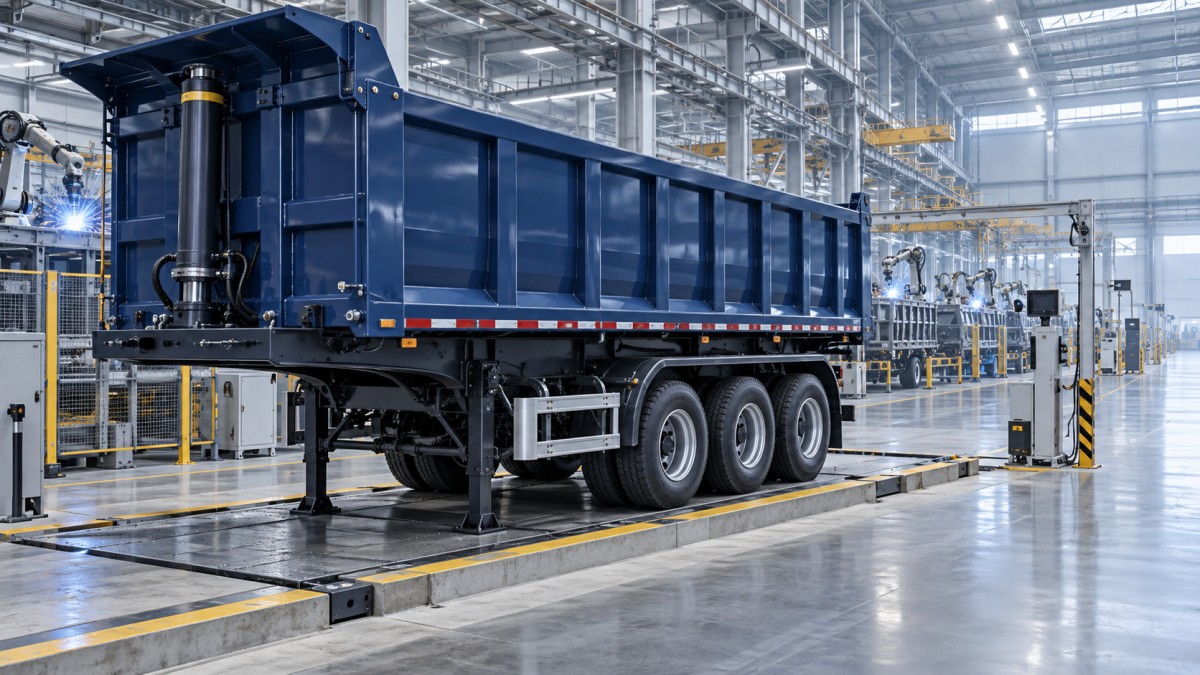
Payload variation is the difference in usable carrying capacity between supposedly identical trailers produced by the same supplier or production batch.
It usually results from inconsistent tare weight, uneven structural fabrication, component substitutions, or axle and suspension assemblies that do not match approved specifications.
For safety managers, uncontrolled variation can affect axle loading, braking performance, rollover exposure, and compliance with road regulations in destination markets.
For quality teams, the central question is not whether one sample trailer meets a stated capacity, but whether every delivered unit performs predictably.
A reliable Dump Trailer Manufacturer should provide evidence that payload capacity is engineered, measured, documented, and verified before each trailer leaves the factory.
Ask for the nominal tare weight, permitted tolerance, maximum gross vehicle weight, axle ratings, and expected payload range for the exact configuration quoted.
If the supplier cannot explain how these figures connect, the stated payload may be a sales estimate rather than a controlled production result.
Start With Tare Weight Control
Tare weight is the most direct indicator of payload consistency because every unnecessary kilogram of trailer weight reduces available legal carrying capacity.
However, an unusually low tare weight may also indicate thinner steel, undersized reinforcement, lighter suspension components, or omitted protective equipment.
Request individual weighing records for completed trailers, not only a brochure specification or a single photograph of a scale display.
Those records should identify the trailer serial number, weighing date, scale calibration status, inspector, specification revision, and accepted weight range.
A controlled factory normally sets an internal tare-weight tolerance based on trailer model, material thickness, body length, axle arrangement, and optional equipment.
Compare several records from different production dates. A narrow, explainable range shows process stability, while unexplained swings deserve further investigation.
Ask whether weights are recorded before painting, after final assembly, or after accessories are installed, since inconsistent weighing stages create misleading comparisons.
Also confirm whether the quoted tare includes spare tire carriers, toolbox, tarpaulin system, hydraulic cylinder, landing gear, and any market-specific safety equipment.
Verify Material Traceability and Thickness
Material variation is a major cause of inconsistent trailer weight and structural capacity, especially for dump bodies exposed to abrasion and repeated impact.
The manufacturer should identify steel grades, plate thicknesses, supplier certificates, batch numbers, and incoming inspection criteria for load-bearing components.
Review the bill of materials for sidewalls, floor plate, front wall, chassis rails, crossmembers, subframe, hinges, and tipping-cylinder mounting areas.
Thickness should be checked at multiple locations because nominal mill specifications do not guarantee that every fabricated component remains within design tolerance.
Use ultrasonic thickness measurements when possible, particularly on floor plates and formed sections where corrosion, grinding, or fabrication can reduce effective thickness.
Material substitution must be controlled through engineering approval. A different steel grade can alter both trailer weight and fatigue performance.
Look for documented rules requiring production, purchasing, and quality departments to approve substitutions before replacement steel enters assembly.
For reference, similar traceability is essential on bulk equipment such as the Cement Bulker Trailer, where tank material and pressure integrity directly affect operating safety.
Inspect Structural Dimensions and Fabrication Tolerances
Payload consistency depends on geometry because small dimensional deviations can change body volume, load distribution, center of gravity, and stress concentration.
Ask the supplier for controlled drawings showing chassis length, body dimensions, crossmember spacing, axle centers, suspension mounting points, and hydraulic mounting locations.
A serious manufacturer uses jigs, fixtures, and measurement checkpoints to keep welded chassis assemblies aligned before final body installation.
During a factory audit, inspect whether workers measure diagonal dimensions, rail straightness, axle spacing, and kingpin position using documented acceptance standards.
Uneven chassis rails or inaccurate axle placement can cause unequal tire loading, suspension imbalance, accelerated wear, and unpredictable road behavior.
Check the dump body’s sidewall and floor geometry as well. Variation in internal dimensions can affect actual volume even when rated payload appears identical.
For high-volume material transport, buyers should verify both weight capacity and volumetric capacity, since lighter materials may fill the body before reaching weight limits.
Request first-article inspection reports for new models and records showing how production units are compared against the approved master specification.
Assess Welding Quality as a Payload-Control Issue
Welding quality affects more than appearance. It determines whether a trailer can repeatedly carry its intended load without cracking, distortion, or premature reinforcement repairs.
Poor weld consistency may force manufacturers to add unplanned steel reinforcements, increasing tare weight and causing payload differences between individual trailers.
Ask whether welding procedures specify wire type, current range, joint preparation, sequence, welder qualification, and visual acceptance criteria for critical joints.
Critical areas include chassis rails, crossmembers, suspension brackets, hoist mounts, hinge assemblies, kingpin plates, and body-to-subframe connections.
Quality records should show visual inspections and, where required, non-destructive testing such as magnetic particle, ultrasonic, or dye penetrant examination.
Inspect finished welds for undercut, porosity, incomplete fusion, spatter, inconsistent bead profiles, and excessive grinding that may weaken the joint.
Automated welding can improve repeatability, but it only helps when fixture accuracy, welding parameters, maintenance, and final inspection are consistently controlled.
Confirm Axle, Suspension, Tire, and Brake Matching
A trailer’s legal and safe payload depends on the weakest rated component, not simply on the total capacity printed in a quotation.
Verify that axle ratings, suspension capacity, tire load index, wheel ratings, brake chamber sizing, and kingpin capacity match the declared gross vehicle weight.
Ask for component certificates and confirm whether the installed brands and part numbers match the approved configuration listed in purchase documentation.
Component substitutions are especially risky when suppliers use different axle or tire brands without reassessing braking balance, load distribution, or service availability.
Check axle alignment reports. Correct alignment supports even tire wear and helps maintain stable load transfer during tipping, braking, and uneven-road operation.
For dump trailers, suspension bracket welding and equalizer geometry deserve close attention because they strongly influence axle load sharing under difficult conditions.
Safety managers should also review brake-system testing, including air leakage checks, emergency braking response, chamber installation, and hose routing protection.
Review Hydraulic Tipping System Controls
Payload variation becomes more dangerous during unloading because a raised dump body amplifies instability caused by uneven loading, poor ground conditions, or structural imbalance.
Confirm that the hydraulic cylinder, pump, hoses, mounting brackets, and body hinge system are selected for the specified body weight and payload.
Ask the manufacturer for tipping-angle specifications, cylinder stroke data, pressure settings, and stability guidance for the intended material and body configuration.
Inspect whether hydraulic mounts are reinforced according to drawings and whether pin bores, hinge shafts, and retaining components receive dimensional inspection.
A supplier should have an end-of-line tipping test that checks smooth lifting, full lowering, hydraulic leakage, abnormal noise, and body alignment.
Documented functional testing is more meaningful than a brief demonstration because it connects each finished trailer serial number to a recorded acceptance result.
Use Factory Capability as Evidence
Factory equipment does not guarantee quality, but it helps explain whether the manufacturer can repeat critical dimensions and structural processes at production scale.
Look for CNC cutting equipment, large bending machines, assembly fixtures, automated welding stations, calibrated weighing systems, and documented inspection tools.
These capabilities reduce reliance on manual approximation, particularly for chassis components, body plates, tank-like structures, and repetitive welded assemblies.
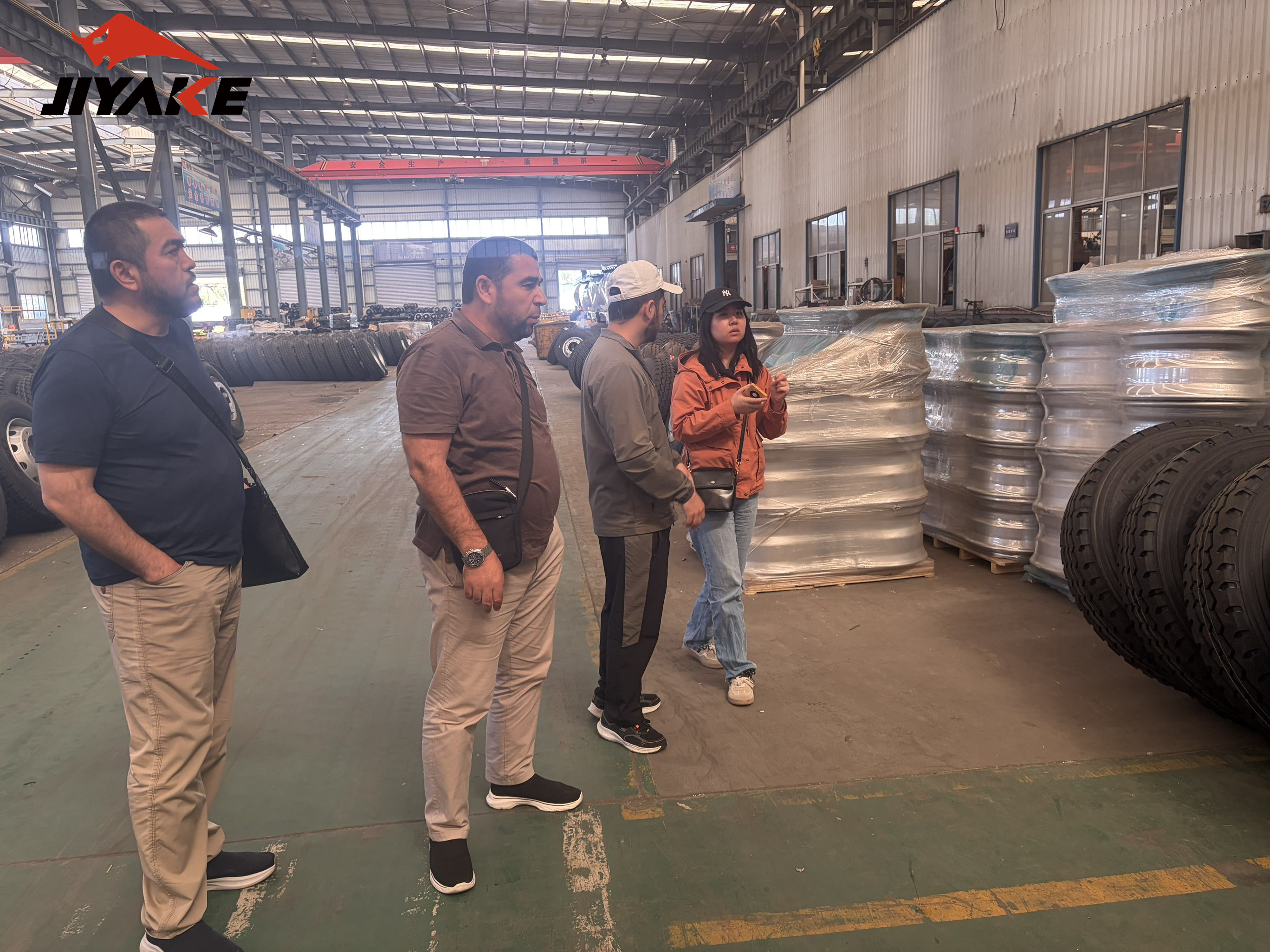
Shandong Jiyake Automobile Sales Co., Ltd. operates production resources including CNC cutting, automatic welding, large bending, canning, and tank automatic welding equipment.
When evaluating any supplier, confirm that equipment is actively used for your trailer model rather than simply listed as a general factory capability.
Ask to observe material receiving, cutting, welding, assembly, final inspection, and finished-unit weighing in the same production workflow.
Create a Practical Supplier Acceptance Checklist
Before placing a volume order, define measurable acceptance requirements in the technical agreement rather than relying on general capacity statements.
Specify target tare weight, permitted tolerance, gross vehicle weight, rated payload, axle loads, steel grades, thicknesses, and approved component brands.
Require serial-number-linked records for weighbridge results, material certificates, dimensional inspections, welding checks, axle alignment, brake tests, and tipping tests.
Include a right to conduct pre-shipment inspection or appoint an independent inspector for a representative sample from each production batch.
For large orders, consider first-article approval before mass production. This allows quality teams to correct deviations before they become repeated fleet-wide defects.
Also define how nonconforming trailers will be reworked, reweighed, documented, and accepted, including responsibility for delays or replacement costs.
Make the Buying Decision on Evidence
The strongest Dump Trailer Manufacturer is not necessarily the one claiming the highest payload or lowest tare weight in a sales presentation.
It is the supplier that can demonstrate repeatable control over weight, materials, dimensions, welding, running gear, hydraulics, and final inspection.
For quality and safety managers, traceable production data turns payload claims into auditable evidence and reduces uncertainty before trailers enter service.
Choose a manufacturer whose documented controls match the operating environment, legal axle limits, material type, maintenance capability, and safety expectations of your fleet.
Leave A Reply

First class quality service and professional after-sales team.
Get in Touch
*We respect your confidentiality and all information are protected.