




Recent Posts
 Thailand Clients Visit JIYAKE to Inspect Brand-New Semi-Trailers and Reach Cooperation AgreementNov 21, 2026
 Guinea Clients Visit JIYAKE to Inspect Brand-New SINOTRUK Vehicles and Reach Strategic CooperationNov 21, 2026
 When can an electric dump truck work on a fixed site?Oct 30, 2026

How does a bulk cement trailer unload its cargo?
A bulk cement trailer unloads its cargo using compressed air to fluidize the cement and push it through a discharge pipeline into a storage silo. This enclosed pneumatic process helps reduce dust and makes unloading more efficient. If you are researching a bulk cement trailer for sale, understanding how its air compressor, tank and discharge valves work together can help you compare equipment and operating requirements. This guide explains each stage of the unloading process and the key factors that affect performance.
What happens inside the tank during unloading?
Cement powder does not simply pour out of a trailer like water. Packed powder can resist flow, especially around the outlet. A pneumatic trailer introduces compressed air through fluidizing media near the bottom of the tank. The air moves between the particles, loosening the powder so it behaves more like a fluid and can move toward the discharge outlet.
At the same time, a pressure difference drives the cement-and-air mixture through the discharge hose and up the silo filling pipe. Some systems also use an air line to assist conveying. The exact layout and valve sequence depend on the trailer design, so two vehicles may perform the same job with different controls.
The tank is not usually tipped to empty it. Its internal slopes, fluidizing sections and outlet arrangement are designed to guide material toward the discharge point while the tank remains in its normal position.
From parking to an empty tank
Unloading begins before the compressor starts. The driver positions and secures the vehicle where the discharge hose can reach the receiving connection without sharp bends or unnecessary strain. The receiving silo must have enough capacity for the load, and its venting and dust-collection equipment must be suitable and operational. Air entering with the cement needs somewhere to go; a restricted silo vent can create a serious pressure hazard.
The hose is then connected and secured to the trailer outlet and the silo inlet. Operators check that connections, seals and hose restraints are appropriate for the equipment. A worn coupling or poorly seated gasket may appear minor, but under pressure it can leak dust or allow a hose to separate.
Once the system is ready, the compressor supplies air and the operator uses the trailer’s specified valve sequence to pressurize and fluidize the load. The discharge valve is opened as directed by the manufacturer, allowing cement to travel to the silo. Pressure gauges and the sound and behavior of the line help the operator monitor the transfer.
Near the end, flow may become less steady as the remaining cement moves toward the outlet. Some trailers have separate sections that can be controlled to help clear material from different parts of the tank. The operator follows the equipment procedure to finish the transfer and clear the line where required.
After unloading, the system must be shut down and depressurized according to the trailer and site procedures. A gauge reading alone should not replace the specified isolation and pressure-release checks. Never loosen a hose, coupling or tank opening while pressure may still be trapped.
Why unloading speed changes from one site to another
A trailer’s compressor matters, but it is only one part of the system. A long hose, a high silo inlet or several tight bends can increase resistance. A receiving line with a smaller bore than the equipment is designed for may also restrict flow. That is why an unloading time quoted for one installation should not be assumed at another.
The condition of the cement matters too. Moisture can cause powder to cake or form lumps, making fluidization and conveying more difficult. Worn fluidizing media, air leaks and partially blocked lines can produce similar symptoms, so slow discharge is not automatically a compressor problem.
Watch for a pressure rise accompanied by reduced or stopped flow. It can indicate a restriction, but the correct response depends on the equipment and site procedure. Increasing pressure beyond the permitted limit is not a shortcut: stop and isolate the system as instructed, and do not attempt to disconnect or clear a pressurized line.
A cement tanker is different from a tipper
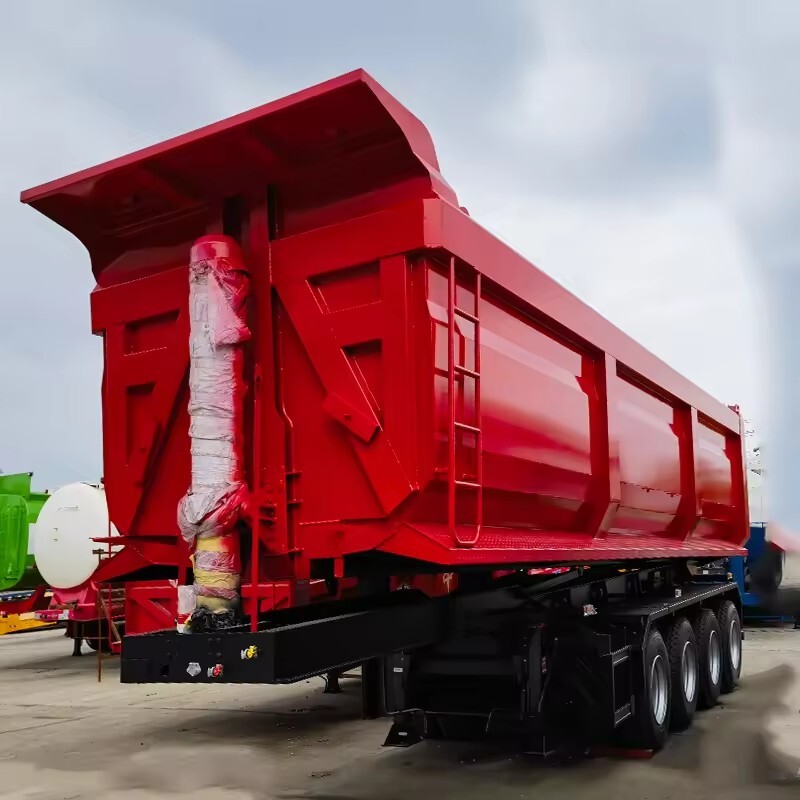
Both vehicles can carry loose construction materials, but their unloading methods are not interchangeable. A tipper uses a hydraulic lift to discharge materials such as sand or gravel from an open body. A cement tanker uses a sealed pressure system to deliver fine powder into enclosed storage.
For example, the 6X6 400HP Dump Truck represents the tipping approach used in construction and mining. Its hydraulic unloading system addresses a different material-handling task; it is not a substitute for a pneumatic cement trailer when cement must be conveyed into a silo.
What to check when comparing trailers
Start with the receiving sites rather than the tank alone. Ask for the silo inlet height, expected hose length, connection type and available space around the unloading point. Confirm the trailer’s rated operating pressure, compressor arrangement, discharge connections and cleaning procedure against the manufacturer’s documentation. The tractor must also be compatible with the trailer and its compressor drive, where applicable.
Maintenance access is easy to overlook. Ask how fluidizing media, valves, filters and seals are inspected or replaced, and whether suitable parts and service support are available in the operating region. If the same trailer will carry different powders, confirm the cleaning requirements and material compatibility before assuming it can switch loads without contamination.
Shandong Jiyake Automobile Sales Co., Ltd. supplies bulk cement tankers alongside other heavy and special-purpose vehicles, with customers in more than 60 countries. When discussing a configuration with a supplier, provide the actual silo and route details. A trailer that looks suitable on paper may still need different connections, compressor arrangements or support provisions to work at the intended sites.
Leave A Reply

First class quality service and professional after-sales team.
Get in Touch
*We respect your confidentiality and all information are protected.