




Customizing Dump Semi-Trailers: Payload, Axle, and Suspension Options
Choosing the right dump semi-trailer is not only about body size—it directly affects payload efficiency, road performance, maintenance costs, and long-term profitability. For fleet owners, contractors, and transport companies, customizing dump semi-trailers with the proper payload capacity, axle configuration, and suspension options can make operations safer, more compliant, and more productive. This guide explores the key factors to consider when selecting a customized dump semi-trailer for heavy-duty hauling applications.
In heavy-duty transport, a dump semi-trailer must match the material, route, tractor power, road regulations, and unloading frequency. A trailer used for sand is not always suitable for rock, coal, ore, demolition waste, or wet clay.
Shandong Jiyake Automobile Sales Co., Ltd. supports fleets with semi-trailers, tippers, tractor trucks, dump trucks, tankers, bulk cement tankers, concrete mixer trucks, wrecker trucks, timber trailers, and other special vehicles for more than 60 countries.
Payload Planning: Matching Capacity with Real Hauling Conditions
Payload selection is the first customization decision because it affects body volume, chassis strength, axle quantity, suspension load, tire wear, braking distance, and legal compliance. A difference of 5 tons can change the whole structure.
Material Density and Body Volume
A dump semi-trailer carrying coal may require a larger cubic body, while one carrying stone or ore needs stronger flooring and lower volume. Typical payload classes often range from 30 to 80 tons, depending on market regulations.
Before ordering, buyers should calculate both weight and volume. Overloading by only 10% can accelerate fatigue in the main beam, hydraulic cylinder mount, kingpin plate, and suspension brackets.
The table below outlines common payload planning factors for dump semi-trailer customization. Actual specifications should be confirmed according to local road laws, tractor compatibility, and operating terrain.
The key conclusion is simple: payload should not be chosen only by maximum tonnage. The best dump semi-trailer is one that carries the planned load repeatedly without shortening service life.
Common Payload Mistakes
- Selecting a large body without considering material density and rollover risk.
- Ignoring local axle-load limits, which may cause penalties or road access restrictions.
- Using thin floor plates for abrasive materials such as crushed stone and construction waste.
- Failing to match the trailer gross weight with tractor engine power and braking capacity.
Axle Configuration: Balancing Legal Load, Stability, and Maintenance
Axle configuration determines how weight is distributed between the tractor, kingpin, suspension, tires, and road surface. Many dump semi-trailers use 2-axle, 3-axle, or multi-axle layouts based on payload and route requirements.
For cross-border fleets in Southeast Asia, Central Asia, and African markets, regulations may vary by country. Buyers should confirm allowable gross combination weight, axle spacing, brake requirements, and tire rating before production.
2-Axle, 3-Axle, and Heavy-Duty Layouts
A 2-axle dump semi-trailer may be suitable for moderate payload and shorter routes. A 3-axle configuration is more common for 40 to 60 ton operations, especially when road conditions are mixed.
For mine, quarry, and infrastructure projects, heavy-duty layouts may include strengthened axles, larger brake chambers, reinforced landing gear, and tires selected for rough roads, heat, and repeated impact.
- Confirm target payload and total loaded weight in 3 operating scenarios.
- Check road law limits for axle load and gross vehicle combination weight.
- Match axle rating with tire specification, suspension capacity, and brake system.
- Reserve structural safety margin for rough roads, gradients, and emergency braking.
Why Axle Position Matters
Axle position affects turning radius, tire scrubbing, kingpin load, and tipping stability. If the axle group is placed poorly, the trailer may overload the tractor or become unstable during unloading.
A practical engineering review should include center of gravity calculation, tailgate opening clearance, hydraulic cylinder position, and frame torsion resistance. These 4 factors are especially important for side-dump and rear-dump designs.
Suspension Options: Mechanical, Air, and Reinforced Solutions
Suspension choice directly influences ride comfort, cargo protection, tire life, and maintenance frequency. For dump semi-trailers, the two most common options are mechanical suspension and air suspension.
Mechanical Suspension for Rough Worksites
Mechanical leaf spring suspension is widely used in heavy construction transport because it is strong, simple, and easier to maintain in remote regions. It tolerates dust, potholes, and uneven loading better than delicate systems.
For rough sites, operators typically inspect U-bolts, spring leaves, bushings, and equalizer seats every 5,000 to 10,000 km. Early tightening helps prevent abnormal tire wear and frame stress.
Air Suspension for Road Transport Efficiency
Air suspension offers better shock absorption, height adjustment, and reduced vibration. It can be beneficial for longer highway routes, sensitive cargo, and markets where road protection standards are strict.
However, air suspension requires closer attention to air bags, valves, pipelines, and pressure control. Fleets operating far from service stations should evaluate spare parts availability before choosing this option.
The following comparison helps procurement teams evaluate suspension options for different dump semi-trailer operating environments, from quarry roads to long-distance regional hauling.
Mechanical systems are often preferred where reliability and fast repair matter most. Air suspension is more suitable when road quality, comfort, and load protection justify higher maintenance discipline.
Body, Hydraulic, and Tractor Matching for Safer Unloading
A dump semi-trailer is a complete working system, not only a steel box on wheels. Body design, hydraulic lifting, tractor selection, and driver procedures must work together during every unloading cycle.
Body Structure and Steel Thickness
For abrasive materials, buyers often specify thicker bottom plates than side plates. Common practice is to use a stronger floor, reinforced side ribs, and a rear door designed for repeated impact.
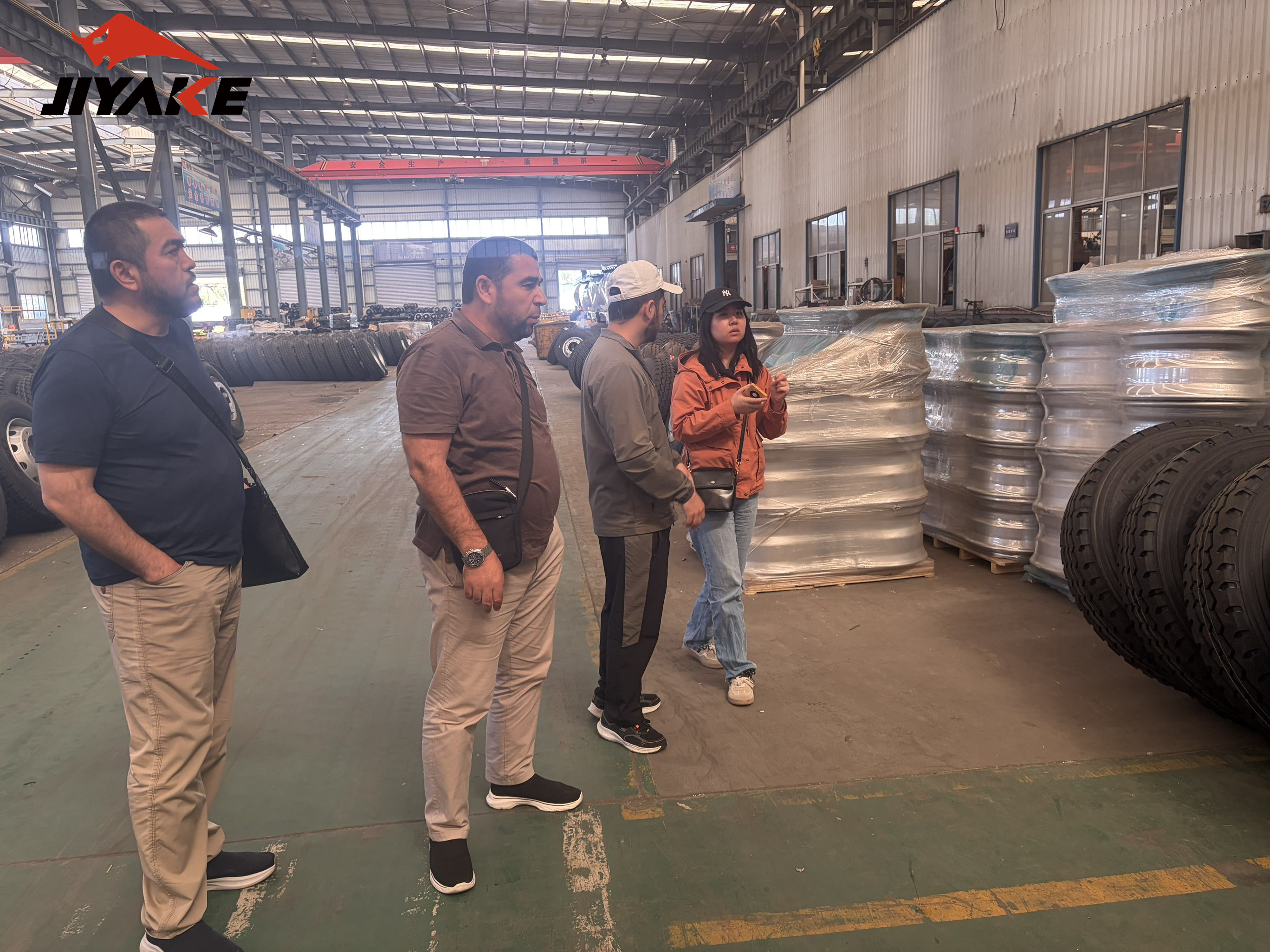
Manufacturing accuracy also matters. Shandong Jiyake operates a 300,000 m2 factory with about 500 employees and equipment such as CNC cutting machines, automatic welding machines, large bending machines, and tank automatic welding systems.
Hydraulic Lifting and Stability
Hydraulic cylinder selection should consider body length, load distribution, lifting angle, and unloading frequency. A typical rear-dump trailer may use a lifting angle around 45° to support clean discharge.
Operators should avoid lifting on sloped or soft ground. Even a 3° side slope can increase rollover risk, especially when wet material sticks to one side of the body.
Fleet Support Vehicles and Site Mobility
Some projects also require smaller support vehicles for tools, staff, or light cargo movement around job sites. For these tasks, a Light Truck can complement heavy haulage fleets.
The ZZ1088D3414C1 model offers 4x2 rear wheel drive, right-hand drive cab, 115 HP diesel engine, 120 L fuel tank, and 2 to 10 tons loading capacity for practical daily operations.
Procurement Checklist and Customization Process
A reliable procurement process reduces redesign, delivery delay, and mismatch after shipment. For international buyers, technical confirmation should be completed before price comparison becomes the main focus.
5-Step Specification Confirmation
- Define material type, density, daily trips, loading method, and unloading site conditions.
- Confirm payload target, trailer dimensions, axle load limits, and local transport regulations.
- Select suspension, tire size, braking system, landing gear, hydraulic system, and tailgate structure.
- Review drawings, welding requirements, paint specification, spare parts list, and delivery schedule.
- Arrange inspection, documentation, shipping method, and after-sales support for the destination country.
Typical communication can take 3 to 7 working days for standard designs. More complex projects involving special dimensions, reinforced structures, or market-specific compliance may require 2 to 4 weeks.
Key Questions Buyers Should Ask
- What is the recommended payload for my road conditions and material density?
- Which axle and suspension combination offers the best service life for my routes?
- What parts should be stocked for 6 to 12 months of operation?
- Can the trailer match my existing tractor truck, fifth wheel height, and hydraulic interface?
These questions help buyers move beyond unit price and evaluate the complete ownership cost. A trailer with correct engineering often saves money through fewer breakdowns, safer operation, and longer tire life.
Making the Right Custom Dump Semi-Trailer Decision
Customizing a dump semi-trailer requires clear decisions on payload, axle layout, suspension, body reinforcement, hydraulic lifting, and tractor matching. Each choice influences safety, compliance, maintenance, and operating profit.
For contractors, mining fleets, infrastructure suppliers, and transport companies, the best configuration is the one proven against real routes, load cycles, unloading conditions, and local road requirements.
Shandong Jiyake Automobile Sales Co., Ltd. provides customized heavy truck and semi-trailer solutions supported by integrated design, production, vehicle trade, and fittings supply. The company serves customers across Southeast Asia, Central Asia, Africa, and other regions.
If you are planning a new dump semi-trailer purchase or fleet upgrade, contact us to discuss payload requirements, axle options, suspension selection, delivery needs, and customized solutions for your market.
Leave A Reply

First class quality service and professional after-sales team.
Get in Touch
*We respect your confidentiality and all information are protected.