




Common skeletal semi trailer frame damage after repeated loading
Repeated loading does not usually cause a skeletal semi trailer frame to fail in one dramatic event. The more common pattern is cumulative damage: small weld cracks, local distortion, loosened joints, corrosion at moisture traps, and fatigue around connections that see the same stress cycle thousands of times. A trailer can remain operational while these defects develop, which is precisely why they require a disciplined inspection approach rather than reliance on driver observations alone.
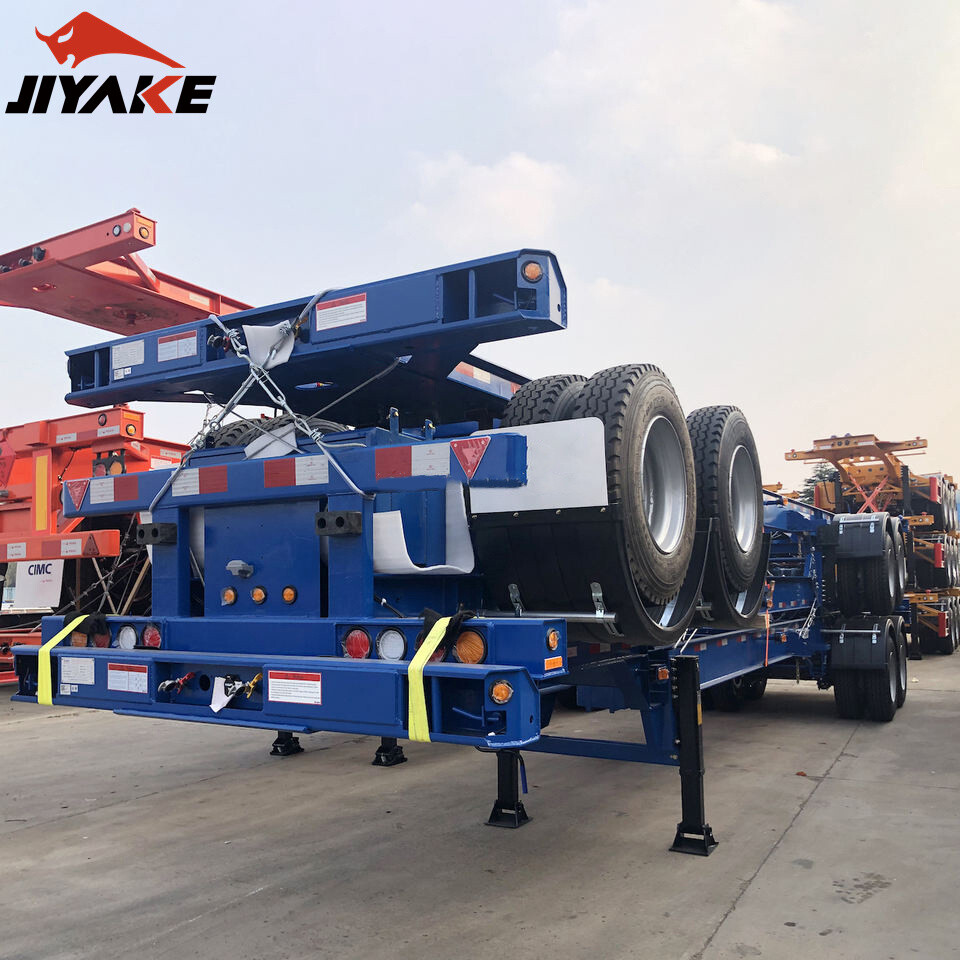
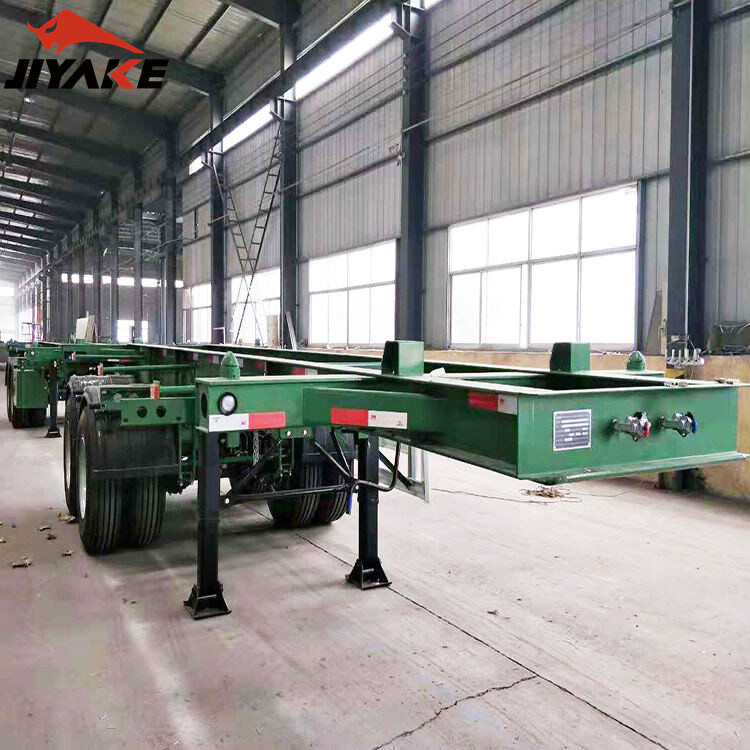
For a skeletal semi trailer, the primary load path runs through the main longitudinal beams, cross-members, gooseneck or front frame area, container-lock support structure, suspension interfaces, and rear end assembly. Damage at any of these points can alter load distribution. A crack that begins at a bracket toe or cross-member termination may eventually transfer higher stress into an adjacent beam section, creating a wider structural issue than the original defect suggests.
Fatigue cracks at welded connections
Welded joints are the most frequent starting point for fatigue damage because they combine stress concentration, residual welding stress, and repeated vibration. Common locations include the ends of cross-members, landing gear brackets, twist-lock support plates, suspension hangers, kingpin reinforcement areas, bumper supports, and auxiliary equipment brackets.
The important distinction is between a cosmetic weld imperfection and an active fatigue crack. Surface spatter, uneven weld profile, or old paint damage may not affect structural integrity. A crack, however, often has a sharp and linear path, may extend from the weld toe into the parent metal, and can reopen after cleaning or repainting. Rust staining along a weld line is also a warning sign, particularly where the trailer has been exposed to rain, road salt, fertilizer residues, or coastal air.
Repeated container loading increases stress at the lock support zones. If a container is placed off-centre, dropped onto the chassis, or secured while the trailer is parked on uneven ground, the local frame can receive loads that differ substantially from normal highway loading. These events may not immediately bend the main rails, but they can initiate cracking at attachment points.
Inspection should not stop at visible weld faces. Paint should be removed locally where a suspected crack is present, and the area should be cleaned before evaluation. Dye penetrant or magnetic particle examination can be useful where the material and access conditions permit. A visual check through thick paint alone is not a reliable basis for clearing a suspected structural crack.
Distorted cross-members and local deck deformation
Cross-members maintain spacing between the main rails and distribute concentrated container loads into the chassis. They are vulnerable to localized overload, fork truck contact, improper container placement, collision with loading equipment, and twisting caused by uneven surfaces.
A cross-member does not need to be completely fractured to create a safety concern. Permanent sagging, lateral bowing, crushed flange edges, buckling near a joint, or a change in the member’s alignment can reduce its ability to support future loading cycles. Distortion may also prevent container locks from engaging correctly or cause a container to sit unevenly on the skeletal semi trailer.
Quality checks should compare corresponding locations on both sides of the frame rather than judging one member in isolation. A slight asymmetry can reveal that one side has been subjected to impact or concentrated loading. Inspection should also include the connection between the distorted cross-member and the longitudinal rail; bending damage often pulls on the weld zone and creates secondary cracking.
Attempting to straighten damaged members without a controlled repair assessment can introduce further risk. Heat straightening, uncontrolled heating, or forceful pulling may change steel properties, damage protective coatings, and leave residual stress in a member already affected by fatigue. The repair decision should consider the location of the damage, the material grade, the original section geometry, and the manufacturer’s approved repair limits.
Main rail cracking, buckling, and loss of section
The main rails are the frame’s principal structural members. Damage here has a higher consequence than damage to many non-load-bearing attachments. Common warning signs include longitudinal cracks near changes in section, flange wrinkling, web buckling, tearing around holes, crushed rail edges, and permanent twist between the front and rear portions of the chassis.
Stress is rarely uniform along a rail. Transitions in depth, stiffener ends, suspension brackets, kingpin plate connections, and locations where additional components are welded to the rail can create local stress raisers. A drilled hole, burned cut-out, or unauthorized bracket may appear minor but can interrupt the intended load path. Holes and attachments added after production should therefore be controlled under an engineering approval process, not treated as routine workshop modifications.
Frame twist deserves particular attention. A skeletal chassis may still track behind the tractor even when it has lost dimensional accuracy. The more practical indicators are uneven container support, inconsistent twist-lock engagement, abnormal tyre wear, suspension misalignment, or recurring cracking on one side of the frame. These symptoms should trigger dimensional measurement rather than repeated local weld repairs.
Corrosion is a structural issue when it attacks joints and trapped areas
Surface rust on exposed steel is not automatically a reason to remove a trailer from service. The risk changes when corrosion reduces material thickness, attacks weld toes, enters lap joints, or develops inside closed sections where it cannot be seen easily. Water and debris commonly collect around cross-member intersections, lock support plates, mudguard brackets, suspension areas, and poorly drained reinforcement zones.
Corrosion-related damage can be missed when inspections focus only on the external appearance of painted beams. Flaking paint, bubbling coatings, rust weeping from seams, and swelling around overlapping plates deserve closer examination. Where material loss is suspected, thickness measurement is more meaningful than visual judgment. The acceptable remaining thickness and repair method should be based on the trailer design documentation or a competent structural engineering assessment.
Cleaning practices also matter. High-pressure washing removes debris but can force water into damaged coatings and unsealed joints. After washing, drainage points should remain open and damaged coating systems should be restored. Applying paint over active corrosion or over an uncleaned crack can conceal evidence without restoring structural capacity.
Suspension and landing gear interfaces receive more loading than they appear to
The suspension hanger zone is exposed to road shock, braking loads, cornering forces, and axle movement. Cracks around hangers or equalizer brackets can be driven by overloaded operation, worn bushes, incorrect axle alignment, loose fasteners, or rough-road service. A hanger crack should not be treated as an isolated weld issue until the condition of the suspension components and alignment has been checked.
Landing gear brackets face a different loading pattern. Repeated coupling, uncoupling, uneven yard surfaces, and lifting a loaded or partially loaded trailer can place high cyclic forces into the front frame. Cracks near landing gear supports, distorted mounting plates, or loose bracing are especially important because a local failure can create an unstable parked trailer.
Terrain exposure should be recorded accurately, but equipment categories should not be treated as interchangeable. A vehicle built for construction or mining, such as a HOWO 380HP Dump Truck, may operate under severe road shock, yet its chassis layout, loading pattern, and structural duty differ from those of a container skeletal trailer. Repair acceptance must be based on the actual trailer design and service history.
Inspection priorities after repeated loading cycles
A useful inspection programme combines routine walk-around checks with scheduled close inspection. Driver reports can identify obvious impact damage, loose locks, unusual noises, or visible cracks, but they are not a substitute for controlled structural examination. Inspection intervals should reflect duty severity, including payload, route condition, container handling practices, exposure to corrosive environments, and any known overload or collision event.
- Check all main rail faces, flanges, section transitions, and reinforcement ends for cracking, buckling, impact marks, and unauthorized modifications.
- Inspect cross-members from both sides where access allows, paying close attention to end welds and areas hidden by debris or coating damage.
- Verify twist-lock operation, seating condition, surrounding support plates, and evidence of uneven container contact.
- Examine suspension hangers, landing gear brackets, kingpin structure, rear frame members, and all high-load accessory attachments.
- Look for corrosion at seams, drain points, overlapping plates, and enclosed-section openings; measure thickness where corrosion appears advanced.
- Record defect location, crack length, orientation, photographs, inspection method, and any repair carried out. Recurrent defects at the same point require root-cause review.
Repair quality is as important as defect detection
Structural repairs should restore the intended load path, not merely close a visible crack. Before welding, the crack must be fully identified and removed or prepared according to an approved repair procedure. Simply welding over a crack can leave the crack tip active beneath the new weld, allowing it to propagate again. The surrounding steel should also be examined for distortion, thinning, and secondary cracks.
Welding procedures, welder qualifications, consumables, preheat requirements, and inspection methods should match the material and repair scope. Where a manufacturer specifies repair restrictions for high-strength steel sections, those restrictions take precedence. Added doubler plates or reinforcement strips may appear to strengthen a damaged area, but poorly designed reinforcement can shift stress to the plate edge and create a new fatigue initiation point.
A repaired frame should be checked not only for weld appearance but also for alignment, lock function, suspension geometry where relevant, and coating restoration. The central safety question is whether the trailer can return to its designed load path and operating condition. If that cannot be demonstrated, continued service creates a risk that is unlikely to remain confined to the original damaged location.
Leave A Reply

First class quality service and professional after-sales team.
Get in Touch
*We respect your confidentiality and all information are protected.