




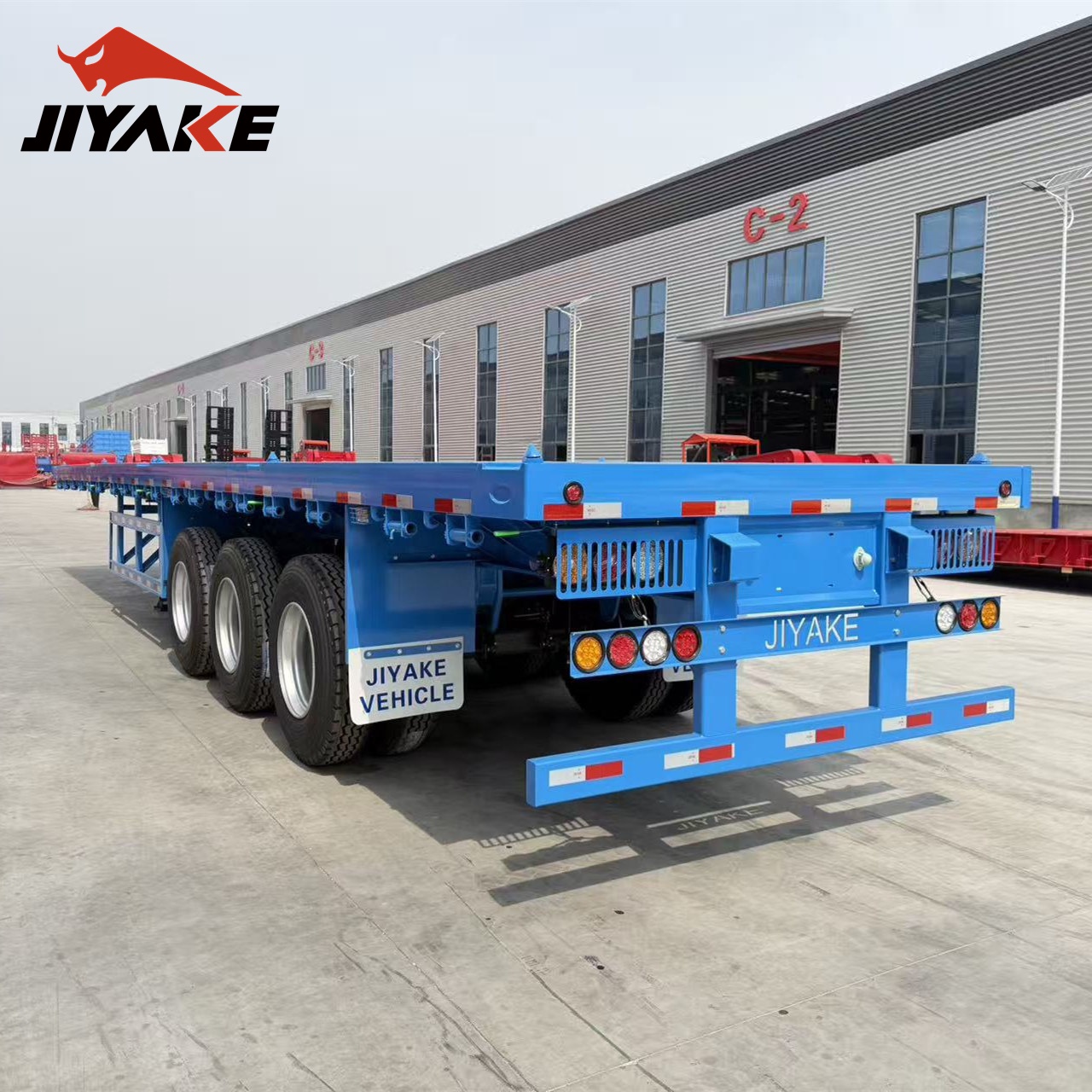
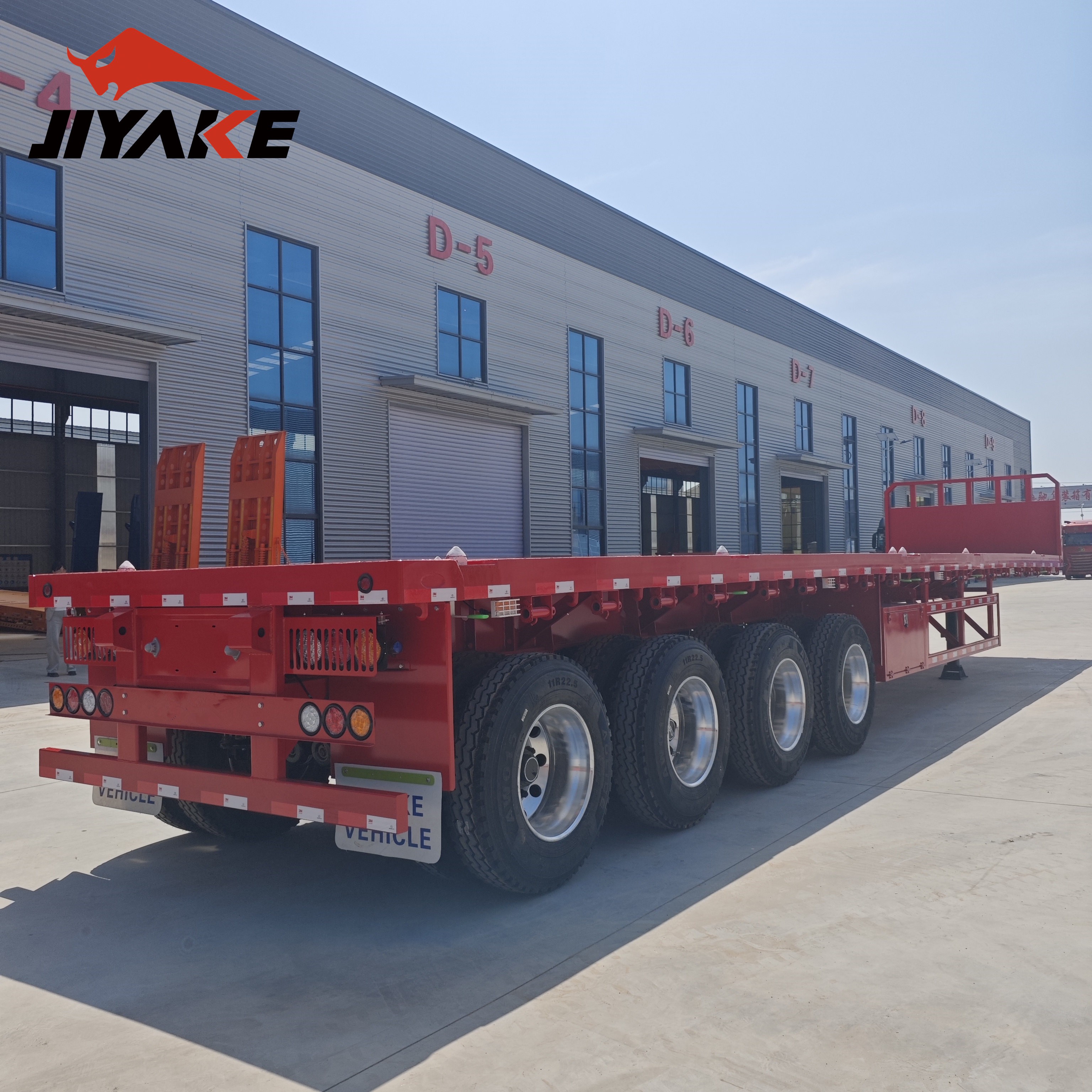
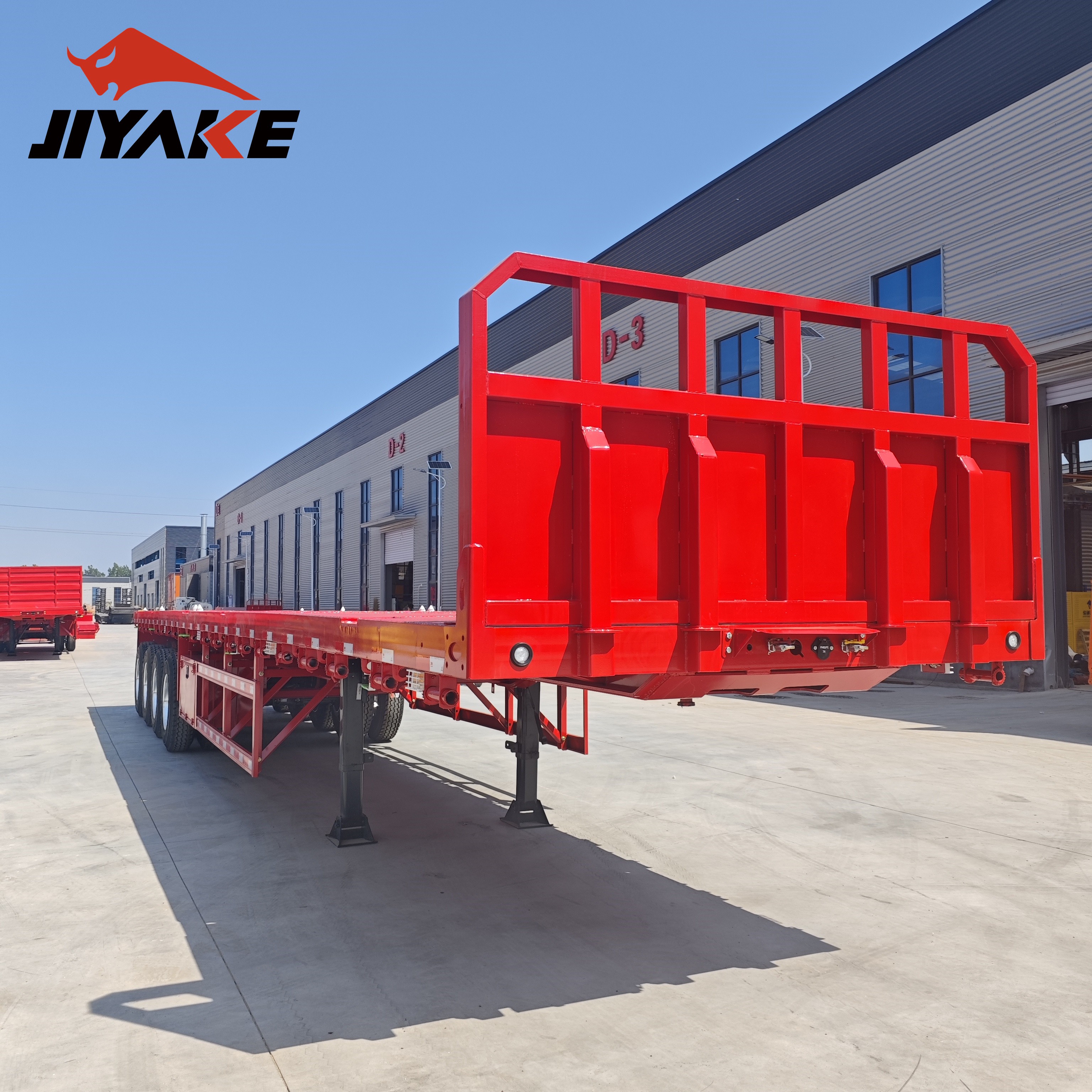

3 Axle Lowbed Semi Trailer vs 2 Axle Models: Key Differences
3 Axle Lowbed Semi Trailer vs 2 Axle Models: what really changes?
A price check alone rarely answers this question well.
When heavy equipment enters the picture, trailer structure matters more than the initial quote.
The biggest differences usually appear in payload, axle load sharing, road legality, tire wear, and braking stability.
That is why the 3 Axle Lowbed Semi Trailer is often evaluated as a transport solution, not just a trailer body.
In practical heavy truck operations, a wrong axle choice can create overloading risks, faster maintenance cycles, and lower uptime.
Companies with broad trailer production experience, such as Shandong Jiyake Automobile Sales Co., Ltd., usually compare these models by operating conditions first.
Is a 3 axle lowbed only about carrying more weight?
Not exactly. Higher capacity is important, but it is only one part of the decision.
A 3 Axle Lowbed Semi Trailer spreads cargo weight across more support points.
This reduces stress concentration on each axle, wheel end, and suspension component.
It also improves balance when moving excavators, rollers, loaders, or oversized machinery with uneven center of gravity.
By contrast, a 2 axle model can work very well for lighter equipment and shorter routes.
The limitation appears when payload rises close to local axle load limits.
At that point, a cheaper trailer may become more expensive through fines, downtime, and premature tire replacement.
A quick comparison table helps clarify it
When does a 2 axle trailer still make sense?
Quite often, actually.
If the transported machine is compact, route distance is limited, and local roads are narrow, a 2 axle lowbed can be the smarter choice.
It is usually lighter, simpler to maneuver, and less expensive to buy.
For occasional hauling, that balance may be enough.
The key is to avoid using a 2 axle configuration as a heavy-duty trailer by habit.
A trailer that works for one backhoe may struggle badly with a tracked excavator or road paver.
More common than many expect is a mixed fleet approach.
For example, a lowbed may pair with a support vehicle such as Foton Truck in engineering transportation, where route type and cargo class vary by project.
How do axle count and road compliance affect daily operations?
This is where the decision becomes practical.
A 3 Axle Lowbed Semi Trailer often performs better under legal axle load rules because weight is distributed more evenly.
That can reduce the chance of overloading a single axle even when total gross weight looks acceptable.
It also supports safer braking, especially on uneven roads or during downhill movement.
However, legal compliance is never based on axle count alone.
Deck length, gooseneck structure, suspension type, tire specification, and tractor matching all matter.
In regions served across Southeast Asia, Central Asia, and Africa, transport rules and road surfaces can differ sharply.
That is why established exporters usually discuss route conditions before confirming trailer configuration.
- Check axle load limits by country and by route type.
- Confirm the real operating weight of the equipment, not brochure weight.
- Review tractor power, braking match, and turning radius together.
- Consider rough-road fatigue if the trailer will work on mines or remote projects.
What about lifecycle cost, maintenance, and durability?
The lower purchase price of a 2 axle trailer can be attractive.
Still, long-term cost depends on how hard the trailer works.
A 3 Axle Lowbed Semi Trailer has more running parts, so maintenance is not free.
Yet if it operates within its design range, it may reduce overload damage and improve service life.
That is often the hidden savings point.
Durability also depends on production quality.
Factories with CNC cutting, automatic welding, large bending equipment, and stable fabrication processes generally offer better structural consistency.
This matters for beam strength, welding accuracy, and fatigue resistance under repeated heavy loads.
In some operations, the towing side matters too.
A heavy truck with 6x4 drive, 375 hp, WEICHAI diesel power, and a FAST manual gearbox may be better matched for demanding haul work than a lighter tractor setup.
What mistakes are most common when choosing a 3 Axle Lowbed Semi Trailer?
One common mistake is selecting by rated capacity only.
If the cargo has a high center of gravity or uneven weight distribution, stability can become the real problem.
Another mistake is ignoring route reality.
A 3 axle setup may be ideal on highways but less convenient on very tight jobsite roads.
Some also forget to verify spare parts access, suspension preference, and brake system compatibility.
The better approach is to compare the whole transport chain.
So, which model is the better choice in the end?
If transport work regularly involves heavy machinery, long routes, or strict axle load control, the 3 Axle Lowbed Semi Trailer usually offers the safer margin.
If loads are lighter and operations are simpler, a 2 axle trailer can still deliver strong value.
The most reliable selection comes from matching three things together: cargo reality, road compliance, and operating frequency.
Before deciding, list the heaviest machine to be moved, the worst road on the route, and the expected annual transport volume.
Then compare axle layout, frame strength, suspension, and towing compatibility side by side.
That process is far more useful than comparing quotes in isolation.
A well-matched trailer will protect uptime, compliance, and long-term heavy truck efficiency.
Leave A Reply

First class quality service and professional after-sales team.
Get in Touch
*We respect your confidentiality and all information are protected.