




Step-by-Step Guide: Buying Reliable Flatbed Trailers from Professional Suppliers
Buying reliable flatbed trailers starts with choosing professional suppliers who combine engineering strength, manufacturing precision, and global service experience. In this step-by-step guide, you will learn how to evaluate product quality, factory capability, customization options, and after-sales support, so you can source dependable flatbed trailers for heavy-duty transport with greater confidence and lower long-term operating risk.
For fleet owners, project contractors, logistics companies, and equipment transport buyers, the trailer itself is only one part of the purchase decision. The supplier behind it determines build consistency, spare parts access, delivery reliability, and how quickly transport problems can be solved in the field.
In the heavy truck industry, a poor trailer decision can lead to axle overload, uneven tire wear, unstable cargo support, and delayed project schedules. A professional supplier reduces these risks through controlled production, practical engineering, and support that continues after shipment.
Why Professional Flatbed Trailer Suppliers Matter
When buyers compare flatbed trailers, price often gets attention first. However, over a 3-year to 5-year operating cycle, structural durability, brake system reliability, and maintenance efficiency usually have a bigger effect on total ownership cost than the initial invoice amount.
A professional supplier should have visible production strength, a repeatable welding process, and the ability to match trailer configuration to cargo type. This matters whether the trailer is used for steel coils, construction machinery, timber, containers, or oversized industrial equipment.
Key signs of a capable manufacturer
- In-house production rather than pure trading only
- Clear technical drawings and configurable specifications
- Stable steel sourcing and automatic welding capability
- Export experience across multiple regions and road conditions
- Defined inspection steps before dispatch and loading
Shandong Jiyake Automobile Sales Co., Ltd. operates in the modified truck and trailer field with integrated design, research, production, and sales. Its product range covers semi-trailers, dump trucks, tankers, tractor trucks, concrete mixer trucks, timber trailers, and other special vehicles, serving customers in more than 60 countries.
Factory scale also matters in B2B procurement. A 300000m2 production base with around 500 employees and equipment such as CNC cutting machines, automatic welding machines, large bending machines, and tank automatic welding systems indicates stronger control over production quality and lead-time planning.
Risks of buying from weak suppliers
Flatbed trailers work under high load, long distance, and mixed road conditions. If the supplier cannot verify beam design, axle matching, and braking layout, buyers may face frame deformation, poor tracking, or increased maintenance frequency within the first 6 to 12 months.
The table below shows how supplier capability directly affects field performance and operating risk.
The most practical takeaway is simple: a reliable flatbed trailer is built long before shipment. It starts with engineering decisions, process discipline, and a supplier that understands real transport loads rather than only catalog specifications.
Step-by-Step Process for Buying Reliable Flatbed Trailers
A structured procurement process helps buyers compare suppliers on more than price. In most heavy transport projects, 5 steps are enough to identify whether a supplier can meet loading demands, compliance expectations, and delivery timing without avoidable risk.
Step 1: Define your real transport requirement
Start with the cargo, not the trailer brochure. Record average payload, maximum payload, cargo dimensions, loading method, route condition, and trip frequency. A flatbed used for 30T steel sections on paved highways needs a different configuration than one moving 60T machinery on mixed road surfaces.
Questions to confirm before inquiry
- What is the normal payload range, such as 20T to 80T?
- Will the trailer run on highways, mining roads, port yards, or rural routes?
- Is side loading, crane loading, or rear loading required?
- Do local regulations limit axle load, trailer length, or tire specification?
- Is customization needed for ramps, twist locks, stake pockets, or reinforced flooring?
Step 2: Check factory capability and manufacturing control
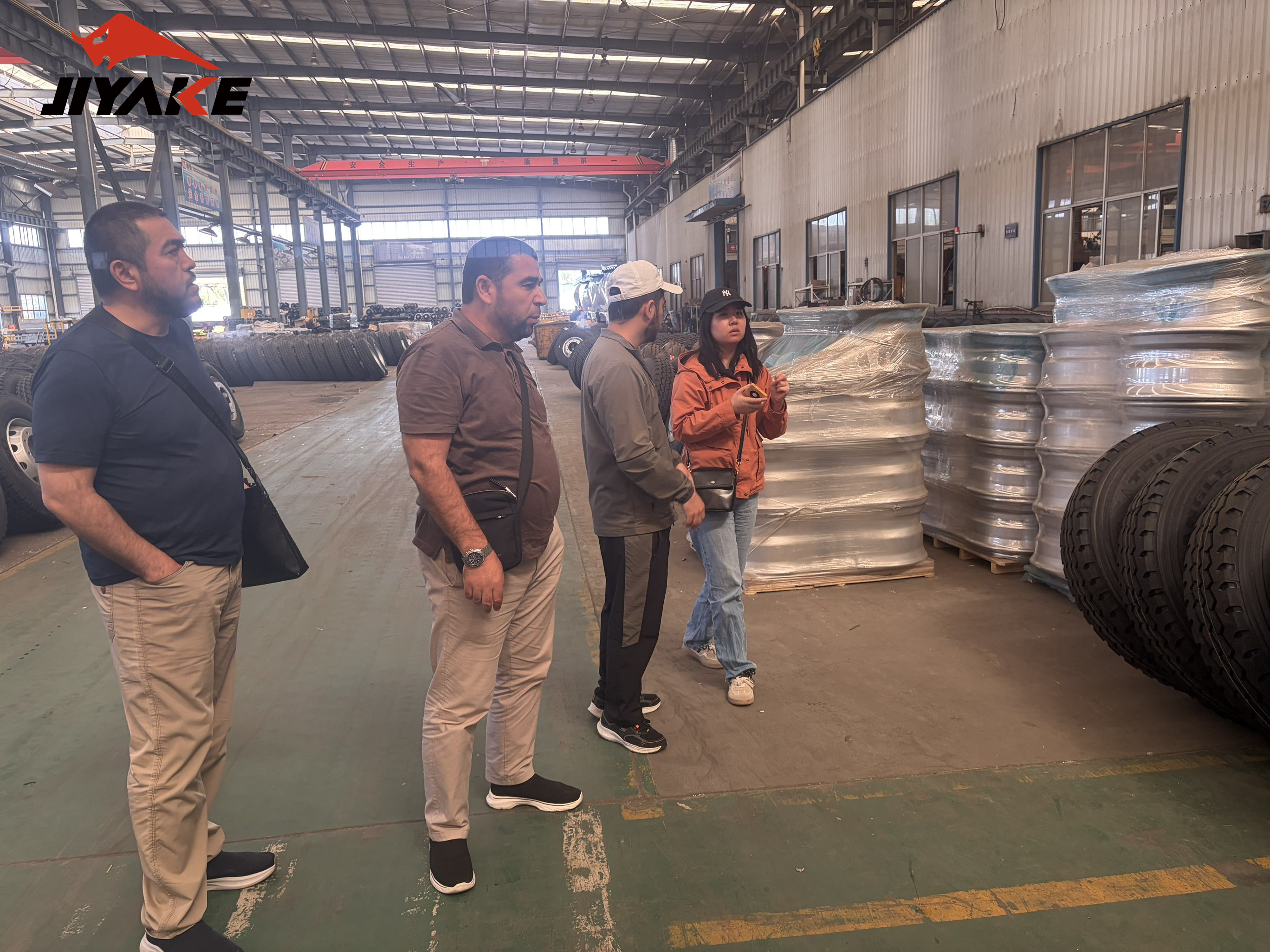
Ask for factory photos, workshop process details, and production equipment information. Buyers should verify whether the supplier controls cutting, forming, welding, blasting, painting, and assembly. These steps directly influence dimensional accuracy, weld consistency, and corrosion resistance.
For example, automatic submerged-arc welding is commonly preferred for main structural beams because it improves penetration consistency compared with highly variable manual welding. In export heavy truck applications, surface treatment and anti-corrosion coating also affect service life in humid, coastal, or high-temperature regions.
Step 3: Review specifications in detail
Never approve a flatbed trailer only from appearance. Buyers should review the beam section, steel grade, floor design, axle capacity, suspension type, tire specification, braking system, and optional accessories. A specification sheet should connect every major component to actual transport tasks.
In heavy haul applications for energy, infrastructure, and industrial cargo, some buyers also compare modular solutions such as the Hydraulic Modular Trailer when standard flatbed layouts are no longer enough for extreme dimensions, tight turning requirements, or 100T-class transport tasks.
The following table shows how to read key technical items when evaluating a heavy-duty trailer configuration.
The key is not to chase the heaviest configuration by default. The right specification balances payload, maneuverability, road regulation, and service convenience. Over-specification can increase dead weight and operating cost, while under-specification creates safety and durability risk.
Step 4: Confirm customization and application fit
Professional suppliers should support practical customization rather than cosmetic changes only. Depending on the transport task, buyers may need reinforced floors, detachable side structures, air suspension options, stronger ramps, or specific tire and rim brands for regional parts availability.
For specialized heavy transport, the second major question is maneuverability. In project cargo work, some modular transport solutions use self-propelled hydraulic modules, independent suspension, and remote-controlled steering modes such as crab steering or 360-degree turning to handle confined sites and uneven terrain more safely.
Step 5: Evaluate delivery, documentation, and after-sales support
Lead time should be discussed early. In many export trailer orders, standard configurations may need 20 to 35 days, while custom builds can require 30 to 60 days depending on material preparation, axle selection, and painting schedule. Buyers should also confirm packing method, spare parts list, and inspection photos before shipment.
After-sales support should include at least 3 elements: technical communication, component traceability, and replacement guidance. If a brake valve, light system, or suspension component fails during operation, response speed can directly affect utilization rate and customer commitments.
How to Compare Suppliers Beyond Price
The lowest quote is not always the lowest cost. Buyers should compare suppliers using a weighted approach that includes structural quality, specification transparency, delivery discipline, and support capability. Even a 5% to 8% price difference can be reasonable if downtime risk and maintenance burden are significantly reduced.
A practical comparison framework
- Technical match: Does the trailer fit actual cargo and route requirements?
- Production strength: Can the factory prove controlled manufacturing steps?
- Commercial clarity: Are price terms, lead time, and optional items clearly listed?
- Service readiness: Are manuals, spare parts, and response channels available?
This comparison becomes especially important for cross-border procurement. Buyers in Southeast Asia, Central Asia, and Africa often need equipment adapted to climate, road conditions, maintenance environments, and local driver habits, not just standard export configurations.
Common buying mistakes to avoid
One common mistake is ignoring component compatibility. A trailer with strong beams but poorly matched tires, rims, or braking components can still underperform. Another mistake is approving a unit without checking floor thickness, paint preparation, or whether optional parts are truly included in the offer.
Some buyers also underestimate service documentation. A complete parts list, maintenance guidance, and wiring or air circuit references can save hours during troubleshooting and help local technicians work faster with fewer errors.
What Reliable Flatbed Trailer Buyers Should Ask Before Ordering
Before placing the final order, ask direct, technical questions. Good suppliers usually answer clearly and with detail. Vague replies often signal weak engineering review or limited production control.
Priority questions for final confirmation
- What payload range is this flatbed trailer designed for in continuous use?
- What steel grade and beam dimensions are used in the main structure?
- What axle, brake, ABS, and suspension options are available?
- How many inspection points are completed before loading and shipment?
- What spare parts are recommended for the first 12 months of operation?
- How are customization changes documented before production starts?
Reliable sourcing in the heavy truck market depends on discipline at every step: requirement definition, supplier screening, configuration review, quality control, and service planning. Buyers who follow this process typically make stronger decisions and reduce long-term operating uncertainty.
If you are sourcing flatbed trailers or specialized heavy transport equipment for industrial, infrastructure, or project cargo use, working with an experienced manufacturer can make procurement more efficient and field performance more predictable. Contact us now to discuss your application, request a tailored specification, and learn more solutions for heavy-duty transport.
Leave A Reply

First class quality service and professional after-sales team.
Get in Touch
*We respect your confidentiality and all information are protected.