




Partnering With a Direct Fuel Tanker Trailer Manufacturer
Fuel tanker trailers are the backbone of bulk liquid logistics, transporting critical energy resources—including gasoline, diesel, and aviation fuel—from refineries and distribution terminals directly to gas stations, mining sites, and commercial hubs. Selecting the right trailer configuration is vital for optimizing payload capacity, meeting hazardous material transportation regulations, and protecting long-term ROI.
How to Choose a Fuel Tanker Trailer
Choosing the ideal fuel tanker trailer requires evaluating several core operational factors:
Fluid Medium & Density: Gasoline is lighter (approx0.74kg/L), while diesel is denser (approx0.84kg/L).
Lower-density fluids allow for higher total volume limits before hitting roadway axle weight restrictions. Terrain & Distance: Long-distance highway transport benefits from lightweight aluminum construction, whereas off-road or unpaved mining access routes demand high-tensile carbon steel or stainless steel tanks with reinforced suspensions.
Regulatory & Loading Infrastructure: Verify whether local terminals mandate top-loading dome covers or bottom-loading systems equipped with vapor recovery adapters conforming to API RP 1004 standards.
Aluminum vs Steel Fuel Tanker Trailer
Tank shell material directly influences trailer tare weight, payload capacity, and long-term durability:
30m³ vs 40m³ Fuel Tanker Trailer
Volumetric capacity must balance regional bridge laws and maximum allowable gross vehicle weight (GVW):
30m³ (Approx. 8,000 Gallons) Trailers: Typically configured on 2-axle or 3-axle setups. They excel in urban fuel delivery where turning radii are tight and local road weight limits are strictly enforced.
40m³ (Approx. 10,500 Gallons) Trailers: The global standard for long-haul highway logistics. Often configured with 3 or 4 axles to distribute weight effectively across regional highway bridge formulas.
40ft Fuel Tanker Trailer Dimensions
Standard 40ft fuel tanker trailers are engineered to maximize stability and volume within international shipping and highway constraints:
Overall Length: 11,500 mm to 12,500 mm (~40 to 41 feet)
Overall Width: 2,500 mm (standard legal highway width limit)
Overall Height: 3,600 mm to 3,900 mm (dependent on top rollover protection rails and chassis height)
Tank Cross-Section: Elliptical or double-D shape, engineered with a low center of gravity to prevent rollover during high-speed cornering.
How Many Compartments Does a Fuel Tanker Need?
Fuel tankers utilize internal bulkheads and baffles to separate cargo and prevent fluid surge:
Single-Compartment: Ideal for dedicated bulk deliveries of a single product (e.g., supplying a large diesel generator site or regional bus depot).
Multi-Compartment (3 to 6 Compartments): Allows fleet operators to transport multiple fuel grades—such as 87-octane gasoline, 93-octane gasoline, and premium diesel—in a single trip to retail gas stations.
Anti-Surge Baffles: Perforated transverse plates inside each compartment break up wave momentum during braking and acceleration, protecting tractor stability.
Fuel Tanker Trailer for Gasoline Transportation
Gasoline is a highly volatile, low-density flammable liquid with high vapor pressure.
Vapor Recovery Systems: Closed-loop systems that collect hazardous hydrocarbons during bottom-loading and return them to terminal storage.
Overfill Prevention Sensors: Optical sensors that automatically shut off fuel flow at the terminal rack if liquid levels reach maximum safety limits.
Pressure Vacuum Vents: Breather valves that regulate internal tank pressure shifts caused by temperature fluctuations.
Fuel Tanker Trailer for Diesel Transportation
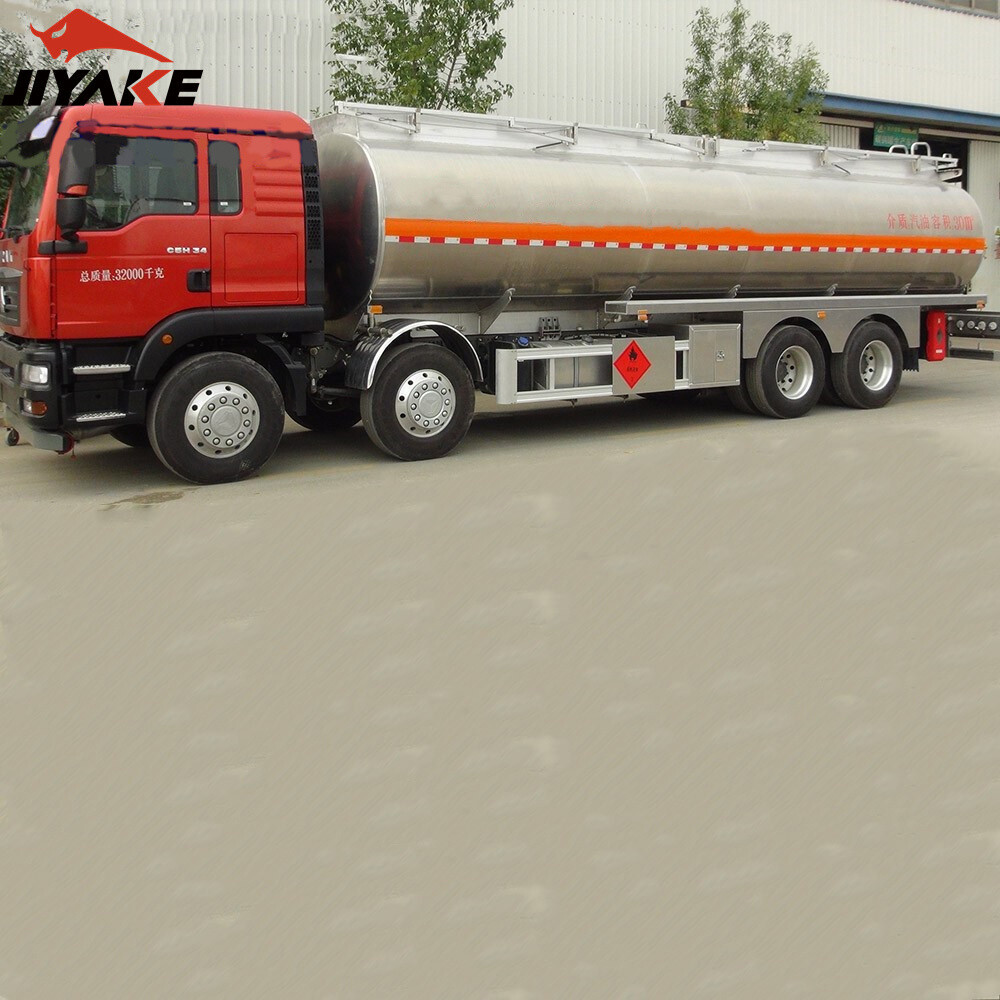
Diesel fuel is denser and less volatile than gasoline, making its volumetric payload heavily dependent on gross weight capacity.
High-Flow Discharge: Diesel tankers often feature larger manifold piping (3-inch or 4-inch) paired with PTO-driven pump systems to accelerate offloading into high-capacity above-ground storage tanks.
Clean-Out Capability: Compartments are designed with sloped bottom troughs or double-conical bases for complete drainage and fast flushing.
Fuel Tanker Trailer Safety Requirements
Hazardous liquid transport is governed by international safety standards (such as DOT 406 / MC 306 or ADR regulations):
Emergency Bottom Shut-Off Valves: Pneumatically controlled internal foot valves automatically seal compartment outlets in the event of a collision or piping rupture.
Rollover Coaming Protection: Heavy-duty top rails protect manhole covers, vapor valves, and relief vents from impact damage if the trailer capsizes.
Static Grounding & Bonding: Continuous grounding strip reels and API grounding bolts dissipate static electricity generated during high-speed fluid transfer.
Fire Safety: Thermal-release safety fuses automatically drop emergency internal valves if surrounding temperatures exceed safe limits.
Fuel Tanker Trailer Maintenance Guide
Implementing a routine preventative maintenance schedule prevents environmental leaks and ensures regulatory compliance:
Daily Pre-Trip Inspections: Check pneumatic line pressures, inspect API bottom couplers for worn Viton/PTFE seals, and confirm static grounding cable continuity.
Monthly Checks: Inspect emergency shut-off valve responsiveness, clean vapor recovery dust caps, and verify function of overfill optical probes.
Annual Mandated Testing: Undergo formal external visual checks (V), leakage tests (K), and periodic hydrostatic or pneumatic pressure tests (P) as required by transportation authorities.
Fuel Tanker Trailer Price Guide
The purchasing price for a new fuel tanker trailer varies based on shell material, suspension specs, and secondary safety equipment:
Standard Carbon Steel Tankers (30,000L - 40,000L): Typically range from $22,000 to $32,000, offering a durable, entry-level solution for rugged road networks.
Aluminum Alloy Tankers (30,000L - 45,000L): Range between $32,000 and $48,000, reflecting the raw material value of lightweight aluminum and specialized manufacturing process requirements.
High-Spec European / US Standard (DOT 406 / ADR Compliant): Fully equipped trailers featuring multi-compartment API bottom loading, electronic stability control (ESC), and automated disc-brake axles range from $50,000 to $85,000+.
Leave A Reply

First class quality service and professional after-sales team.
Get in Touch
*We respect your confidentiality and all information are protected.