




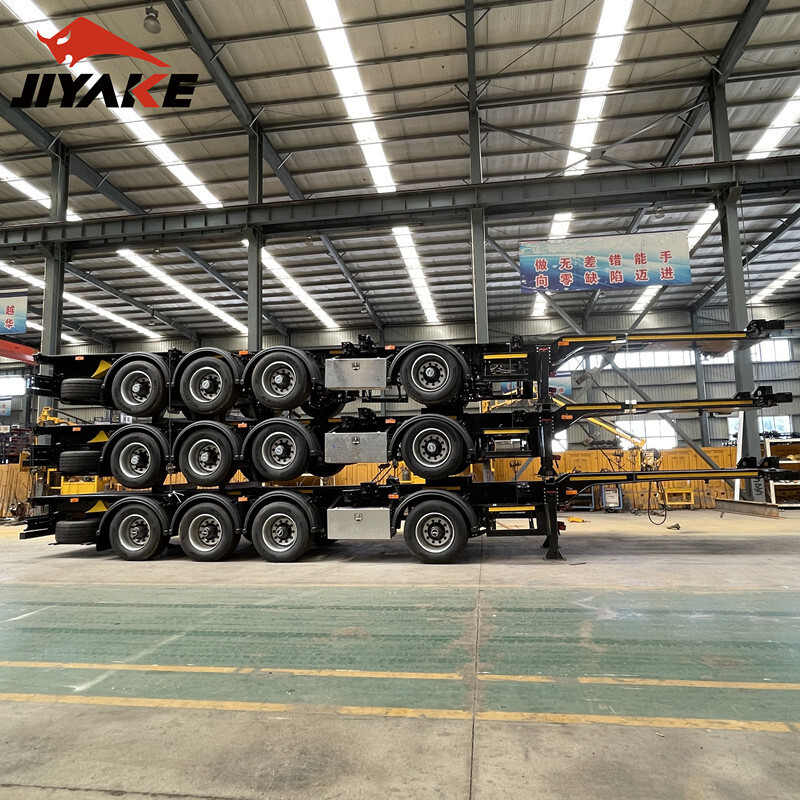
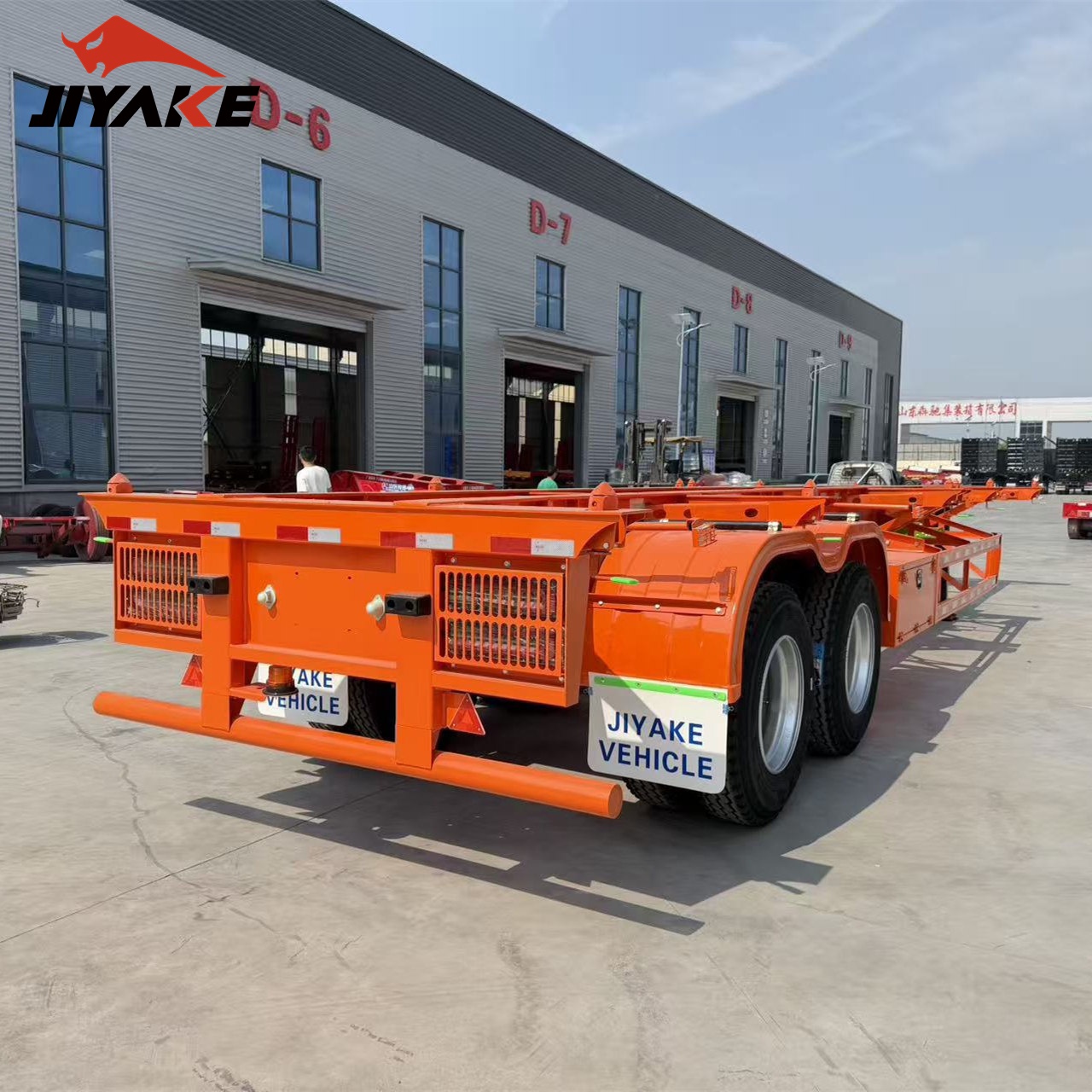

A skeleton semi-trailer is an open-frame trailer that carries shipping containers secured by twist locks, rather than loose freight loaded onto a solid deck.
It commonly suits port transfers, inland container haulage, and intermodal connections where containers remain sealed while moving between ships, road vehicles, and rail terminals.
Suitability depends on container dimensions, loaded weight, axle distribution, and route restrictions. Matching container length alone does not establish whether a trailer can operate legally.
This guide explains which jobs fit this trailer design, where its limitations matter, and what information you should check before selecting equipment for a route.
How Does a Skeleton Semi-Trailer Hold a Container?
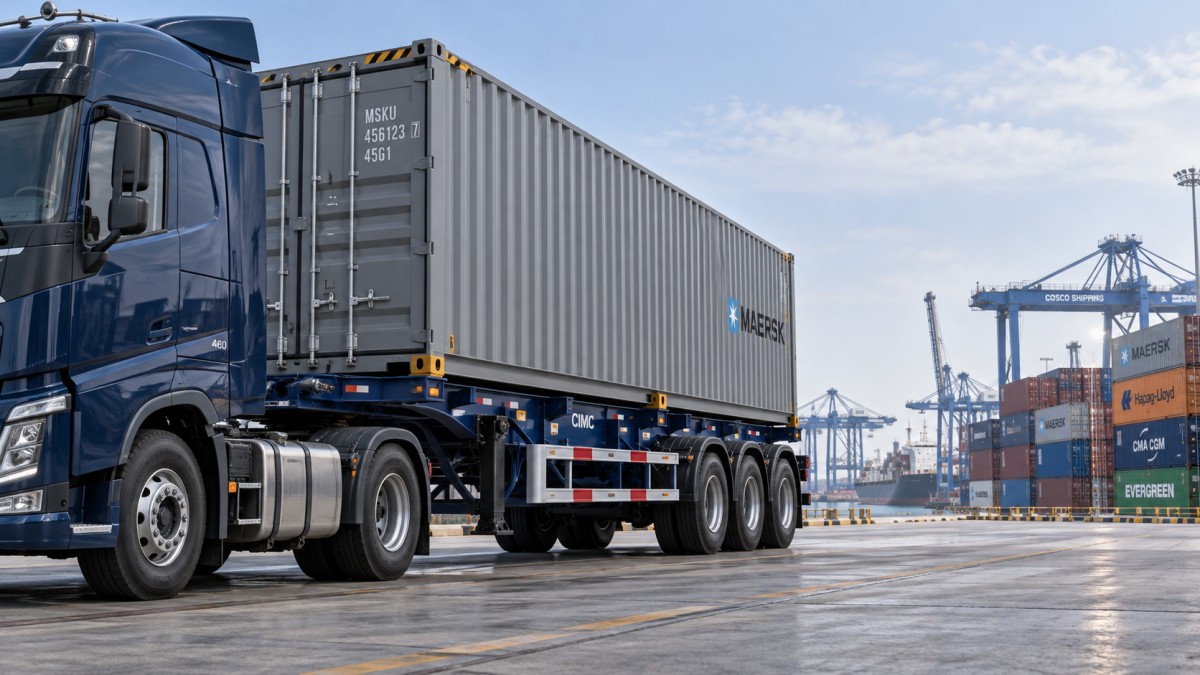
The frame supports the container at designated contact points, while twist locks engage its corner castings. The container itself provides the enclosed cargo space.
Without a continuous cargo deck, the trailer can have a lower unladen weight than a comparable decked design, potentially leaving more capacity for containerized freight.
That advantage varies with frame construction, axle equipment, and optional features. Compare actual tare weights and legal operating limits before assuming a useful payload increase.
Before travel, each required lock must engage correctly. Damaged castings, misaligned fittings, or unsecured locks can compromise retention even when the container appears properly seated.
Also check the kingpin, landing gear, suspension, brakes, tires, and frame condition. Container security depends on a serviceable vehicle as well as correctly operated locks.
Which Container Transport Jobs Suit This Design?
A skeleton semi-trailer works best when the container remains the handling unit throughout the road journey. These common applications illustrate where that arrangement adds value.
For port drayage, predictable container sizes and frequent terminal visits can make a dedicated chassis practical. However, queues and turnaround times still influence daily productivity.
For inland distribution, confirm how the consignee unloads cargo. Door access, dock height, parking space, and permission to leave a trailer can determine operational suitability.
Intermodal transport benefits from moving the same container between modes without transferring individual packages. Each terminal must nevertheless have suitable equipment and accept the container.
Specialized containers need additional checks. Reefers may require an independent power source, while tank containers require attention to approvals, cargo behavior, and applicable transport regulations.
Will It Carry Your Container Size and Configuration?
Common configurations accommodate 20-foot or 40-foot containers, while some designs accept 45-foot units. Compatibility depends on the particular frame and its approved lock positions.
Some trailers carry one 40-foot container or two 20-foot containers. Others use sliding or extendable frames, but these arrangements must be explicitly supported by design.
A single heavy 20-foot container is especially important to assess. Its permitted position must distribute weight appropriately between the tractor coupling and trailer axle group.
Do not assume that any available twist-lock position is suitable for every load. Request the manufacturer's loading layout and check the resulting axle weights.
High-cube containers also affect selection because their greater height increases the complete vehicle's overall height. Check bridges, overhead structures, and local limits along the route.
For extendable equipment, verify the approved operating positions and locking procedure. Adjustable length provides flexibility only when the frame is correctly positioned and secured.
How Much Cargo Can It Legally Carry?
Start with the container's actual gross mass, including cargo, packaging, and container tare. Then assess that load against the complete tractor-and-trailer combination and route.
The trailer's structural rating is only one limit. Legal gross combination mass, individual axle limits, tire ratings, and coupling capacity may impose lower operating limits.
A container's verified gross mass helps establish its total weight, but does not by itself confirm acceptable weight distribution across the road vehicle's axles.
Uneven cargo placement inside the container can overload an axle group even when total combination weight remains legal. Obtain loading information when concentrated loads are involved.
For example, dense cargo in a 20-foot container may reach road weight limits before filling its available volume. A longer chassis does not automatically solve this.
For demanding loads, obtain a configuration-specific weight assessment and verify axle loads on a suitable weighbridge. Additional axles alone do not establish a higher legal payload.
When Is Another Trailer Type More Suitable?
A skeleton frame offers no general-purpose loading floor. Loose pallets, steel bundles, and machinery normally need a suitable platform and an engineered load-securing arrangement.
A flatbed can suit mixed freight requiring a continuous deck. Container work still requires appropriate securing equipment, adequate ratings, and a compliant loading arrangement.
For equipment and infrastructure cargo, a Lowbed Semi Trailer may suit the loading method better, provided its dimensions and verified capacity match the specific machine.
The listed model specifies Q345B carbon steel, three FUWA axles, mechanical or air suspension, and mechanical or hydraulic ramps. Its stated loading capacity is 10 tons.
Confirm usable deck height, ramp capacity, and machine clearances before selection. The listed 1,000–1,300 mm ground clearance requires clarification and should not establish loaded transport height.
Containers with projecting cargo also require separate assessment. A flat rack or open-top container does not remove road clearance limits, securing requirements, or permit obligations.
What Should You Check Before Requesting a Quotation?
Give the supplier a clear operating description: container sizes, maximum gross masses, typical cargo, collection points, delivery sites, road conditions, and expected journey frequency.
Include tractor details, especially fifth-wheel height, coupling compatibility, and permitted loads. A trailer specification cannot establish suitability without considering the tractor that will pull it.
Ask for a dimensioned drawing showing container positions, twist locks, wheelbase, axle spacing, and overall height with your intended containers fitted in their operating positions.
Request the actual tare weight and rated capacities for the proposed configuration. Separate structural capability from the legal carrying capacity available on your routes.
Specify local braking, lighting, registration, and inspection requirements. Suspension choice should reflect operating conditions, maintenance capability, and applicable rules rather than a general preference.
Shandong Jiyake Automobile Sales Co., Ltd. supplies semi-trailers and other commercial vehicles. When discussing a configuration, request supporting drawings and specifications for your intended market.
How Do You Decide Whether It Fits Your Operation?
Choose a skeleton semi-trailer when your regular work involves compatible shipping containers, suitable handling facilities, and loads that meet both equipment ratings and road limits.
For occasional container movements alongside substantial loose-freight work, compare utilization carefully. A dedicated container chassis may spend too much time idle between suitable assignments.
Base the final decision on three checks: container fit, legal weight distribution, and practical loading access. Together, these establish whether the trailer suits the job.
Once those checks are satisfied, compare tare weight, service support, maintenance access, and operating cost. The best configuration is the one your actual workload can use consistently.
