






When to require a factory audit of a semi trailer manufacturer
When to Require a Factory Audit of a Semi Trailer Manufacturer
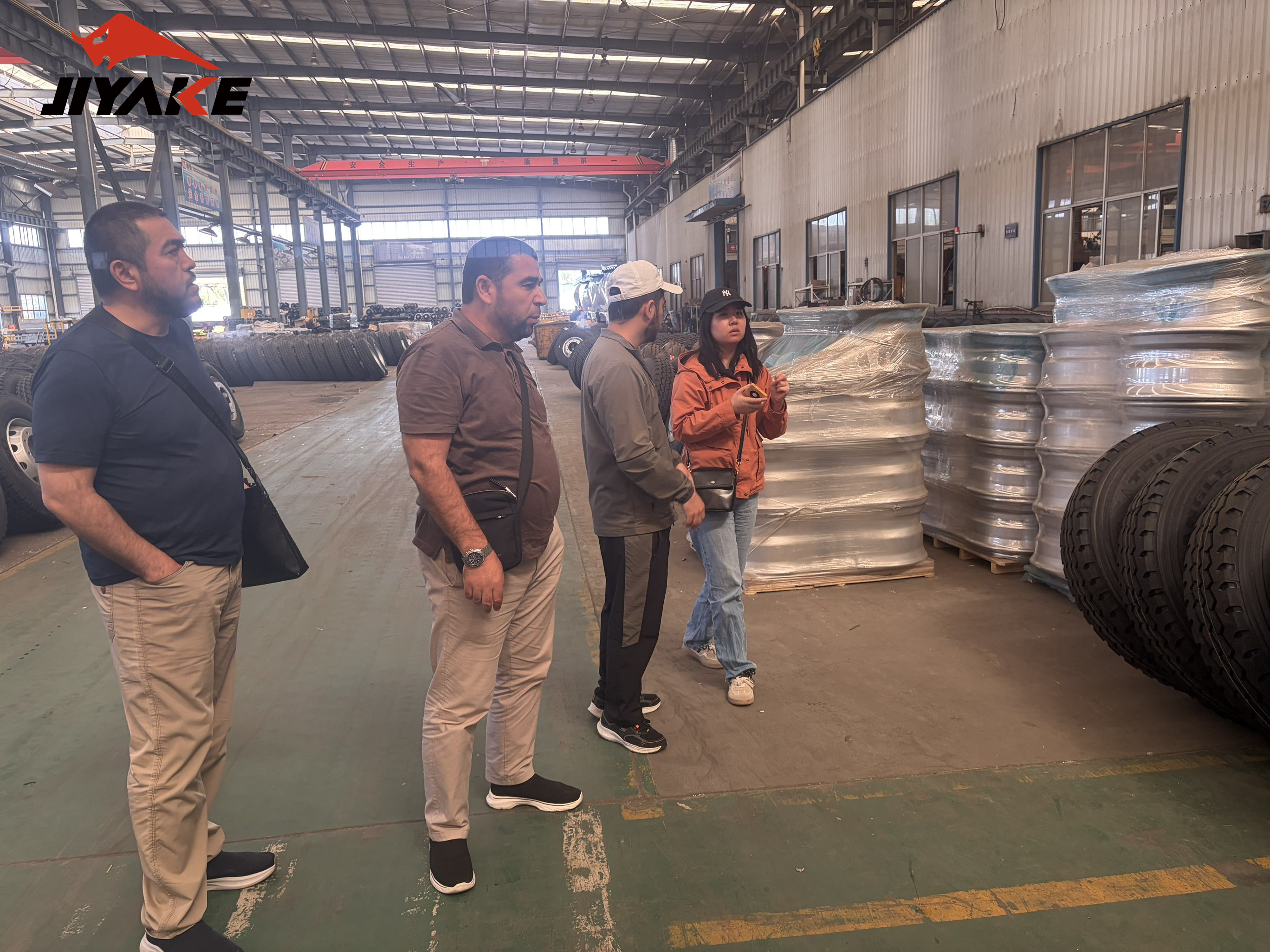
Knowing when to require a factory audit of a Semi Trailer Manufacturer is essential for procurement teams managing quality, compliance, and delivery risk. A quotation, product drawing, and video call can establish an initial impression, but they do not show how consistently a supplier controls welding, materials, traceability, or final inspection. Before placing a large order or appointing a long-term supplier, an on-site audit helps determine whether the proposed production process can actually support the technical specification and destination-market requirements.
The need for an audit is not limited to very large fleets. It becomes necessary whenever a trailer failure would create costly downtime, cargo loss, road-safety exposure, or a difficult warranty dispute. Tankers, tipper trailers, bulk-material units, timber trailers, and other special vehicles generally deserve more scrutiny than a straightforward, repeat configuration because their structural loads, fittings, and fabrication steps are more application-sensitive.
The situations where an on-site audit should not be optional
A factory audit is strongly justified before a first substantial order. “Substantial” is not only about unit quantity. A small purchase can still carry high exposure if it involves an unfamiliar chassis design, specialized tank body, corrosive cargo, or a market with strict registration and inspection rules. Buyers should also audit when a supplier offers a price that differs materially from comparable quotations. Lower cost may be legitimate, but the audit should clarify whether the difference comes from steel or aluminum grade, axle and suspension sourcing, coating preparation, welding labor, inspection scope, or simply a narrower configuration than expected.
Another trigger is a change in the supply relationship. A manufacturer that performed well on flatbed trailers may not automatically have the same control over fuel tankers, cement tankers, or liquid bitumen equipment. Similarly, a factory that can produce a demonstration unit may not have the staffing, fixtures, component supply, or production planning discipline to maintain the same quality over a batch. The audit should be repeated, or at least updated, when there is a major design revision, a new production site, a change in key subcontractors, or a significant increase in order volume.
Destination-market uncertainty is another practical reason. Requirements for dimensions, axle loading, braking arrangements, lighting, tanker accessories, marking, and documentation vary by country and by application. A buyer should not assume that “export experience” alone answers these questions. Instead, ask the factory how it converts the purchase specification and local requirements into approved drawings, work instructions, inspection points, and final records.
What a useful factory audit actually examines
A meaningful audit follows the route of the trailer through the factory rather than stopping at a showroom vehicle. Start with incoming materials. The buyer should understand how main structural materials, tank plates, axles, landing gear, braking components, tires, electrical assemblies, and valves are identified and checked. If a component brand or material grade is specified in the contract, the factory needs a workable method to prevent unintended substitution.
Fabrication deserves close attention. CNC cutting equipment can improve repeatability, but its value depends on the approved program, material handling, and subsequent dimensional checks. For chassis and tank work, inspect fit-up before welding, fixture use, weld appearance, access to difficult joints, distortion control, and the way rework is recorded. Automated welding can offer consistency on suitable seams, yet it does not eliminate the need for qualified operators, parameter control, and inspection. The audit should ask how the factory identifies nonconforming work and who has authority to stop it.
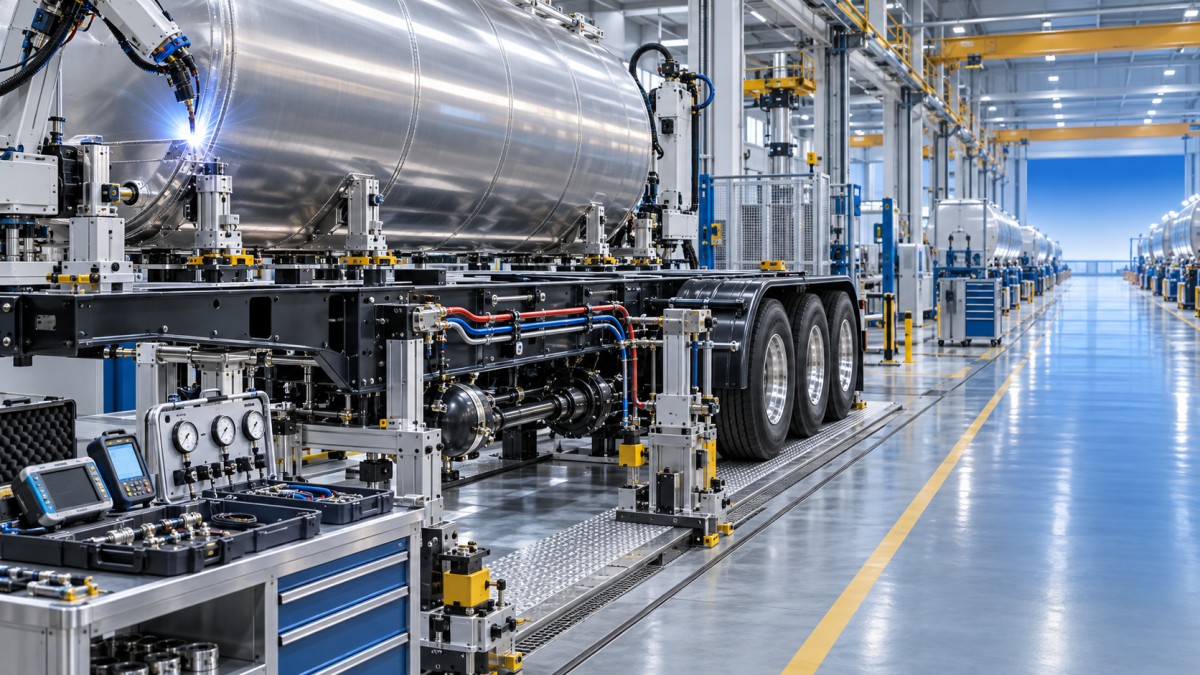
For tank trailers, the audit should go beyond external finish. Buyers need to review the manufacturing sequence for shells, compartments where applicable, baffles, manholes, discharge systems, piping, supports, and protective features. Pressure or leak testing, where relevant to the design and applicable requirements, should be witnessed or supported by clear records. It is equally important to confirm that test equipment is suitable for the planned work and that the factory can connect each test result to an identifiable trailer or tank serial number.
Capacity is more than the size of the workshop
Procurement teams often ask for factory area and headcount, and those facts are useful context. They should not, however, be treated as proof of available capacity. A 300,000 m² facility with 500 employees, such as the production base described by Shandong Jiyake Automobile Sales Co., Ltd., indicates a substantial physical operation, but the buyer still needs to see the active production schedule, work-in-process flow, bottleneck stations, and staffing allocated to the specific trailer type.
The company integrates product design, research and development, production, sales, automobile trade, and fittings production, while supplying semi-trailers and a broader range of modified trucks and special vehicles. Its equipment list includes CNC cutting machines, automatic welding equipment, large bending machines, canning equipment, and automatic tank welding equipment. During an audit, these capabilities should be connected to the order in question: which machine will produce the parts, what inspection follows each major process, and whether the tooling is already proven for the requested configuration.
Export reach across Southeast Asia, Central Asia, and African markets can be helpful when evaluating packaging, shipping coordination, and familiarity with cross-border delivery. Still, a buyer should request project-specific confirmation of drawings, component selection, documentation, and any required market approvals. Past export activity is relevant evidence, not a substitute for technical verification.
Audit the product risks, not just the supplier’s presentation
The inspection plan should match the cargo and operating environment. An aluminum tanker, for example, raises different questions from a general cargo trailer: alloy handling, joining processes, corrosion considerations, tank cleanliness, and protection of fittings all affect service suitability. For chemical, foodstuff, and mixed-cargo logistics, a lightweight design may increase payload potential and support fuel economy, but only if the tank configuration, cargo compatibility, operating conditions, and local rules are properly defined. A review of an Aluminum Tanker Trailer should therefore focus on the complete technical package rather than weight reduction alone.
Ask to see one unit at several stages: raw material preparation, partially assembled chassis or tank, pre-paint condition, final assembly, and completed inspection. This makes it harder for a factory to rely only on a polished finished sample. Check whether serial numbers remain legible and whether the factory can retrieve drawings, inspection records, and purchased-component information for a particular unit. Those controls matter when parts are needed years later or when a field issue requires root-cause analysis.
How to turn findings into a purchasing decision
An audit report should distinguish between observations and deal-breaking gaps. Cosmetic inconsistency in a noncritical area may be corrected through a pre-shipment inspection requirement. Missing traceability for critical materials, unclear welding controls, unexplained component substitutions, or an inability to demonstrate required testing are more serious. They should be resolved before production release, not left as general promises in email correspondence.
The best outcome is a practical quality agreement attached to the purchase order. It should identify the approved drawing revision, named or equivalent components, inspection hold points, test expectations, acceptance criteria, documentation required at delivery, and the process for approving changes. If an on-site visit is not possible, a remote assessment can provide preliminary evidence, but it is less reliable for judging fabrication discipline and shop-floor conditions.
Require the audit before commitment when the trailer is specialized, the supplier relationship is new, the order is high-risk, or destination compliance is uncertain. In semi-trailer procurement, the objective is not to find a flawless factory brochure. It is to confirm that the supplier’s people, equipment, controls, and records can repeatedly build the trailer that was actually specified.
Leave A Reply

First class quality service and professional after-sales team.
Get in Touch
*We respect your confidentiality and all information are protected.