




Recent Posts
 Thailand Clients Visit JIYAKE to Inspect Brand-New Semi-Trailers and Reach Cooperation AgreementNov 21, 2026
 Guinea Clients Visit JIYAKE to Inspect Brand-New SINOTRUK Vehicles and Reach Strategic CooperationNov 21, 2026
 When can an electric dump truck work on a fixed site?Oct 30, 2026


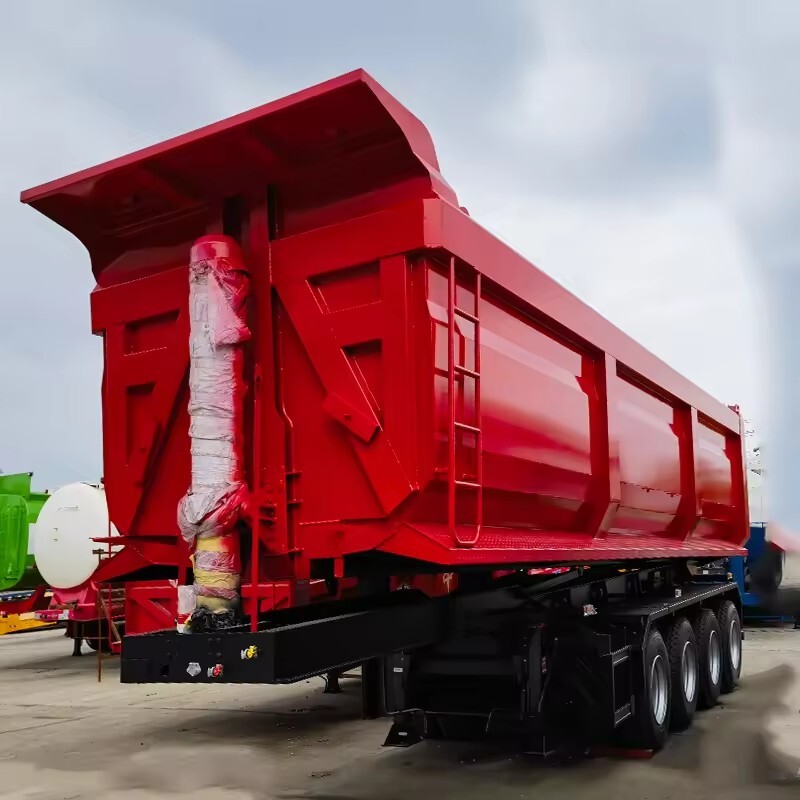

What determines the fuel cost of operating a dump truck?
Fuel can account for a substantial share of a dump truck’s operating costs, making it an important consideration for financial decision-makers. When evaluating a dump truck for sale, the purchase price is only part of the equation. Engine efficiency, payload, terrain, driving habits and maintenance all influence how much fuel the vehicle will consume—and how much useful work that fuel will deliver.
The most reliable budget is therefore not based on a brochure figure alone. It starts with the work the truck will actually perform: the distance traveled, the weight carried, the time spent waiting and the conditions encountered on both loaded and empty trips.
Start with the full operating cycle, not just distance
Two dump trucks covering the same annual mileage can have very different fuel bills. One might run steadily between a quarry and a construction site; another may spend much of its shift idling in a loading queue, climbing steep grades and maneuvering on loose ground.
For road-heavy operations, fuel consumption in liters per 100 kilometers can be a useful starting point. For site work with extensive idling or slow movement, liters per engine hour may be more informative. Neither measure tells the whole story on its own, so finance teams should also look at fuel cost per productive tonne delivered, where dependable payload data is available.
That distinction matters when comparing trucks of different sizes. A larger vehicle may consume more fuel per trip but move more material. Conversely, a higher-capacity truck that regularly leaves half empty may carry unnecessary weight and deliver a poor return on its fuel spend.
What changes the fuel bill?
Payload and utilization
Moving more weight generally requires more energy, particularly when accelerating or climbing. Yet fuel cost per tonne can improve when a truck carries an appropriate load instead of making several lightly loaded trips. The goal is not to maximize weight at all costs; it is to match payload to the route, the material and the vehicle’s legal and technical limits.
Include the empty return leg in the calculation. A truck may travel half its route without cargo, and its unladen weight still consumes fuel. If outbound and return distances differ, use the actual operating pattern rather than assuming a perfectly balanced round trip.
Terrain, road surface and congestion
A paved highway, a congested city route and a muddy worksite place different demands on the same vehicle. Gradients increase the power needed on climbs, while loose surfaces and poor road conditions can increase rolling resistance. Frequent stops also require repeated acceleration.
Seasonal conditions deserve a place in the budget. Rain, road deterioration or longer queues at a busy project can change consumption even when the contracted haul distance stays the same. For an investment approval, ask operations staff whether the proposed route represents normal conditions or an unusually favorable day.
Engine, driveline and vehicle specification
Engine size, transmission, axle ratios and drive configuration affect how efficiently a truck performs a particular task. More power is not automatically more economical, but an underspecified truck may struggle on gradients or spend too much time operating under heavy load.
Compare specifications against the intended duty cycle. A vehicle expected to climb regularly with dense material has different requirements from one carrying lighter loads over mostly level roads. Request consumption evidence for comparable configurations and routes, and check whether quoted figures include idling, loading and unloading.
Driving behavior and idle time
Hard acceleration, unnecessary braking and excessive speed can raise fuel use. Idling also burns fuel without adding distance, which can make a distance-only estimate look better than the actual bill. At a loading site, even small delays can accumulate across multiple shifts.
Driver training and practical dispatch procedures can help, but the financial question is broader: how much of the schedule is productive movement, and how much is waiting? If queues are unavoidable, they should be included in the forecast rather than treated as a driver issue.
Maintenance and operating condition
Underinflated or unsuitable tires, dragging brakes, poor wheel alignment and neglected engine maintenance can all contribute to higher fuel consumption. Tire condition also affects safety and wear, so postponing maintenance to reduce short-term expenditure may increase costs elsewhere.
For a used dump truck, review service records and inspect the vehicle’s condition before relying on an assumed consumption rate. For a new vehicle, include scheduled maintenance and access to replacement parts in the operating plan. A fuel-efficient specification is less valuable if the truck cannot be kept in the condition required to achieve it.
A practical fuel-cost calculation for approval
Use a simple baseline first, then adjust it for the work cycle. For a truck whose consumption is measured primarily by distance:
Annual fuel cost = annual kilometers ÷ 100 × liters per 100 kilometers × fuel price per liter.
For example, assume a truck travels 80,000 km per year, consumes 45 L/100 km and pays an average of 1.20 currency units per liter. Estimated annual consumption is 36,000 liters, giving a fuel cost of 43,200 currency units. These are illustrative assumptions, not a quoted performance figure.
If a comparable truck consumes 40 L/100 km under the same conditions, its estimated annual fuel cost would be 38,400 currency units: a difference of 4,800 per year. That difference is worth examining against the purchase-price gap, but only if both estimates cover equivalent payloads, routes and operating time.
For site-intensive work, a separate hourly calculation may be more appropriate: annual engine hours multiplied by liters per engine hour and the fuel price. Avoid adding a full hourly estimate to a full distance-based estimate, as that could count the same fuel twice. Instead, ensure the selected method accounts for both driving and idle time, or model those periods separately.
Compare cost per tonne before choosing a dump truck for sale
Fuel cost per kilometer is useful for budgeting, but it can favor the wrong vehicle if carrying capacity differs. Divide the fuel cost for a defined period by the tonnes actually delivered during that period. Use verified payloads where possible, and keep the route, material and measurement period consistent across options.
It is also sensible to test more than one scenario:
- Expected case: normal annual distance or engine hours, typical payload and the budgeted fuel price.
- Higher-cost case: a higher fuel price, more idling or heavier route conditions.
- Lower-utilization case: fewer productive tonnes delivered while fixed ownership costs continue.
Alongside fuel, assess financing, maintenance, tires, insurance, taxes, downtime and expected resale value where applicable. A lower purchase price can be attractive, but it should not conceal a higher cost for every tonne moved. Equally, projected fuel savings should not be used to justify a premium unless the operating assumptions are credible.
Is a dump truck the right equipment for every load?
The cost comparison begins with the transport task. A dump truck is designed for tipping material; a side-wall semi-trailer serves a different purpose and requires a tractor unit. For operations that also move general or bulk cargo, a separate combination may be worth assessing rather than asking one vehicle to perform every job.
For example, Shandong Jiyake’s 60 Ton Side Wall Semi Trailer is a three-axle option described with high-strength steel construction and side-wall height choices. It is not a substitute for a tipping body when the job requires dumping. Its fuel consumption would depend on the tractor, load and route. The supplied specifications reference both model capacity ranges and a 40,000 kg loading weight, so buyers should confirm the exact configuration, permissible payload and applicable local limits before making a comparison.
What to request before signing off
Ask the supplier for the proposed truck’s exact configuration, rated payload, unladen weight, service requirements and any available fuel-consumption evidence relevant to the intended work. Share the expected route, gradients, material, daily trips and idle time so that assumptions can be discussed openly.
Where possible, validate the forecast with an operating trial or records from a comparable vehicle. Record fuel added, distance, engine hours and tonnes delivered over the same period. A decision supported by those figures gives the finance team a clearer basis for comparing offers—and a more realistic fuel budget after the truck enters service.
Leave A Reply

First class quality service and professional after-sales team.
Get in Touch
*We respect your confidentiality and all information are protected.