




Semi-Trailer Weight and Tractor Fuel Use: A Fleet Cost Analysis Framework
Yes, semi-trailer weight affects tractor fuel efficiency, but it is not a simple rule that a lighter trailer always produces the lowest operating cost. The fuel effect depends on whether the tractor is hauling near its legal or practical payload limit, how much of the fleet's mileage is empty, the road profile, average speed, trailer aerodynamics, tyre specification, and how well the tractor-trailer combination is matched.
For a fleet buyer, the useful question is not only, “How much does the trailer weigh?” It is: What does every additional kilogram cost across loaded and empty kilometres, and does the trailer's construction create enough payload, durability, or operational benefit to justify that cost? A poor decision can reduce legal payload, increase fuel use on demanding routes, add tyre and maintenance expense, or create a trailer that is too light for the work it must withstand.
Why trailer weight changes tractor fuel use
A tractor unit must move its own mass, the semi-trailer, and the payload. More gross combination mass requires more energy to accelerate, climb gradients, and overcome rolling resistance. The fuel penalty is most visible where the vehicle repeatedly starts, stops, climbs, or operates on soft or uneven surfaces. Urban deliveries, quarry access roads, construction sites, mining approaches, and hilly regional routes usually expose the difference more clearly than long, flat highway runs.
At steady motorway speed, aerodynamic drag can become a larger fuel driver than a moderate difference in trailer tare weight. This is why a lighter trailer with a poorly matched body height, exposed equipment, unstable tarpaulin, or significant tractor-to-trailer gap may not outperform a slightly heavier but more aerodynamic specification on long-distance freight.
Weight still matters because it affects two operating conditions at once:
- Loaded operation: a heavier trailer increases gross combination weight and the tractor's work demand.
- Payload capacity: where legal gross weight is fixed, every increase in trailer tare weight reduces the payload available on a weight-limited load.
The second point is often more important commercially. If bulk cargo is routinely limited by vehicle weight rather than trailer volume, an unnecessarily heavy trailer can mean less revenue-producing material per trip. The fleet may then need more journeys to move the same annual tonnage, increasing fuel, labour, tyre wear, toll exposure, and vehicle utilisation pressure.
The operating profile determines whether lightweight construction pays back
Two fleets can buy the same trailer and reach different conclusions. A fleet hauling palletised goods may cube out before reaching its gross weight limit. In that case, reducing trailer tare weight may have only a modest commercial benefit, especially if the lighter design compromises floor strength, side protection, repairability, or usable internal volume.
A fleet carrying aggregates, cement, grain, steel, ore, or other dense material faces a different calculation. These loads often reach the allowable mass limit before available volume is filled. A lower-tare trailer can increase payload per trip, provided the chassis, suspension, body, landing legs, and axle group remain suitable for daily loading cycles and road conditions.
Do not confuse a lighter trailer with a lower-cost trailer
Lightweight construction can create a payload advantage, but reducing mass requires disciplined engineering. Material grade, chassis design, cross-member spacing, welding quality, corrosion protection, body thickness, and axle selection all influence whether the trailer will retain its value under repeated loading and road shock.
A buyer should be cautious when a low tare weight is achieved by reducing reinforcement in high-stress areas or by using a specification intended for smoother roads than the fleet actually operates. Repair costs, downtime, cracking around high-load points, body deformation, and premature suspension or tyre issues can erase a fuel or payload benefit quickly.
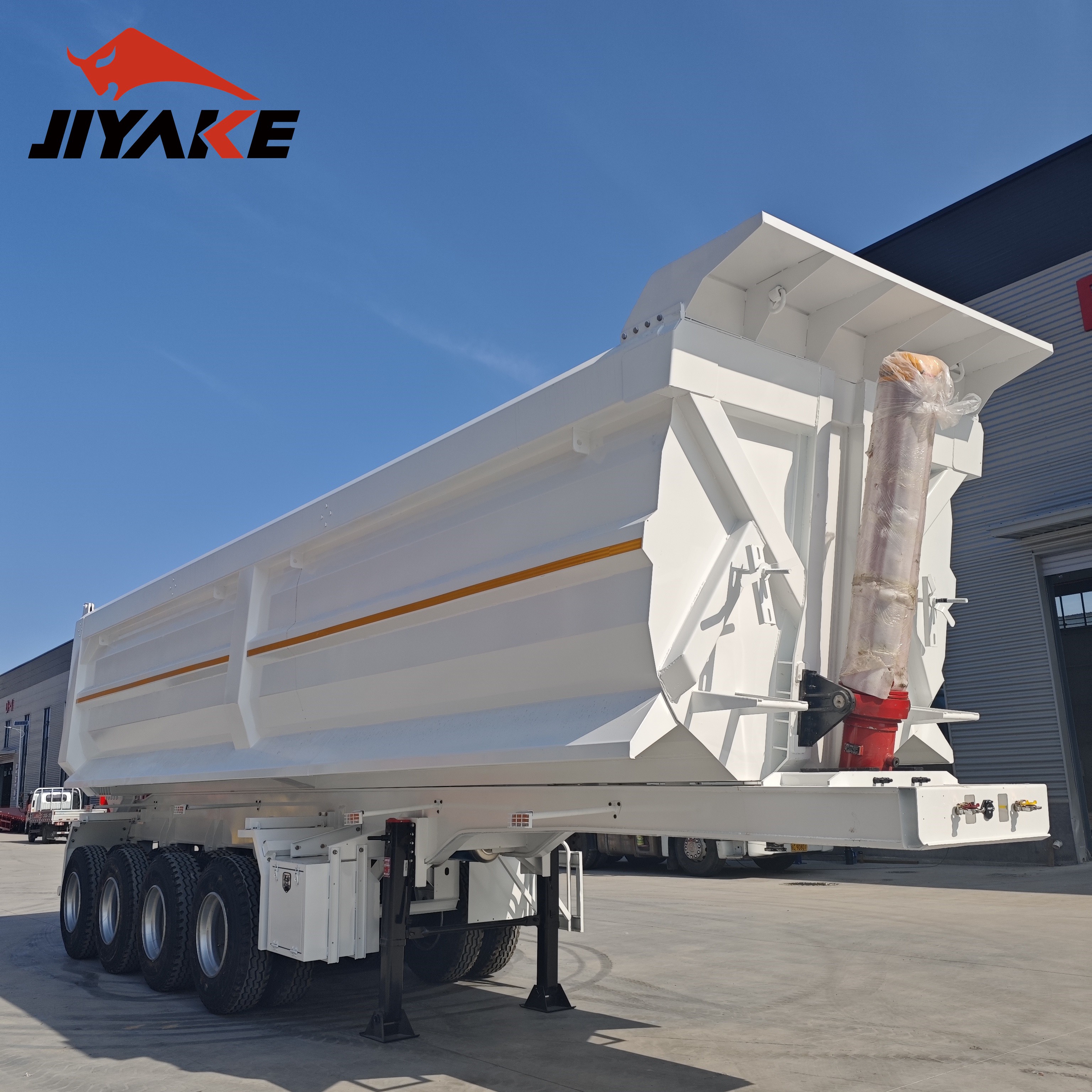
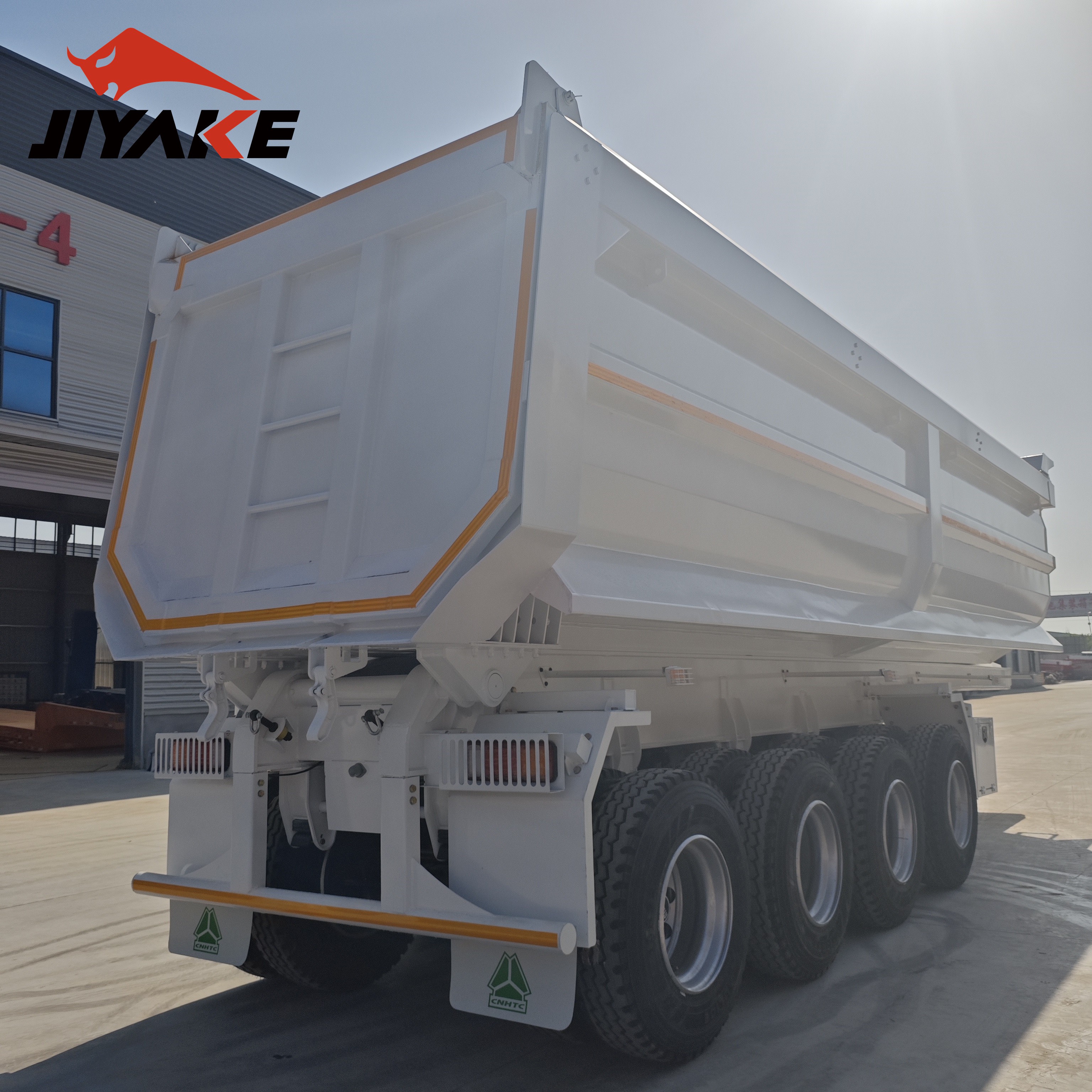
This is particularly relevant in tipper work. A body used for abrasive aggregate, uneven loading, and frequent raising cycles needs a different balance from a highway trailer carrying low-density materials. The right question is not whether the lightest body is best, but whether its structure matches the material, loading method, tipping frequency, centre-of-gravity demands, and site conditions.
Weight is only one part of tractor fuel efficiency
When a fleet sees fuel consumption rise after changing trailers, it is easy to blame tare weight. That conclusion is incomplete unless the operating data separates other variables. Trailer-related fuel performance is usually shaped by the following factors at the same time:
- Aerodynamic profile: trailer height, front-face shape, tractor-trailer gap, side guards, roof equipment, and exposed underbody components influence air resistance.
- Axle and tyre configuration: more axles, unsuitable tyre pressure, aggressive tread patterns, poor alignment, and dragged brakes increase rolling losses.
- Load distribution: incorrect fifth-wheel loading can affect traction, steering response, tyre wear, and driveline efficiency.
- Route conditions: grades, traffic, road surface, wind exposure, and site access change the value of a lightweight design.
- Tractor matching: engine torque, transmission ratios, axle ratios, cooling capacity, and retarder requirements must suit the actual combination mass.
- Driver operating pattern: harsh acceleration, unnecessary idling, and poor gear selection can outweigh a modest trailer-weight saving.
For procurement teams, this means fuel comparisons should use comparable routes, payload bands, weather periods, and driving conditions. Comparing one tractor running flat highway routes with another operating on hilly construction access roads does not reveal the fuel effect of trailer weight.
Build the decision around revenue per productive trip
A practical fleet cost analysis starts with the work, then tests trailer specifications against it. Begin by separating loads into weight-limited and volume-limited categories. Review loaded kilometres, empty-return kilometres, average payload, loading frequency, route gradients, road condition, and whether the tractor is already operating close to its intended combination mass.
Next, compare candidates using a whole-life view rather than purchase price or tare weight alone. The comparison should include:
- Trailer tare weight and the payload it leaves available within the operating limit.
- Expected loaded and empty kilometres over the vehicle's working life.
- Fuel use across the fleet's actual duty cycle, not a single ideal route.
- Tyre, brake, suspension, chassis, and body maintenance exposure.
- Expected downtime for repairs, inspections, and body work.
- Residual value based on the trailer's likely condition after its intended service.
This approach prevents a common mistake: assigning all economic value to one additional tonne of theoretical payload when the fleet cannot consistently sell, load, or legally carry that extra tonne. Conversely, it prevents another mistake: rejecting a lighter specification based on its purchase premium when recurring dense loads could make the payload gain economically meaningful.
How axle choice changes the answer
Axle configuration affects both compliance and operating cost. More axles can distribute weight and support a higher permitted combination mass in some operating environments, but they also add tare weight, tyres, brake components, bearing service points, and rolling resistance. A configuration that is appropriate for heavy, stable bulk work may be inefficient for a fleet that frequently travels partially loaded or returns empty.
The tractor drive arrangement should be evaluated alongside the trailer axles. A 6x4 tractor can offer useful traction and load-handling capability for demanding haulage, but its added driveline mass and rolling losses may not be the best fit for predominantly light, paved highway work. A fleet should select drive configuration based on traction demand, site access, grade, surface condition, and payload pattern, not simply on nominal engine power.
For construction and mining operations where material movement and site access are central, a dump-truck configuration may be more appropriate than a tractor and semi-trailer combination. For example, the HOWO 380HP Dump Truck is positioned for construction and mining applications, with 6x4 availability, high-strength-steel construction, and a middle-lifting carriage. Its relevance is not that it automatically reduces fuel use, but that the vehicle layout should match short-haul bulk movement, unloading cycles, terrain, and payload requirements before fuel comparisons are made.
Questions to put to a trailer supplier before purchase
A useful supplier discussion goes beyond asking for tare weight and body dimensions. Request the exact specification of the proposed trailer, including axle group, suspension, tyre size and load rating, chassis material, body construction, landing gear, braking system, corrosion treatment, and optional equipment. Accessories can materially change final tare weight and operating behaviour.
Ask how the trailer is intended to be loaded and which cargoes it is designed to carry. A trailer suited to dry bulk may not tolerate the same impact loading as a steel or rock application. The supplier should also be able to identify the intended tractor coupling assumptions, kingpin load range, and the conditions under which the stated tare weight applies.
Manufacturing capability matters because consistent cutting, bending, and welding affect fit-up and structural repeatability. Shandong Jiyake Automobile Sales Co., Ltd. supplies semi-trailers and specialised heavy vehicles across multiple export markets, with production resources that include CNC cutting, automatic welding, large bending, and tank-welding equipment. For a fleet purchase, the relevant evaluation is whether the selected design, fabrication quality, parts support, and specification control fit the actual route and cargo duty.
Make the fuel decision after defining the duty cycle
Semi-trailer weight does affect tractor fuel efficiency, especially under acceleration, climbing, rough-road work, and frequent empty running. Yet fuel consumption alone should not choose the trailer. A lower tare weight is commercially valuable when it creates usable payload capacity or reduces mass across a meaningful share of the fleet's kilometres. It is less valuable when freight is volume-limited, aerodynamics dominate, or the lighter design creates a durability risk.
The strongest procurement decision is built from route data, payload records, load type, empty-mileage share, and a realistic view of maintenance exposure. Select the lightest trailer that can reliably perform the required work, then match the tractor, axles, tyres, and body specification to the operating environment. That is the point where fuel efficiency becomes part of a defensible fleet cost decision rather than an isolated specification comparison.
Leave A Reply

First class quality service and professional after-sales team.
Get in Touch
*We respect your confidentiality and all information are protected.