




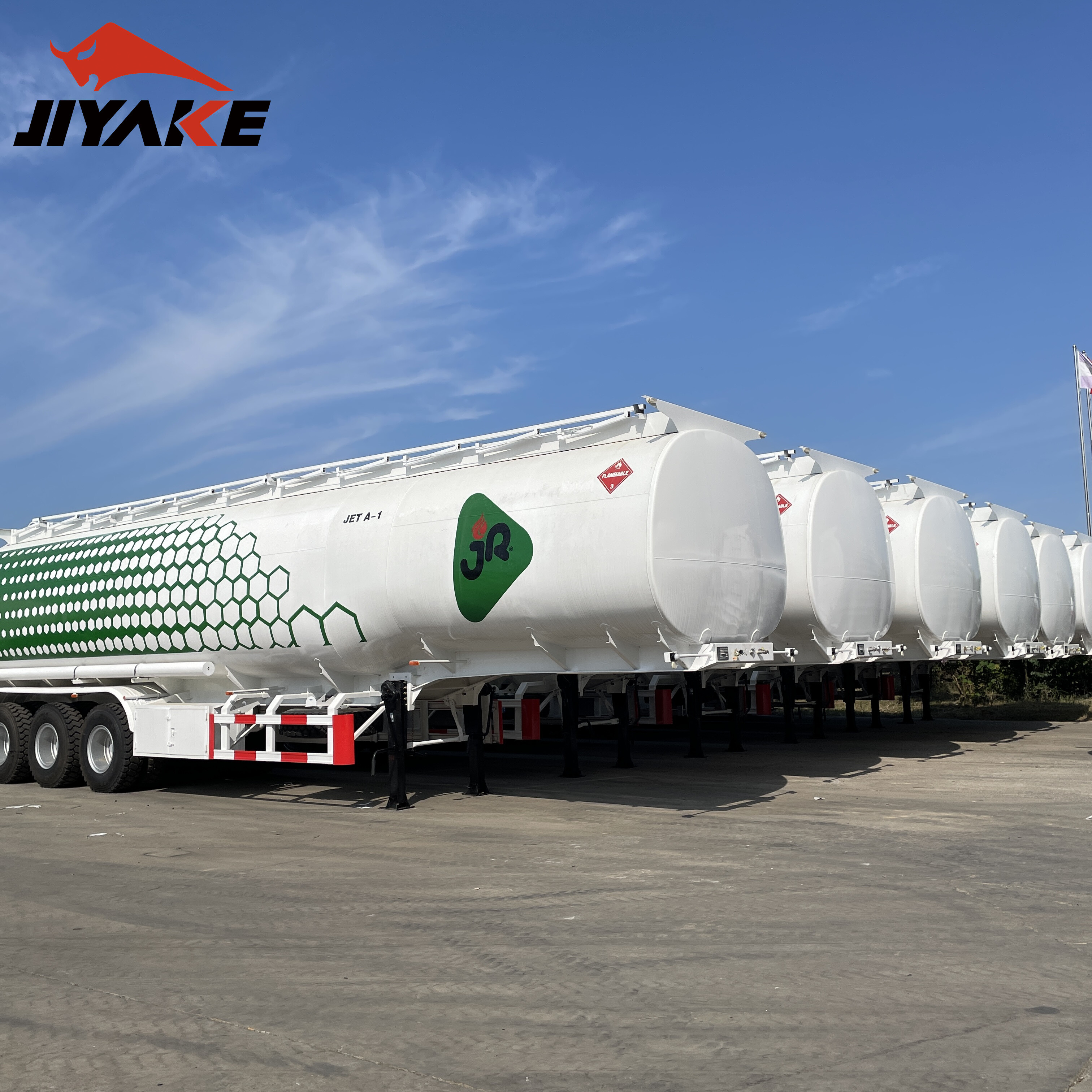
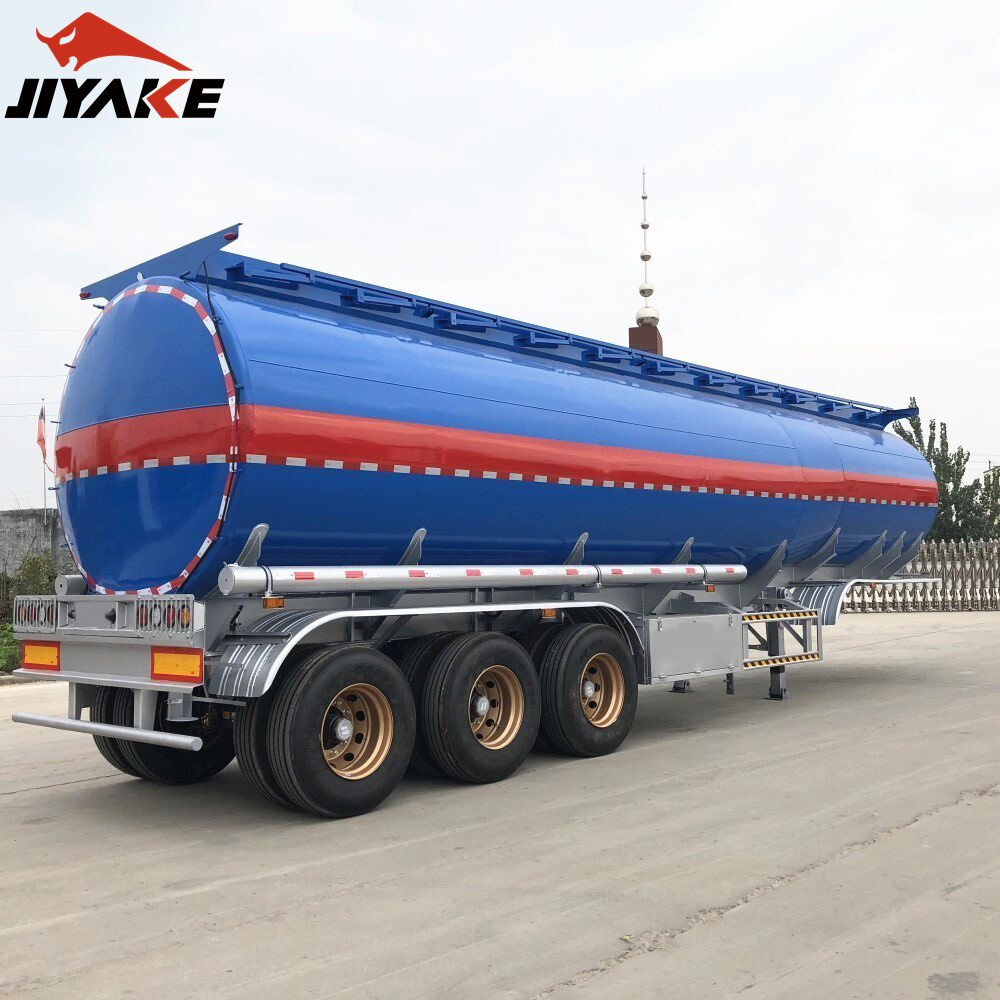
45m3 Fuel Tanker Trailer Price: Comparing Tank Material and Safety Systems
45m3 Fuel Tanker Trailer Price: Comparing Tank Material and Safety Systems
A 45m3 fuel tanker trailer is often purchased on a quotation comparison sheet, but the lowest quoted unit is not always the lowest-cost asset to operate. At this capacity, the trailer is expected to move a large liquid payload over long distances, often through mixed road conditions and high ambient temperatures. Small differences in tank plate, welding discipline, compartment layout, braking hardware, and discharge protection can become expensive after a few years of service.
For procurement teams, the practical question is not simply, “What is the 45m3 Fuel Tanker Trailer Price?” It is: what is included in that price, what has been omitted, and which specification is suitable for the fuel type, route, tractor unit, and local operating rules? A trailer that looks identical from the outside may have a very different internal structure and safety configuration.
This matters particularly in fuel distribution. A delayed delivery caused by a damaged valve, a leaking manhole seal, poor anti-static grounding, or an unsuitable tank material can affect far more than maintenance spending. It may interrupt supply schedules, create product-loss exposure, and take a revenue-producing vehicle out of service at exactly the wrong time.
Why a 45m3 tanker quote can vary so widely
Capacity alone does not define a tanker trailer. “45m3” describes nominal volume, but the selling price is shaped by the tank material and thickness, number of compartments, axle and suspension selection, chassis construction, piping arrangement, discharge valves, electrical components, paint system, and the level of documentation supplied with the unit.
A basic price may refer to a tank body with a standard chassis and limited accessories. Another quotation may include multiple compartments, bottom loading provisions, vapor-related connections, aluminum walkways, emergency shut-off arrangements, toolboxes, spare wheel carriers, or a more robust suspension package. If those details are not separated line by line, buyers can mistakenly compare two different configurations as though they were the same product.
The operating market also changes the specification. A cross-border petroleum distributor may need equipment matched to a defined technical standard or customer inspection checklist. A regional operator working on rough roads may prioritize chassis reinforcement, mechanical simplicity, and serviceable parts. Neither choice is automatically better; the mistake is paying for features that do not fit the operation, or saving money on components that the route will quickly expose.
Tank material: where the initial price and lifecycle cost meet
Material selection is usually the biggest technical driver behind a 45m3 Fuel Tanker Trailer Price. Carbon steel, aluminum alloy, and stainless steel are the materials most commonly discussed, but they should not be treated as interchangeable options.
Carbon steel: practical, familiar, but dependent on protection
Carbon steel remains a common choice because it is generally easier to source, repair, and fabricate. For operators with capable maintenance workshops, it can be a sensible solution, especially where roads are demanding and field repairability matters. Its lower entry cost can make it attractive when fleet expansion must stay within a tight capital budget.
The trade-off is weight and corrosion management. A heavier tank reduces the available weight margin, which may matter where gross vehicle limits are tightly enforced. The external coating system, weld finishing, drainage around fittings, and inspection routines deserve real attention. Water and contaminants can accumulate in neglected areas, and cosmetic paint quality is not the same thing as long-term corrosion protection. Buyers should ask what surface preparation and paint process are actually used rather than accepting a general statement such as “anti-rust paint.”
Aluminum alloy: payload advantage, with stricter fabrication expectations
Aluminum alloy tanks are normally considered when tare weight is a major commercial issue. Lower trailer weight can support a better payload position, subject to axle limits and applicable transport rules. This can be meaningful for regular long-haul fuel movements where every legally usable kilogram contributes to trip economics.
However, aluminum should not be selected only because it sounds premium or lightweight. The value depends on alloy choice, tank design, weld quality, and the manufacturer’s ability to control fabrication. Aluminum welding requires appropriate process control and skilled operators; an attractive exterior finish does not reveal the quality of internal weld work. Repairs can also require more specialized capability than basic steel repairs. Before awarding an order, request clarity on tank plate specification, welding method, inspection practice, and the service support available in the destination market.
Stainless steel: specialized use, not a default upgrade
Stainless steel is often associated with high corrosion resistance and is widely considered in chemical or food-grade liquid transport. For conventional fuel tanker procurement, it is not automatically the best answer. Its suitability depends on the exact product carried, contamination control requirements, budget, and local customer specification. A buyer should avoid paying for stainless steel simply as a badge of quality when a properly designed carbon-steel or aluminum tank better fits the duty cycle.
Compartment design changes the trailer’s commercial usefulness
A single-compartment 45m3 tanker can be efficient for point-to-point movement of one product. In real distribution work, multi-compartment layouts are often more useful because they allow different grades or deliveries to be carried on the same route. Yet every additional compartment adds bulkheads, manholes, piping complexity, valves, and inspection points. It also changes loading and unloading procedures.
The right number of compartments comes from dispatch patterns, not from a generic preference. If most deliveries are full-load transfers to one depot, a simpler layout may reduce maintenance exposure. If the trailer serves several retail stations in one trip, compartment flexibility may reduce empty mileage and improve scheduling. Procurement should ask operations to provide a sample month of actual loads before finalizing the drawing. That exercise often reveals whether a seemingly useful compartment arrangement will actually be used.
Internal baffles are equally important. They help manage liquid surge and support vehicle stability during braking, cornering, and uneven road travel. Their configuration should match the tank geometry and compartment arrangement. This is not a feature to evaluate by counting baffles alone; workmanship, placement, and the strength of their attachment are what matter in service.
Safety systems worth paying attention to
Fuel tanker safety is a system rather than a single accessory. A polished handrail or a long feature list does not compensate for poor valve protection, weak piping support, or unreliable electrical connections. The buyer should review how loading, transport, discharge, emergency response, and maintenance are handled as one chain.
Key items to examine during technical comparison include:
- Manholes and seals: Confirm the cover structure, gasket material, locking arrangement, and access for inspection. A leaking seal is a small component failure with potentially serious consequences.
- Bottom discharge and emergency shut-off: The valve arrangement should be protected from road impact and easy for trained staff to operate. Ask whether emergency closure is mechanically or pneumatically controlled and how it is tested.
- Overfill-related provisions: The exact requirement depends on the loading system and local practice, but tanker and terminal interfaces should be discussed before production, not after delivery.
- Grounding and electrical protection: Anti-static grounding, wiring routing, lamps, connectors, and switch protection must be appropriate for the intended hazardous-service environment. Verify the applicable local requirements separately.
- Braking, suspension, and under-run protection: These influence both road safety and asset durability. Check axle ratings, brake configuration, spare-parts availability, and protection around vulnerable components.
- Walkways, ladders, and handrails: These are maintenance-access items, but they become safety-critical when operators work on top of the tank in rain, dust, or poor light.
A sensible buyer will ask for a component list that identifies the actual brands and models offered, where applicable, rather than accepting a vague phrase such as “high-quality valves.” If substitutions are permitted during production, that should be addressed in the purchase agreement. The same applies to tires, axles, suspension components, and electrical hardware.
Do not separate the tanker from the tractor unit
A 45m3 tanker is only as workable as the tractor-trailer combination. Fifth-wheel height, kingpin load, axle spacing, braking connections, electrical interfaces, and route gradients all need to be checked together. A mismatch can create handling problems, accelerate tire wear, or leave the combination unsuitable for local gross-weight limits.
For demanding logistics, heavy loads, and line-haul work, a 6x4 tractor configuration is commonly considered because it provides useful traction and load support. The Shacman Tractor Truck is offered as a new 6x4 platform with a 300L diesel fuel capacity, water-cooled six-cylinder engine, and 11.00R20 or 12.00R20 tire options. Those specifications may suit certain tanker applications, but coupling suitability should always be confirmed against the final trailer drawing, operating terrain, and legal requirements in the destination country. A tractor’s stated engine or chassis characteristics alone do not establish compliance for a fully loaded fuel tanker combination.
How to compare quotations without missing hidden cost
The most reliable comparison method is to issue one technical specification sheet and require every supplier to quote against it. If suppliers quote their own “standard” 45m3 design, the prices may be impossible to compare fairly. The sheet should identify the intended liquid, tank material, nominal capacity, compartment volumes, plate requirements where defined, chassis and axle preference, suspension type, valve system, safety accessories, paint expectations, documentation, spare parts, and inspection arrangements.
Then divide cost into three layers: the purchase price, the cost to commission the trailer, and the cost to keep it available. Commissioning can include shipping, customs handling, local registration, inspection, coupling work, and driver familiarization. Availability cost includes routine maintenance, seal and valve replacement, tire consumption, corrosion repairs, downtime, and access to parts. The lowest factory quotation can lose its advantage quickly when parts take too long to obtain or when basic maintenance requires nonstandard components.
It is also worth checking what the supplier can actually manufacture in-house and what is externally sourced. Shandong Jiyake Automobile Sales Co., Ltd. operates across modified trucks, semi-trailers, tanker trailers, and related vehicle equipment, with production resources that include CNC cutting, automatic welding, tank automatic welding, bending, and canning equipment. For buyers, that type of capability matters less as a marketing claim than as a discussion point: ask which stages are controlled internally, how tank welds are inspected, and what records can be supplied with the completed unit.
Questions to settle before placing the order
Before issuing a purchase order, obtain the approved general arrangement drawing and confirm the empty weight estimate, compartment breakdown, axle configuration, kingpin setting, overall dimensions, outlet arrangement, and access features. If actual road limits or terminal rules are uncertain, resolve those points before fabrication starts. Altering a finished tanker is rarely as clean or economical as getting the design right on paper.
Ask how pressure or leak testing is handled, what inspection records are available, and which consumable spares should be ordered with the trailer. Include a practical spare package for items likely to need replacement in normal service, particularly seals, valve-related components, lamps, and other service parts specific to the selected configuration. For fleets operating far from the manufacturer, this is a straightforward way to reduce avoidable downtime.
The best 45m3 fuel tanker purchase is rarely the one with the longest option list or the lowest headline price. It is the unit whose material, compartment design, safety hardware, tractor match, and maintenance plan are aligned with the loads it will actually carry. A clear technical comparison may take longer before purchase, but it is much cheaper than discovering the missing specification after the tanker has entered service.
Leave A Reply

First class quality service and professional after-sales team.
Get in Touch
*We respect your confidentiality and all information are protected.