




Manufacturing Processes Behind Reliable Dump Semi-Trailers
Reliable dump semi-trailers begin with precision manufacturing, from structural design and material selection to CNC cutting, automated welding, bending, assembly, and final inspection.
Every production step affects payload capacity, durability, safety, unloading efficiency, and total operating cost in heavy-duty transport scenarios.
Shandong Jiyake Automobile Sales Co., Ltd. builds modified trucks and special vehicles for demanding roads, heavy loads, and continuous commercial use.
Scenario First: Why Manufacturing Quality Changes Dump Semi-Trailer Performance
Dump semi-trailers work differently across mining, construction, road projects, agriculture, ports, and bulk material logistics.
A trailer hauling gravel needs impact resistance. A trailer moving wet soil needs stable lifting and smooth discharge.
For long-distance transport, tare weight, axle layout, suspension quality, and welding consistency become decisive factors.
Therefore, reliable dump semi-trailers are not only assembled. They are engineered around load type, route condition, and unloading frequency.
Heavy Construction Sites Need Strong Frames and Controlled Tipping
Construction material transport often includes sand, crushed stone, brick waste, asphalt mix, and reinforced debris.
These loads create repeated impact on the body floor, side panels, main beams, and rear door structure.
During manufacturing, the frame must be aligned accurately before welding. Poor alignment may cause twisting during loaded tipping.
CNC cutting supports consistent plate dimensions, while large bending machines improve panel shape and structural rigidity.
Automated welding reduces unstable weld penetration, especially around high-stress areas such as cross members and lifting brackets.
Key Manufacturing Checks for Construction Use
- Main beam strength must match expected payload and road impact.
- Floor thickness should suit abrasive and sharp materials.
- Hydraulic lifting points require accurate positioning.
- Rear door locking must remain reliable after repeated unloading.
Mining and Quarry Routes Require Fatigue-Resistant Structures
Mining routes usually combine heavy payloads, steep slopes, vibration, dust, and uneven ground.
In this scenario, dump semi-trailers need reinforced frames and carefully selected steel specifications.
Fatigue failure often begins at poorly treated weld edges, suspension seats, or beam transition zones.
A professional production process includes fixture-controlled welding, dimensional inspection, and surface treatment before painting.
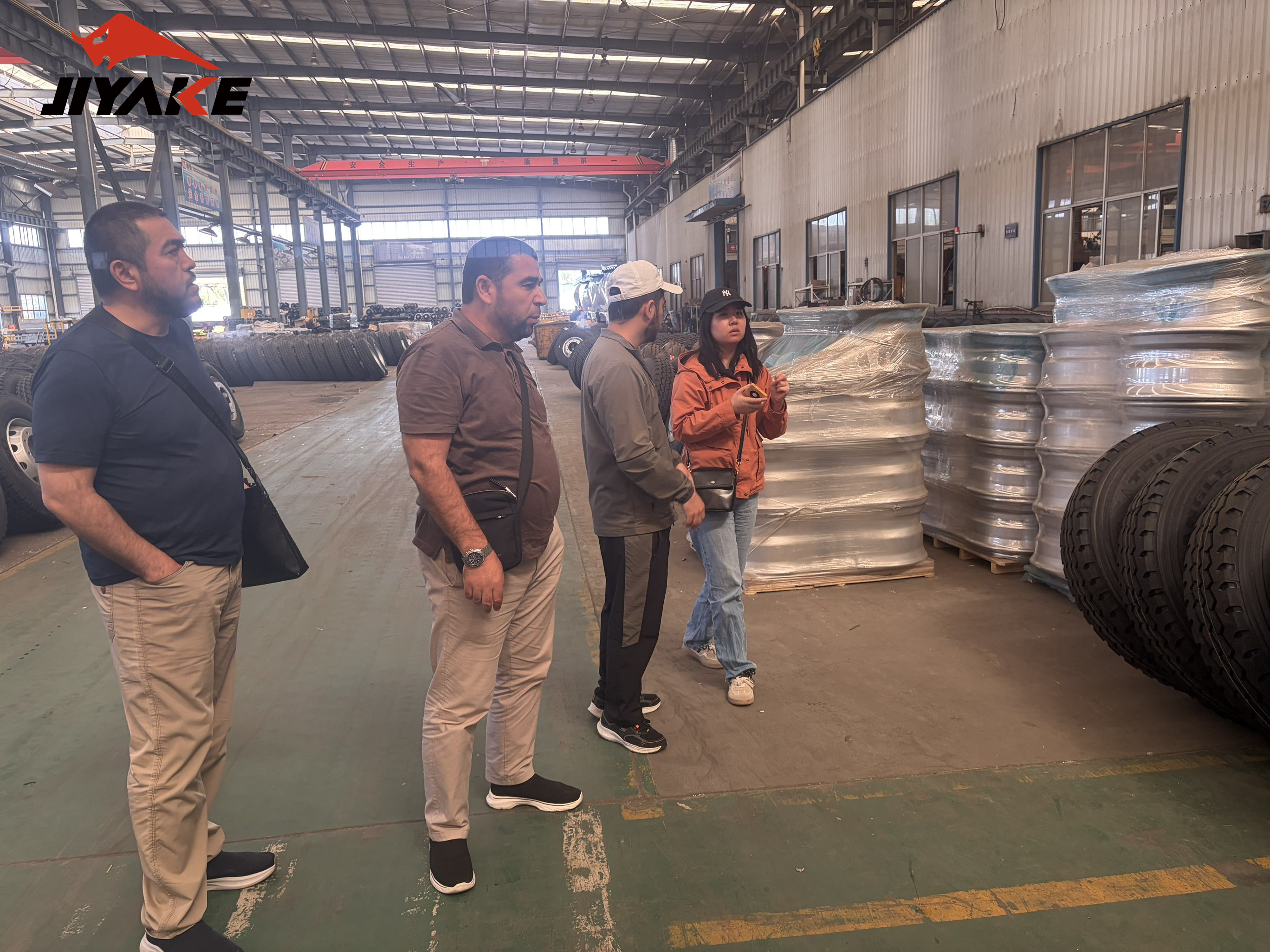
Shandong Jiyake operates a factory covering 300,000 square meters, supported by CNC cutting, automatic welding, and large bending equipment.
This equipment foundation supports stable production for semi-trailers, tipper trucks, dump trucks, tankers, mixers, and other special vehicles.
Agricultural and Seasonal Transport Needs Flexible Body Matching
Agricultural transport may involve grain, fertilizer, soil, manure, stones, or packaged materials during different seasons.
The same working area may require both tipping efficiency and safe containment during road movement.
Body height, side reinforcement, sealing performance, and rear door style should be selected by material flow characteristics.
Where lighter cargo or mixed equipment transport appears, a related platform solution may also be considered.
For example, the Fence Cargo Trailer supports construction materials, landscaping gear, agricultural products, and industrial equipment.
Its modular aluminum fence system can work as an open platform or be enclosed with panels or tarps in minutes.
Long-Haul Bulk Logistics Focuses on Weight, Axles, and Maintenance
Bulk logistics demands stable payload performance over long distances, often under strict fuel and maintenance cost pressure.
In this scenario, reliable dump semi-trailers depend on optimized tare weight, suspension durability, and predictable braking behavior.
Axle quality and tire compatibility influence load distribution, rolling resistance, and service intervals.
Manufacturing consistency is important because small dimensional deviations can create abnormal tire wear or frame stress.
For export operations, road conditions and maintenance capacity differ by region, including Southeast Asia, Central Asia, and African markets.
Jiyake has served more than 60 countries, which helps refine designs for diverse regulations, roads, and operating habits.
Different Scenarios Require Different Manufacturing Priorities
How Precision Processes Build Reliable Dump Semi-Trailers
Reliable manufacturing begins with design review, where payload, route, unloading angle, and tractor compatibility are confirmed.
Material selection follows, balancing strength, abrasion resistance, weldability, and weight control.
CNC cutting improves consistency across beams, ribs, plates, and brackets, reducing manual errors before assembly.
Bending equipment shapes panels accurately, improving body stiffness and making later assembly more efficient.
Automated welding improves repeatability in critical joints, while manual finishing handles complex areas requiring skilled attention.
Final assembly integrates axles, landing gear, king pin, suspension, tires, hydraulic system, lights, and safety markings.
Quality Inspection Points Before Delivery
- Check frame straightness and diagonal dimensions.
- Inspect weld appearance and key stress areas.
- Test hydraulic lifting and lowering stability.
- Confirm brake, electrical, tire, and suspension performance.
- Verify painting coverage and anti-corrosion preparation.
Avoiding Common Scenario Misjudgments
One common mistake is selecting dump semi-trailers only by rated loading capacity.
Actual performance also depends on material density, loading method, road slope, unloading site, and maintenance frequency.
Another mistake is ignoring tare weight. Excessive self-weight reduces legal payload and increases fuel consumption.
Some operations also overlook hydraulic matching, which may cause slow unloading or unstable lifting under heavy loads.
Paint and surface treatment should not be treated as appearance only. Corrosion reduces service life in wet or coastal regions.
Practical Selection Guidance for Heavy-Duty Applications
- Define the main cargo type and maximum daily transport frequency.
- Confirm road conditions, including slopes, curves, mud, and unpaved sections.
- Match frame, body, axle, suspension, and tire configuration to the actual scenario.
- Review hydraulic lifting angle and unloading space before final specification.
- Choose production partners with stable equipment, inspection control, and export experience.
Where platform flexibility is required alongside tipping transport, the Fence Cargo Trailer offers 30-40T loading capacity, 13-ton Fuwa axles, leaf spring suspension, and easy towing.
Specifications such as 20ft and 40ft options, 28t landing gear, JOST king pin, and THT twist locks support varied cargo movement.
Next Step: Build the Trailer Around the Working Scenario
Reliable dump semi-trailers are created when manufacturing processes match real operating scenarios.
Design accuracy, material quality, CNC cutting, automatic welding, bending precision, assembly control, and inspection all matter.
For construction, mining, agriculture, or long-haul bulk logistics, specifications should be reviewed before production begins.
Share cargo type, payload target, road condition, unloading method, and destination market to receive a practical dump semi-trailer configuration.
Leave A Reply

First class quality service and professional after-sales team.
Get in Touch
*We respect your confidentiality and all information are protected.