




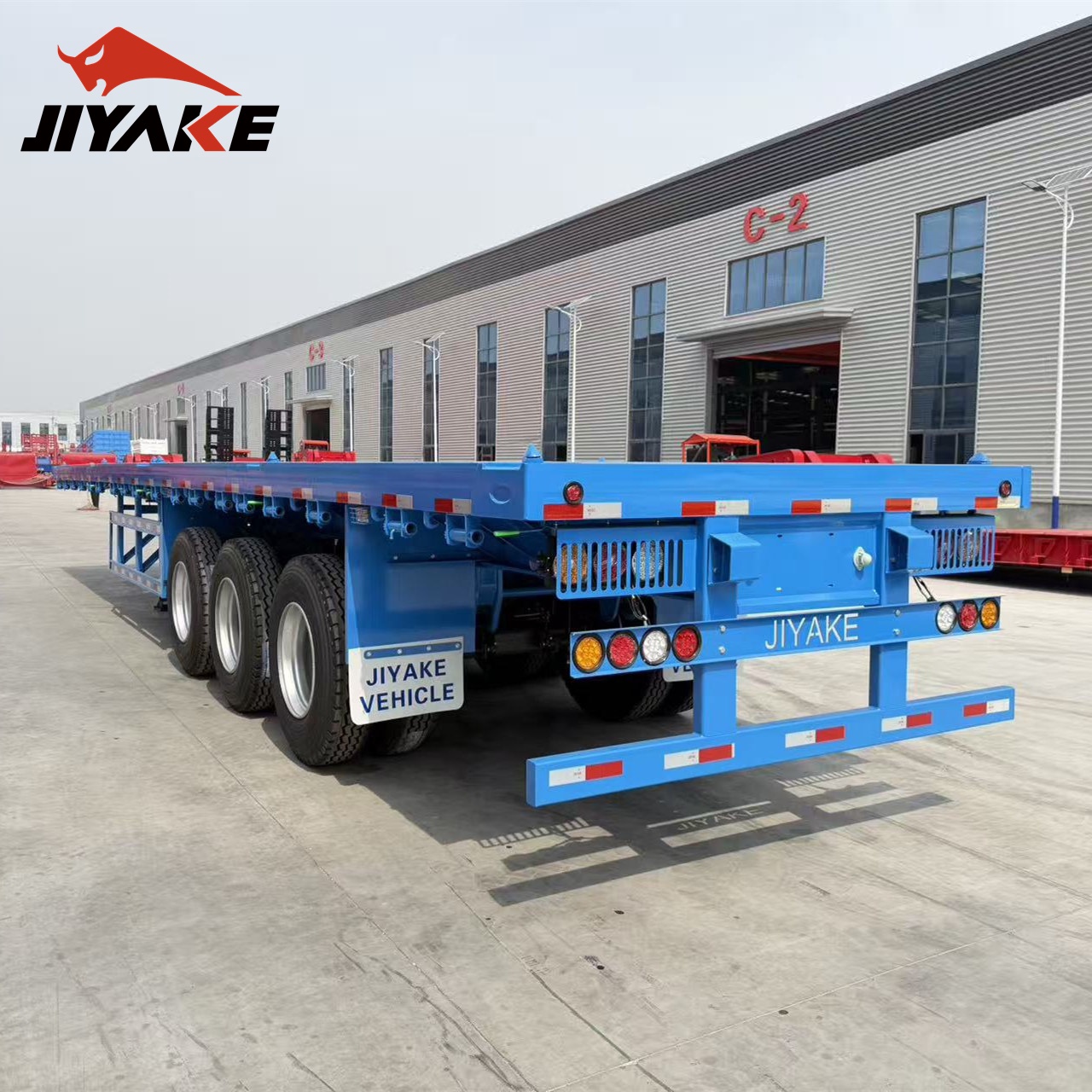
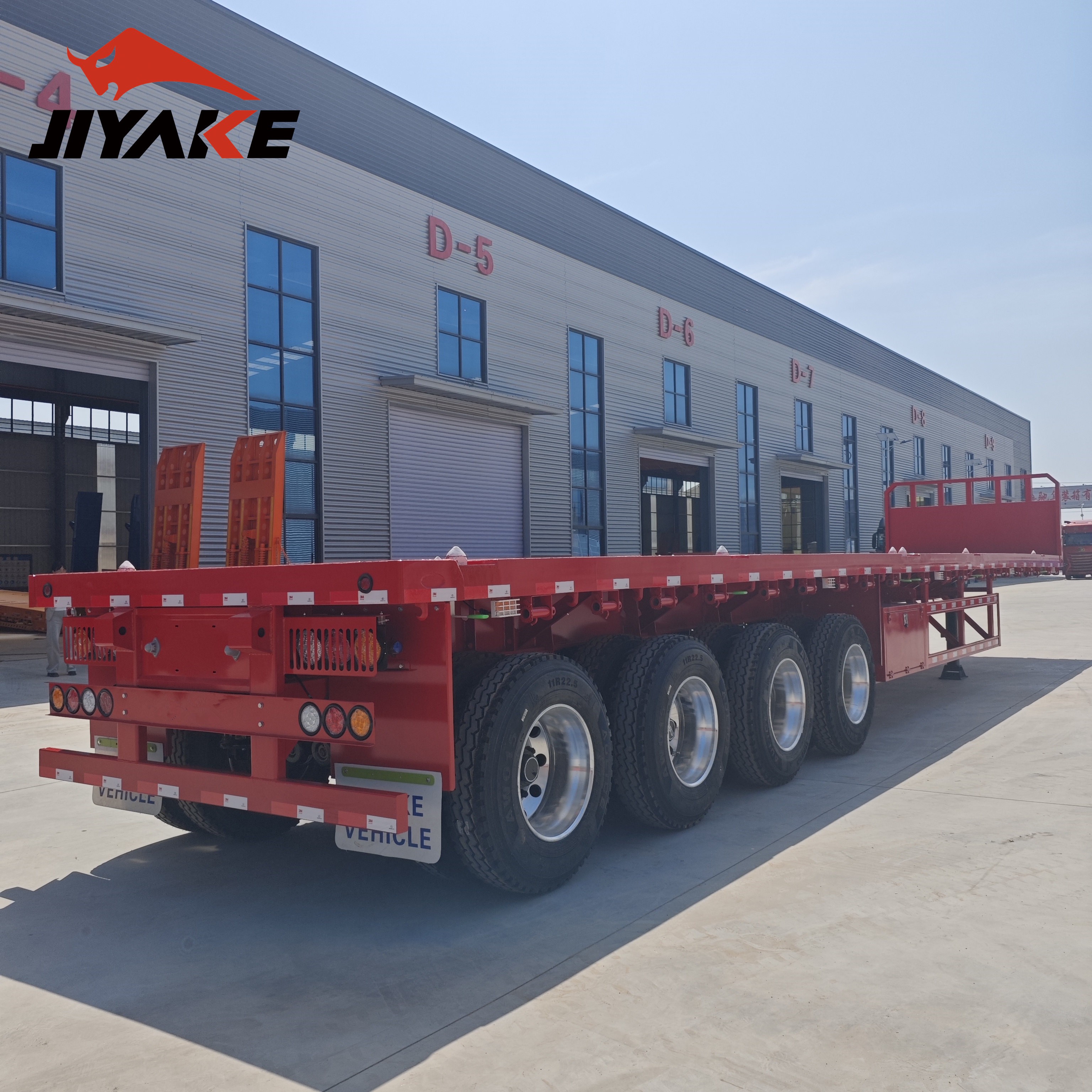
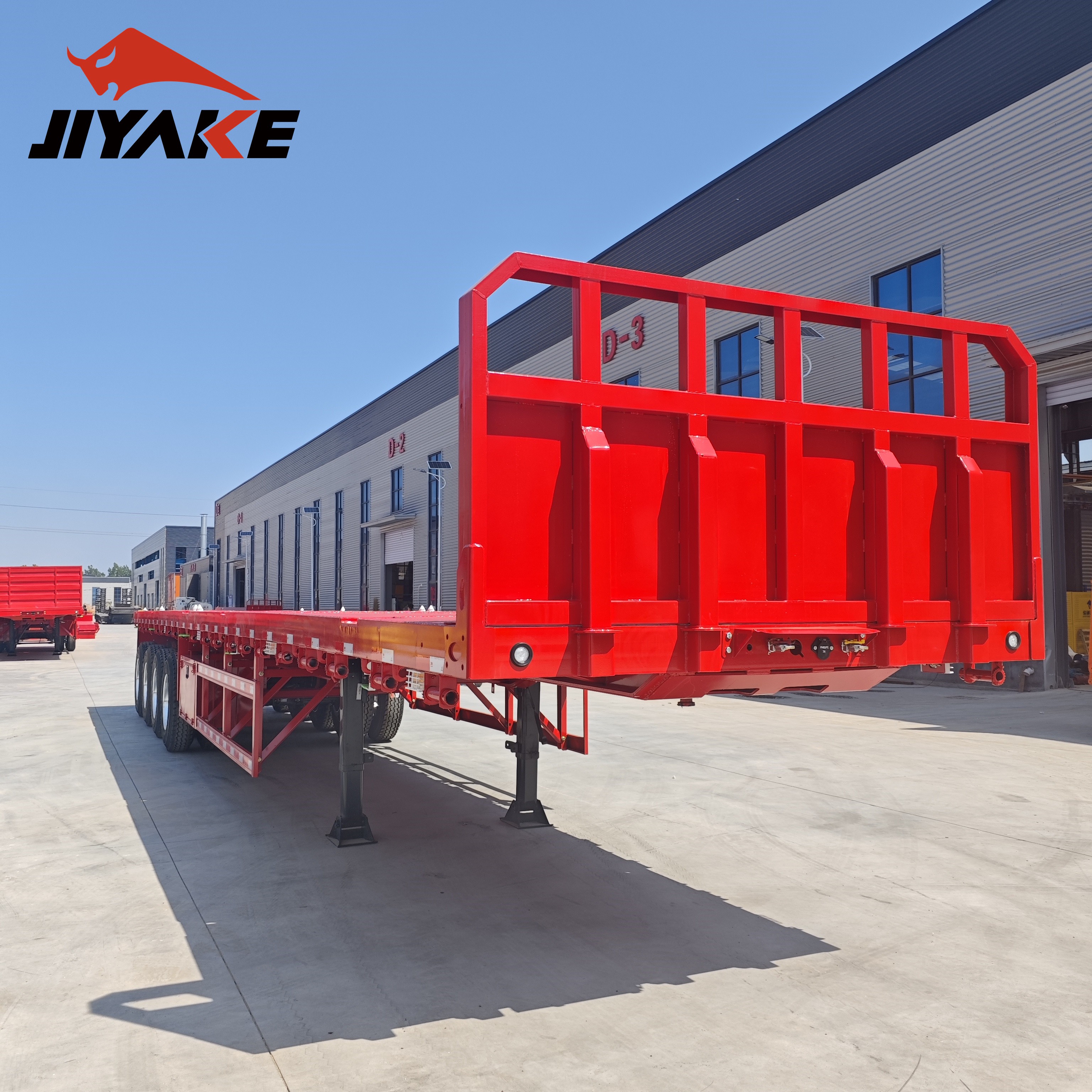

Can a China lowbed semi trailer handle oversized machinery?
Yes—when engineered correctly, a China lowbed semi trailer can safely transport oversized machinery with excellent stability, load distribution, and road adaptability. As a trusted lowbed semi trailer manufacturer in China, Shandong Jiyake combines advanced production equipment, strong R&D, and export experience in over 60 countries to deliver reliable transport solutions for excavators, loaders, and other heavy equipment.
What determines whether a China lowbed semi trailer can carry oversized machinery?
The short answer is capacity alone is not enough. A China lowbed semi trailer must match the machinery’s operating weight, overall dimensions, axle load distribution, and loading method. For oversized machinery, buyers usually evaluate 4 core factors first: deck height, main beam strength, axle specification, and suspension performance. If one of these is mismatched, transport risk rises quickly on ramps, uneven roads, and long-haul routes.
In heavy truck transport, a lower deck helps reduce total transport height and improves stability during cornering. This matters when moving excavators, road rollers, bulldozers, loaders, or other machines with a high center of gravity. In many practical transport scenarios, a lowbed configuration is chosen because it offers a more favorable balance between road clearance and loading convenience than a standard flatbed semi trailer.
Shandong Jiyake Automobile Sales Co., Ltd. supports this segment through integrated design, manufacturing, and sales. With a 300000m2 factory, 500 employees, and equipment such as CNC cutting machines, automatic welding machines, large bending machines, canning machines, and tank automatic welding systems, the company has the production base needed for consistent trailer fabrication rather than simple assembly.
For end users, the real question is not simply “Can it move the machine?” but “Can it move the machine safely, legally, and repeatedly over 2–5 years of work?” A properly specified lowbed semi trailer should handle concentrated loads, braking force, and frequent loading cycles without premature structural fatigue.
Key load-handling factors buyers should check
- Rated loading capacity versus actual operating weight, including attachments such as buckets, blades, or hydraulic hammers.
- Main beam design and steel structure performance under repeated point loading and torsional stress.
- Axle and suspension matching for rough roads, construction sites, and mixed highway conditions.
- Ramp angle, deck length, and gooseneck layout, which affect whether the machine can board safely in 1 pass or requires extra support.
Typical oversized machinery categories
A lowbed semi trailer is commonly used for machines in the 20T–80T working range, depending on axle count and structural design. Typical examples include crawler excavators, wheel loaders, pavers, compactors, graders, and certain mining or agricultural units. Transporting these machines safely requires more than headline tonnage; width, height, track contact area, and the position of the engine compartment also influence trailer selection.
Which technical specifications matter most for heavy equipment transport?
When buyers compare heavy haul solutions, they often focus on axle quantity first. That is useful, but it is only part of the picture. The more reliable approach is to review the entire structural package: beam dimensions, landing gear strength, suspension type, king pin compatibility, tires, and tare weight. These details decide how the trailer behaves under full load, during braking, and while passing uneven road surfaces.
To illustrate how technical data should be read in a practical way, the table below summarizes a representative trailer configuration. While this specification set belongs to a cargo trailer format rather than a lowbed design, it is still useful for understanding how buyers should evaluate chassis components, axle quality, and operating support when comparing commercial trailers in the heavy truck industry.
For lowbed buyers, this kind of parameter reading is essential. A trailer intended for oversized machinery usually needs a stronger frame section, carefully distributed axle loading, and a deck geometry designed for construction equipment rather than palletized cargo. In practice, a 30T–40T capacity range may suit medium machines, but larger excavators or mining units often require higher-capacity lowbed designs with additional axles and tailored deck reinforcement.
It is also important to understand the relation between tare weight and payload. A heavier trailer may indicate stronger material sections, but excessive dead weight can reduce transport efficiency and affect route compliance. Buyers should ask for the usable payload range, not only the gross figure. That helps prevent under-specification on one side and unnecessary operating cost on the other.
Why manufacturing process affects real-world performance
In oversized machinery transport, weld consistency and dimensional accuracy matter because stress is concentrated around beam joints, ramp hinges, and axle mounts. CNC cutting improves part precision, while automatic welding supports more stable seam quality over batch production. For buyers who expect service over multiple years and mixed road conditions, these production details are not minor—they directly influence fatigue resistance and maintenance intervals.
This is where factory capability becomes practical value. A manufacturer with integrated production and export experience can usually respond faster to local regulation differences, tractor matching needs, and custom axle or tire requirements. For overseas buyers, that reduces communication gaps during the 3 main project stages: configuration confirmation, production follow-up, and delivery preparation.
How does a lowbed compare with other trailer options for oversized machinery?
Not every heavy load requires a lowbed semi trailer. In some jobs, a flatbed or platform trailer may be enough. But once machinery height, center of gravity, or loading difficulty increases, lowbed designs become much more practical. The key advantage is simple: they lower the cargo deck, which improves stability and reduces total loaded height on the road.
Buyers also need to separate machinery transport from general cargo transport. For example, agricultural products, industrial equipment, construction materials, or landscaping gear may fit a side-structure solution better than a low deck. In those applications, an aluminum modular fence design can provide flexibility, especially when cargo type changes week to week.
One example is the Fence Cargo Trailer, which is configured for 20ft and 40ft operations and built around an aluminum structure with a modular fence system. It can be used as an open platform or enclosed with panels or tarps in minutes, making it suitable for mixed cargo rather than oversized tracked machinery. This comparison helps buyers avoid choosing a trailer based only on price or general appearance.
The table below shows when a lowbed semi trailer is the better choice and when another trailer style may serve a different transport mission more effectively. For end users managing limited budgets, this prevents buying a versatile trailer for a task that actually requires a specialized heavy haul solution.
For buyers transporting oversized machinery more than twice per month, a dedicated lowbed trailer is usually the safer long-term decision. If the job mix includes loose materials, packaged goods, and lighter industrial freight, then adding a second trailer type may deliver better total fleet efficiency than forcing one trailer to do every task.
A practical decision rule
- Choose a lowbed if the machine is tall, heavy, self-propelled, or difficult to load onto a standard deck.
- Choose a general cargo trailer if the transport task changes frequently and the load is not oversized in height or shape.
- Choose a specialized side-structure solution if cargo retention, lightweight design, and rapid configuration matter more than deck height.
How should end buyers choose the right lowbed semi trailer?
For end consumers and fleet owners, the most common mistake is asking for a quote too early. Before requesting price, define 5 key items: machinery model, operating weight, transport route, local road limits, and intended use frequency. A trailer used once every few months can be configured differently from one running 5–6 days per week between job sites.
The second mistake is focusing only on purchase cost. In heavy truck operations, the better metric is total ownership value over 24–36 months. This includes tire wear, brake maintenance, welding fatigue risk, spare parts availability, and downtime exposure. A lower upfront price may become more expensive if the trailer needs frequent reinforcement or replacement parts in the first year.
The third mistake is ignoring tractor-trailer compatibility. Buyers should confirm king pin size, braking system fitment, tire preference, suspension behavior, and axle serviceability in their market. These are not minor details. They determine whether the trailer integrates smoothly with the tractor head and whether local maintenance teams can keep it running without long delays.
A manufacturer with export experience across more than 60 countries can be especially valuable here, because transport conditions differ between Southeast Asia, Central Asia, and African markets. Road quality, overload enforcement, spare part access, and climate all influence how a lowbed semi trailer should be specified before production begins.
5-point procurement checklist
- Confirm actual machine transport weight, including tools and optional attachments, instead of relying only on brochure weight.
- Check route constraints such as bridge limits, turning space, and height restrictions before choosing deck type and axle layout.
- Review structural details such as beam section, ramp type, and suspension because these affect loading stability and service life.
- Ask about common delivery timing, usually discussed in production windows rather than fixed promises, especially for custom builds.
- Match the trailer to local maintenance reality, including axle parts, tires, and brake component availability.
Typical buyer questions before order confirmation
Most serious buyers ask about 4 practical topics: load limit, customization scope, shipping schedule, and after-sales support. These are the right questions. They connect the trailer to the buyer’s business operation rather than treating it as a generic product. In many projects, 1–2 rounds of technical confirmation can prevent expensive mismatches later.
What risks, compliance points, and usage mistakes should you avoid?
Even a well-built China lowbed semi trailer can perform poorly if it is used outside its intended load envelope or route conditions. One common problem is uneven loading. If the machine sits too far forward or too far back, axle pressure and king pin load can become unbalanced, affecting braking, steering, and tire wear. This is why load positioning should be treated as an operating procedure, not a casual decision.
Another issue is overlooking local road and transport requirements. Oversized machinery often involves width, length, or height restrictions depending on the region. Buyers should confirm applicable transport permits, escort requirements, and axle load rules before the trailer enters service. A trailer may be structurally capable yet still unsuitable for a specific route if local compliance conditions are not considered in advance.
Maintenance discipline also matters. Heavy-duty trailers should be inspected at defined intervals, commonly before each major trip, weekly for visible wear points, and monthly for deeper checks on suspension, tires, brake components, and fastening points. This routine is especially important in construction, mining, or rural road environments where vibration and impact are frequent.
Finally, do not confuse “can be loaded” with “should be loaded.” If a machine barely fits the deck, has poor ramp approach geometry, or creates unstable weight concentration, a different lowbed layout may be the safer option. Good transport planning is about repeatability and margin, not only making the first trip possible.
Common misconceptions
“More axles automatically means better transport.”
Not always. More axles can improve load distribution, but only if the frame, suspension, and route conditions justify them. Otherwise, they may increase maintenance complexity without solving the actual transport problem.
“Any heavy-duty trailer can move oversized machinery.”
This is risky. Machinery transport involves loading angle, center of gravity, tie-down points, and deck height. General heavy-duty trailers may not address these needs safely.
“The lowest quote is the most economical choice.”
A quote only becomes economical when it fits the route, the machine, and the expected service cycle. If repairs, downtime, or compliance issues increase, the lower price advantage disappears quickly.
FAQ and next-step guidance for buyers
Buyers searching for a China lowbed semi trailer usually want direct answers: what it can carry, how to choose it, how long delivery may take, and what information is needed before quotation. The following FAQ addresses those decision points in a practical way and helps shorten the evaluation cycle.
How do I know if my machinery is oversized for a standard trailer?
Check 3 things first: total operating weight, total height after loading, and boarding angle. If the machine creates excessive loaded height, poor ramp access, or unstable weight concentration on a standard flatbed, a lowbed semi trailer is usually the better option. This is especially common with excavators, tracked loaders, and road-building equipment.
What information should I prepare before asking for a quotation?
Prepare at least 6 items: machine model, operating weight, length and width, destination country, tractor head specification, and expected usage frequency. If possible, also share route type, local road limits, and whether you need detachable ramps or other custom details. This makes quotation and configuration much more accurate.
How long does customization usually take?
Exact lead time depends on configuration complexity, production queue, and shipping arrangement. In practice, buyers should discuss delivery in stages: technical confirmation, production scheduling, and shipment preparation. Asking about each stage separately gives a more reliable timeline than expecting a single universal number.
Can one supplier support both machinery transport and general cargo transport needs?
Yes, if the supplier has a broad product line and real manufacturing capacity. Shandong Jiyake produces semi-trailers, tractor trucks, dump trucks, tankers, concrete mixer trucks, wreckers, timber trailers, and other special vehicles. That wider product scope helps buyers compare solutions based on use case rather than forcing one trailer format into every task.
Why choose us for lowbed semi trailer consultation and purchase support?
Because the decision involves more than a catalog image. Shandong Jiyake combines product design, research and development, production, and sales within one enterprise structure, supported by subsidiary capabilities in automobile production, trade, and fittings production. That makes it easier to discuss custom configuration, component selection, and export-focused specifications in one place.
If you are comparing lowbed semi trailer options, you can contact us for concrete support on parameter confirmation, axle and suspension matching, deck and ramp selection, estimated production cycle, destination market considerations, and quotation planning. If your transport needs also include lighter materials or mixed freight, we can help compare lowbed solutions with alternatives such as the Fence Cargo Trailer so you can choose based on cargo type, route condition, and budget rather than guesswork.
A productive inquiry should include your machine details, target payload range, road conditions, tire preference, and delivery destination. With that information, the discussion can move quickly from general interest to a workable transport solution tailored to your operation.
Leave A Reply

First class quality service and professional after-sales team.
Get in Touch
*We respect your confidentiality and all information are protected.