




Buying a Used Skeleton Semi-Trailer: Frame and Alignment Red Flags
Buying a Used Skeleton Semi-Trailer: Frame and Alignment Red Flags
A used skeleton semi-trailer may look ready for service, but fresh paint can hide frame cracks, distorted chassis rails, or poorly executed repairs. For procurement teams, overlooking these warning signs can mean uneven tire wear, unstable handling, costly downtime, and a purchase that exceeds its budget. Before comparing prices, check whether the trailer’s structure and axle alignment support safe, reliable container transport.
The key question is not whether the trailer can carry a container today. It is whether its load paths, coupling structure, and running gear remain fit for the intended work—and whether the seller can demonstrate that condition.
Establish what the chassis was built to carry
Match the chassis identification and manufacturer’s plate to ownership documents before inspecting condition. Confirm supported container lengths, rated gross weight, axle ratings, kingpin specification, and intended tractor compatibility. A chassis that accepts a container physically is not automatically suitable for its loaded weight or weight distribution.
Ask about previous cargo, operating routes, collision damage, and structural alterations. Repeated work on rough terminal approaches deserves closer attention around suspension attachments and crossmember connections. Missing history does not prove abuse, but it increases uncertainty and strengthens the case for independent inspection.
Look beyond the paint at structural load paths
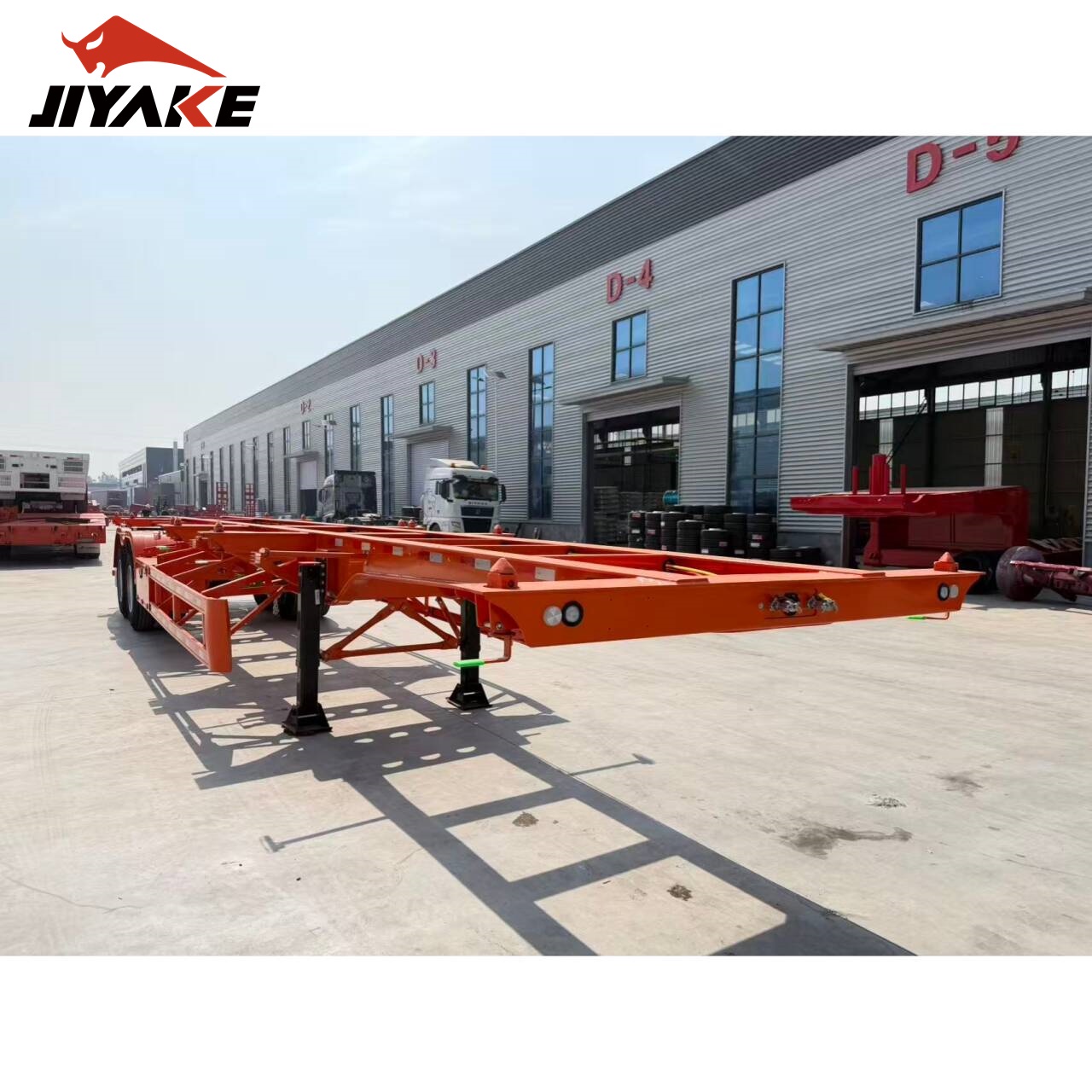
Inspect the trailer on firm, level ground, with safe access and adequate lighting. Never enter beneath an unsupported chassis or rely on air suspension alone. Start at the kingpin and upper coupling plate, follow both main rails rearward, then examine crossmembers, container supports, and suspension mounting areas.
Pay particular attention to transitions in section depth and welded attachments. These areas transfer concentrated loads. Warning signs include cracks beside weld toes, rust bleeding through a narrow paint line, local buckling, torn attachment plates, or a flange that changes direction abruptly.
- Fresh paint over isolated areas: Request pre-refinishing photographs and an explanation. New coating is not proof of concealment, but it can obscure evidence.
- Added plates or overlapping repairs: Ask for the repair design, procedure, and inspection record. Reinforcement can move stress into adjacent, unreinforced material.
- Grinding marks, irregular welds, or heat discoloration: These warrant investigation, especially near the kingpin assembly or suspension hangers.
- Heavy corrosion: Flaking scale and pitting around joints may conceal section loss. A technician may need thickness measurements rather than a visual opinion.
Not every weld irregularity is a structural defect, and not every repaired frame should be rejected. The distinction is documented engineering and verified workmanship. Where cracks are suspected, a qualified inspector should select appropriate nondestructive testing; painting over or rewelding a crack without understanding its cause is not an adequate repair.
Container locks can reveal distortion
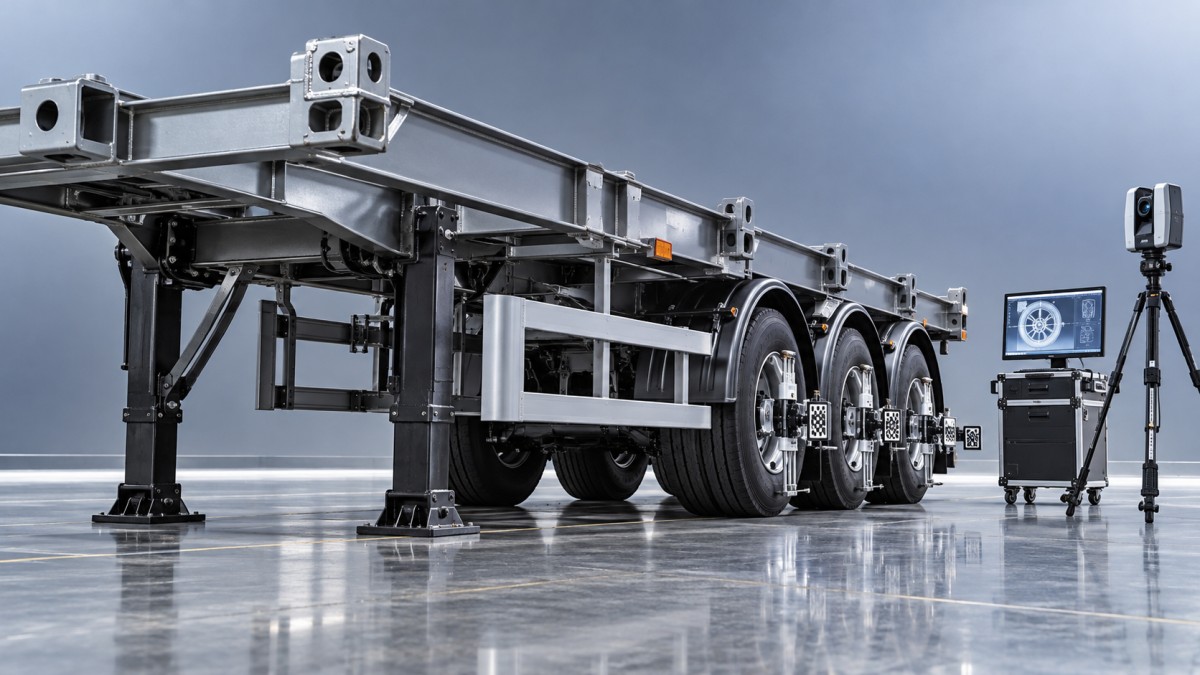
Check twistlock housings, support bolsters, and surrounding welds for impact damage, elongation, and improvised spacers. Locks should operate correctly without forcing. Difficulty seating a known-straight, compatible container may indicate damaged supports or chassis distortion, although the container itself must also be checked.
For extendable chassis, inspect sliding rails, locking pins, stops, and each approved locking position. Excessive play or mismatched engagement can compromise the structure even when the main beams appear straight.
Separate alignment symptoms from their causes
Sight along the rails for obvious bends or twist, but do not treat appearance as a measurement. Some chassis have designed camber, and uneven ground or incorrect suspension height can create misleading impressions. Structural dimensions need comparison with manufacturer references, not an assumed universal tolerance.
A proper trailer alignment inspection should establish the chassis reference geometry, axle orientation relative to the kingpin or specified datum, axle-to-axle parallelism, and relevant wheel geometry. Request a written report showing measured values, applicable tolerances, and test conditions—not simply an invoice marked “alignment completed.”
Uneven tire wear is useful evidence, but it is not a diagnosis. Feathering can indicate alignment problems; cupping may involve suspension or damping issues; one-sided wear can have several causes. Tire pressure, mismatched tires, bearing condition, and bent components also need checking. Newly fitted tires remove that history, so request photographs or replacement records.
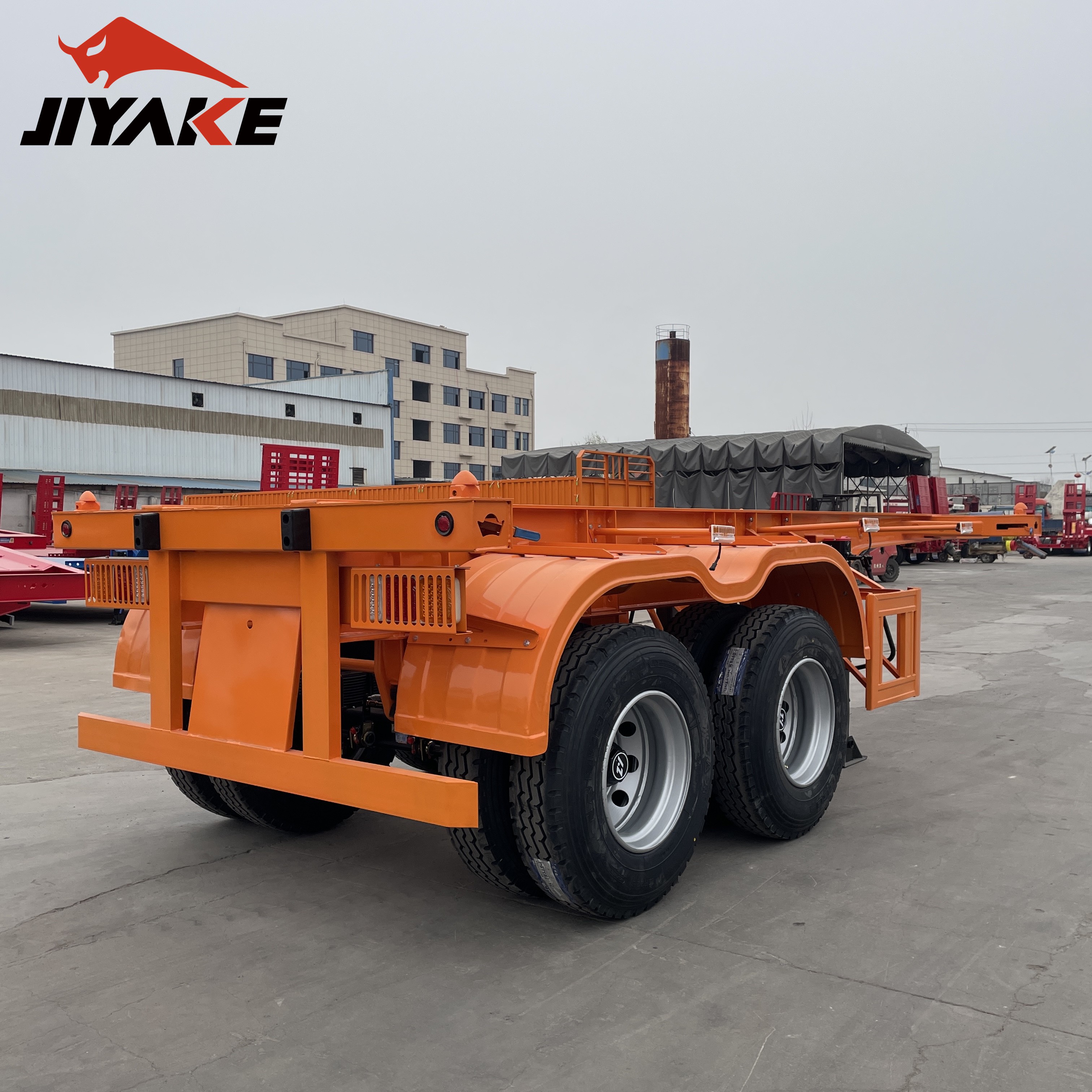
Inspect spring hangers, equalizers, torque rods, bushes, U-bolts, and axle seats as applicable. On air suspension, verify ride height and attachment condition. Alignment adjusted around worn bushes or a shifted axle seat may not hold in service. A road test can reveal dog-tracking or pulling, but road camber, wind, brakes, and the tractor can influence behavior.
Buy the inspection evidence, not the reassurance
Before agreeing on price, request dated maintenance records, accident and structural repair documentation, previous alignment reports, and tire replacement history. Inspection reports should identify the specific chassis and explain their scope. A general roadworthiness check may not include detailed frame measurement or crack detection.
For an overseas purchase, confirm import eligibility, local road-use requirements, parts availability, and who will address defects discovered before dispatch. Shandong Jiyake Automobile Sales Co., Ltd. combines vehicle design, production, trading, and fittings operations and serves more than 60 countries. When evaluating a supplier with that scope, ask for unit-specific drawings, component identification, and inspection evidence; manufacturing capability does not by itself establish a used trailer’s condition.
Do not solve the wrong transport problem
If the planned work is machinery transport rather than container haulage, reconsider the trailer category before comparing used chassis prices. A Lowbed Semi Trailer provides a platform-and-ramp arrangement for equipment transport. The listed configuration includes Q345B carbon steel, three FUWA axles, and a stated 10-ton loading capacity. Confirm the actual build, loading geometry, and legal operating limits; three axles alone do not establish payload capacity.
Decide what is repairable—and what remains uncertain
Worn service components can be negotiable when their replacement cost and condition are understood. Structural cracks, unexplained heat straightening, distorted coupling areas, or alignment that cannot be restored within the applicable specifications require a different decision: pause the purchase until an independent specialist establishes an acceptable repair route.
Compare the purchase price plus inspection, repairs, tires, transport, and expected downtime against a documented alternative. Make acceptance conditional on agreed structural and alignment findings. If the seller refuses safe inspection access or cannot explain major repairs, the discount is not a substitute for evidence.
Leave A Reply

First class quality service and professional after-sales team.
Get in Touch
*We respect your confidentiality and all information are protected.