




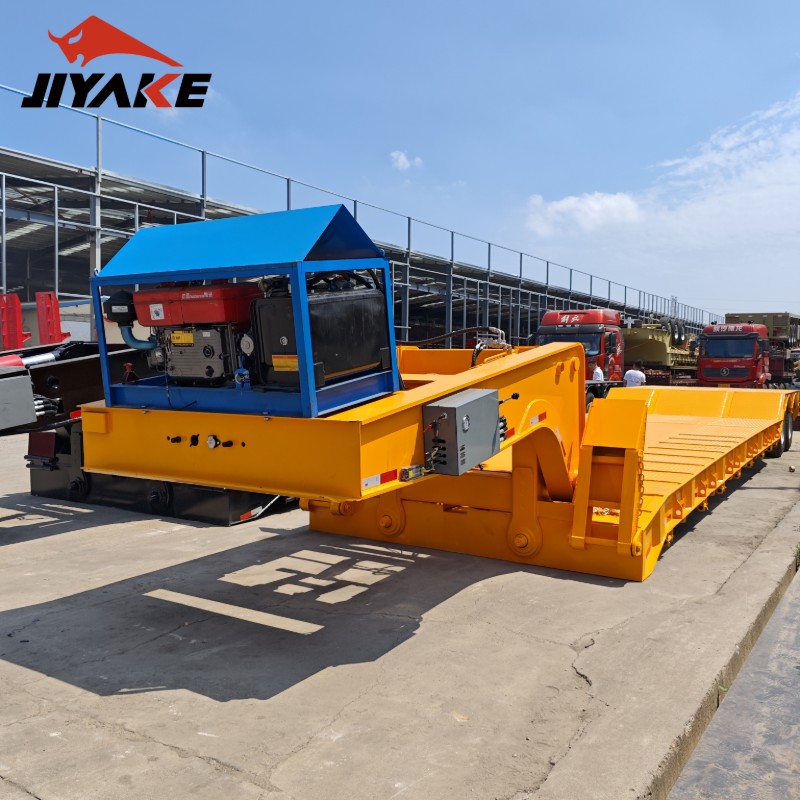
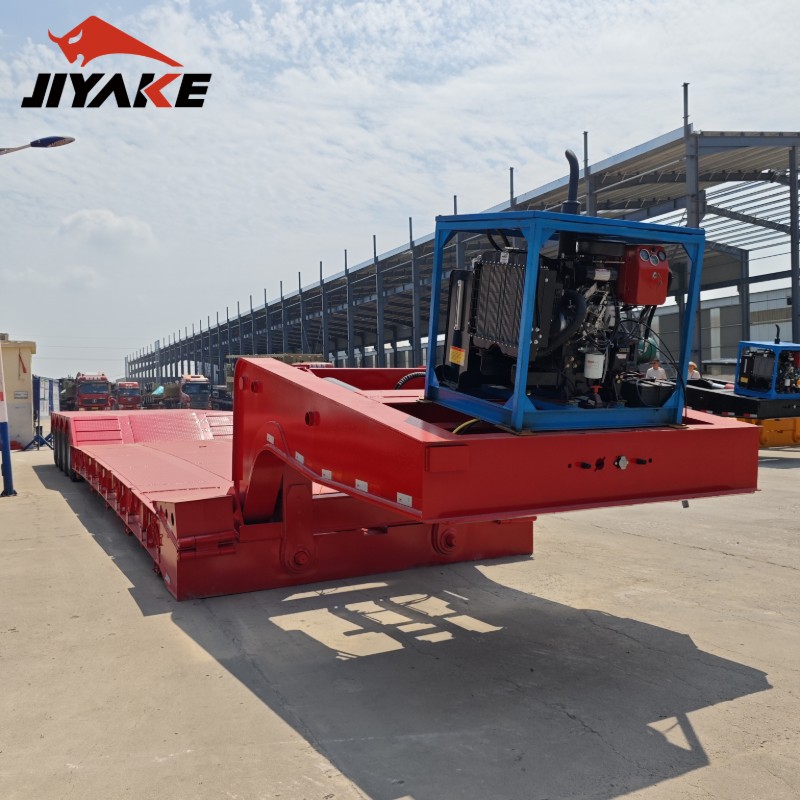
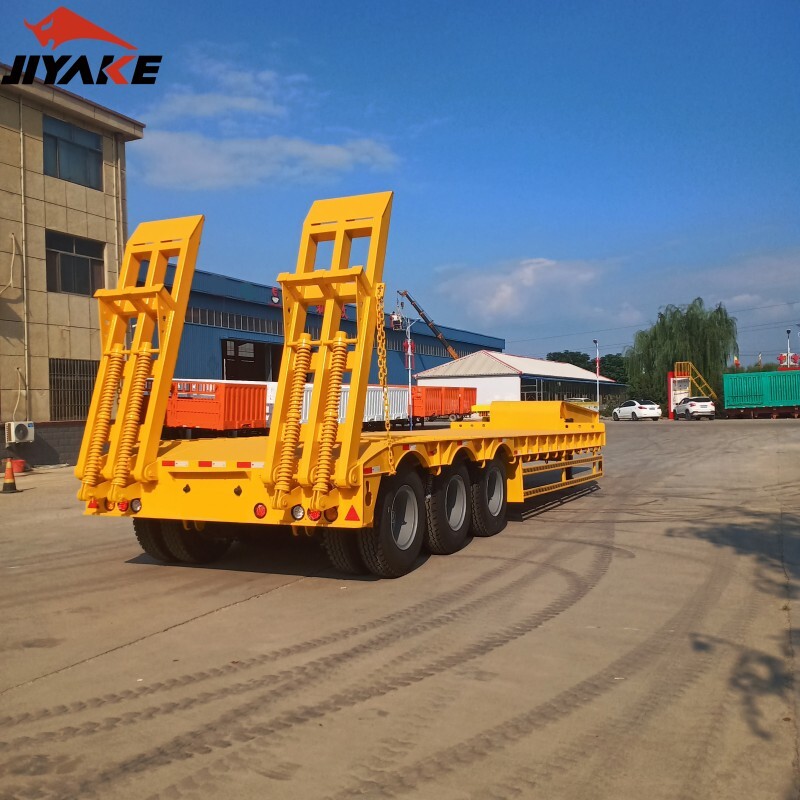

Why does a loaded lowbed trailer lean to one side?
A loaded lowbed trailer usually leans because weight is unevenly distributed, a tire is underinflated, or a suspension component is damaged or set incorrectly. Uneven ground can produce the same appearance, while a bent axle or chassis may cause a persistent lean even after the load is removed.
A visible tilt can change handling, increase tire wear and place extra stress on the frame and suspension. Stop the movement, secure the vehicle and establish whether the lean comes from the site, the cargo or the trailer before attempting an adjustment.
Start with a safe, repeatable measurement
Park on firm, level ground away from traffic. Apply the parking brakes, chock the wheels and follow the equipment’s isolation procedure. Do not work beneath a loaded trailer or rely on a jack, air suspension or landing gear alone to support it. If the cargo or trailer appears unstable, keep clear and arrange a controlled unloading operation.
Look across the trailer from the front and rear, then measure between the ground and matching structural points on each side. Use points on the main frame rather than mudguards or removable deck fittings, which may themselves be bent. Record the measurements, tire condition, load position and suspension configuration. Check the manufacturer’s method and tolerances where available.
Repeat the measurements after unloading, without changing other conditions unnecessarily. A trailer that levels out when empty points toward load placement, tire deflection or a load-sensitive suspension fault. A lean that remains empty makes a suspension, frame or setup problem more likely. Neither observation alone proves the cause.
Check where the cargo weight actually sits
A machine may appear centered on the deck while its center of gravity is offset by a boom, attachment, engine or counterweight. Compare the actual position of the heavy components with the trailer centerline. Also check whether loose material has shifted or whether a support block has settled, leaving one side of the cargo lower.
Review the loading plan and available axle or wheel-load information. An axle scale can reveal uneven loading along the trailer, but an axle total alone does not show the difference between its left and right wheels. Where suitable equipment is available, individual wheel-end weights provide a better indication of side-to-side imbalance.
Do not loosen restraints on an unstable load simply to reposition it. Use the approved lifting and loading procedure, place the cargo within the trailer’s rated limits and secure it again before measuring. A level deck does not by itself prove that axle loads or load distribution are acceptable.
Tires and suspension: compare both sides
Measure cold tire pressures with a reliable gauge and compare them with the applicable tire and trailer recommendations for the load. Include every tire on the affected side: a visibly sound tire in a dual assembly can conceal a damaged or low-pressure partner. Check for cuts, bulges, irregular wear and mismatched tire sizes or construction.
Do not simply inflate a damaged tire to make the deck level. Remove the assembly from service if its condition is unsafe, and use the tire manufacturer’s safety procedures for inspection and inflation. A pressure correction should be followed by another height measurement, not treated as proof that the fault is resolved.
Mechanical suspension
On a leaf-spring suspension, compare spring packs, hangers, equalizers and shackles from side to side. A broken leaf, shifted spring, worn pin or seized equalizer can let one area sit lower under load. Look for fresh contact marks, displaced components and movement that differs from the opposite side. Inspect U-bolts and mounting hardware for looseness or damage without assuming that tightening alone will repair a shifted assembly.
Replace or repair components according to the suspension manufacturer’s instructions. Spring work involves stored energy and requires suitable support and tooling. Avoid adding improvised spacers or mixing parts with different specifications to compensate for a lean; the underlying defect may remain and axle loading may change.
Air suspension
Where fitted, inspect air springs, lines and fittings for damage or audible leaks. Compare ride height at the manufacturer’s specified measuring points with the system at normal operating pressure. Check the height-control linkage for damage, binding or an incorrect setting, and confirm whether the trailer uses one control valve or separate left and right controls.
An air leak or incorrect valve setting may be responsible, but a low air spring can also be a consequence of another fault. Do not adjust linkage length until the correct ride-height specification and diagnostic procedure are known. Exhaust air and support the frame safely before entering any suspension pinch area.
When the trailer still leans empty
Inspect the main beams, crossmembers and suspension mounting areas for cracks, deformation, damaged welds or evidence of an earlier impact. Compare corresponding points on both sides and look for a local twist rather than relying on deck-edge height alone. A bent wheel, axle tube or mounting bracket may also produce an uneven stance.
Axle alignment is worth checking when the lean accompanies pulling, tire scrubbing or irregular wear. However, alignment readings do not establish that the frame is straight. Use the trailer manufacturer’s reference points and a suitable alignment system; damaged structure should be assessed before attempting to correct alignment.
Do not heat, weld or straighten a frame member as an improvised field repair. Structural repairs require an approved procedure, suitable equipment and confirmation that the repaired assembly meets the manufacturer’s requirements.
Verify the repair under the original conditions
After correcting the identified defect, measure the empty trailer again and document the work. Reload it using the approved plan, check restraints and repeat the side-to-side measurements on the same level surface. Confirm tire pressures and suspension ride height, then inspect for new leaks, movement or contact marks. Any road check should take place only when the vehicle is safe to operate and in accordance with the applicable operating procedures.
Keep the measurements with the service record, including which component was repaired and whether the lean changed with load. This is also useful when preparing a 3 Axle Lowbed Trailer for sale: an unloaded visual inspection cannot demonstrate how the suspension behaves under a permitted load.
For a fleet handling both equipment transport and loose material, the 8X4 F3000 Shacman Dump Truck is a separate dump-truck option with a reinforced frame and middle-lift body. It is not a remedy for a leaning lowbed; the trailer fault should be identified and repaired independently.
Leave A Reply

First class quality service and professional after-sales team.
Get in Touch
*We respect your confidentiality and all information are protected.