





Choosing the right ramp angle for a 3 axle lowbed trailer
Choosing the right ramp angle for a 3 axle lowbed trailer
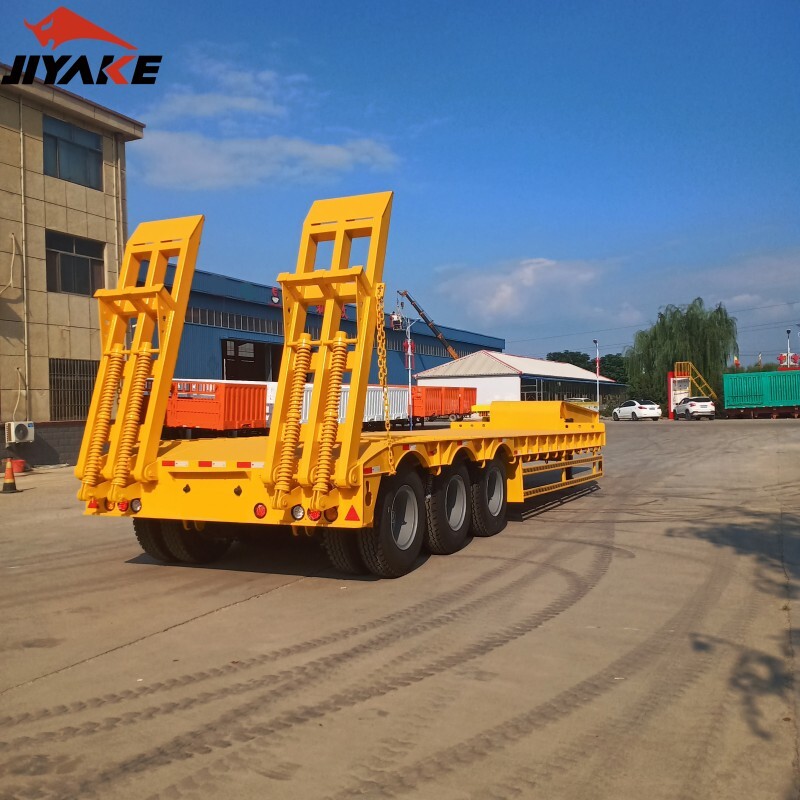
Choosing the right ramp angle for a 3 axle lowbed trailer can make loading heavy equipment safer and more efficient. If the angle is too steep, machinery may scrape the ground, lose traction or become unstable during loading. Whether you operate excavators, construction equipment or other low-clearance machinery, understanding how ramp length, trailer deck height and ground conditions affect the approach angle is essential. This guide will help you assess these factors when operating or comparing a 3 Axle Lowbed Trailer for sale.
Start with the machine, not the trailer specification
There is no single ramp angle that works for every load. A tracked excavator with substantial ground clearance presents a different loading problem from a long-wheelbase vehicle or a machine with a low belly. Even if both fit within the trailer’s payload rating, their clearance and stability limits can be very different.
Identify the most restrictive equipment you expect to load. Check its operating weight, including attachments and fuel, along with track or tire width, ground clearance, wheelbase or track length, and any low projections. The equipment manufacturer’s instructions may also specify a permissible loading slope, attachment position or travel direction. Those instructions take priority over a convenient-looking ramp.
Pay attention to three potential contact points: the front of the machine as it meets the ramp, the underside as it passes over the ramp-to-deck transition, and the rear as it leaves the ground. A machine can clear the initial approach and still bottom out at the top.
How ramp length and deck height change the angle
For a straight ramp on level ground, the basic relationship is simple: a higher deck creates a steeper slope, while a longer ramp reduces it. If you know the vertical rise from the ground to the ramp hinge and the usable ramp length measured along the slope, the approximate angle is:
Ramp angle = arcsin (vertical rise ÷ ramp length).
For example, a vertical rise of 1 metre and a straight ramp length of 4 metres give an angle of approximately 14.5 degrees. This is a geometry example, not a recommended operating limit. The actual angle changes with ground slope, suspension movement and where the ramp feet settle. Measure the rise at the loading site rather than relying solely on an advertised deck height.
The calculation also assumes a straight, supported ramp. Folded sections, curved profiles and transition plates can change the effective path. Ask for a side-view drawing showing the ground contact, ramp hinge and deck transition; the nominal ramp length alone does not reveal every clearance issue.
A shallow angle is useful, but the transition still matters
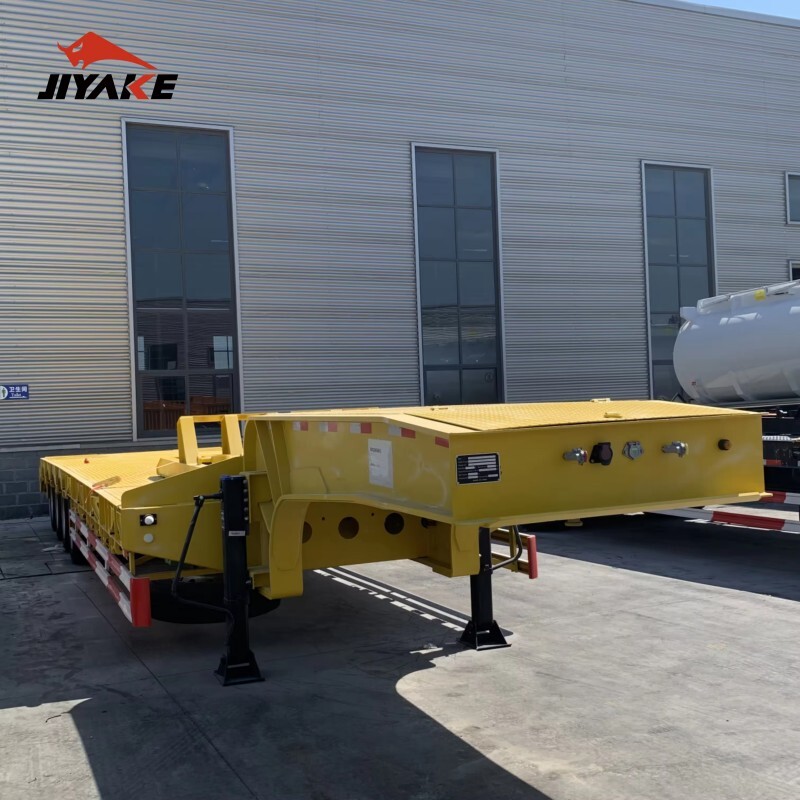
Longer ramps often help low-clearance equipment, but they need more space behind the trailer and may be heavier to deploy and maintain. A lower deck can reduce the rise without extending the ramps, although deck height, frame design, road clearance and payload requirements must be considered together.
Consider the difference between a machine’s approach angle and the ramp angle. The listed approach angle describes the vehicle’s front-end geometry on a specified surface; it does not guarantee clearance at the hinge or over the crest. Ground clearance alone is equally incomplete, because a long wheelbase or track base can cause the centre of the machine to contact the transition.
For instance, the 8X4 x3000 Shacman Dump Truck is listed with a 16-degree approach angle and 314 mm minimum ground clearance. Those figures describe the truck, not a suitable lowbed ramp angle. If a truck is to be transported, its actual weight and dimensions, loading geometry and the trailer’s capacity still need to be checked together.
Where clearance is tight, discuss a longer ramp, an appropriate transition section or another loading arrangement with the trailer supplier. Do not improvise with loose packing or unsupported extensions: any modification must be suitable for the concentrated loads and approved for the equipment involved.
Check traction, support and stability at the site
A ramp that looks acceptable on a clean workshop floor may be unsuitable on a muddy construction site. Wet steel, loose soil, ice, oil and worn ramp surfaces can all reduce grip. Ramp feet also need firm support; if they sink unevenly, the slope and alignment can change while the machine is climbing.
Set up on firm, level ground where practical, following the trailer and equipment manufacturers’ loading instructions. Secure the trailer against movement and use its specified stabilizers or supports. Keep ramps correctly spaced for the tracks or tires and check that locking devices, hinges and supporting surfaces are in good condition.
The machine’s centre of gravity shifts as it climbs and crosses onto the deck. An attachment raised higher than necessary, a sideways slope or an abrupt steering correction can make the operation less stable. Use the manufacturer’s prescribed travel direction and attachment position, move slowly and use a designated spotter where visibility is restricted. Keep people clear of the machine and the potential fall zone.
If the machine slips, grounds out or the ramps move, stop and reassess. A different location, supported loading platform or manufacturer-approved loading method may be needed. More throttle is not a substitute for traction or clearance.
Compare ramp capacity as carefully as payload
A three-axle lowbed’s overall payload rating does not automatically tell you what its ramps can carry. Loading imposes concentrated forces through individual wheels or tracks, and weight distribution changes as the machine moves. Confirm the ramp assembly’s rated capacity, the assumed load distribution and any restrictions on wheel or track contact with the supplier.
Also check ramp width, usable spacing, surface type, hinge construction and the condition and capacity of any hydraulic lifting system. Hydraulic assistance makes deployment easier; it does not by itself establish that a ramp is strong enough for a particular machine. For mixed fleets, adjustable spacing can be useful, but only within the manufacturer’s specified positions and loading limits.
Before comparing quotations, provide the supplier with the heaviest machine and the one with the most difficult clearance, even if they are different units. Include operating weights, contact widths, wheelbase or track length, relevant overhangs and the ground conditions at typical loading sites. Request confirmation of deck height, ramp length, rated loading conditions and the proposed transition geometry.
Shandong Jiyake Automobile Sales Co., Ltd. supplies semi-trailers and other heavy vehicles, with production capabilities that include CNC cutting, automatic welding and large bending equipment. For a proposed lowbed, the useful next step is to review its actual configuration against your equipment list, including any market-specific dimensional, axle-load and documentation requirements. A drawing and a clear loading plan will tell you more than a ramp angle quoted in isolation.
Leave A Reply

First class quality service and professional after-sales team.
Get in Touch
*We respect your confidentiality and all information are protected.