




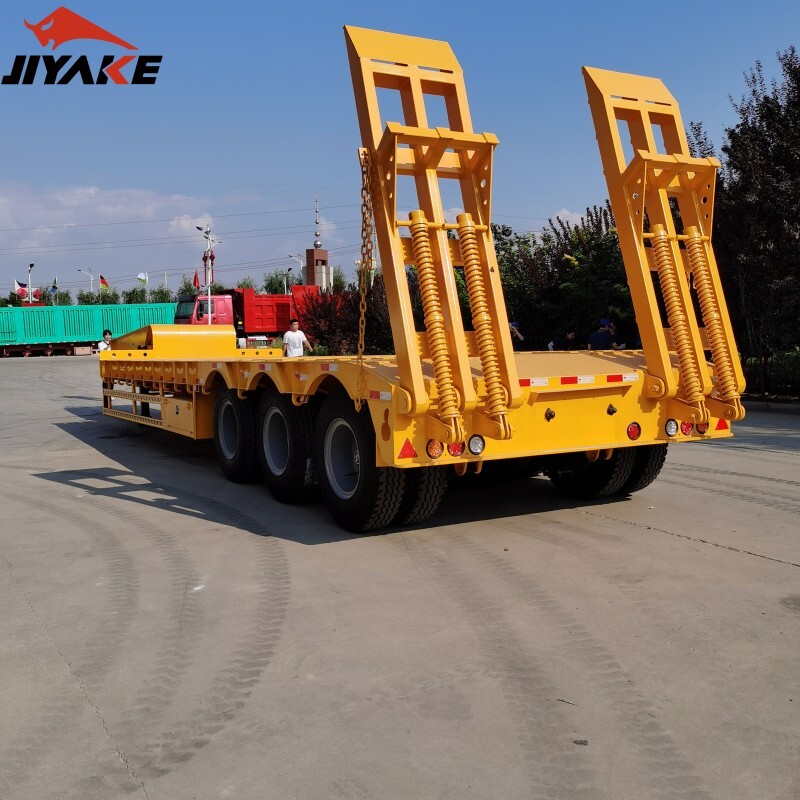
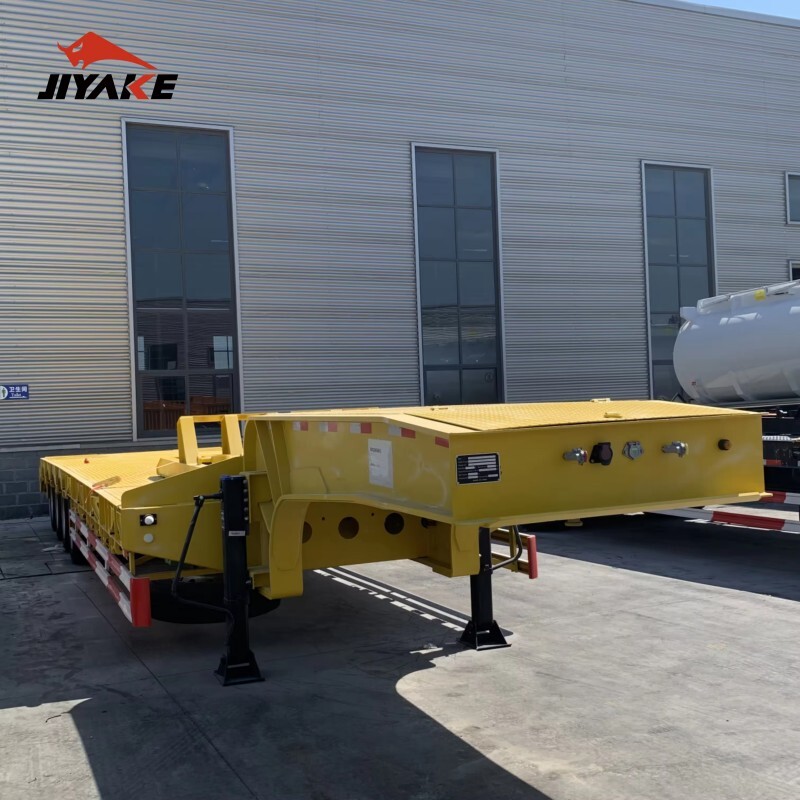
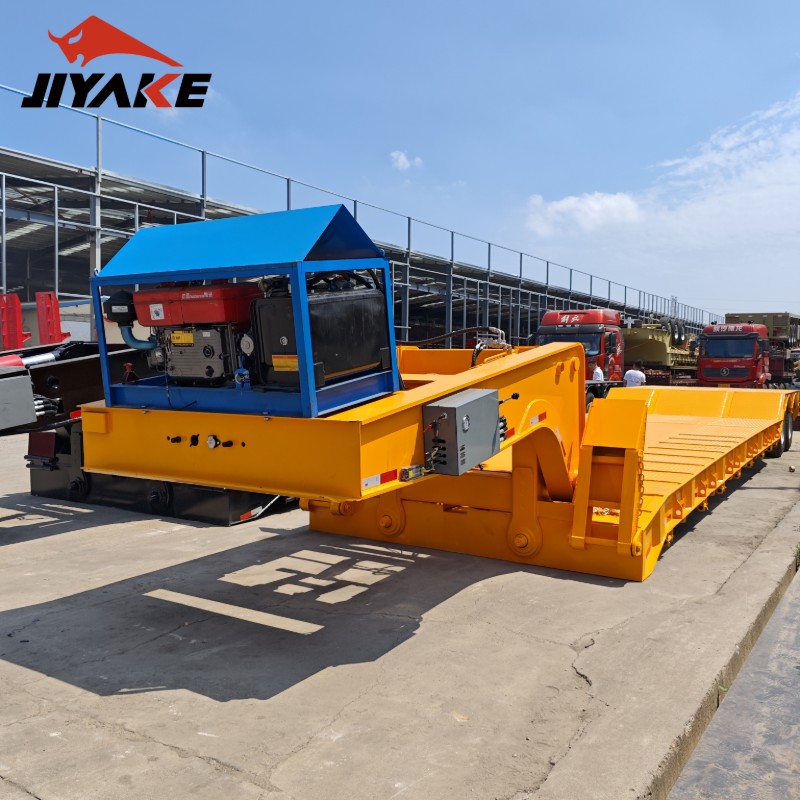

What tire wear can reveal on a used 3 axle lowbed trailer
A used lowbed trailer may look ready for work from a distance, yet its tires can tell a more complicated story. Uneven tread, cupping, or wear concentrated along one edge can point toward alignment problems, worn suspension components, or a history of improper loading. None of these patterns proves a particular fault on its own, but each gives a buyer a reason to ask better questions.
For procurement teams comparing a 3 Axle Lowbed Trailer for sale, tire condition is more than a replacement-cost issue. It is a useful starting point for assessing maintenance history, operational risk, and the likelihood of workshop time after delivery.
Read the wear pattern before discussing the price
Inspect all tires, including inner tires where fitted. A trailer with three axles has several positions to compare, and the differences between them can be more revealing than the condition of any single tire. Photograph or record each position so the seller can explain discrepancies.
One shoulder worn more than the other
Wear concentrated on the inside or outside shoulder can suggest an alignment issue, a bent axle, worn suspension parts, or a wheel-end problem. On a lowbed trailer, axle alignment matters because a misaligned axle can cause tires to scrub as the trailer travels.
Compare both sides of the same axle and look for a similar pattern on the other axles. A single affected position may have a different cause from wear repeated across an entire axle group. Ask for an alignment check rather than assuming that replacing the tire will solve the problem.
Wear on both shoulders or across the center
Both shoulders wearing faster than the center can be associated with underinflation or sustained heavy loading. Faster center wear can be associated with overinflation. Tire construction, operating conditions, and previous positions also affect the pattern, so treat pressure as a lead to investigate, not a confirmed diagnosis.
Check cold inflation pressures against the tire manufacturer’s load-and-inflation guidance and the applicable trailer requirements. A pressure reading taken after a journey will be higher than a cold reading and should not be interpreted in the same way.
Cupping, dips, and irregular patches
Localized dips or a scalloped tread can indicate that a tire has not maintained consistent contact with the road. Possible causes include worn suspension components, wheel-end issues, imbalance, or the tire’s previous service history. Flat spots may also follow braking or a long period parked in one position.
Run a hand carefully over the tread when it is safe to do so, and inspect visually around the full circumference. If the seller recently moved a tire from another position, ask where it came from; the wear may reflect an earlier problem elsewhere on the trailer.
Look beyond tread depth
A tire can have usable tread and still be a poor purchase. Examine sidewalls for cracks, cuts, bulges, exposed cord, and evidence of repairs. Check the inner sidewalls as well as the visible outer faces. Damage to a casing can make a tire unsuitable for continued service regardless of how much tread remains.
Record the tire size, load rating, speed rating, and date code, and compare them with the trailer’s axle loads and intended use. Confirm that tire specifications are suitable for the vehicle, the route, and local rules. Mixed sizes or markedly different wear levels within a dual-wheel assembly deserve particular attention because load sharing may be uneven.
Also check that dual tires have adequate clearance and are not contacting each other or nearby components. A mismatched or damaged tire is not proof that the trailer has been neglected overall, but several such findings should prompt a closer look at its maintenance records.
What the three axles can tell you together
A lowbed trailer carrying excavators or other concentrated loads may experience very different stresses from a trailer hauling evenly distributed freight. Loading position, axle load distribution, turning conditions, road surfaces, and tire pressure can all influence wear. Tire condition alone cannot establish whether the trailer was overloaded.
Still, patterns across the axle group can guide the inspection:
- Similar irregular wear across several tires: Review operating conditions, inflation practices, suspension condition, and alignment.
- One axle noticeably worse than the others: Inspect that axle’s alignment, suspension connections, and wheel ends; ask whether tires have been rotated or replaced.
- One tire much newer than its neighbors: Ask why it was replaced and whether the underlying cause was repaired. A routine puncture and a recurring wheel-end problem have very different implications.
- Fresh tires on every position: This may be a benefit, but it also removes some visible service history. Request records and inspect the running gear rather than treating new rubber as evidence of sound alignment.
Where safe and authorized, a qualified technician can check for play, damaged suspension hardware, leaks, and signs of heat at wheel ends. Avoid working beneath or raising a trailer without proper support and procedures.
Turn inspection findings into a purchasing decision
The most useful question is not simply, “How many tires need replacing?” It is, “What caused the wear, and what will it cost to put the trailer into service?” A replacement tire budget is relatively straightforward to estimate once the specification is known. Alignment corrections, suspension repairs, axle damage, or wheel-end work require a separate assessment.
Before making an offer, ask the seller for:
- Service records covering tires, alignment, suspension, brakes, and wheel bearings, where available.
- The trailer’s rated capacity, axle ratings, and tire specifications, checked against its identification plates and documentation.
- Permission for an independent inspection, including an axle-alignment assessment if wear patterns justify one.
- Details of previous repairs, tire replacements, and known incidents affecting the axles or suspension.
Build the likely repairs into the landed and ready-for-work cost, alongside transport, inspection, parts availability, and any local registration requirements. If the cause of irregular wear cannot be verified before purchase, allow for uncertainty in the offer or make the agreement conditional on an acceptable inspection. A low asking price is less attractive if the trailer will spend its first weeks in a workshop.
Check the complete hauling combination
The trailer’s condition is only one part of the procurement decision. The tractor must also be suitable for the intended load, coupling arrangement, route, and applicable weight limits. Do not infer a tractor’s towing capacity from its appearance or axle configuration; confirm the manufacturer’s ratings and the legal limits for the proposed combination.
For buyers reviewing tractor options at the same time, the new Shacman Tractor Truck is offered in a 6X4 configuration with a diesel engine and a 300 L fuel tank. Its suitability for a particular lowbed assignment still depends on the verified coupling specifications, ratings, and operating requirements. The listed Euro 2 emissions standard should also be checked against the rules in the destination market.
Shandong Jiyake Automobile Sales Co., Ltd. supplies semi-trailers and other commercial vehicles to markets including Southeast Asia, Central Asia, and Africa. When discussing a used trailer or a replacement vehicle, provide the intended cargo, route conditions, and destination requirements so that specifications and support needs can be reviewed together.
Ultimately, tire wear is a valuable clue—not a verdict. A careful comparison of all wheel positions, backed by records and a mechanical inspection, gives procurement teams a firmer basis for negotiation and a clearer picture of the trailer’s real cost.
Leave A Reply

First class quality service and professional after-sales team.
Get in Touch
*We respect your confidentiality and all information are protected.