




What Is a 2 Axle Skeleton Semi Trailer Used for in Container Transport?
What Is a 2 Axle Skeleton Semi Trailer Used for in Container Transport?
In global container logistics, a 2 Axle Skeleton Semi Trailer is one of the most common tools for moving standard containers between ports, yards, factories, inland depots, and distribution points. It is not designed to carry loose cargo or oversized machinery. Its job is more specific: to support containerized freight with a lighter chassis, a practical loading structure, and operating economics that often make sense for short- to medium-distance haulage.
For companies comparing trailer types, that distinction matters. A skeleton trailer removes the unnecessary deck body and keeps only the structural frame needed to lock and support ISO containers. That makes loading and unloading faster, reduces dead weight, and helps fleets maximize payload efficiency within local axle and road limits. In many markets, especially where container turnover is high and routes are repetitive, that simplicity is exactly the point.
What the trailer is actually built to do
A 2 Axle Skeleton Semi Trailer is usually used to carry one standard container at a time, commonly 20ft or 40ft depending on the frame design and local transport rules. The open chassis uses twist locks or similar container securing points, allowing the box to be mounted directly onto the trailer frame. Compared with platform trailers, there is less material, less self-weight, and less need for cargo-specific lashing arrangements when the freight stays inside the container.
This makes it suitable for container drayage from seaport to inland terminal, factory delivery of imported raw materials, export container movement to port, and intermodal handover where cargo remains sealed from origin to destination. If a business moves standardized containers every day, a skeleton design is usually more practical than a flatbed.
The “2 axle” part is just as important as the skeleton structure. Two axles generally mean a more compact trailer, lower tare weight, and lower maintenance complexity than heavier multi-axle alternatives. But it also means the trailer must be matched carefully to container weight, tractor specification, and local road restrictions. A lighter trailer is not automatically the right one for every container route.
Where it fits best in container transport
In practice, this trailer type is most useful in a few recurring situations.
Port and terminal transfer is the obvious one. Containers need to move quickly between quay, customs yard, bonded warehouse, and local storage site. A 2 axle chassis is easier to maneuver than longer or heavier combinations, which helps in crowded terminal areas.
It also works well for inland factory delivery where roads are paved but not always ideal. Many operators prefer a trailer that balances structural strength with lower running cost, especially when trips are frequent and cargo is already secured inside the box.
Another strong use case is regional intermodal transport. When containers move from ship to truck, or from rail yard to consignee, the trailer does not need cargo-specific bodywork. It needs accurate container fitment, reliable braking, and a frame that can tolerate repeated loading cycles without premature fatigue.
Why fleets choose a 2 axle configuration
The answer is usually operational rather than theoretical. A 2 Axle Skeleton Semi Trailer often costs less to run than a heavier trailer because there are fewer tires, fewer axle-related wear parts, and less chassis mass to pull. Over time, those details affect fuel use, tire replacement, brake maintenance, and turnaround efficiency.
There is also the issue of route matching. Not every container move requires a 3 axle trailer. If the usual cargo is within the legal and technical carrying range of a 2 axle model, going heavier can be unnecessary. On the other hand, if cargo weights are regularly high, or if local regulations distribute allowable loads differently, a 2 axle option may become limiting. This is where buyers often make mistakes: they compare purchase price before checking actual operating conditions.
What to check before deciding
A trailer like this should never be judged by axle count alone. Buyers usually need to confirm container sizes supported, kingpin arrangement, landing gear quality, suspension type, brake system specification, frame steel grade, and compatibility with the tractor head already in the fleet. Road conditions matter too. A route with smooth port highways is one thing; mixed regional roads with overloading risk and weak maintenance support is another.
It is also worth checking whether the trailer is intended for one 40ft container, two 20ft positions, or a more flexible layout. That changes fleet scheduling more than many new buyers expect. Twist lock positioning, cross-member reinforcement, and rear structure design all influence real-world usability, especially when containers are loaded unevenly.
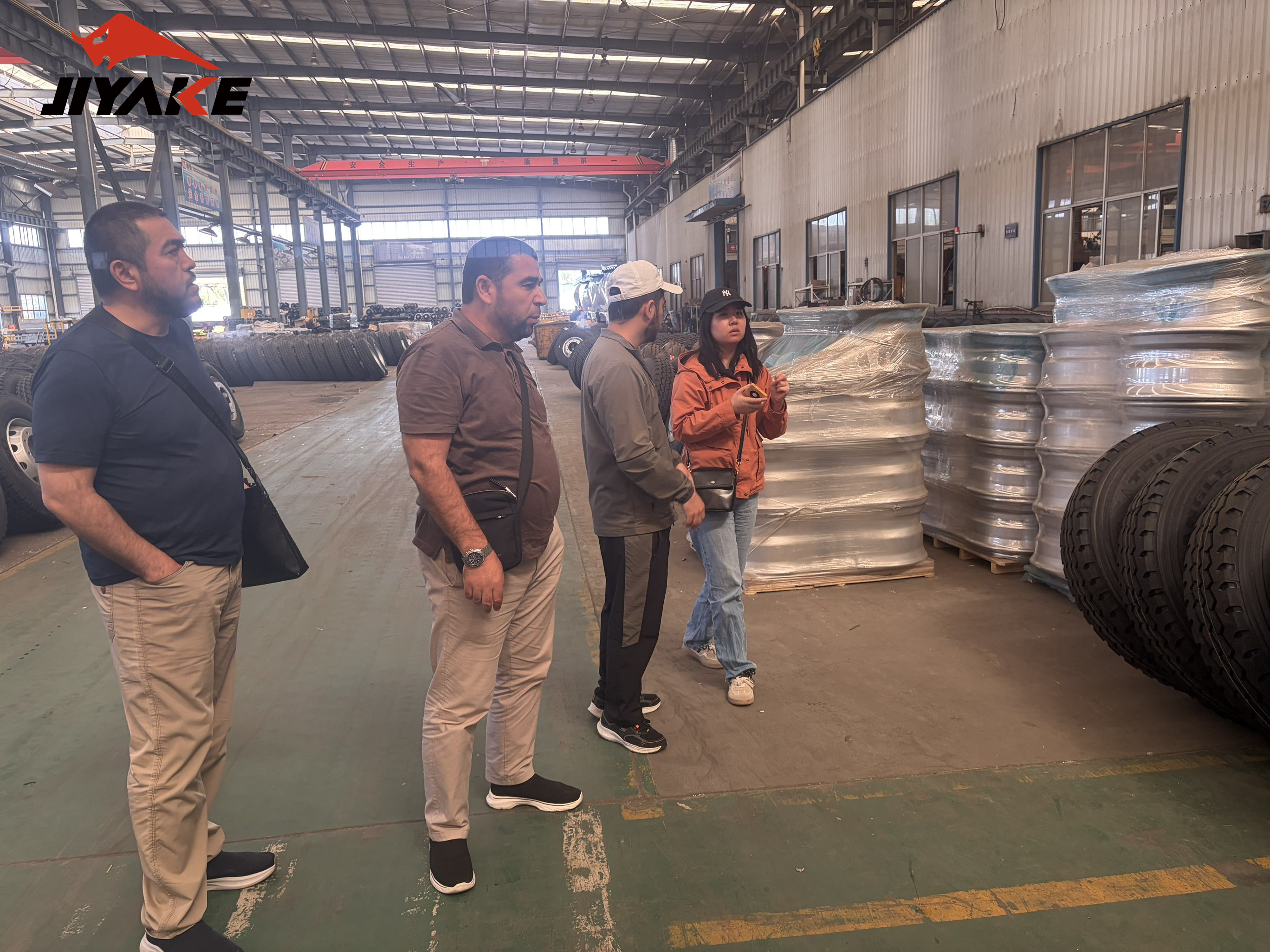
This is one reason established manufacturers matter. Shandong Jiyake Automobile Sales Co., Ltd. works across semi-trailers, tractor trucks, tankers, tippers, dump trucks, mixer trucks, wreckers, timber trailers, and other special vehicles, with service experience in more than 60 countries across Southeast Asia, Central Asia, and Africa. For buyers, that kind of product range is useful because container transport decisions are often connected to broader fleet planning, not just one trailer model. The company’s 300000m2 factory base, 500 employees, and equipment such as CNC cutting machines and automatic welding systems suggest a production environment oriented toward scale and fabrication consistency, though final suitability still depends on the exact specification offered for a given route.
Common misunderstandings
One common mistake is assuming a skeleton trailer is a universal trailer. It is not. It is efficient because it is specialized. If your operation involves loose building materials, palletized cargo without containers, or oversized machinery, a different body type will serve better.
Another misunderstanding is that all transport tasks in heavy trucking can be solved with one chassis concept. In reality, container haulage and project cargo are very different. A fleet that handles both may pair a container chassis with equipment such as a Folding Gooseneck Lowbed Semi Trailer for heavy equipment, energy projects, or infrastructure logistics. That kind of lowbed uses Q345B carbon steel, a low deck structure, and a wider loading platform for oversized or indivisible cargo, which is a completely different job from container transport. Knowing that difference helps avoid buying a trailer that is efficient on paper but wrong in daily use.
How experienced buyers usually evaluate it
They start with the cargo pattern, not the brochure. How many containers move per week? What sizes dominate? What are the heaviest actual loads, not theoretical maximums? Are the roads mostly port access roads, inland highways, or mixed regional surfaces? Will the trailer need mechanical suspension for simplicity, or is air suspension preferable for certain routes and regulations? Those answers narrow the choice fast.
They also ask about serviceability. In some export markets, simple and rugged components are preferred because spare parts support is uneven. In others, operators want more refined brake and suspension configurations. There is no single best setup. There is only a better match between route, maintenance capacity, cargo weight, and legal limits.
A 2 Axle Skeleton Semi Trailer is used for one very practical purpose: moving containers efficiently without carrying extra structure that the job does not need. When the route, payload, and local regulations line up, it is one of the most economical tools in container transport. When those conditions do not line up, a different axle layout or trailer type may be the smarter choice. That is usually the real decision point—less about the name of the trailer, more about whether its structure fits the freight task you actually run.
Leave A Reply

First class quality service and professional after-sales team.
Get in Touch
*We respect your confidentiality and all information are protected.