




How regional hauling needs influence the dump trailer market
How Regional Hauling Needs Influence the Dump Trailer Market
Regional hauling demands are reshaping the dump trailer market as project managers balance payload capacity, road conditions, material types, and delivery schedules. From short-haul construction aggregates to long-distance infrastructure supply routes, the right trailer configuration can directly affect operating costs, safety, and project efficiency. Understanding these regional differences helps contractors choose durable, high-performance dump trailers that match real-world site requirements.
The key point is that a “dumping job” is never just a dumping job. A vehicle hauling screened sand between a quarry and an urban batching plant faces a very different operating pattern from one moving wet soil on unpaved access roads, or carrying blasted rock from a remote mine. Payload, cycle time, traction, body wear, local axle limits, fuel availability, and workshop support all change the practical specification.
Short Hauls Prioritize Cycle Time and Site Maneuverability
In dense construction corridors, trucks may complete many short trips in a day. The travel distance is limited, but the work is demanding: frequent loading, repeated stopping, tight turning areas, uneven staging zones, and queues at both ends of the route. In this environment, a project can lose more time through poor maneuverability or slow unloading than through insufficient engine output.
For urban and peri-urban aggregate work, managers often need to assess body volume alongside legal and practical payload. Light materials such as dry sand can fill a large body before reaching a weight limit, while crushed stone, wet soil, and demolition debris can reach the allowable load much sooner. Selecting a body only by cubic capacity may create either underutilized trips or an increased risk of overload.
The unloading zone matters just as much. A middle-lift arrangement can provide a straightforward solution for regular bulk-material discharge, but it requires stable ground and adequate overhead clearance. Before assigning equipment, site teams should inspect the dumping surface for lateral slope, soft edges, hidden trenches, and material buildup. A trailer or tipper body can be structurally sound and still become unsafe when raised on unsuitable ground.
Longer Routes Shift the Decision Toward Driveline and Operating Stability
Infrastructure projects often extend beyond the immediate construction zone. Material may travel from ports, quarries, borrow pits, or concrete-material suppliers to road, rail, and utility sites many kilometers away. Here, the vehicle spends more time at cruising speed, so fuel consumption, transmission matching, braking performance, tire durability, and driver comfort become more visible in the total cost of each delivered tonne.
A higher nominal payload is not automatically the better answer. On mixed highway and site routes, managers should compare the loaded return route, gradients, bridge or road restrictions, unloading frequency, and expected empty running. A body and chassis that are oversized for the material flow may increase fuel use and reduce flexibility; one that is too lightly specified may suffer from repeated wear, heat buildup, or premature suspension and tire issues.
Brake configuration deserves particular attention where descents are common. Service, parking, and auxiliary braking functions should be considered as a system, together with load profile and driver operating practices. The applicable local requirements must always be confirmed, especially where a vehicle crosses borders or moves between public roads and controlled industrial areas.
Rugged Terrain Changes the Meaning of “Capacity”
In mining zones, undeveloped project sites, and regions with seasonal road deterioration, traction and structural resilience can matter more than theoretical volume. Deep ruts, loose gravel, steep ramps, and wet ground place stress on the chassis, tires, suspension, and tipping system. The practical payload may need to be adjusted to road condition, not simply loaded to the maximum shown on a specification sheet.
This is one reason drive layout remains a central buying decision in the dump trailer market. A 4x2 arrangement may suit relatively firm, accessible routes. A 6x4 configuration commonly offers a stronger balance for heavy construction hauling, while 6x6 or 8x4 layouts may be considered where site access, axle loading, terrain, and local operating rules justify them. The decision should be based on the worst workable segment of the route, not the best paved section.
For difficult ground, tire selection also becomes operational planning rather than a replacement-parts choice. Tire size, tread suitability, availability in the destination market, and the ability to maintain correct pressure all influence uptime. A project that depends on remote hauling should ask in advance which consumables can realistically be sourced locally and how quickly common service items can be obtained.
Material Characteristics Drive Body and Wear Decisions
The material being transported has a direct effect on body design. Abrasive stone and ore can accelerate floor and sidewall wear. Sticky clay may hang up in corners and slow discharge. Hot asphalt-related materials, fine powders, or moisture-sensitive bulk loads can introduce entirely different requirements. A project manager should describe the material honestly: density is useful, but particle size, moisture content, loading method, impact force, and tendency to stick are equally relevant.
High-strength steel bodies are often selected where durability and resistance to repeated heavy-duty use are priorities. Yet material choice is only one part of the solution. Loading technique matters too. Dropping large rock from excessive height can damage even a robust body, while uneven loading can affect vehicle balance and increase stress during tipping. Clear loader-driver coordination is often a more effective protection measure than adding capacity without revising the loading process.
A Practical Specification Review Before Procurement
Before comparing quotations, it helps to turn the project plan into a route-and-load brief. This reduces the risk of choosing equipment on headline horsepower or body size alone.
- Identify the heaviest material, not only the most common material.
- Map the route’s weakest sections: gradients, soft ground, narrow access, bridges, and unloading areas.
- Estimate loading and tipping cycles, including waiting time at quarry, plant, or site.
- Confirm permitted axle loads, emissions requirements, and road-access rules in the operating region.
- Review local availability of tires, filters, hydraulic components, and trained service support.
- Define whether the truck will stay on one project or move between construction, quarry, and mining assignments.
For example, a 6x4 heavy-duty dump truck with a 25-ton loading capacity, radial tires, a multi-function brake system, and a middle-lift body may be a sensible starting point for certain construction and mining duties. But its suitability still depends on the local route, material density, regulations, and body configuration. Equipment should be specified around the work pattern rather than selected as a generic fleet asset.
Regional Markets Also Depend on Service Reality
The most suitable hauling solution is not determined at the factory gate. It is determined over months of loading, transport, discharge, maintenance, and changing site conditions. In markets across Southeast Asia, Central Asia, and Africa, contractors may face very different combinations of road quality, climate, fuel standards, parts networks, and workshop capability. Those factors should influence component choices as early as the design stage.
Shandong Jiyake Automobile Sales Co., Ltd. works across these varied operating environments with a product range that includes semi-trailers, tippers, tankers, tractor trucks, mixer trucks, timber trailers, and other special vehicles. Its manufacturing base covers 300,000 square meters and includes CNC cutting, automated welding, bending, and tank-welding equipment. For project teams, this type of integrated production capability is most relevant when it supports a clear application discussion: body dimensions, chassis arrangement, material handling, and maintenance access should all be aligned before production begins.
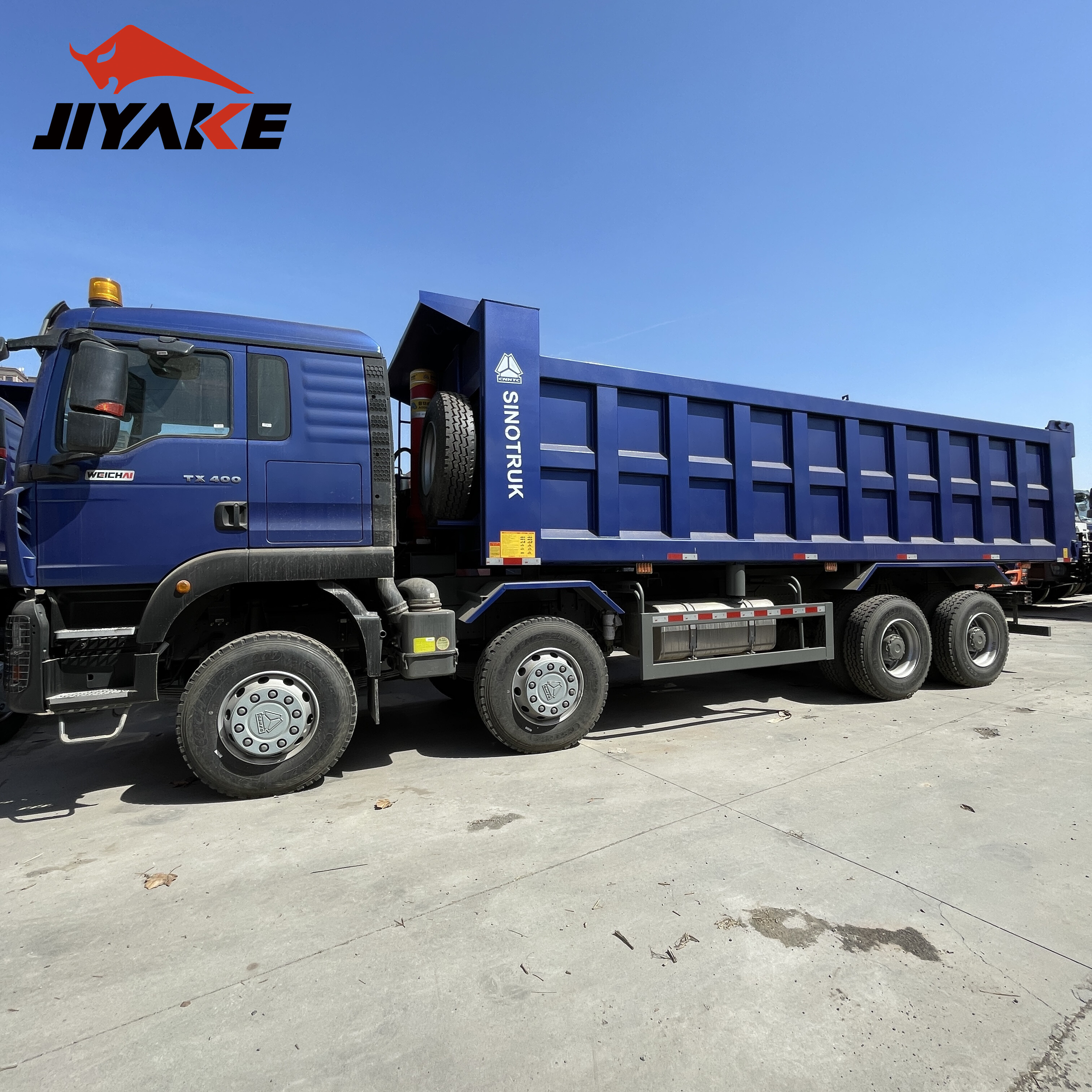
Where rugged access and rapid bulk-material unloading are part of the operating brief, the HOWO 380HP Dump Truck illustrates the type of configuration that may be evaluated. Available specifications include different drive arrangements, and the platform is positioned for construction and mining work. The final engine, emissions, tire, and body selections should be checked against destination-market requirements rather than assumed from a standard configuration.
The Market Is Moving Toward Application-Specific Hauling
Regional needs are making the dump trailer market less uniform. Contractors are increasingly looking beyond a basic payload figure toward equipment that fits a defined material flow and road environment. That does not always mean choosing the most complex truck. In many cases, the better decision is a durable, serviceable configuration with the correct axle layout, body strength, dumping arrangement, and parts plan for the route it will actually run.
Before committing to a fleet or a single project unit, compare the intended payload with material density, route condition, loading method, tipping surface, and local compliance requirements. Those details are where regional hauling needs become equipment decisions—and where avoidable downtime usually begins or ends.
Leave A Reply

First class quality service and professional after-sales team.
Get in Touch
*We respect your confidentiality and all information are protected.